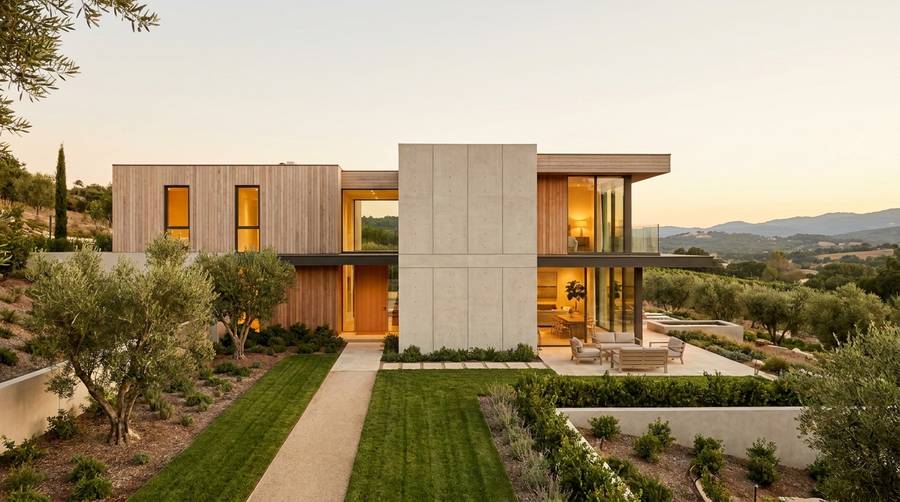
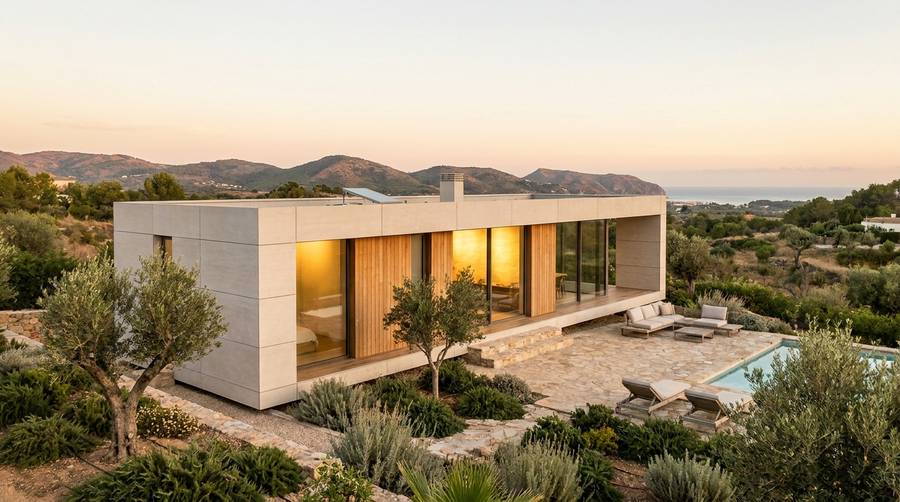
Affordable Prefabricated House Guide 2026
Imagine moving into a high-quality, energy-efficient home in months, not years — and with a fixed price you can trust. This guide cuts through hype to give self-builders in Spain practical steps to choose an affordable prefabricated house in 2026: the best materials, realistic budgets, financing paths and the turnkey process that limits surprises.
1. Why choose an affordable prefabricated model in Spain (key advantages)
Efficiency and fixed timelines: shorter delivery, predictable schedule
Prefabrication reduces on-site time. Factory production overlaps design and site prep, so you avoid long seasonal delays common in traditional builds. Typical timeline: 2–6 months factory + 1–3 months site work, versus 12–24 months for a conventional project.
Shorter schedules mean lower temporary housing costs, faster move-in and fewer exposure risks (weather, subcontractor delays).
Fixed price and cost control: predictability for self-builders
Transparent package pricing is the main financial benefit. Reputable providers offer fixed-price contracts with defined scopes for structure, envelope, thermal systems and finishes. That reduces scope creep and late change orders that inflate traditional budgets.
- Ask for a line-item quotation with allowances for finishes.
- Include a contingency (3–6%) for owner-led selections.
- Verify what’s excluded: site works, foundations, connections and taxes.
Sustainability and energy performance: lower footprint and bills
Modern industrialized systems often outperform traditional builds in airtightness and insulation. When paired with efficient mechanical ventilation and correct shading, prefabricated homes can meet near-Passivhaus targets at lower marginal cost.
Lower operational energy means predictable lifetime costs and eligibility for certain incentives tied to energy performance.
Fact: A properly engineered timber or prefabricated concrete envelope can reduce heating demand by 40–70% compared with poorly insulated traditional builds.
2. Top 5 modern materials for affordable prefabricated models
Industrialized concrete: durability and thermal mass
Precast concrete panels and insulated concrete elements provide robustness, good thermal inertia and low maintenance. They are ideal for Mediterranean climates where daytime heat is buffered for cooler nights.
Use cases: ground floors, façades with stone or plaster finishes, and integrated thermal stores in passive designs.
Light timber frame: speed, insulation and lower carbon
Engineered timber frames with high-performance insulation are fast to manufacture and assemble. Wood reduces embodied carbon and provides excellent thermal performance when detailed correctly.
Key detail: ensure vapor control and proper flashing to avoid moisture issues in coastal environments.
Steel frame: flexibility and precise tolerances
Cold-formed steel (steel frame) excels for open-plan designs and long spans. It is stable, reproducible and often combined with insulated panels for rapid enclosure.
Best where design flexibility and repeatable quality are priorities.
Cross-laminated timber (CLT): premium feel with speed
CLT panels offer fast erection and high-quality interior finishes. They give a warm aesthetic and strong structural performance but tend to be costlier than light timber frames—suitable when clients value natural finishes and shorter schedules.
High-performance insulated panels (SIPs and ICF)
SIPs (structural insulated panels) and insulated concrete forms (ICF) deliver continuous insulation and airtightness, simplifying mechanical sizing for energy systems.
These systems are attractive when achieving near-Passivhaus metrics with controlled build time is the objective.
3. Top 5 budget models with the best value for money
Mediterranean compact design: maximize daylight and minimize waste
Design smart, not large. A compact footprint with cross-ventilation, south-facing living areas and overhangs reduces energy loads and material costs while preserving comfort.
- Open-plan living to reduce corridor square meters.
- Large glazed areas with correct solar control to harness daylight and heat.
Certified efficient approach: near-Passivhaus on a budget
Target performance before luxury finishes. Insulation, airtightness, triple-glazing and balanced ventilation deliver most of the energy gains. Prioritize building physics in the quote.
Modular expandability: grow when you need to
Choose modules designed to link cleanly. Starting with a smaller core home and adding modules later preserves initial affordability while offering long-term flexibility.
Prefabricated core + in-situ finishing hybrid
Combine a factory-made thermal shell with local finishes. The hybrid lowers factory complexity and cost while delivering a quality envelope quickly.
Standardized plans with upgrade paths
Pick a proven plan with optional upgrades. Standardization reduces design and approval fees; upgrades (better windows, finishes) can be chosen once on-site costs are settled.
4. Five reasons a turnkey project simplifies self-build
Comprehensive process: from plot search to delivery
Turnkey providers coordinate land assessment, permits, foundation work and final handover. For first-time self-builders, this minimizes administrative burden and accelerates timelines.
Centralized subcontractor management and quality control
A single accountable entity reduces finger-pointing. Factory QA combined with a site supervisor maintains consistent build quality and traceability.
Clear milestones and legal guarantees
Fixed milestones and warranties reduce uncertainty. Ensure contracts include delivery dates, snag lists, and warranty terms for structure and envelope.
Efficient procurement and bulk buying
Turnkey teams negotiate better rates for materials and systems. Savings are often passed to the client or absorbed to maintain competitive pricing.
Less time investment for the owner
You retain design choices without daily site oversight. This is crucial for owners who prefer a guided process while keeping final approvals on finishes.
5. Four financing keys for industrialized housing in 2026
Self-build mortgages: requirements and typical documents in Spain
Self-build (autopromoción) loans often require:
- Detailed budget and phased payment schedule.
- Technical project and timeline endorsed by an architect.
- Land ownership or a down payment of the land value.
Bank appetite improved for factory-built solutions because of lower perceived construction risk, especially with experienced turnkey providers.
Comparing financial products and presenting a modular budget
Create a modular budget that distinguishes factory shell, site works and finishes. Lenders prefer clarity: show fixed-price quotes for factory scope and independent estimates for foundations and connections.
Grants and incentives for energy-efficient construction
Look for regional and national incentives tied to energy ratings. Funding or tax benefits can materially improve affordability for near-Passivhaus performance levels.
Practical tips to improve loan approval
- Use an accredited turnkey provider with references and clear warranties.
- Prepare a phased cashflow aligned with lender drawdowns.
- Document supplier guarantees and performance tests (airtightness, U-values).
6. How to decide: practical checklist before choosing an affordable prefabricated model
Plot evaluation, regulations and access considerations
Assess site constraints early. Topography, connections to utilities, soil type and access for deliveries determine foundation type and cost. Confirm local planning rules for prefabricated systems—some municipalities have specific requirements.
Technical and comfort criteria: insulation, ventilation and finishes
Set minimum performance targets. Specify U-values, airtightness targets (e.g., n50 ≤ 3 h-1 for budget efficient homes), and a mechanical ventilation system with heat recovery if possible.
Case study summary: real project metrics
Example project (summary):
- Location: Mediterranean peri-urban plot.
- System: light timber frame + SIP roof.
- Timeline: 4 months factory + 2 months site—6 months total.
- Cost breakdown: shell 55%, site & foundations 20%, finishes 20%, fees 5%.
- Outcome: measured 50% lower heating need vs local code; client satisfaction rated 9/10 for timeline and cost control.
Final checklist before signing
- Obtain a fixed-price, line-item contract.
- Confirm delivery milestones and penalties for delays.
- Check warranties for structure, envelope and equipment.
- Request references and visit completed homes.
- Plan financing with a lender experienced in autopromoción.
For a compact walkthrough of standardized affordable plans that balance cost and quality, see Modelo prefabricado económico: guía 2026.
Deciding on an affordable prefabricated house is a trade-off: prioritize building physics, a clear turnkey scope and an experienced provider to keep costs predictable without sacrificing comfort.
Ready to evaluate your plot and shortlist systems? Start with a site appraisal and a fixed-scope quote — the insight you gain will make budgeting and financing far simpler. If you want, we can prepare a checklist tailored to your plot and budget to move to the next step.