Recycled Flooring for Modular Homes in Spain
Start with a decision that pays off: recycled flooring tailored to modular homes
Choosing the right recycled flooring can cut embodied carbon, lower costs and speed delivery without sacrificing Mediterranean aesthetics. In this guide you get practical rules, supplier-ready criteria and real project metrics to pick floors that fit industrialized construction workflows in Spain.
Recycled materials can reduce the floor's embodied carbon by up to 50% and cut installation time by 20% when selected for prefabrication-ready systems.
1. Recycled concrete flooring: strength and sustainable design
Benefits for industrialized homes: durability and compatibility with precast concrete
Recycled concrete flooring uses crushed reclaimed concrete as aggregate. It matches well with industrialized concrete systems because it allows for consistent mixes and predictable curing. For modular homes built with precast slabs or industrialized concrete frames, recycled concrete brings:
- High compressive strength suitable for open-plan living spaces.
- Thermal mass benefits that stabilize indoor temperatures in Mediterranean climates.
- Fire resistance and longevity, reducing life-cycle maintenance.
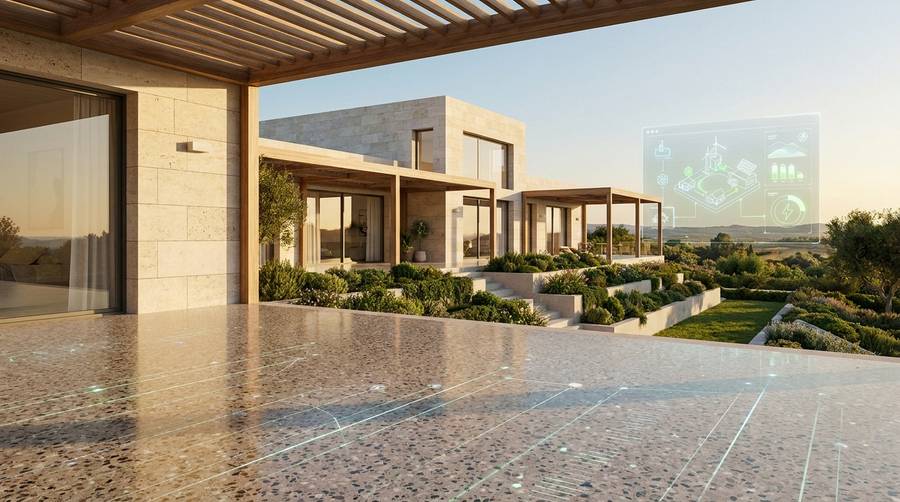
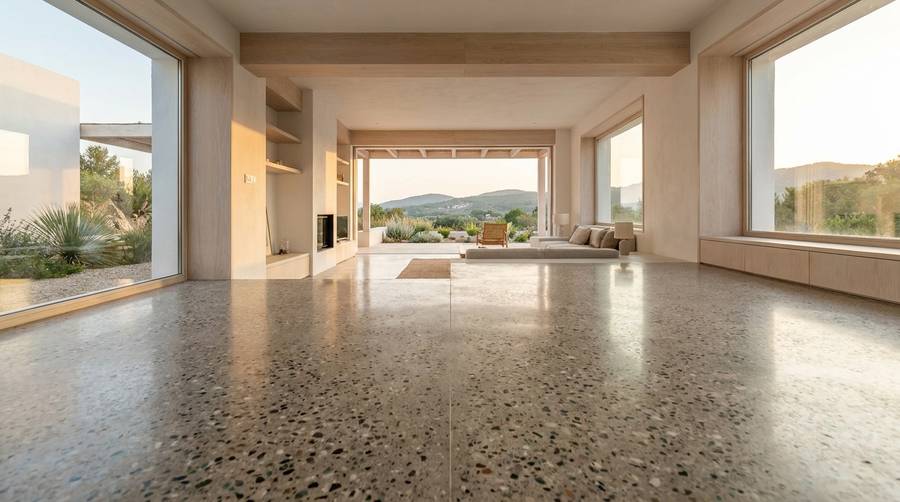
Finishes and Mediterranean aesthetics: polished, pigmented and natural textures
Modern recycled concrete offers diverse finishes. Consider these options:
- Polished finish for a sleek, premium look that reflects warm natural light.
- Pigmented/topcoats to emulate natural stone tones common in Spanish homes.
- Exposed aggregate or textured surfaces for outdoor-friendly terraces.
Installation, maintenance and cost comparison
Recycled concrete can be poured on-site or pre-cast in factory environments. For modular builds, factory-cast panels reduce weather delays. Maintenance is low: periodic sealing every 3–7 years. Cost-wise, recycled concrete often equals or undercuts natural stone when factoring long-term durability.
2. Ceramic tiles with recycled content: style with low impact
Composition and environmental certifications relevant in Spain
Recycled ceramic tiles incorporate post-industrial or post-consumer waste into clay bodies. Look for certifications: AENOR eco-labels, CE marking, and EPDs (Environmental Product Declarations) that validate reduced impacts.
Best use in modular homes: interiors, terraces and wet areas
Ceramic tiles excel in kitchens, bathrooms and covered terraces. Their water resistance and durability make them ideal in combination with modular bathroom pods and wet-room assemblies.
Sustainability advantages and carbon savings examples
Using recycled ceramic tiles can cut production emissions by 15–30%. In a 120 m² home, choosing recycled ceramic for wet zones and corridors can reduce embodied emissions by several hundred kilograms of CO2e, depending on tile origin.
3. LVT and vinyl floors with recycled content: adaptability and comfort
Thermal and acoustic properties ideal for prefabricated homes
Modern LVT (luxury vinyl tile) and vinyl floors with recycled content deliver good thermal comfort and sound attenuation. They pair well with lightweight timber frames and steel frame systems where vibration and noise control matter.
Quick installation in dry-build processes and 'turnkey' systems
LVT typically installs as floating floors or glue-down panels, speeding onsite finish work. That aligns with 'llave en mano' workflows where the factory or trade teams finish interiors rapidly after modules arrive.
Durability, maintenance and medium-term budgets
High-quality recycled-content LVT can last 15–25 years with simple cleaning. Upfront costs are moderate. Over time, lower maintenance and reduced subfloor preparation often make LVT cost-effective compared to natural timber.
4. Engineered wood and composite decking with recycled fibers
Natural look combined with recycled cores and dimensional stability
Engineered planks with recycled polymer or fiber cores replicate warm timber aesthetics while improving stability. They suit living rooms and bedrooms where a timber feel is desired without the climate sensitivity of solid wood.
Optimizing for timber frame and steel frame assemblies
Choose engineered boards sized for factory panelization. Their predictable thickness and weight make them easy to integrate into floor cassettes for light timber frames and steel frame modules.
Care, repairs and long-term family value
Regular maintenance includes gentle cleaning and occasional re-coating for wear layers. High-grade engineered floors improve perceived home value and appeal to buyers seeking sustainable materials.
5. Permeable paving and recycled gravel for outdoor areas
Benefits for drainage, water efficiency and Mediterranean gardens
Permeable pavements and recycled gravel improve stormwater infiltration. In Mediterranean landscapes, they reduce runoff, recharge local soils and support drought-resilient landscaping.
Integration with terraces and garden zones of modular homes
Design continuous thresholds between interior recycled flooring and exterior permeable surfaces. Use matching tones and transitions to create seamless outdoor–indoor flow, a hallmark of contemporary Spanish homes.
Costs, upkeep and Spanish project examples
Permeable solutions can be cost-competitive, especially when accounting for reduced drainage infrastructure. Maintenance is simple: occasional raking and topping-up of aggregate layers.
6. How to choose the ideal recycled flooring for your modular project
Technical and aesthetic criteria: climate, use, budget and energy efficiency
Decide using a matrix of priorities:
- Climate: prefer thermal-mass materials in continental zones; lighter floors in humid coastal areas.
- Use: high-traffic areas need durable finishes like ceramic or polished concrete.
- Budget: balance upfront cost with life-cycle savings.
- Efficiency: select floors that support insulation strategies and heat retention.
Compatibility with prefabrication processes, delivery times and logistics
Prioritize factory-friendly finishes that can be installed before module shipment. Examples:
- Pre-finished engineered flooring fixed in floor cassettes.
- Pre-cast recycled concrete slabs integrated in module floors.
- Large-format recycled ceramic tiles applied in controlled factory conditions.
Practical cases and metrics: times, costs and client satisfaction
Real project snapshots help decide:
- Case A — 110 m² modular home with pre-cast recycled concrete floors: factory installation reduced on-site finishing by 18 days and kept material costs on par with alternatives. Client satisfaction rating: 9/10 for thermal comfort.
- Case B — 95 m² timber-frame house using recycled LVT and engineered wood: on-site fit-out completed in 9 days. Medium-term maintenance costs were 22% lower than solid wood. Client satisfaction: 8.6/10 for acoustic comfort.
- Case C — 140 m² modular Mediterranean villa with recycled ceramic terraces and permeable gravel: improved outdoor usability and lower irrigation needs. Rainwater infiltration increased by 35% in garden tests.
Practical closing: steps to integrate recycled floors in your industrialized home
Checklist for procurement, suppliers and autopromoter insurers
- Request EPDs and AENOR or equivalent certificates for recycled content.
- Ask for factory-installation options and lead times.
- Confirm warranty terms for wear layers and seals under modular transport conditions.
- Coordinate transitions between interior floors and outdoor permeable surfaces in early design stages.
Financing and added value: why sustainable floors matter for mortgages and resale
Sustainable flooring can support better energy performance ratings and perceived home value. For autopromoters seeking financing, documented sustainability upgrades can strengthen mortgage cases for self-build loans and green lending products.
Resources and next steps: standards, guides and specialist contacts
Start by testing samples in situ under natural light. Compare installation timelines and ask suppliers for installation guides tailored to prefabrication. For material questions, consult product EPDs and local specialists.
Integrate recycled flooring early into your modular plan to maximize savings and minimize site uncertainty. If you want an implementation checklist or a supplier-ready specification for your plot, we can prepare a tailored brief that matches your budget and timeline. Reach out to discuss the next steps.
Related reading
Learn how recycled floors pair with other sustainable finishes in our practical guides, for example Pavimentos reciclados: guía para viviendas industrializadas and Pavimentos reciclados: futuro en vivienda industrializada.
Artículos relacionados