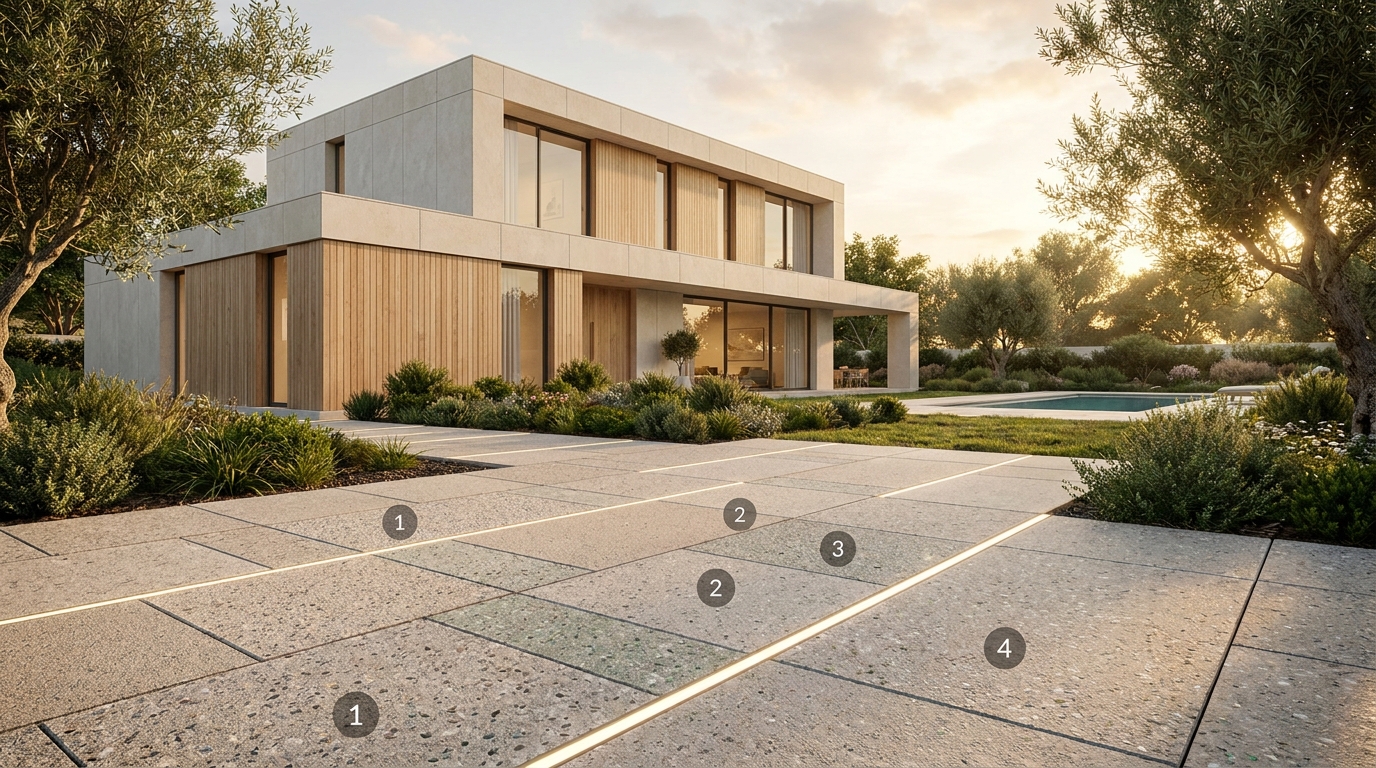
Recycled Flooring in Modular Homes: Pros & Cons
When the first family moved into their modular home in Andalusia six months after signing the contract, they noticed one detail that surprised them most: the floors felt warmer and cleaner than expected. That single observation encapsulates why recycled flooring is becoming a serious contender for industrialized housing in Spain—not a trend, but a set of technical choices that affect cost, timing, comfort and carbon.
Choosing recycled flooring for a modular home can cut embodied carbon by up to 40% compared with some conventional materials, while preserving competitive costs and delivery times—if specified correctly.
What are recycled pavements and why they matter for industrialized housing
Definition and scope: Recycled flooring refers to floors manufactured partly or wholly from recovered materials—recycled concrete aggregates, post-consumer plastics, reclaimed ceramic material and engineered wood agglomerates. In an industrialized housing context, these products are produced to consistent tolerances and designed to integrate into factory-led workflows.
Materials that appear in modern recycled flooring
- Recycled concrete and aggregates: Mixes that replace virgin sand/gravel with crushed concrete or recycled aggregates.
- Plastic-composite boards: High-density composites from PET, HDPE or mixed plastics bound with resins.
- Ceramic with recycled content: Glazed or unglazed tiles incorporating crushed ceramic waste.
- Wood agglomerates and MDF with reclaimed wood: Engineered panels using post-industrial sawmill residues.
How recycled floors fit a turnkey modular process
In a 'llave en mano' approach, selection of flooring is locked early to coordinate factory schedules, subfloor assemblies and logistics. Recycled flooring that is supplied in panel or tile form simplifies off-site installation, reduces variability on-site and can speed up finishing stages in controlled factory environments.
Expected sustainability impact
Recycled flooring reduces demand for virgin resources and diverts construction and municipal waste from landfills. When paired with industrialized manufacturing, the combination often lowers embodied carbon per square meter. However, results vary widely by product and supply chain; lifecycle assessments (LCAs) are essential to validate claims.
Common recycled flooring types used in Spain for modular homes
Concrete composites and recycled aggregates: characteristics
These floors replace a share of natural aggregates with crushed concrete or crushed masonry. Advantages include thermal mass and compressive strength similar to conventional mixes. Typical uses: ground-floor slabs, screeds and terrazzo-like finishes.
- Pros: Good durability, familiar detailing for installers, thermal inertia.
- Cons: Slightly higher variability in color/finish; requires quality-controlled supply to avoid contaminants.
Recycled plastic and composite floors: resilience and aesthetics
Plastic-based composites offer waterproofing and high impact resistance. They come as click-fit planks or tiles, which suit modular construction where speed matters.
- Pros: Lightweight, low-maintenance, wide palette of finishes.
- Cons: Perceived lower value in some resale markets; attention needed to VOCs and recyclability of binder.
Ceramic and wood-based recycled options
Recycled ceramic tiles and wood agglomerates offer familiar aesthetics. Recycled-ceramic tiles can mimic traditional gres porcelain while lowering raw material use; engineered wood using reclaimed fibre can provide warm finishes with lower embodied carbon.
Key advantages of choosing recycled flooring for modular homes
Environmental benefits
- Lower embodied carbon: Using reclaimed aggregates or recycled plastics reduces upstream emissions compared with virgin extraction.
- Waste diversion: Integrates demolition and industrial residues into new value chains.
- Support for circular economy: Stimulates regional recycling industries which matters in Spain’s supply context.
Technical advantages
- Compatibility with factory workflows: Prefabricated panels and tiles are ready to drop into modular floor cassettes.
- Insulation and acoustic performance: Some recycled composites perform well thermally and acoustically when combined with modern underlays.
- Durability: Properly engineered mixes meet common performance classes for residential use.
Effect on project timing and costs
Recycled flooring can reduce lead times if suppliers provide standardized panels aligned with factory rhythms. Cost outcomes depend on local supply; in many Spanish regions recycled aggregates reduce raw material cost and stabilize pricing versus volatile virgin materials.
- Example: in a recent modular pilot (Andalusia, 2024), switching to a recycled concrete screed shaved two weeks from on-site finishing and reduced material cost by ~6% for a 120 m2 house.
Disadvantages and risks to assess before committing
Technical limitations and variability
Recycled materials can show greater batch-to-batch variation. Without strict supplier QA and clear specifications, you risk differences in color, density and moisture content that affect installation and long-term behavior.
Maintenance, repairs and warranty issues
Not all manufacturers provide long-term warranties comparable to conventional products. In modular ('llave en mano') contracts, ensure warranty terms explicitly cover recycled components and define responsibility for replacement or defects.
Market perception and resale risk
Some buyers still perceive recycled products as lower value. A well-documented certification (Ecolabels, EPDs) and good presentation in finishes mitigate this. For prime resale markets, combine recycled flooring with high-quality visible finishes to preserve perceived value.
Technical and economic comparison: recycled vs conventional flooring
Cost analysis: unit price, lifecycle and total cost of ownership
When comparing costs, consider:
- Unit cost: Recycled materials can be cheaper or similar to mid-range conventional products.
- Installation labor: Factory pre-assembly reduces on-site labor, often offsetting any premium for specialty recycled finishes.
- Lifecycle costs: Evaluate maintenance schedules, replacement intervals and energy effects (thermal inertia or insulating value).
Technical performance: resistance, thermal bridging and Passivhaus compatibility
Key technical checks:
- Compressive and flexural strength: Match to structural requirements, especially for ground floors.
- Moisture behavior: Verify capillarity and drying times when integrated with sub-systems in modular cassettes.
- Thermal bridging and insulation: Some recycled concrete options add thermal mass but require separate insulation layers to meet Passivhaus standards. Composite floors can integrate insulation and reduce thermal bridges when designed holistically.
Case studies and measurable metrics
Real metrics help decide:
- Pilot A (Seville, 2024): 120 m2 modular home using recycled aggregate screed. Results: delivery in 16 weeks, material cost savings 6%, estimated embodied CO2 reduction 28% vs conventional screed.
- Pilot B (Catalonia, 2025): 95 m2 modular home with recycled plastic composite planks for terraces and interiors. Results: waterproofing issues resolved in factory stage, lifecycle maintenance projected lower by 12% over 20 years.
How to decide and integrate recycled flooring into your modular project
Selection criteria: project, climate, use and certifications to request
When choosing recycled flooring, ask for:
- Environmental Product Declarations (EPDs) and independent LCAs.
- Manufacturer QA documentation: batch traceability and contamination tests.
- Performance tests: abrasion class, slip resistance, moisture resistance, and fire classification.
- Local suitability: materials should be tested for regional climate—thermal performance in northern Spain differs from Mediterranean coast.
Recommended process in a turnkey contract
To avoid surprises, integrate these steps into your 'llave en mano' delivery:
- Early specification: Lock flooring families at schematic design to align supply chains.
- Sample and mock-up: Request full-scale samples and factory mock-ups for finishes and tolerances.
- Site and factory acceptance tests: Perform moisture and flatness checks before panel shipment.
- Detailed warranty clauses: Define responsibilities for defects, replacements and lifecycle thresholds.
Practical tips: suppliers, testing and financing sustainable choices
- Choose suppliers with factory integration: Those experienced in modular supply reduce interface risks.
- Insist on pilot installations: A 10–20 m2 mock-up under real use reveals issues early.
- Access to green financing: For autopromoters in Spain, explore mortgage products for self-build that favor energy-efficient or low-carbon specifications—these can offset any upfront premium for certified recycled solutions.
Final decision checklist:
- Have LCAs and EPDs been provided and verified?
- Can the product be supplied in factory-friendly formats?
- Are warranties and responsibilities explicit in the turnkey contract?
- Does the finish match market expectations for resale and comfort?
Choosing recycled flooring for a modular home is less about ideology and more about matching materials, process and proof. With rigorous specification, testing and contractual clarity, recycled floors can deliver measurable carbon reductions, competitive costs and durable performance—making them a pragmatic option for modern industrialized housing in Spain.
If you’re planning a modular or industrialized build, request a flooring mock-up and EPDs before signing the turnkey contract—small tests save weeks and reduce risk.
Artículos relacionados