Recycled Flooring for Industrialized Homes
Imagine walking across a terrace that looks and feels premium but carries a fraction of the embodied carbon of conventional materials. That image is rapidly becoming reality as recycled flooring moves from niche pilots to standardized components in industrialized housing in Spain. This article analyzes market data, technical compatibility, lifecycle impacts and practical steps for autopromotores who plan a llave en mano modular home today.
Current market and projections: recycled flooring in industrialized housing
Market size in Spain and forecasts to 2035
Spanish demand for sustainable building materials is growing double-digit in specific product lines. Recent industry surveys and procurement data from modular factories indicate that adoption of recycled flooring in industrialized housing rose from under 2% of factory-fitted finishes in 2020 to circa 9% in 2024 in pilot regions (Catalonia, Valencia, Madrid). Forecasts for 2026–2035 show three plausible scenarios:
- Conservative: gradual uptake to 20% by 2035, driven by local regulations and limited supply.
- Accelerated: 35–45% adoption by 2035 if supply chains scale and manufacturers standardize recycled tiles/aggregates.
- Transformational: 60%+ adoption in certain product lines (terraces, secondary interiors) if circular-economy policies and incentives are introduced.
Driving forces: sustainability, fixed-price models and autopromotor demand
Four forces converge to favor recycled flooring in modular homes:
- Sustainability goals: autopromotores increasingly seek lower embodied carbon to meet Passivhaus-aligned targets.
- Price predictability: prefabrication benefits—fixed-price contracts and shorter on-site times—align well with engineered recycled products.
- Regulatory pressure: EU and Spanish recycling targets push manufacturers to incorporate more secondary materials.
- Supply-side innovation: manufacturers of concrete, ceramics and composites are offering industrialized recycled panels suited to factory lines.
Barriers and accelerators: material availability and supply chains
Key barriers include inconsistent quality of feedstock, certification gaps and limited local processing plants. Accelerators are emerging: industrial hubs near ports are closing loops for construction and ceramic waste, and logistics optimization is reducing transport emissions and costs. For autopromotores, the practical implication is clear: choose suppliers who can demonstrate stable supply and traceability.
Emerging recycled materials and technical suitability
Main types: recycled concrete aggregates, ceramic tiles, plastic composites
Recycled flooring options entering the industrialized-housing pipeline include:
- Recycled concrete aggregate (RCA) tiles and pavers: made from crushed concrete and mortar.
- Recycled ceramic tiles: reprocessed tile waste bonded into new tiles or composites.
- Plastic-reinforced composites: mixed post-consumer plastic with mineral fillers for lightweight decking.
Mechanical properties: strength, moisture and abrasion resistance
Technical tests from manufacturers show that well-processed RCA tiles can match compressive strength of standard concrete pavers and offer comparable abrasion resistance when sealed properly. Key performance notes for autopromotores:
- Moisture behaviour: some recycled ceramics have higher porosity—specify a factory-applied seal or a tested surface treatment.
- Thermal comfort: density differences affect thermal mass—choose according to climate and Passivhaus strategy.
- Slip resistance: ensure finishes meet local standards for wet areas, especially terraces.
Compatibility with industrialized systems: concrete, wood-frame and steel frame
Recycled flooring can be integrated at two main points: factory (preinstalled finish panels) or site (finished pavers/tiles installed after assembly). Compatibility tips:
- With industrialized concrete floors, recycled aggregates can be incorporated in factory-cast slabs or as bonded top layers.
- For light wood-frame (wood-frame) systems, use lightweight recycled composites or thin-bedded recycled tile panels to avoid overloading the structure.
- Steel frame systems support thin industrial panels fixed to subfloors; ensure acoustic decoupling is planned.
Performance, certifications and warranties autopromotores require
Evaluation criteria: lifespan, maintenance and thermal/acoustic behaviour
When selecting recycled flooring, evaluate:
- Designed lifespan: 25+ years for primary interiors, 10–20 for high-traffic external uses depending on treatment.
- Maintenance needs: some recycled surfaces require periodic resealing.
- Thermal and acoustic performance: combine with suitable underlays or insulation to meet Passivhaus and comfort targets.
Regulation and certifications: CE, EPDs and VOC classifications
To reduce risk, ask suppliers for:
- CE marking for applicable products.
- Environmental Product Declarations (EPDs) showing cradle-to-gate or cradle-to-grave impacts.
- Indoor emissions data (TVOC, formaldehyde) where products are used inside.
Warranty models for llave en mano contracts
For turnkey projects, prefer suppliers offering:
- Factory warranties that cover delamination, frost resistance and colour stability.
- Clear responsibility allocation in contracts: factory installed vs on-site installed scope.
- Performance-based guarantees tied to measured outcomes (e.g., no more than X mm settling, surface wear ratings after 5 years).
Recycled flooring can cut embodied carbon by 30–60% versus virgin materials if feedstock is locally sourced and processing is optimized.
Practical integration in llave en mano modular projects
Design and prefabrication: factory workflows
Design for manufacture with recycled flooring means early decisions. Recommended process:
- Early supplier engagement during schematic design.
- Standardize panel sizes to fit factory jigs and reduce cuts.
- Define finishing and edge details at design stage to avoid on-site adjustments.
Logistics, timings and quality control
Advantages in industrialized housing:
- Reduced on-site finishing time—factory-applied floors arrive ready or nearly ready.
- Quality control in a controlled environment reduces rework and warranty claims.
- Typical time savings: 20–40% reduction in finishing stage versus traditional builds, depending on product and installation sequence.
Installation use-cases: terraces, interiors and high-traffic zones
Best-practice matches:
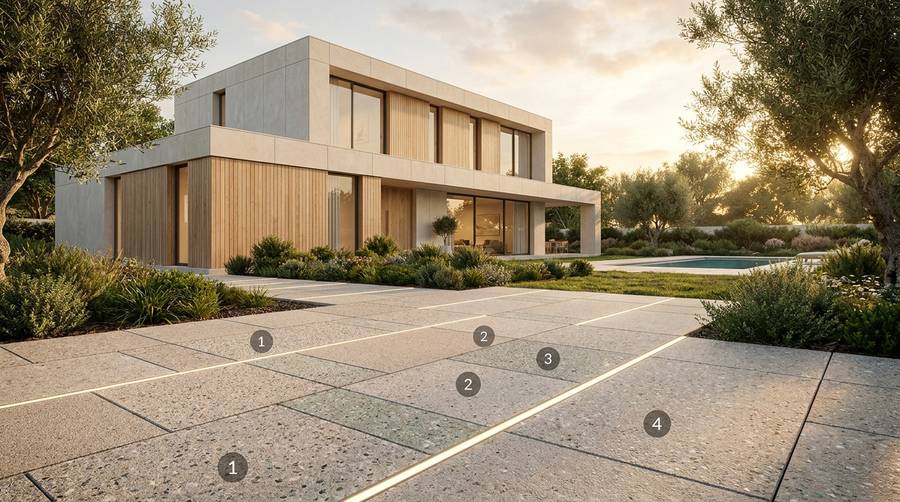
- Terraces: recycled ceramic or composite pavers with anti-slip finishes.
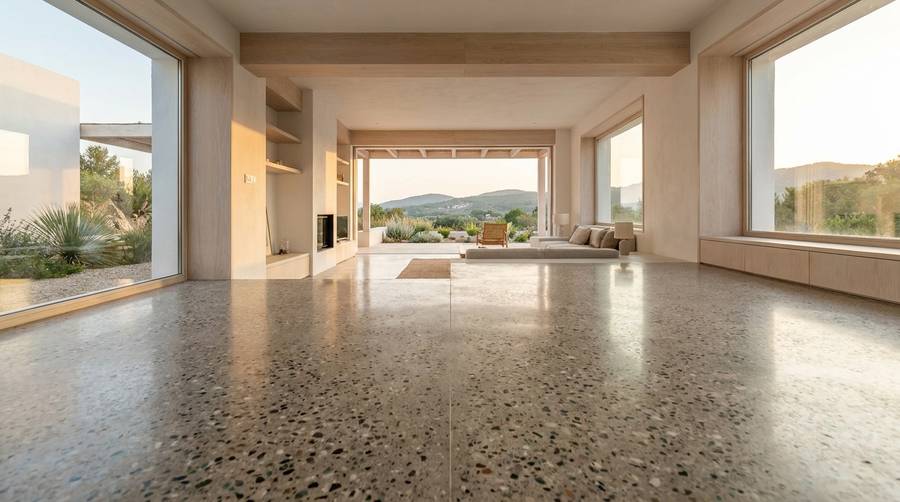
- Living areas: thin recycled tile panels bonded to subfloor with acoustic underlay.
- Circulation: higher-grade RCA tiles with appropriate abrasion class.
Environmental impact and carbon accounting
Lifecycle comparison: recycled versus conventional flooring
Life cycle assessments show that recycled flooring's biggest gains are in reduced raw material extraction and lower transport when local feedstock is used. Typical figures from industry LCA studies:
- Embodied carbon reductions: 30–60% depending on material and logistics.
- Energy use during manufacture: can be similar to virgin in energy-intensive recycling processes—optimize by selecting low-temperature bonding methods.
Circular strategies: reuse, recycling and end-of-life recovery
Design for disassembly helps keep materials in loop. Recommendations:
- Label floor panels with material and recycling instructions.
- Plan reversible fixings for future recovery.
- Engage local recycling partners to close the material loop.
Benefits for Passivhaus and sustainability targets
Lower embodied carbon supports overall building performance goals. Recycled flooring combined with high-efficiency envelopes contributes to more credible whole-building carbon targets, particularly important for autopromotores seeking premium certification or future-proof resale value.
Business models and financing routes to accelerate adoption
Cost comparison: upfront cost vs lifecycle cost
Upfront prices for high-quality recycled flooring can be comparable or slightly above low-end virgin finishes. However, lifetime cost advantages arise from:
- Lower disposal costs at end-of-life.
- Potential tax credits or incentives in green procurement programs.
- Reduced schedule risk in llave en mano projects, lowering overall project contingency.
Financing instruments for autopromotores
Autopromotores can access several routes:
- Self-build mortgages (hipotecas para autopromoción): lenders increasingly accept industrialized, factory-built cost plans when paired with certified suppliers.
- Green loans and sustainable mortgages: preferential rates when projects demonstrate lower embodied carbon or Passivhaus compliance.
- Hybrid models: supplier financing for premium recycled components bundled into the llave en mano price.
Scaling supply through partnerships
Industrial scaling requires collaborations across demolition waste processors, tile manufacturers and modular factories. Autopromotores can de-risk projects by choosing integrators with established supply agreements and EPD transparency.
Vision 2030: how recycled flooring will transform industrialized housing
Probable scenarios: mainstreaming, premium niches and regulated markets
By 2030, recycled flooring will likely follow a differentiated path:
- Mainstream: entry-level modular product lines include recycled terrazzo-like panels for terraces and secondary interiors.
- Premium: bespoke recycled ceramic and composite finishes marketed for sustainability-focused buyers.
- Regulated: public housing and certain municipal projects mandate minimum recycled content.
Practical recommendations for autopromotores planning now
Actionable steps:
- Lock supply early: include recycled flooring options in supplier contracts at the schematic stage.
- Request EPDs: require environmental declarations and lab test reports before procurement.
- Design modular interfaces: standardize panel dimensions and edge details to reduce on-site work.
- Plan finances: discuss hipotecas para autopromoción terms with lenders using your turnkey quotation and supplier warranties.
Key indicators to monitor
Watch these KPIs over the coming years:
- Feedstock availability and price per tonne.
- Number of manufacturers offering factory-compatible recycled panels.
- Regulatory changes affecting minimum recycled content.
- EPD coverage across product lines and demonstrated in-situ performance data.
For autopromotores seeking tested sustainable finishes, also consider material choices for surfaces beyond flooring — for example, recycled pavements and finishes that integrate with landscaping and terraces.
Deciding now means securing supply, locking warranty terms and aligning your financing. If you are planning a llave en mano modular home, start conversations with suppliers early, ask for EPDs and test reports, and structure your contract to allocate responsibilities clearly. These steps will help you capture the environmental and scheduling advantages recycled flooring offers while protecting value and comfort.
If you'd like, I can help you draft a shortlist of Spanish suppliers, specify performance criteria for tender documents, or prepare a checklist to present to your lender for a hipoteca para autopromoción. Send your project brief and I'll provide a tailored next-step plan.
Artículos relacionados