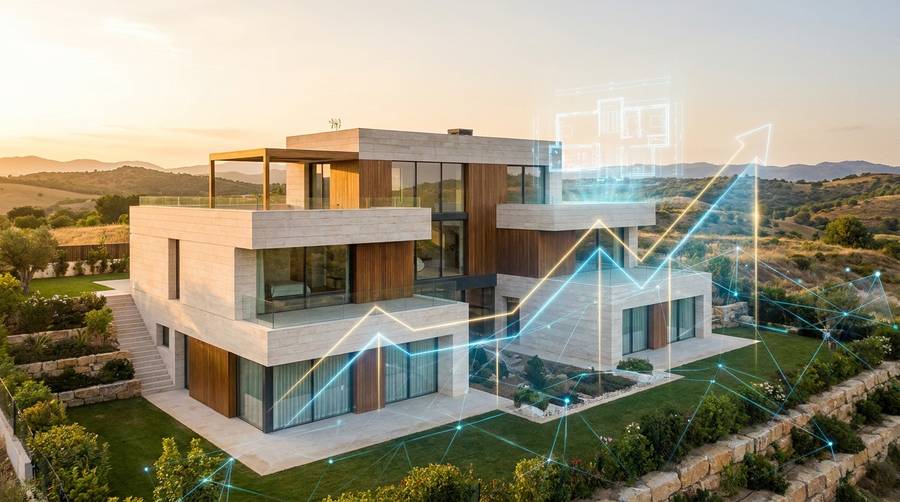
Industrialized Housing in Spain: Complete Guide 2026
Why choose industrialized housing: a clear guide for self-builders
Imagine signing a fixed-price contract and knowing your home will be delivered within months, not years. That certainty motivates many Spanish self-builders to choose industrialized housing. This guide cuts to the essentials: what industrialized housing delivers, which materials matter, and what a turnkey process actually looks like in Spain.
Industrialized housing combines factory-controlled manufacturing with on-site assembly. The result is faster delivery, predictable costs and higher quality control. Below you will find concrete steps to plan financing, prepare documentation and present your project to investors or at trade events.
Industrialized homes can reduce on-site construction time by up to 60% and cut carbon emissions significantly when modern materials and Passivhaus principles are applied.
Advantages versus traditional construction: efficiency, timing and fixed price
Faster timelines. Panels, modules or floor systems are produced simultaneously while groundwork is prepared. This parallel workflow shortens the schedule.
- Typical timeline: 4–8 months from foundation to finish for a 120–200 m² home, depending on system.
- Less weather risk: Factory production avoids delays caused by rain or cold spells.
Cost predictability. Turnkey contracts can lock scope and price early. That reduces the typical cost overruns of bespoke builds.
Quality control. Factory conditions enable repeatable manufacturing and consistent QA, improving thermal performance and finish quality.
Modern materials and their effect on quality and sustainability
The three dominant systems used by Spanish industrialized builders are:
- Industrialized concrete: precast panels and elements that deliver robustness and acoustic performance.
- Light timber frame (entramado ligero): fast, renewable and thermally efficient when combined with proper insulation and airtightness strategies.
- Steel frame (steel frame): high strength-to-weight ratio, suitable for complex forms and multi-storey homes.
Choose materials based on climate, budget and performance targets. For example, timber frame plus a high-performance envelope often achieves Passivhaus-level energy demand with lower embodied carbon than concrete-heavy options.
What to expect from a turnkey process in Spain
A true turnkey delivery covers design, manufacturing, site works and final handover. Expect these stages:
- Site survey and feasibility.
- Design and technical memory (memoria técnica).
- Manufacturing, logistics and quality checks.
- On-site assembly and final finishes.
- Testing, commissioning and handover documentation.
Important: Confirm which warranties and guarantees transfer to you on delivery. Ask for thermal performance tests, airtightness results and the CE marking of components.
Overview of financing for modularized housing in Spain 2026
Financing an industrialized home blends traditional mortgage products with specific instruments for self-builders. Planning early improves your approval chances and terms.
Types of financing: personal loans, mortgages and crowdfunding
Common routes include:
- Mortgages for self-builders (hipoteca para autopromoción): staged disbursements tied to construction milestones.
- Standard mortgage: used when buying a finished modular home from inventory.
- Personal or bridge loans: short-term options for land purchase or early works.
- Crowdfunding and private equity: an alternative for innovative projects with a clear value proposition.
Each product has trade-offs in cost, flexibility and documentation burden.
Bank criteria for industrialized housing projects
Banks assess:
- Borrower capacity: income, savings and credit history.
- Project viability: professional budgets and realistic timelines.
- Collateral: the land and future property value.
- Technical credibility: qualified technical memory, construction contract and builder track record.
Presenting a turnkey contract with clear responsibilities significantly improves bank confidence.
Key documentation and requirements to apply for financing
Prepare the following:
- Title deed or reservation contract for the plot.
- Detailed technical memory and plans (memoria técnica).
- Detailed, itemized budget and cashflow schedule.
- Turnkey contract with milestones and retention clauses.
- Proof of permits or planning feasibility.
Early involvement of an architect or technical coordinator speeds approvals.
Mortgages for self-builders: how they work and how to prepare
Self-builder mortgages are structured to match work progress. Lenders release funds in tranches after milestones are verified.
Difference between a purchase mortgage and a self-builder mortgage
A purchase mortgage finances a finished property. A self-builder mortgage finances construction. The latter:
- Releases funds in stages.
- Requires tighter project controls.
- May have higher administrative fees but similar interest rates when a turnkey contractor is involved.
Disbursement structure by milestone for industrialized housing
Typical disbursement schedule:
- Land purchase: upfront tranche (if included).
- Foundation and utility connections: next tranche.
- Manufacturing complete / delivery to site: mid tranche.
- Final assembly and handover: final tranche and retention release.
Include independent verification clauses. Banks often require certificates from the architect or technical director before each release.
How to increase viability: technical memory, budget and turnkey contract
To strengthen your file:
- Produce a concise technical memory with performance targets and systems specification.
- Present a fixed-price turnkey contract with penalties for delays.
- Include a realistic contingency (5–10%) in the budget.
Tip: Use prior project metrics to justify build times and cost assumptions.
Grants, incentives and alternative public/private financing
Subsidies and green finance can reduce the net cost and improve project bankability. Know where to look.
Regional and national grants for sustainable housing (including Passivhaus criteria)
Spain and regional governments offer programs to promote energy-efficient homes. Typical features:
- Targeted at deep-renovation or new construction with low energy demand.
- Requirements often reference Passivhaus or similar energy targets.
- Application windows and eligibility rules vary by region.
Apply early and align your technical memory with grant criteria. Grants strengthen loan terms and reduce borrower equity needs.
Mixed financing: combining bank loans, grants and personal savings
A practical approach blends funding sources:
- Bank loan as backbone.
- Regional grants to lower capital needs.
- Personal savings to cover contingency and early-stage costs.
Document each source clearly in your bank submission.
Private platforms and green funds
Alternative actors include:
- Developer credit lines and promotors financing.
- Leasing models for certain components.
- Green bonds or funds when projects meet sustainability thresholds.
These options can accelerate development when banks are conservative.
Preparing your project for housing fairs and securing financing on-site
Exhibitions are high-impact channels to reach investors and future clients. Use them to shorten funding cycles.
Key materials and messages for investors and the public
Bring clear, concise documentation:
- Technical sheets with lead times, warranties and thermal performance.
- Transparent cost breakdowns and fixed-price contract samples.
- Comparative metrics: time-to-delivery and lifecycle energy use.
Make it easy for bankers to understand project risk and mitigation measures.
Stand design and experience: showing quality, sustainability and turnkey delivery
Your stand should demonstrate credibility. Show finished materials, not raw systems. Use high-quality renders and a small sample wall to highlight finishes.
- Emphasize Mediterranean aesthetics: light facades, wood and stone details.
- Display QA documentation and warranty examples.
Networking strategies and post-fair follow-up to convert leads
Collect qualified leads and follow up with a short dossier within 48 hours. Include a tailored financing pathway and an executive summary of milestones. That converts interest into meetings with lenders.
Real case studies: times, costs and self-builder satisfaction
Below are three anonymized case studies with concrete metrics. These examples show realistic outcomes, not idealized results.
Case 1: Industrialized concrete home — schedule, final cost and energy savings
Project: 160 m² single-family home using precast concrete panels.
- Site to handover: 9 months.
- Initial budget: €240,000 (fixed-price turnkey).
- Final cost: €246,500 (2.7% overrun due to landscaping upgrades).
- Energy performance: 40% lower heating demand than a standard new build.
- Satisfaction: Homeowner rated communication and delivery 9/10.
Case 2: Light timber frame — financing experience and lessons
Project: 130 m² timber-frame house targeting high thermal performance.
- Timeline: 6 months manufacture and assembly; 2 months site works.
- Financing: Self-builder mortgage with 4 tranches tied to milestones.
- Key lesson: Early clarity on airtightness testing improved lender confidence and unlocked a lower rate.
- Satisfaction: 9.5/10 for thermal comfort and construction speed.
Comparative metrics: carbon reduction, timeline adherence and customer satisfaction
Across multiple projects, typical trends:
- Timeline adherence: Industrialized processes meet or beat planned durations in 80% of cases.
- Carbon reduction: Timber and optimized concrete solutions show 20–40% lower embodied carbon compared to conventional on-site builds.
- Customer satisfaction: Average rating above 8/10 when transparency and warranty terms are strong.
Final practical steps to launch your project: financing and presentation checklist
Below are action-oriented checklists you can use today.
Pre-application checklist: plots, technical memory, budgets and turnkey contract
- Secure plot with clear legal status and utilities access.
- Hire an architect or technical coordinator to produce a concise technical memory.
- Obtain at least two turnkey offers with detailed scopes and timelines.
- Build a cashflow projection and include realistic contingency.
- Collect proof of permits or applications in process.
Fair checklist: material, financial pitch and lead follow-up
- Prepare short technical sheets and a one-page investment summary.
- Design a stand that highlights finished materials and liveability.
- Train staff to present financing options clearly to bankers and customers.
- Schedule follow-ups within 48 hours for hot leads.
Next steps after securing financing: schedule, guarantees and execution
- Agree a clear milestone schedule with the lender and contractor.
- Ensure retention mechanics and performance guarantees are written in the contract.
- Plan independent verifications for each tranche to avoid disputes.
- Keep a digital project folder with all permits, test certificates and invoices.
Resources and further reading
For a deeper look at market trends and access to mortgage developments for industrialized housing, see the article Vivienda industrializada: tendencias 2026 en España.
Final thought: Industrialized housing is not a single solution. It is a toolkit. When paired with rigorous planning, transparent contracts and the right financing mix, it becomes a predictable, high-quality route to homeownership. Start with the technical memory and a reliable turnkey offer. That will unlock lenders and reduce risk.
If you are ready to move forward, gather the plot details and one existing turnkey quote. Use the checklists here to prepare a concise dossier. When you present a clear plan, financing follows.