


Prefabricated house success: A Spanish turnkey case
How the project began: from idea to the ideal plot
They wanted a home that fit a life plan, not a compromise. The owners arrived with a clear priority list: healthy indoor air, stable costs, and a 12‑month delivery horizon. That clarity turned a common struggle for self‑builders into a predictable process.
Owner motivation: needs, budget and life vision
The couple had these non‑negotiables:
- Fixed maximum budget and predictable cashflow.
- High thermal comfort and low running costs.
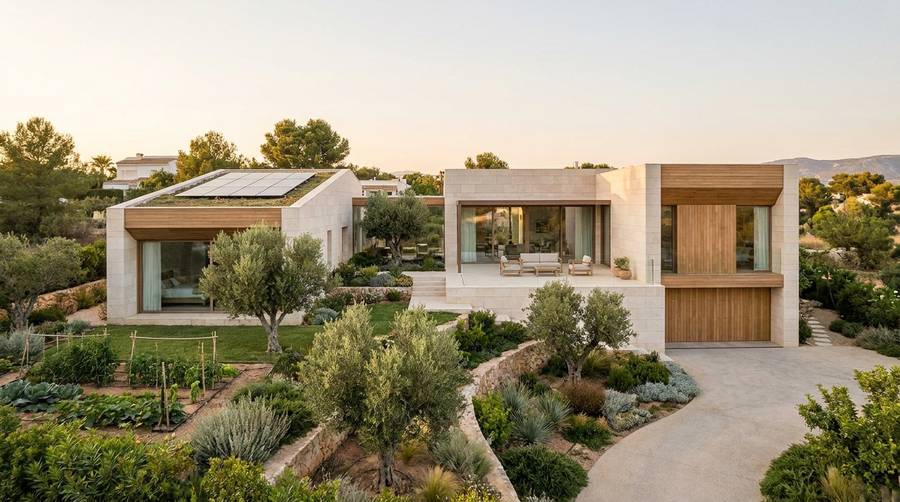
- A contemporary Mediterranean look consistent with local context.
They dismissed long, uncertain traditional builds early. The decision to industrialize came from wanting value certainty and timeline control.
Plot search and evaluation: key criteria for modular homes
Plot selection focused on three technical and legal checks that often derail projects:
- Clear access for transport and crane operations.
- Simple foundation needs (stable topography, no major retaining works).
- Local planning compatibility with modern, low‑rise housing and Passivhaus elements.
Early feasibility avoided surprises. A short soil report and a pre‑application meeting with the town hall cut risk and cost.
Choosing industrialization: technical, economic and environmental reasons
They chose a prefabricated approach for three measurable reasons:
- Short, controlled onsite time reduced weather delays and local disturbance.
- Factory quality control translated into fewer defects and faster commissioning.
- Material optimization and tighter assemblies improved long‑term energy performance.
Design and choice of construction system: materials and efficiency
The design phase balanced aesthetics, budget and performance. The project compared three systems before selecting the final solution.
Practical comparison: industrialized concrete vs light timber frame vs steel frame
Key trade‑offs considered:
- Industrialized concrete: high thermal mass, excellent acoustic performance, slightly higher embodied carbon but durable finishes with low maintenance.
- Light timber frame: low embodied carbon, fast dry assembly, excellent insulation potential and flexible interiors.
- Steel frame: precise geometry, large spans and good durability; requires thoughtful thermal breaks to avoid thermal bridging.
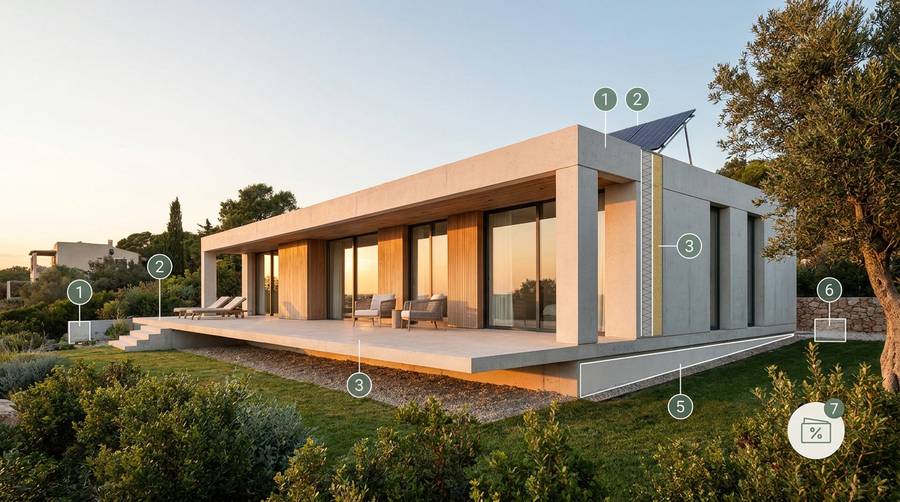
For this case, a hybrid solution was selected: industrialized concrete plinth and core for durability and acoustic control, with a light timber envelope to maximize insulation and reduce embodied carbon in the upper levels.
Integrating Passivhaus and energy efficiency strategies
Design choices focused on passive measures first. The implemented strategies included:
- Compact form and optimized orientation to reduce solar gains in summer and capture winter sun.
- High‑performance continuous insulation with airtightness targets below 0.6 ACH at 50 Pa.
- Mechanical ventilation with heat recovery sized to the dwelling and verified in a blower‑door test.
These actions reduced heating demand dramatically and allowed smaller mechanical systems, lowering both capital and operating costs.
Interior design and layout tuned for comfort and cost
The interior prioritized daylight, cross‑ventilation and simple, durable finishes. Choices that saved money without compromising quality:
- Open plan living to reduce corridor area and construction complexity.
- Standardized module widths to align with factory panel dimensions and avoid waste.
- Locally sourced natural finishes—wood and lime‑based renders—for a Mediterranean feel.
The turnkey process in action: schedule, milestones and coordination
Turnkey meant the client had one contract and one timeline to track. That single point of responsibility proved decisive in keeping the project fluid.
Main phases: design, manufacturing, transport and assembly
The process was divided into four controlled phases:
- Detailed design and permits (8–10 weeks).
- Factory production of panels and components (10–12 weeks).
- Transport and on‑site assembly (2–4 weeks).
- Finishes, commissioning and handover (4–6 weeks).
Each phase had fixed acceptance criteria and a clear sign‑off to prevent scope creep.
Real timeline from the case: committed vs delivered
The contractual commitment was 26 weeks from production start to turnkey delivery. The achieved timeline:
- Design and permits: 9 weeks.
- Factory production: 11 weeks.
- Transport and montage: 3 weeks.
- Final finishes and commissioning: 3 weeks.
Total: 26 weeks—delivered on schedule. The tight coordination between factory and site reduced weather‑related risk and kept a fixed price intact.
Supplier management and client communication during the build
Successful coordination relied on three operational rules:
- Weekly progress updates with photos from the factory and site.
- Standardised checklists for quality control at every handover point.
- A dedicated project manager as a single contact for the client.
Transparency and cadence in communication reduced client anxiety and prevented last‑minute change requests that drive up cost.
Costs and financing: how the home was made affordable
Cost predictability was a primary motive. The project used a fixed turnkey contract with a clear cost allocation.
Real cost breakdown: manufacturing, civil works, finishes and extras
Approximate distribution of final contracted costs (percentages for clarity):
- Factory manufacturing and systems: 45%.
- Foundations, civil works and site preparation: 20%.
- Interiors and finishes: 20%.
- Transport, crane and assembly: 8%.
- Contingency and permits: 7%.
Keeping the design aligned with standard module sizes lowered manufacturing waste and reduced material cost by an estimated 8–12% versus a bespoke approach.
Financing options and self‑build mortgages in Spain (2026)
Common routes used by the owner:
- Construction mortgage for self‑builders with staged payments linked to milestones.
- Combination of a land mortgage and a separate completion loan.
- Bank financing validated by a turnkey contract and factory production schedule, which lenders value as risk‑mitigating.
For autopromoters in 2026, demonstrating a turnkey contract and factory series production improves access to competitive terms.
Strategies to keep a fixed price and avoid overruns
Actions that preserved budget certainty:
- Locking finishes and change windows before production start.
- Using standardised modules to avoid bespoke fabrications.
- Allocating clear responsibility for civil works versus factory scope in the contract.
Measurable results and evidence of success
Numbers matter. This section summarises the key measurable outcomes for the project.
Key metrics: time saved, cost savings and achieved efficiency
- Time to delivery: 26 weeks from production start to handover, compared with 18–24 months typical for traditional builds.
- Budget variance: final cost matched contracted turnkey price within a 1.5% margin.
- Energy performance: preliminary modelling showed heating demand under 15 kWh/m²·year after commissioning.
These metrics translated into tangible homeowner benefits: lower energy bills, predictable borrowing costs and immediate occupancy.
Owner satisfaction: testimonials and post‑delivery evaluation
The owners rated their experience highly for three reasons:
- Predictability: “We could plan life events because the date never moved.”
- Comfort: consistent indoor temperatures and quieter interiors than their previous masonry home.
- Aftercare: a clear defects period and responsive service from the project manager.
Comparison with equivalent traditional construction: costs and carbon footprint
When compared to a similar-size traditional house built locally, the prefabricated solution showed:
- Lower operational energy demand due to improved envelope and ventilation systems.
- Comparable or slightly lower total costs once time‑to‑occupancy and financing costs were included.
- Reduced onsite emissions and waste because most works occurred under factory conditions.
Lessons learned and recommendations for future self‑builders
The case provides practical takeaways for others looking to industrialize their home.
Common mistakes and how to avoid them
- Late changes: freeze main material and layout decisions before production starts.
- Underestimating site logistics: confirm access and crane requirements early.
- Overlooking interface responsibilities: define civil vs factory scope clearly in the contract.
Practical tips to negotiate turnkey contracts and ensure transparency
- Request detailed milestone payments tied to verifiable deliveries.
- Insist on quality checklists at each handover and a clear defects liability period.
- Require factory QA records and a final blower‑door test as part of the acceptance package.
How to scale the project: expansion, maintenance and resale
Industrialized homes can be designed for future adaptability. Recommended strategies:
- Plan structural frames for easy vertical or horizontal extensions.
- Document maintenance schedules and component sources for future buyers.
- Keep a digital dossier with as‑built drawings and factory certificates to simplify resale.
The project legacy: everyday life, sustainability and next steps
The house quickly became more than a building; it changed daily life. Lower bills, better comfort and a calm delivery process improved the owners’ quality of life.
Impact on quality of life and the local community
The reduced construction time and lower site disturbance were welcomed by neighbours. The finished home blended with the local Mediterranean fabric and improved street quality.
Environmental contribution: carbon reduction and long‑term benefits
By combining low‑carbon timber elements with efficient systems and smaller mechanical equipment, the house achieved a reduced life‑cycle footprint and lower operational emissions—benefits that compound over decades.
Next steps to replicate this model and widen affordability
To scale the model and make modular homes more accessible, recommended actions include:
- Promoting standardised module libraries to reduce design time and cost.
- Aligning finance products with factory production milestones to lower lending risk.
- Sharing verified case studies and real metrics to increase market confidence—like this one.
For a practical primer on the advantages of industrialized housing, see Casa prefabricada: 6 razones para elegir vivienda industrializada for complementary guidance.
If you’re planning a self‑build, start by defining your non‑negotiables and secure a turnkey pathway that protects schedule and cost. When you pair clear priorities with industrialised methods, you can build faster, greener and with real budget certainty—turning the dream of a Mediterranean home into a predictable project.
If you want, we can review your plot constraints and financing options and outline a tailored turnkey plan based on this model.
Artículos relacionados
Modular Housing in Spain: 6 Reasons to Choose Industrialized Homes
Modular housing offers predictable costs, faster delivery and modern materials that cut energy use and carbon. This guide gives six practical reasons—backed by metrics, a case study and a turnkey checklist—for choosing industrialized homes in Spain today.