Industrialized Housing Guide: How to Design a Home in Spain 2026
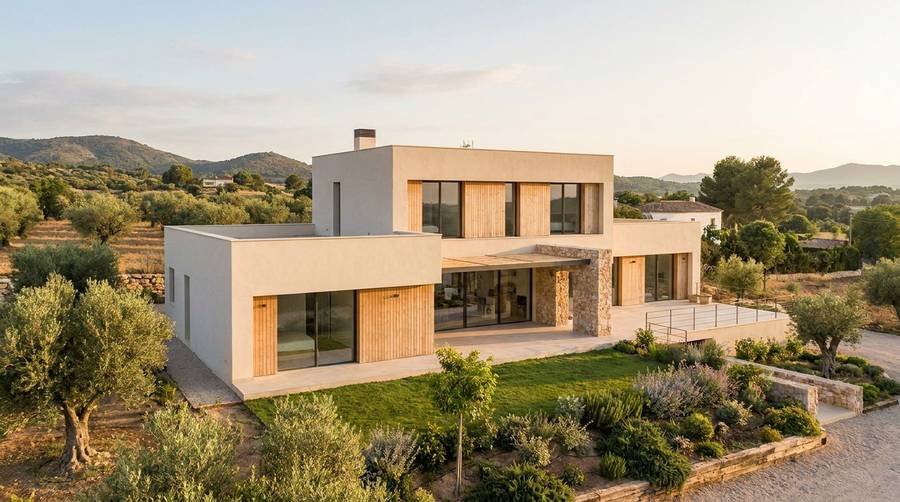
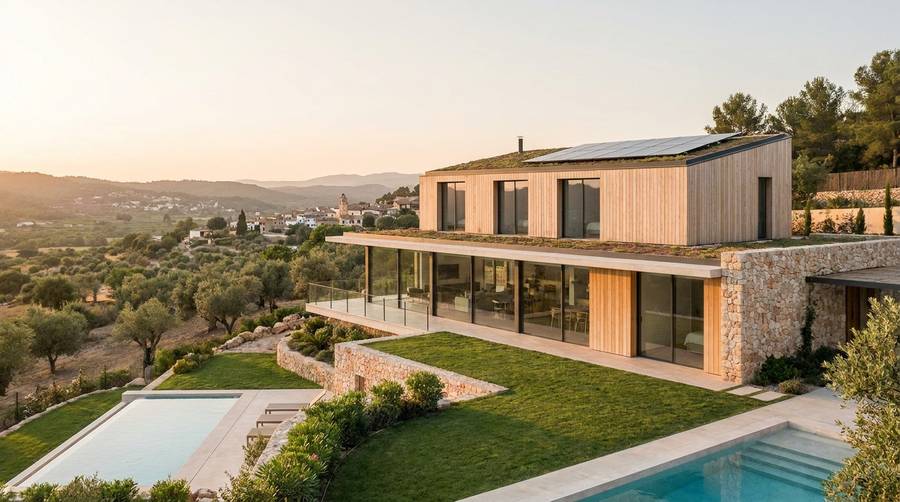
It started as a tight deadline and a fixed budget—but the family moved in before winter, with energy bills cut by half. This guide shows how that is possible today with an industrialized approach to housing in Spain.
Why choose an industrialized home in Spain today
Industrialized housing is not a marketing buzzword: it is a different delivery model that shifts complexity from the build site to a controlled factory environment. For Spanish self-builders this model delivers three concrete benefits: predictable costs, shorter and guaranteed on-site times, and higher quality control.
Advantages versus traditional construction: efficiency, fixed schedules and fixed price
- Predictable pricing: Factory workflows and repeatable assemblies reduce variability. Contracts usually include a fixed price for manufacture and installation, reducing contingency overruns.
- Shorter on-site time: Typical on-site assembly ranges from 2 to 8 weeks for a single-family home, depending on foundation complexity and finishes.
- Higher quality control: Climate-controlled production enables tighter tolerances, fewer defects and simplified QA than open-site build.
Sustainability and energy efficiency: Passivhaus and carbon reduction
Industrialized systems are particularly suited to meet Passivhaus criteria because factory assembly allows superior airtightness, consistent insulation installation and integrated thermal bridges control. Choosing efficient systems can reduce operational energy by 70–90% compared with older Spanish stock and lower embodied carbon when materials and logistics are optimized.
Measured case studies show industrialized homes achieving space heating demands below 15 kWh/m²·year when designed to Passivhaus principles and executed in factory conditions.
Real cases and metrics: delivery times, average costs and client satisfaction
From 2019–2024, several Spanish projects documented average delivery from contract to keys between 8 and 14 months for turnkey packages. Typical turnkey costs for a high-quality 120 m² home in 2025 ranged between €1,400–€1,900/m² depending on finishes and site complexity. Post-occupancy satisfaction surveys report higher satisfaction in thermal comfort and fewer defects at handover vs traditional self-builds.
First steps: find a plot and review planning constraints
Before choosing systems or finishes, secure a plot and clarify what is allowed. Early site analysis prevents costly redesigns.
How to check municipal rules and buildability
- Consult the municipal urban plan (PGOU) and local building ordinances for permitted land use, maximum buildable area and height limits.
- Request a pre-application report (in some municipalities named 'informe urbanístico') from the town hall to confirm key constraints.
- Consider servitudes, protected trees and archaeological overlays which can delay approvals.
Site conditions that affect industrialized design
- Access: Truck and crane access dictates panel or module sizes and logistics windows.
- Topography: Slopes increase foundation complexity; modular systems can adapt but cost rises with bespoke foundations.
- Soils and groundwater: A geotechnical report is essential to size foundations and avoid surprises on assembly day.
Project planning with a turnkey mindset
Engage a turnkey provider or an architect experienced in modular projects early. A coordinated team will integrate factory lead times, utility connections and site works into a single schedule and identify long-lead items (windows, MVHR, special finishes).
Design and choosing a construction system
System selection is the most impactful decision: it determines cost, thermal inertia, acoustic performance and the building’s lifecycle carbon footprint.
Practical comparison: industrialized concrete vs steel frame vs light timber frame
- Hormigón industrializado (precast concrete): High thermal mass, excellent durability, and sound insulation. Suited for Mediterranean climates where temperature swings matter. Slightly higher transport weight and sometimes longer manufacturing lead times.
- Steel frame (steel frame): Fast production, long clear spans, ideal for complex geometries. Steel requires attentive thermal bridge treatment and careful detailing for Passivhaus levels of airtightness.
- Light timber frame (entramado ligero de madera): Low embodied carbon, excellent thermal performance when coupled with thick insulation, and rapid factory assembly. Vulnerable to moisture if detailing fails, so rigorous moisture strategy is essential.
Bioclimatic design and applying Passivhaus to industrialized homes
Key principles to implement from the start:
- Compact form and solar orientation: Prioritise southern glazing for passive gains; use shading to avoid summer overheating.
- Airtightness and continuous insulation: Factory-fitted airtight layers reduce on-site risk of poor detailing.
- Mechanical ventilation with heat recovery (MVHR): A must for balanced indoor air and energy efficiency in airtight homes.
Interior and exterior design choices that influence cost and performance
- Window specification: triple glazing with warm-edge spacers increases cost but cuts heating demand significantly.
- Facade systems: prefabricated rainscreen panels add cost but simplify long-term maintenance and improve thermal continuity.
- Finish levels: defining a clear scope for turnkey (e.g., fitted kitchen, landscaping) prevents scope creep.
Factory workflow and on-site assembly: step by step
The predictable production pipeline is the industrialized model’s core advantage. Understanding each stage helps manage expectations and risk.
Factory phases: prefabrication, QA and logistics
- Design freeze: Final 3D model and production drawings signed off before manufacturing.
- Component fabrication: Walls, floors and roof panels or volumetric modules are produced under controlled conditions.
- Quality control: Factory testing of airtightness membranes, window installation and structural connections reduces on-site fixes.
- Logistics planning: Just-in-time delivery windows are arranged to minimize on-site storage and crane time.
On-site assembly and coordination for turnkey delivery
- Foundation works and utility trenches prepared while components are built.
- Cranes install modules or panels; mechanical, electrical and plumbing (MEP) connections are coordinated to follow a tight sequence.
- External finishes, landscaping and final commissioning complete the handover.
Sample schedule and risk management to avoid delays
Typical timeline for a 120–150 m² turnkey home: 0–3 months design & permits; 2–4 months factory production; 1–2 months site assembly and finishes; total 5–9 months from permit to keys when synchronized well. Key risks: permit delays, unforeseen groundworks, and late changes to finishes. Mitigation: early geotech, fixed scope contracts, and reserve contingency for site-specific works.
Costs, financing and options for self-builders
Transparent budgets and suitable finance routes are essential to move from idea to keys with confidence.
Detailed budget breakdown: construction, transport, finishes and certifications
- Factory manufacture and module/panel cost: typically 45–60% of turnkey price.
- Foundations and site works: 10–20% depending on soil complexity.
- Transport and crane: 4–8% depending on distance and access.
- Finishes, MEP and landscaping: 15–30% depending on spec level.
- Certifications and energy assessments: include Passivhaus or EPC costs early (0.5–1% of budget).
Self-build mortgages and specific financing for modular homes
Spanish banks offer self-build (autopromoción) loans that release funds in tranches linked to project milestones. For industrialized housing, presenting a turnkey contract, factory production schedule and warranty package increases lender confidence and improves conditions.
How to present your project to a bank: documents and metrics that persuade
- Signed turnkey contract with detailed payment schedule.
- Production and delivery timeline from the factory.
- Energy performance projection (kWh/m²·year) and expected running costs.
- Guarantees: structural and airtightness warranties from the manufacturer.
Warranties, certifications and long-term maintenance
Durability and clear aftercare are central to preserving value and performance.
Recommended certifications and energy labels
- Passivhaus certification or PHI-approved components for deep energy performance.
- National EPC (Certificado de Eficiencia Energética) and optional third-party sustainability labels.
- CE markings for manufactured components and ISO quality references for factories.
Factory warranties and after-sales for turnkey projects
Ensure your contract specifies the length and scope of factory structural warranties, leak and airtightness remediation procedures, and response times for post-occupancy issues.
Preventive maintenance to preserve efficiency and resale value
- Annual MVHR filter changes and commissioning checks.
- Exterior inspections for sealant joints, drainage and shading systems.
- Periodic performance checks: thermal imaging and airtightness tests after two years to verify no degradation.
Action plan: start your modular housing project today
Concrete, step-by-step actions reduce uncertainty and speed up decision-making.
Practical checklist from plot to keys
- Secure the plot and obtain a geotechnical report.
- Request an urban pre-check from the municipality.
- Choose three factory partners and request sample schedules and warranties.
- Develop a fixed-scope turnkey proposal including MEP and landscaping.
- Apply for self-build financing with the turnkey contract and production timeline.
Contract models and key negotiation points with the factory or developer
- Insist on a clear change-order process with pricing and deadlines.
- Define acceptance tests at handover: airtightness threshold, MVHR commissioning and final snag list timings.
- Include liquidated damages or completion guarantees to protect delivery dates.
Brief case studies: timelines, costs and takeaways
- Case A: 110 m² light timber frame Passivhaus. Permit to keys: 7 months. Cost: €1,650/m². Outcome: airtightness 0.35 ACH @50Pa, heating demand 12 kWh/m²·year. Lesson: early MVHR supplier involvement improved commissioning speed.
- Case B: 140 m² precast concrete home. Permit to keys: 9 months. Cost: €1,850/m². Outcome: excellent acoustic performance and low maintenance. Lesson: transport logistics added 6% to budget—plan crane windows early.
Closing thoughts and next steps
Industrialized housing gives self-builders in Spain a practical path to high-quality, energy-efficient homes delivered on schedule. Focus your effort on site analysis, choosing the right system for climate and lifestyle, and securing a turnkey contract with robust warranties.
Ready to move from idea to project? Start by requesting a production schedule and a fixed-scope turnkey quote from a factory partner—compare three offers and verify warranties and energy projections before committing.
Take action: gather your plot documentation, a geotechnical report and a simple brief. With these you can obtain realistic turnkey proposals and realistic financing offers to begin your industrialized housing project with confidence.