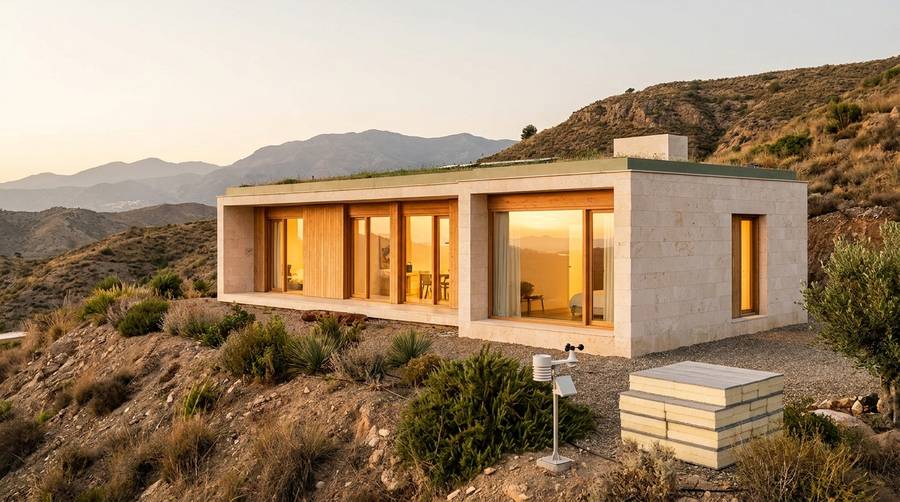
Passivhaus Industrialized Homes in Spain
Why Passivhaus industrialized homes will set the standard for resilient housing
The next decade will separate speculative construction from resilient, measurable performance. For families and autopromoters in Spain, choosing an industrialized Passivhaus approach is now a decision driven by hard metrics: reduced energy bills, predictable timelines and a smaller carbon footprint—especially in climates with heat extremes or cold snaps.
Buildings constructed to Passivhaus standards can cut operational energy use by up to 90% versus typical stock, while industrialized delivery reduces on-site time by 40–60%—a combination that changes both risk and economics.
Evidence and adoption trends: 2026–2035 projections
Industry data and pilot projects across southern Europe show steady uptake of industrialized Passivhaus solutions. Expect annual growth in certified projects of 10–20% through 2030 as regulations tighten and lenders recognize predictable performance. The convergence of digital design, factory-controlled quality and energy regulations creates a runway for scale.
Measurable benefits in hot and cold climates
Quantified gains:
- Operational energy reduction: 70–90% against Spanish building code minimums in monitored cases.
- Comfort: indoor temperature swings reduced by 60–80%, improving occupant health and productivity.
- Carbon: lifecycle emissions drop significantly when industrialized processes reduce waste and optimize material use.
Implications for industrialization: time, cost and standardization
Industrialization trades bespoke on-site uncertainty for repeatable factory processes. The results: shorter build cycles, fixed-price offers and easier quality assurance. Standardization of floor elements and interfaces accelerates permitting and reduces design risk—critical in extreme climate adaptations.
Industrialized design principles for extreme climates
Good design starts with envelope-first thinking. In extreme heat or cold, passive measures define required active system sizing, cost and comfort.
Passive strategies: envelope, airtightness and orientation
Key interventions for Spanish climates:
- High-performance envelope: continuous insulation, thermal breaks and minimized thermal bridges.
- Airtightness: target 0.6 ACH50 or better for Passivhaus—and verify with door-to-door testing.
- Solar control and orientation: deep shading, dynamic glazing or fixed overhangs to balance winter solar gains and summer overheating.
Material selection: concrete, light timber frame and steel frame
Modern industrialized projects in Spain use three primary systems—each with trade-offs:
- Industrialized concrete: excellent thermal mass for diurnal swing damping in hot climates; high initial embodied carbon unless low-cement mixes or recycled aggregates are used.
- Light timber frame: low embodied carbon, fast assembly and high thermal performance with good insulation detailing; excellent for scalable factory production.
- Steel frame (steel frame): precise tolerances, thin buildups and recyclability; requires robust thermal breaks to avoid bridges.
Choose system based on local climate, budget, and lifecycle carbon targets. Hybrid solutions (timber with concrete slabs) often balance mass and low carbon.
Active systems integration: ventilation, solar control and smart management
In Passivhaus industrialized homes, active systems are downsized but critical:
- MVHR (Mechanical Ventilation with Heat Recovery): non-negotiable in high-airtightness builds—choose units with seasonal performance curves matching Spanish summers and winters.
- Solar PV and thermal: pair PV with smart loads and battery sizing informed by simulated yearly production.
- Controls: building automation for ventilation schedules, dynamic shading and heating backup reduces waste and improves occupant control.
How to plan a turnkey Passivhaus industrialized home in Spain: step-by-step
Turnkey in industrialized housing means clarity from plot purchase to keys in hand. Below is an actionable path for autopromoters in 2026.
From plot to project: climatic and regulatory criteria
Before buying a parcel, evaluate:
- Aspect and solar access across seasons.
- Local microclimate (sea breeze, wind patterns, temperature extremes).
- Municipal constraints: building envelope, maximum height and local energy codes.
Include early-stage energy modeling to ensure the plot can deliver required solar gains or shading strategies.
Industrialized process and realistic timelines
Typical timeline for a turnkey industrialized Passivhaus:
- Design & permits: 3–6 months (shorter if using standardized modules).
- Factory production: 6–10 weeks (panelized elements) to 12–16 weeks (complex assemblies).
- On-site assembly and commissioning: 4–8 weeks for a typical single-family home.
Reality check: Expect total project duration from purchase to handover of 7–10 months in efficient programs. These figures contrast with 18–30 months for bespoke traditional builds.
Financing and permits: mortgages for self-build and modular options
Autopromoters can access specific mortgage products for self-build projects—lenders increasingly recognize modular and industrialized projects as lower risk due to fixed prices and timelines. Key advice:
- Prepare a staged payment schedule tied to factory milestones.
- Secure a cost-contingency buffer (5–8%) for permits and site conditions.
- Document factory quality assurance and warranty packages for lender confidence.
Comparisons: industrialized Passivhaus vs traditional construction
Numbers matter when evaluating choices. Here are comparative metrics you can rely on.
Quantitative analysis: total cost, closed-site time and energy performance
Typical comparative ranges (single-family homes in Spanish climates):
- Upfront cost: modular Passivhaus can be similar or modestly higher (+5–12%) than conventional builds depending on finishes.
- Lifecycle cost: lower for Passivhaus due to energy savings—payback periods often 8–15 years depending on energy prices and incentives.
- Closed-site time: industrialized: 4–10 weeks; traditional: 20–40 weeks—this affects weather risk and financing costs.
When factoring warranties, reduced snagging and resale premiums for certified low-energy homes, the economic picture often favors industrialized Passivhaus for long-term owners.
Case studies with metrics
Representative projects show:
- Project A (Mediterranean coast): factory-panelled timber Passivhaus—onsite assembly 6 weeks, final consumption 1.8 kWh/m²·year for heating, client satisfaction 9/10.
- Project B (inland cold-snap region): concrete-panel Passivhaus—reduced peak heating load by 85%, total project time 9 months vs estimated 22 months traditional.
These measured outcomes validate both comfort claims and schedule predictability.
Risks and limitations by system
Be explicit about risks:
- Factory dependency: lead times can be affected by supply chain disruptions—mitigate with multiple suppliers.
- Site complexity: steep slopes or constrained plots may erode modular advantages.
- Integration risk: poor airtightness detailing at interfaces can nullify expected savings—insist on factory/site interface protocols and blower-door verification.
The resilient industrialized future: scenarios and practical recommendations
By 2030, expect a mature market where certifications, digital workflows and supply chains reduce cost and boost reliability.
Technologies and regulations shaping 2030
Key drivers:
- Digital twin and BIM-driven prefabrication for tighter tolerances.
- Stronger energy and carbon disclosure requirements pushing lifecycle assessments into procurement.
- Wide adoption of performance-based warranties.
Business models and supply chains to reduce cost and lead time
Successful models blend:
- Standardized product families for economies of repetition.
- Localized factories to cut transport and improve responsiveness.
- Partnerships with financial institutions offering tailored mortgage lines for industrialized self-builds.
Actionable checklist for autopromoters
- Request measured performance data and blower-door results from previous projects.
- Compare full lifecycle costs, not only capital expenditure.
- Insist on a fixed-price, milestone-based contract tied to energy performance targets.
- Verify factory QA protocols and on-site interface details before signing.
Social and environmental impact of industrialized Passivhaus housing
Beyond individual homes, the model scales to healthier, lower-carbon neighborhoods. Industrialized methods reduce waste, deliver predictable results and increase the availability of high-quality homes in challenging climates.
Carbon reduction and indoor health metrics
Monitoring studies consistently show lower CO2 concentrations indoors, improved air quality via balanced ventilation, and reduced drought stress on energy systems when homes are designed to Passivhaus levels.
Scalability and accessibility
Modular standardization allows faster replication of affordable, high-performance units—key for regions where climate stress is acute. Public programs and incentives can accelerate uptake and lower final costs per unit.
Policy levers and funding opportunities
Autopromoters should track national and EU incentives for low-carbon housing, as well as municipal fast-track permitting for certified projects. These instruments materially affect project viability.
A visionary close: immediate opportunities and next steps for builders today
If you plan to build within the next 12–24 months, start by benchmarking and demanding data. The market favors those who require measured performance, clear timelines and transparent financing.
Operational checklist to begin
- Obtain a site-specific energy pre-assessment within the first month.
- Shortlist manufacturers with documented Passivhaus projects and ask for references and blower-door certificates.
- Structure financing with milestone payments tied to factory production and successful commissioning.
How to evaluate suppliers in first meetings
Ask for:
- Full delivered-cost quotes, including transport and assembly.
- Performance guarantees and what remedies exist if targets are missed.
- Case studies with measured consumption and client contact details.
Resources and further reading
For technical details and common pitfalls in airtightness and ventilation, review Passivhaus ventilation failures and solutions and common airtightness issues in Passivhaus. These resources complement design decisions for extreme climates.
Ready to move forward? If you are researching a self-build, collect measured performance data from at least three completed projects, secure a credible factory partner and structure financing around fixed milestones. With the right team and data-driven approach, industrialized Passivhaus homes in Spain deliver predictable comfort, lower lifetime costs and genuine climate resilience.
Contact your project advisor to request a site assessment and start a data-based plan tailored to your plot and climate.