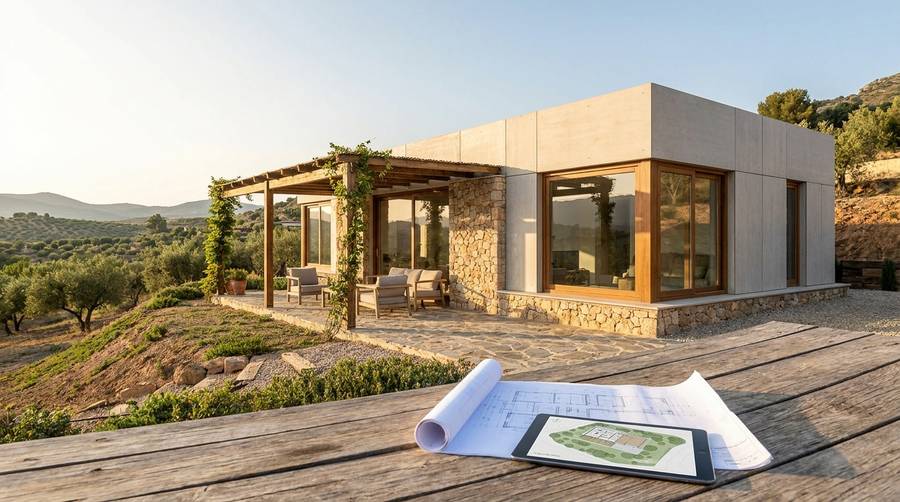
Modular Housing Mistakes: Common Errors & Fixes
Modular Housing Mistakes: Common Errors & Fixes
When a dream home becomes a timeline nightmare, a single misstep at the start can cost months and tens of thousands of euros. This guide cuts straight to the most frequent modular housing mistakes self-builders make in Spain and gives concrete fixes you can apply today.
Errors when choosing the housing type: prefabricated vs traditional
Choosing the right delivery model is a financial and technical decision, not a trend. Many autopromoters confuse upfront price with real lifetime cost and pick the wrong path for their parcel, budget and schedule.
Confusing initial price with total cost: how to calculate real costs and avoid surprises
- Factor in all phases: land purchase, groundwork, connections, access roads, taxes (IBI, VAT/IGIC vs ITP nuances), project management and contingencies (typically 8–15%).
- Compare apples to apples: a fixed-price modular quote often excludes site-specific works. Ask vendors for a line-by-line cost breakdown tied to milestones.
- Cashflow matters: modular factories bill in production stages. Map expected payments against your mortgage drawdowns or lender schedule to avoid funding gaps.
Perception error about quality: technical criteria and metrics to assess materials
Quality is measurable. Use these metrics when evaluating proposals:
- Thermal transmittance (U-values): request U-values for walls, roofs and windows.
- Structural certification: CE marks, Eurocode compliance and third-party test reports for panels or frames.
- Acoustic performance (Rw): relevant in rural plots near roads or neighbors.
- Factory QA: ISO 9001 or similar systems reduce assembly rework.
Practical solution: decision checklist by parcel, budget and timelines
Use this three-step filter:
- Parcel suitability: slope, access, connection costs & planning constraints.
- Budget realism: base modular quote + site works + 12% contingency.
- Timeline tolerance: need for rapid delivery (6–9 months) favors modular; flexible timelines may suit traditional.
Failures selecting materials: from aesthetic choices to structural issues
Material choices determine performance for decades. A pretty cladding can hide a poor thermal bridge or a maintenance nightmare.
Choosing materials without considering climate and energy efficiency: consequences and fixes
- Consequence: wrong cladding or insufficient insulation leads to condensation, higher bills and occupant discomfort.
- Fix: prioritize continuous insulation strategies and ensure details at junctions (window reveals, roof-wall junctions) are tested or detailed by your designer.
- Actionable check: demand 2D/3D thermal bridge studies for critical junctions on your project.
Underestimating modern systems (industrialised concrete, light timber framing, steel frame): advantages and how to integrate them
Each system has clear strengths:
- Industrialised concrete: durability and thermal mass—good for acoustic and passive gains in inland climates.
- Light timber frame: speed, low embodied carbon and excellent thermal behaviour when detailed correctly.
- Steel frame: precision, long spans and easier integration of services.
Integration tip: insist on a compatibility matrix from your supplier describing how their system connects to foundations, wet trades and claddings.
Practical solution: 10–30 year compatibility & maintenance guide
- Create a one-page maintenance schedule for each material (annual, 5-year, 10-year tasks).
- Require material warranties and transfer them in the contract.
- Ask for historic case studies with measured performance over 5–10 years.
Planning errors in the turnkey (llave en mano) project
A vague turnkey contract is the fastest route to argument and delay. Clear scope and milestones protect both parties and keep the project moving.
Not defining clear scope: what to include and exclude in a turnkey contract
- Must be explicit: site preparation, connections to mains, access improvements, landscaping, fixtures and appliances.
- Exclude surprises: list exclusions—fence work, retained trees, contamination remediation—so they can be priced or negotiated separately.
- Performance specs: include target U-values, airtightness (n50), and finishes grade.
Poorly managed dates and deadlines: how to set realistic milestones and sensible penalties
- Use factory lead times plus a realistic buffer for transport and on-site assembly.
- Link payments to verifiable milestones: factory completion, delivery, watertight sign-off, final fit-out.
- Include liquidated damages but cap exposure to avoid adversarial relationships; prefer incentives for early delivery.
Practical solution: minimum planning template and essential documents
At minimum require these documents in the contract package:
- Detailed Gantt with critical path.
- Factory QA checklist and on-site inspection plan.
- Third-party inspection clauses for structural and thermal tests.
Common problems in energy efficiency and sustainability
Sustainability claims are only useful when backed by measurable performance. Many homes marketed as 'eco' fail under inspection.
Overlooking Passivhaus demands and airtightness: symptoms and quick corrections
- Symptoms: cold walls, uneven heating, high energy use despite efficient systems.
- Quick corrections: blower-door testing pre-handover, localised sealing of penetrations, duct sealing and commissioning of MVHR systems.
- Longer term: add external continuous insulation or upgrade glazing if budget allows.
Confusing sustainable materials with low-carbon solutions: indicators to check
- Check embodied carbon data or EPDs (Environmental Product Declarations) where available.
- Assess life-cycle: a durable low-maintenance cladding may outperform a low-embodied alternative over 30 years.
- Verify source and treatment for timber to avoid greenwashing.
Practical solution: post-construction improvement measures and recommended certifications
- Run an energy model and compare predicted vs actual consumption in year 1.
- Consider certifications: Passivhaus, BREEAM or Verde for credibility and resale value.
- Simple retrofits: add ventilation heat recovery or improve airtightness for the biggest ROI.
Small corrective works before final handover typically cost less than 2% of the project budget but prevent large operational costs later.
Financial errors: financing and mortgages for self-builders
Finance is the lifeblood of a self-build; underestimate it and construction stalls. Lenders for autopromoción have specific documentation requirements.
Not preparing the mortgage file for self-build: essential documentation and how to get it
- Standard documents: detailed budget, phased payment schedule, architect’s certificate and building permits.
- Factory and supplier contracts: banks will request fixed-price contracts and delivery dates.
- Tip: obtain a pre-approval that covers the modular supplier payment schedule to avoid cash gaps.
Underestimating financial costs and contingencies: recommended margins and risk calculation
- Reserve a contingency of 10–15% for technical uncertainty; increase to 15–20% for complex sites.
- Include a buffer for interest rate increases if borrowing on variable terms.
- Model worst-case cashflow 3 times during project milestones to ensure liquidity.
Practical solution: financing options in Spain 2026 and negotiating with lenders
Options to explore:
- Self-build mortgage (hipoteca de autopromoción) with phased draws linked to certificates.
- Construction loans from specialized banks and cooperative lenders offering tailored terms.
- Negotiate: insist on lender clauses that accept modular factory certificates in lieu of traditional progress certs.
Failures managing the plot and permits in rural areas
Assuming regulatory silence is a common root cause of paralysing fines and delays. Rural plots vary widely in permitted uses.
Failing to validate local planning rules: how to avoid paralyses and fines
- Obtain a certified consulta urbanística or request a written statement from the town council about allowed uses.
- Check for protected landscapes, parcel classifications and sub-division limits.
- Hire a local architect familiar with municipal practice to speed approvals.
Problems with access, utilities and topography: essential prior checks
- Confirm legal access rights and road condition for heavy transport.
- Request topographical surveys and preliminary geotechnical report for foundation assumptions.
- Estimate connection costs: electrification, water, sanitation and telecoms can be surprisingly high in rural zones.
Practical solution: quick steps to validate a plot and administrative needs
- Order a topography + geotech and municipal land-use letter within the first 2 weeks of interest.
- Obtain quotes for access improvements and utilities before committing to the purchase.
- Keep a documented file for the bank and contractor to speed permits and approvals.
Project close-out and delivery mistakes that hurt client experience
Delivery without proof is a false finish line: paperwork, tests and communication secure long-term satisfaction.
Handing over without tests or certifications: checklist before final acceptance
- Structural sign-off, electrical and plumbing certificates, and airtightness test results.
- As-built drawings and product datasheets for every major system.
- Manufacturer warranties and maintenance manuals handed over in a single packet.
Poor post-delivery communication and weak warranties: how to secure and manage them
- Define reaction times for defects in the contract and keep a digital log for transparency.
- Negotiate minimum 2–5 year workmanship warranties and transferability clauses.
- Offer a 6–12 month commissioning visit to adjust systems and address user questions.
Practical solution: Findnido delivery protocol to ensure satisfaction and traceability
Adopt a simple handover protocol:
- Pre-handover checklist completed onsite with client.
- Documented tests (airtightness, commissioning) attached to the reception certificate.
- Post-handover follow-up at 1 month and 12 months to capture feedback and close minor issues.
For deeper design-stage traps and how to fix them, read our linked analysis on Errores al planear vivienda modular: soluciones prácticas and field corrections in Vivienda modular rural: errores frecuentes y cómo solucionarlos.
Final pragmatic checklist (what to do in the next 30 days):
- Obtain a detailed site feasibility (topo + geotech + access costs).
- Request full line-item quotes from at least two modular suppliers including site works.
- Prepare a financing file and seek pre-approval for a phased draw scheme.
- Insert airtightness and commissioning tests in the contract as deliverables.
Building industrialized housing in Spain is a strategic choice: done well, it delivers fixed prices, predictable timelines and excellent performance. Avoid the common mistakes above by making decisions with measurable criteria, documented responsibilities and a short list of non-negotiables. If you need a practical review of your package or help translating supplier proposals into bank-ready documentation, our team can review your file and suggest targeted corrections to keep your project on time and on budget.
Ready to take the next step? Request a technical review or a checklist tailored to your parcel and supplier proposals to prevent delays and cost overruns.