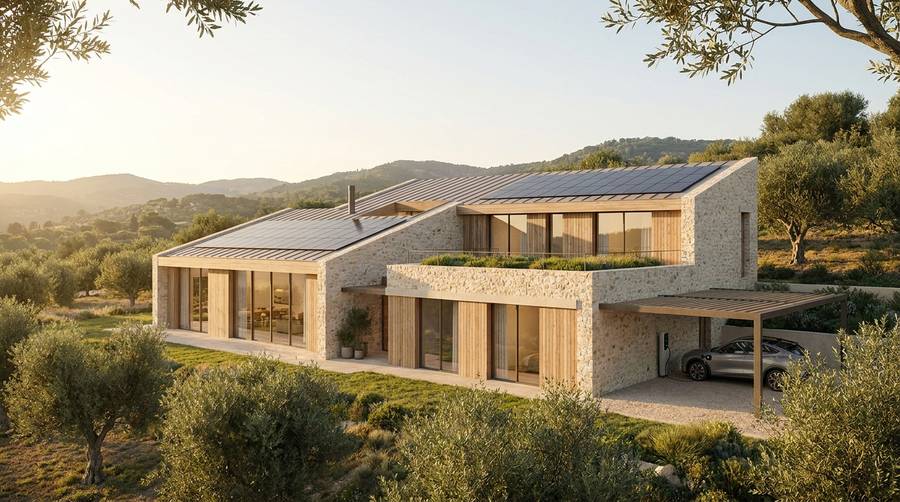
Industrialized Housing: 6 Reasons to Choose Modular Homes
Imagine moving into a finished, energy‑efficient home in months — not years — with predictable costs and a clear quality guarantee. That’s the promise of industrialized housing for Spanish autopromoters. This article cuts through marketing to give you six concrete reasons to consider modular and industrialized construction, backed by real metrics, design guidelines and a practical financing checklist.
1. Energy savings and carbon reduction: core reasons
Industrialized housing delivers measurable gains in energy use and lifecycle emissions. Precision manufacturing, better insulation and controlled site work reduce both construction and operational carbon compared with typical on‑site builds.
Comparative consumption: net‑zero homes vs traditional (key data)
- Operational energy: A well‑executed Passivhaus industrialized home can use 75–90% less heating energy than the Spanish average dwelling.
- Embodied carbon: Efficient modular methods typically cut on‑site waste by 60–80% and reduce embodied emissions per m2 by 10–25% versus fragmented conventional projects.
- Example metric: A 120 m2 modular Passivhaus in Mediterranean Spain can target primary energy use < 30 kWh/m2·yr, compared to 150–200 kWh/m2·yr for older stock.
How industrialization reduces emissions in construction and operation
Controlled factory production improves material yield and enables off‑site integration of high‑performance airtightness layers and insulation. That yields three practical benefits:
- Fewer delivery trips and on‑site activities reduce diesel use and waste handling.
- Higher workmanship consistency lowers thermal bridging and airtightness failures.
- Systems (ventilation, HVAC) can be factory‑tested to ensure designed performance on delivery.
Medium‑ and long‑term household savings
Lower operational energy translates directly into lower bills. Expect:
- Reduced heating/cooling costs by up to 70% in retrofitted design strategies; similar savings in new Passivhaus modular builds.
- Lower maintenance cycles due to better enclosure detailing and quality control.
Factory‑built precision combined with low‑energy design reduces both homeowner bills and the project’s carbon footprint — a win for budgets and climate.
2. Controlled costs and fixed timelines: economic predictability
Predictability is the single biggest financial advantage for autopromoters. Fixed‑price contracts and condensed schedules limit exposure to market volatility and delay costs.
Why fixed price and scheduling reduce risk
- Fewer variables on site: Less weather sensitivity and shorter civil phases lower contingency needs.
- Predefined scope: Factory assemblies are built to a detailed specification, reducing variation orders.
- Cashflow benefits: Shorter construction periods mean shorter borrowing windows and earlier occupancy income or savings.
Real example: typical schedule and delivery metrics
From multiple project benchmarks in Spain, a common timeline for a single detached modular home:
- Pre‑construction (design, permits): 3–6 months
- Factory manufacture: 6–10 weeks
- On‑site assembly and finishes: 4–8 weeks
- Total from contract to handover: ~5–8 months (variable by permitting)
Compare that to 12–24 months for many traditional self‑build projects where weather, subcontractor availability and material lead times create delay risk.
Negotiation keys to avoid overruns
- Insist on a detailed scope with list of inclusions and certified performance targets (airtightness, U‑values).
- Require staged payments tied to objective milestones: permits, factory completion, site assembly, final commissioning.
- Agree on a documented change‑order process and capped rates for extras to prevent open‑ended cost growth.
3. Construction quality with modern materials
Material selection drives durability, thermal performance and lifecycle costs. Three systems dominate modern industrialized housing in Spain: industrialized concrete, light‑wood framing, and steel‑frame.
Technical comparison: precast concrete, light timber frame, and steel frame
- Precast concrete: High thermal mass, excellent fire performance, low maintenance; heavier logistics and higher embodied carbon unless optimized.
- Light timber frame: Fast to produce, excellent insulation integration, low embodied carbon; requires rigorous moisture detailing.
- Steel frame: High precision and long spans; quick assembly and recyclable, but needs thermal break solutions to avoid thermal bridging.
Durability, maintenance and thermal behaviour
Choose materials based on a simple matrix:
- Coastal Mediterranean: Favor treated timber with proper claddings or concrete with breathable external systems.
- Interior continental: Steel or timber with generous insulation depth to manage seasonal extremes.
- Maintenance: All systems deliver low maintenance if detailing and protective finishes are specified at design stage.
Selecting materials for Mediterranean climate and sustainability
Prioritize systems that:
- Allow high thermal inertia where nights are cool (concrete or hybrid systems).
- Enable effective shading and cross‑ventilation for summer comfort.
- Use responsibly sourced timber or low‑carbon concrete mixes to reduce lifecycle emissions.
4. Comfort and performance: Passivhaus and efficiency
Passive design integrated into industrialized builds yields tangible comfort and quality‑of‑life gains. Air quality, acoustic comfort and temperature stability stand out.
Passivhaus principles applied to industrialized housing
- Tight envelope with controlled mechanical ventilation (MVHR).
- Continuous insulation and elimination of thermal bridges through factory detailing.
- High‑performance glazing and solar control tailored to orientation.
Bioclimatic design, airtightness and indoor air quality
Industrialized construction makes it easier to guarantee airtightness values (e.g., n50 ≤ 0.6 h‑1 when target is Passivhaus) because sealing layers are applied in controlled conditions. Complement this with:
- Heat recovery ventilation for fresh air and low energy demand.
- Local shading strategies (brise‑soleil, pergolas) to limit summer overheating.
Measuring performance: how to validate net‑zero potential
Verification steps:
- Commission MVHR and HVAC with measured flows and power draws.
- Perform blower‑door tests and thermal imaging at handover.
- Track first‑year energy bills and compare them to modeled performance; adjust systems as needed.
5. Turnkey process for Spanish self‑builders
A clear turnkey pathway simplifies the autopromoter’s role: focus on brief and site selection, let the team manage permits, factory work and handover.
Step by step: from plot search to keys in hand
- Site analysis and budget alignment.
- Concept design and performance targets (energy, materials).
- Permitting and approvals—prepare a permit pack aligned with factory modules.
- Factory manufacture while site groundwork proceeds in parallel.
- On‑site assembly, services connection and commissioning.
- Final certification, energy tests and handover.
Permits, supply coordination and quality control on site
Key controls to include in contracts:
- Defined tolerances for interfaces between factory modules and on‑site work.
- Testing milestones for airtightness, plumbing and electrical systems.
- Clear responsibility matrix for utilities and civil works.
Case study: timings, costs and client satisfaction (Findnido style)
Example project metrics from a recent Mediterranean single‑family modular delivery:
- Size: 130 m2, hybrid timber‑concrete shell.
- Total delivery time: 6 months from contract signature to handover.
- Construction cost: competitive with traditional build when factoring shorter financing periods and reduced overruns.
- Client satisfaction: post‑occupancy survey scored 4.7/5 for thermal comfort and build quality.
This case demonstrates how a turnkey approach concentrates risk with the provider while giving the autopromoter predictable outcomes.
6. Financing and launching your industrialized home
Financing autopromoted modular homes is increasingly mainstream. Spanish banks and mortgage products now include autopromoter loans and specific modular financing lines.
Financing options: self‑build mortgages and dedicated lines
- Stage‑draw mortgages: releases matched to project milestones (permitting, factory completion, assembly).
- Green mortgage incentives: reduced rates or bonuses for energy‑efficient certified homes (check local offers).
- Bridge loans for land purchase, converted to mortgage at completion.
Documentation and bank criteria for modular projects
Typical bank requirements:
- Detailed cost plan and fixed‑price contract with the supplier.
- Performance guarantees and test results (airtightness targets, thermal modeling).
- Construction schedule and proof of factory capacity.
Practical checklist to decide and start
- Define your performance targets (Passivhaus or other) and acceptable materials.
- Get at least two fixed‑price proposals with staged milestones.
- Secure pre‑approval for a stage‑draw mortgage and align the schedule to the lender’s release conditions.
- Include post‑occupancy performance verification in the contract.
Ready to take the next step? Begin with a site appraisal and a clear performance brief. A short feasibility review will reveal whether industrialized housing meets your budget, timescale and sustainability goals.
If you want, we can prepare a tailored feasibility summary for your plot and brief — a 30‑minute review that outlines expected timeline, likely costs and the best construction system for your climate.