Industrialized Housing: 7 Reasons to Choose Modular Homes
Imagine handing over a fixed budget and date, then opening the doors to a finished, energy‑efficient home months earlier than a conventional build. That scenario is now routine for many self‑builders choosing industrialized housing in Spain. This guide cuts through marketing claims and gives you the concrete reasons, metrics and steps to decide if modular construction is the right path for your self‑built home.
1. Why industrialized housing solves the supply‑demand gap
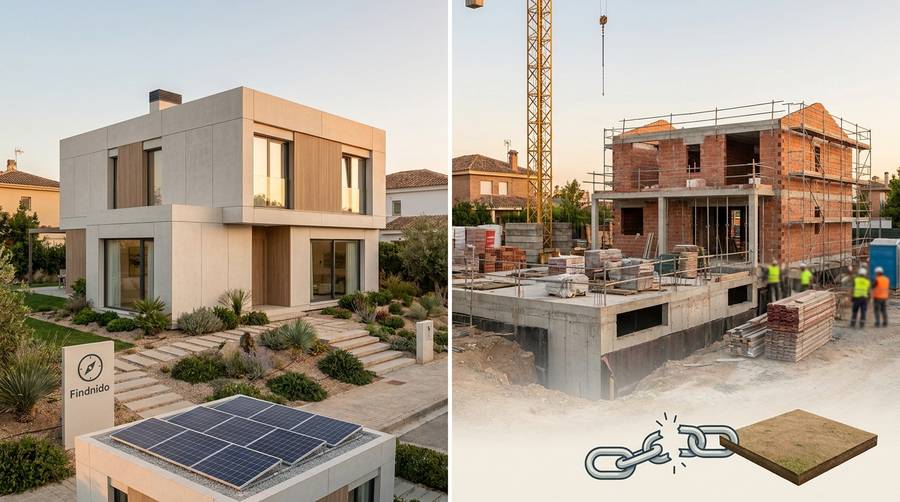
Shortages in available housing and long lead times on conventional builds are not temporary problems — they are structural. Industrialized housing targets the root causes by standardizing, scaling and de‑risking delivery.
Advantages vs traditional construction: time, cost and predictability
- Fixed-price contracts: Factory processes reduce on‑site surprises and allow tighter cost guarantees.
- Compressed schedules: Parallelize design and site works (foundations prepared while elements are manufactured).
- Quality control: Indoor fabrication reduces weather delays and variability in workmanship.
Impact on housing availability: speed to delivery and scalability
Industrialized methods scale horizontally. A modern plant can produce repeats or variants, enabling multiple deliveries per year versus one‑off traditional projects. For municipalities and developers, that means faster absorption of housing demand.
Evidence and data: quantified reductions in time and cost
- Typical reduction in on‑site labour time: 40–60%.
- Overall calendar from permit to handover: commonly 6–12 months for modular single‑family homes vs 12–24+ months traditionally (depends on approvals).
- Cost variance vs budget: industrialized projects report deviations under 5% more often than traditional projects.
Modular delivery shifts risk from unpredictable on‑site variables to controlled factory processes — and that difference shows up in both schedule and final cost.
2. Efficiency and sustainability: 5 measurable benefits
Choosing industrialized housing is not just about speed. It is an opportunity to deliver measurable performance gains across energy, materials and life‑cycle costs.
Energy savings and the Passivhaus approach: performance and certification
- Tighter envelopes: Factory sealing and precision reduce thermal bridging and air leakage.
- Predictable performance: Factory QA enables designs that reliably meet low‑energy targets and streamline Passivhaus certification.
- Operational savings: Passivhaus‑grade modular homes can cut heating/cooling energy by 70–90% compared to pre‑2000 stock.
Carbon footprint reduction: industrial materials and lifecycle thinking
Industrialized production enables selecting lower‑carbon materials and reusing optimized details. Examples include cross‑laminated timber frames, optimized reinforced concrete with recycled aggregates, and reduced waste through digital cutting. Measured lifecycle analyses show 20–40% lower embodied carbon in many modular assemblies vs poorly optimized conventional builds.
Long‑term economic benefits: energy, maintenance and resale
- Lower operating costs: Energy efficiency translates to concrete monthly savings and higher buyer appeal.
- Reduced maintenance: Controlled finishes and protected factory assembly reduce early defects.
- Value retention: Energy performance increasingly commands price premiums in resale markets.
3. Modern materials and systems that work in Spain
Spain’s climate and regulatory environment make several industrialized systems particularly relevant. Below are practical summaries to help you compare.
Industrialized concrete: durability, performance and use cases
Precast and industrialized concrete elements bring high thermal mass and longevity. They are ideal for coastal and high‑insolation sites where thermal inertia helps stabilise indoor temperatures. Use cases: ground floors, stair cores, loadbearing panels and façades with integrated insulation.
Light timber framing: climate fit and regulatory compatibility
Light timber frame (entrama do ligero) suits Mediterranean conditions when properly detailed for humidity and pests. Advantages: rapid assembly, excellent thermal performance when paired with continuous insulation, and reduced embodied carbon. Common configuration: timber frame + ventilated façade + breathable membranes.
Steel frame (steel frame): speed, flexibility and basic considerations
Steel frame systems offer high precision and large spans with reduced section sizes. They work well where architectural flexibility is required. Considerations: detailing for thermal breaks, corrosion protection in marine zones and coordination with acoustic requirements.
4. Turnkey process for self‑builders: 7 clear steps
Opting for a turnkey modular provider shifts many coordination burdens away from the promoter. Here is a practical 7‑step roadmap most successful projects follow.
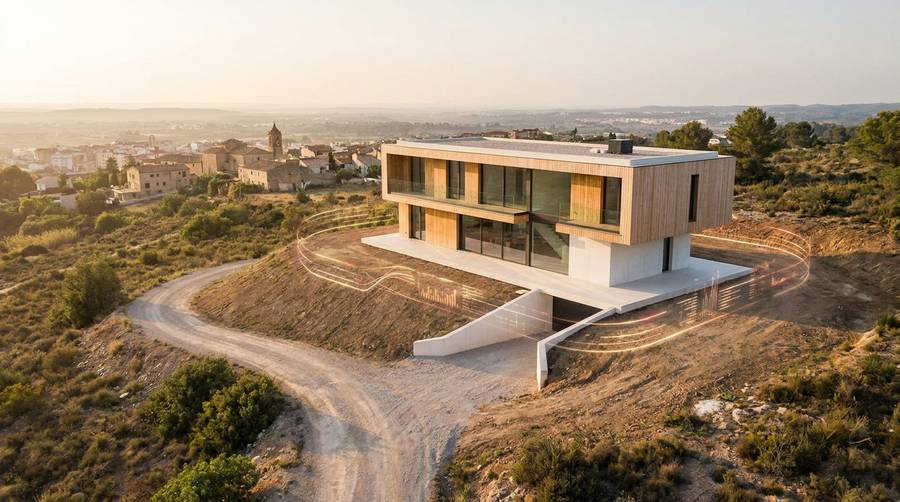
1) Search and validate the plot: restrictions, orientation and local permits
- Check land use, maximum buildable area, and local architectural requirements.
- Prioritise orientation and slope: good solar orientation reduces HVAC needs.
- Confirm access for transportation of modules (width, turning radius).
2) Preliminary design and feasibility: budget and program alignment
Define realistic sizes, target performance (e.g., Passive criteria), and a fixed budget envelope. Early engineering checks avoid costly redesigns later.
3) Planning and permits: coordinate documentation and timetables
Submit technical files and coordinate with local authorities. A turnkey provider often prepares the documentation and manages approvals as part of the package.
4) Detailed design and factory documentation: final specifications
Finalise finishes, technical systems and commissioning plans. Factory BIM and production drawings lock dimensions and interfaces.
5) Foundation and site prep (done in parallel with manufacture)
Foundations, utility connections and access are executed while modules are built. Frequent checks ensure tolerances align.
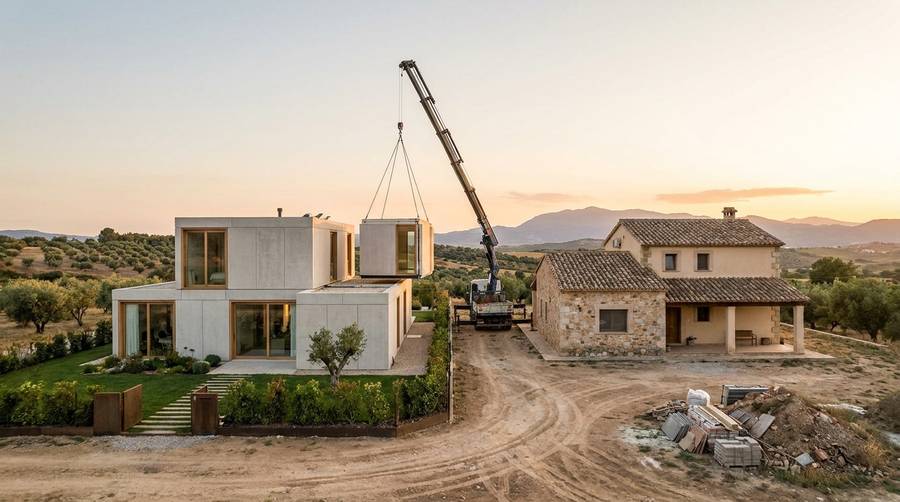
6) Manufacture, transport and on‑site assembly
- Typical factory build time for a single family home: 6–12 weeks.
- Transport windows depend on module size and local logistics; coordination avoids storage costs.
- On‑site assembly and enclosure: usually 1–4 weeks for a house.
7) Commissioning and handover: warranties and documentation
Final testing, energy commissioning and a documented handover package ensure you receive a ready‑to‑live house with predictable warranties.
5. Financing and mortgages for self‑built modular homes
Financing a modular self‑build blends elements of developer finance and traditional mortgage products. Understanding the options helps you structure cash flow and minimise risk.
Financing options: traditional mortgages vs self‑build loans
- Self‑build/intervention mortgages: staged disbursements linked to construction milestones (foundations, structure, completion).
- Developer loans or turnkey financing: some modular providers partner with lenders to offer a near‑mortgage structure for buyers.
- Bridge finance: used when you sell an existing property to fund early stages.
Documentation and requirements in Spain (2026): guarantees and valuations
Prepare the following: detailed budget, turnkey contract, project licence or application, timetable of disbursements, and independent valuation. Lenders will request guarantees for each tranche; turnkey providers that accept staged guarantees streamline this process.
Practical tips to negotiate terms and disbursements
- Ask for fixed milestones tied to deliverables (e.g., foundation ready, modules installed, envelope closed).
- Negotiate caps on contingency clauses and clear definitions of what constitutes completion.
- Seek lenders familiar with modular projects — they understand factory QA and reduced cost volatility.
6. Real cases and technical comparatives: metrics that matter
Numbers offer clarity. Below are concise case studies and guidance on interpreting common metrics.
Case study 1: timelines, final cost and client satisfaction
Project: 150 m2 single‑family home near Valencia. Key figures:
- Permits to handover: 10 months.
- Factory build: 8 weeks.
- On‑site assembly: 2 weeks.
- Final cost deviation from budget: +3% (mainly due to bespoke finishes).
- Client satisfaction: 8.9/10 after 12 months (surveyed on delivery, comfort and running costs).
Case study 2: technical comparison with a traditional equivalent
Comparable 140 m2 house built traditionally vs modular:
- Traditional: 18 months, 12–15% budget volatility, higher initial defects in first year.
- Modular: 9–11 months, ≤5% volatility, lower early defects and 25–40% lower heating demand due to improved envelope.
How to read the metrics: cost/m2, delivery time and social ROI
- Cost per m2 is useful but must include guarantees, systems and energy performance to be comparable.
- Time to occupancy is often the most tangible benefit for self‑builders — it reduces interim housing costs and financing interest.
- Social ROI includes predictable delivery, fewer local nuisances and earlier home occupation, which matter to municipalities and neighbours.
Final thought: Industrialized housing is not a one‑size‑fits‑all solution, but for most self‑builders in Spain it offers measurable advantages in predictability, sustainability and speed.
If you are planning a self‑build, start with a clear brief (size, performance target, budget) and ask turnkey providers for a project example that matches your criteria. Compare schedules, fixed‑price terms and warranty scope before committing.
Ready to evaluate a modular route for your land and budget? Request a comparative feasibility study from a trusted turnkey provider to see exact timelines, costs and performance for your plot.