Industrialized Housing Success: A Spanish Turnkey Case
From plot to home: a turnkey project that reset expectations
They thought a dream home would take years and endless surprises—until six months after the foundations began they were moving in. This case tells how a family in northern Spain used an industrialized, turnkey approach to build a high-performance home on time, on budget and with measurable sustainability gains.
Case summary: who, where and why they chose industrialized housing
The clients were a four-person family who bought a 700 m² plot on a suburban edge near a midsize city in Spain. Their priorities were clear: a fixed-price contract, a short, predictable schedule, and a house that met strict energy-efficiency targets. After comparing options, they selected an industrialized solution combining off-site production and on-site assembly to reduce uncertainty.
Client goals: schedule, budget and sustainability ambition
The family's brief specified a 140 m² three-bedroom home with a small studio, passive-sensible envelope performance, and a total project timeline from contract to delivery of 9 months. Financially, they wanted a single-price guarantee to avoid the overruns they feared from traditional builds.
Why this project inspires other self-builders in Spain
This case is instructive because it combines realistic constraints—planning rules, mortgage structuring for self-promotion, and a tight site—with transparent supplier coordination. The result is a replicable path for other autopromotores: clear milestones, documented savings and a finished home that looks and feels like a conventional Mediterranean house.
“We got a finished, energy-efficient home with certified performance and no last-minute cost shocks—exactly what we needed to feel secure as first-time self-builders.”
Initial context and diagnosis: the challenges of a self-build family
Starting point: plot search, planning and financing
The family selected a plot after six months of searching. Key constraints were local urban limits, a requirement for pitched roofs in the neighborhood, and a connection point for services 40 meters from the parcel boundary. Financially, they arranged a staged self-promotion mortgage, with tranches tied to milestones: planning approval, foundation completion, and handover.
Limitations of the traditional process they wanted to avoid
In early consultations they identified the common risks of conventional builds: variable subcontractor rates, unpredictable weather delays, and incremental change orders that inflate budgets. They also wanted to avoid prolonged on-site activity that disrupts neighborhood relations.
Decision for industrialized housing and selection criteria
The family chose a turnkey industrialized route based on three factors: (1) a fixed-price contract from a single provider, (2) a short, factory-driven production window to limit site exposure, and (3) the ability to achieve near-Passivhaus performance using contemporary materials—industrialized concrete elements for foundations and basement, timber frame for main envelope, and selective steel frame for long spans.
Key challenges faced at project start
Tight schedules and coordination of approvals
Licensing, geotechnical studies and service connections all had to be sequenced tightly. The team reduced delays through early engagement with the local town hall and by commissioning the geotechnical report during the design phase, so foundation solutions were ready when permits arrived.
Delivering Passivhaus-level efficiency within constraints
Achieving high energy performance required integrated work between architect, envelope engineer and MEP teams. They used thermal modeling early to avoid costly rework: insulation thicknesses, airtightness detailing and thermal bridge mitigation were decided before factory production began.
Cost control and financing transparency
To keep the budget predictable, the contract included an itemized fixed price and clearly defined change-order rules. The mortgage for self-promotion included contingency funds and was structured to release payments against verifiable milestones, ensuring cash flow without surprises.
The Findnido solution: turnkey process step by step
Design and selection of the construction system
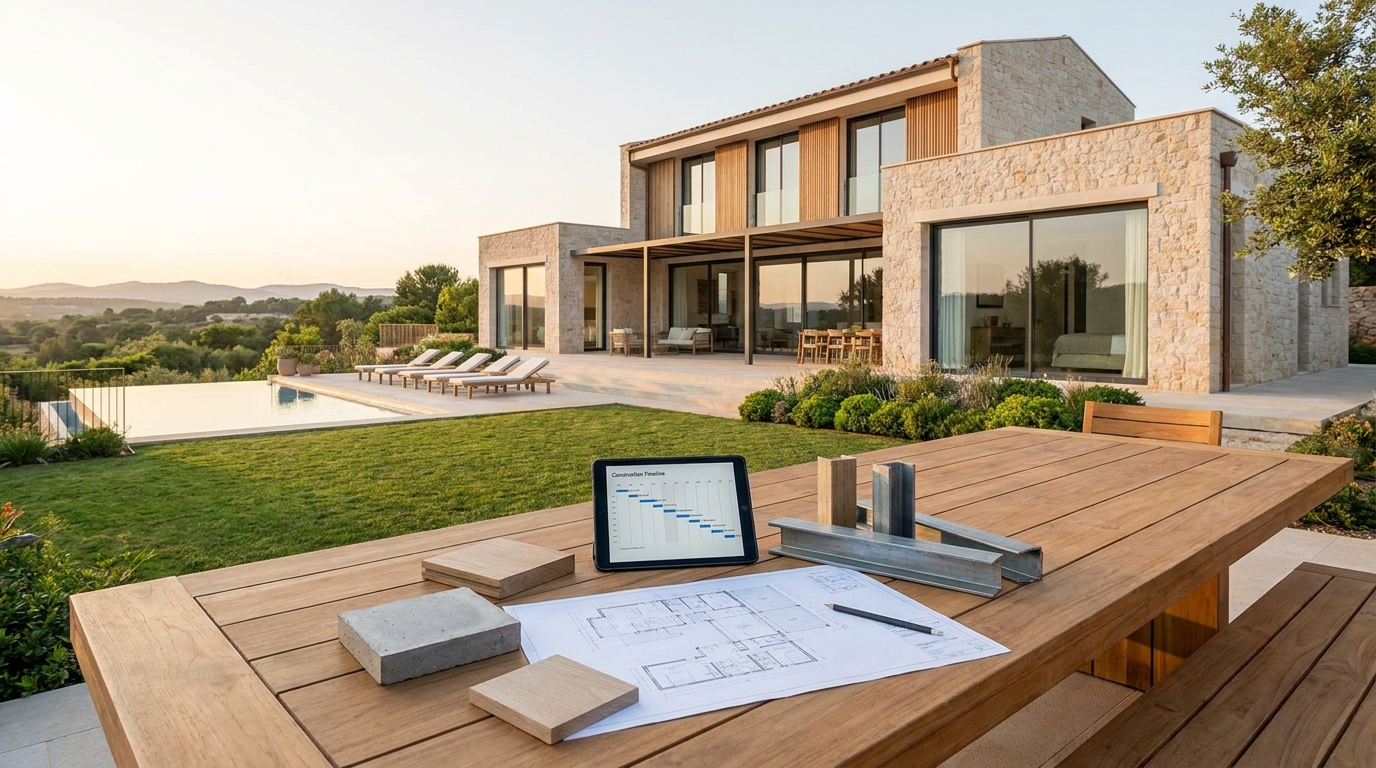
Why this hybrid approach? The project used industrialized precast concrete for the basement and structural bases, light timber frame for most of the envelope, and steel frame elements to span the living area. This mix delivered three advantages: structural robustness where needed, fast on-site assembly, and high thermal performance with less onsite moisture risk.
- Precast concrete: controlled quality for foundations and plinths.
- Light timber frame: quick panels with integrated insulation and service cavities.
- Steel frame: efficient long spans and slimmer profiles in open-plan zones.
Industrial production and logistics: fixed timelines and on-site assembly
Factories produced the panels and modules under schedule. Logistics were planned to the day: deliveries met the assembly window, minimizing on-site storage and neighborhood disruption. The on-site assembly phase lasted five weeks from delivery to roof on, enabling fast weather-protected work for finishes.
Handover and aftercare: quality control and certifications
Before handover, the team performed airtightness tests and energy commissioning. The project secured an energy performance certificate consistent with near-Passivhaus levels and included a 2-year post-occupancy check-in to address minor issues and assess user comfort metrics.
Measurable results: times, costs and client satisfaction
Real metrics: construction time, budget variance and savings
Key project metrics:
- Total time from contract signature to handover: 9 months (design and permits included).
- On-site assembly: 5 weeks for envelope and roof.
- Budget variance: +2.1% over initial fixed price due to a client-requested kitchen upgrade—well within contingency.
- Comparative saving: estimated 12–18% lower risk of cost overruns compared to similar traditional projects in the region.
Energy efficiency and carbon reduction
Measured performance in the first year showed a 65% reduction in heating energy compared to a similar sized conventional house in the same climate. Life-cycle analysis for the envelope indicated a 20% lower embodied carbon largely due to optimized material use and reduced waste from factory production.
Client evaluation: satisfaction and daily benefits
Post-occupancy surveys at 6 and 12 months recorded high satisfaction: 9/10 for acoustic comfort, 8.8/10 for indoor temperatures, and 9.5/10 for predictability of costs. The family highlighted lower maintenance needs and immediate comfort as principal benefits.
Technical and competitive comparison (without friction)
Performance vs. traditional builds
In this case, the industrialized approach outperformed a conventional build in three dimensions: speed, predictable cost, and airtightness/thermal continuity. Traditional builds often deliver similar architectural quality but with longer schedules and higher variance in final cost.
Advantages of modern materials in practice
Concrete industrialized elements ensured a durable basement and a dry, stable base. Timber frame panels provided fast installation and easy integration of insulation and services. Steel framing gave slender structure for open-plan areas. Each material was used where it added the most value.
FAQ-style responses for self-builders
- Will industrialized mean cookie-cutter design? No—panels and modules are highly customizable; the factory process speeds delivery without forcing standard appearance.
- Is on-site weather still a risk? Limited—most wet trades occur in factory conditions, reducing weather-related delays.
- Can I get a mortgage? Yes—self-promotion mortgages are common; structure payments to project milestones.
Lessons learned and a practical guide for self-builders
Actionable advice: prepare plot and paperwork
- Secure a clear topographic and geotechnical report before design to avoid foundation surprises.
- Clarify local planning constraints early, especially roof type and façade materials required by the municipality.
- Define fixed-scope deliverables in the contract and limit late-stage changes.
Financial recommendations: planning a mortgage for self-promotion
- Negotiate tranche releases tied to verifiable milestones (permits, foundations, envelope complete, handover).
- Keep a contingency of 5–8% and secure it upfront within the mortgage structure.
- Document supplier warranties and performance guarantees to support lender confidence.
Final checklist to decide on industrialized housing
- Is predictability a priority over absolute lowest initial price?
- Do you want a shorter on-site period to minimize neighborhood impact?
- Are high energy performance and reduced long-term operating costs objectives?
If you answered yes to most, industrialized housing merits serious consideration. For a practical step-by-step framework, see our Vivienda industrializada: guía completa paso a paso, or compare with traditional approaches in Casa prefabricada vs tradicional: ventajas y desventajas.
Inspirational close: the real impact of a well-executed industrialized home
Tangible benefits for the family and local community
The family gained a comfortable, low-energy home and the neighborhood welcomed a high-quality finished house with minimal disturbance. The predictable timeline meant the family could plan their move and finances confidently, avoiding the stress typical of long builds.
This case as a replicable route for Spanish self-builders
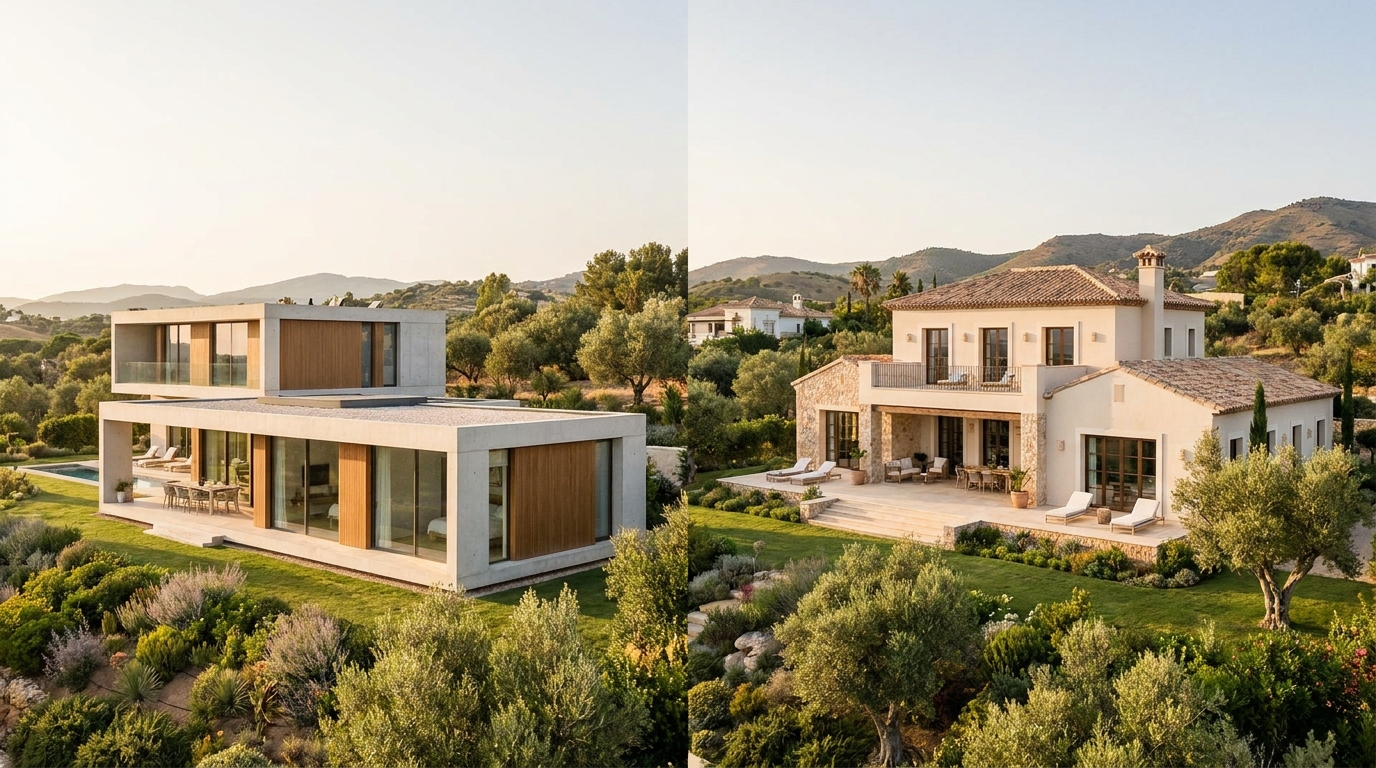
By combining careful pre-design, a clear financing strategy, and a hybrid material approach, the project shows a repeatable model for autopromotores. Industrialized processes can deliver modern, Mediterranean-style homes that are attractive, efficient and financially transparent.
Ready to take the next step?
If you are considering self-promoting a home, start with a clear plot diagnosis and a schedule-based finance plan. Contact an industrialized housing partner to review a fixed-scope proposal and test early-stage thermal modeling—small early choices save time and money later. When you are ready, we can help map the milestones and match systems to your goals.
Take the confident step: prepare your plot dossier, secure staged financing, and request a turnkey proposal to see real timelines and costs tailored to your site.
Artículos relacionados