


Modular Housing vs Traditional Homes: Clear Pros and Cons
Imagine signing a fixed-price contract and moving into your finished home months, not years, after design approval. That accelerated certainty is why many self-builders in Spain now consider modern modular housing as a real alternative to traditional construction.
Modular industrialized housing can reduce onsite time by 50–70% while delivering comparable or better energy performance than many conventional builds.
Why consider modular housing in Spain today
Modular (industrialized) housing combines factory production with on-site assembly. It shifts predictable tasks—cutting, insulating, installing systems—into a controlled environment, and reserves the site for foundations and final assembly. This approach matters in Spain due to land constraints, labor variability and growing demand for energy-efficient homes.
Quick overview: what is industrialized housing and why it matters
Industrialized housing means pre-manufactured elements or modules produced in a factory and installed on-site. It spans approaches from panelized systems to volumetric modules. The key benefits derive from:
- Repeatable quality control in a factory.
- Shorter on-site programs, reducing weather delays and neighborhood impact.
- Better cost predictability through fixed quotes and controlled procurement.
Advantages over traditional construction: time, cost and control
Time to delivery is the most visible advantage. Factory processes run in parallel with site works (foundations, utilities), compressing the critical path. For many projects this translates into predictable, shorter programs.
Costs become more transparent: material purchasing, labour hours and waste are reduced. That lowers surprises that typically inflate traditional budgets.
Control comes from standardized processes and factory QA. For self-builders, this reduces the need for constant site supervision.
Who benefits: self-builders, small developers and families
Modular solutions suit profiles that value certainty and speed:
- Autopromoters (self-builders) who want a fixed-price, predictable schedule.
- Small developers seeking faster turnover on infill plots.
- Families prioritizing energy performance and indoor comfort.
Comparative analysis: modular house vs traditional construction
Construction time and delivery: real timelines with metrics
Real-world data from recent Spanish projects show typical timelines:
- Modular industrialized house (single-family, custom): 4–8 months from permit to delivery. Factory manufacturing often 6–10 weeks; on-site assembly 1–4 weeks for the superstructure.
- Traditional build (similar scope): 12–24 months, depending on weather, subcontractor availability and change orders.
These figures assume groundwork and permits proceed without major delays. The main lever is parallelization: manufacturing while site works progress.
Costs and fixed-price budgeting: risks, savings and numeric examples
Cost transparency differs: Modular providers commonly offer fixed-price packages that include engineering, manufacturing and on-site assembly. Traditional builds often rely on staged contracts and variable subcontractor pricing.
Example comparative budget for a 150 m2 single-family home (indicative averages for Spain, 2026):
- Modular turnkey: €1,600–2,200/m2 (total €240k–330k), depending on finishes and plot complexity.
- Traditional build: €1,800–2,500/m2 (total €270k–375k), with higher variance and a 10–20% contingency often needed.
Key cost drivers:
- Site complexity (slope, access) increases costs in both models but impacts modular projects less when heavy site work is limited.
- Custom high-end finishes narrow the price gap; standard finishes maximize modular savings.
Quality, finishes and architectural flexibility
Quality can match or exceed traditional builds. Factory processes reduce defects, improve airtightness and ensure consistent fit-out. However, architectural freedom varies by system:
- Panelized systems and hybrid approaches allow near-unlimited façades and layouts.
- Volumetric modules are efficient for repeatable floorplans but can still be combined creatively for diverse results.
Choose a system aligned with your design goals: high customization requires early coordination with the manufacturer.
Materials and structural systems: picking the right approach
Industrialized concrete: durability, thermal inertia and use cases
Precast and industrialized concrete elements offer high durability and thermal mass, beneficial in Mediterranean climates where night-time cooling complements daytime thermal storage. Use cases:
- Urban multi-storey modular housing.
- Projects prioritizing longevity and low maintenance.
Concrete modules integrate well with mechanical systems and facade claddings. However, transport and lifting logistics demand planning.
Light timber frame: efficiency, bioeconomy and construction details
Light timber frame (entramado ligero) is popular for its low embodied carbon, fast production and excellent thermal performance when combined with proper insulation. Benefits:
- Lightweight—easier on foundations and faster to assemble.
- Biobased—positive appeal for sustainability-conscious clients.
Key considerations: moisture control during manufacture and detailing for fire and acoustic performance. For Spain, timber—paired with durable external claddings—performs well when specified correctly.
Steel frame (steel frame): speed, strength and Passivhaus compatibility
Steel frame systems deliver structural precision, long spans and rapid assembly. They pair effectively with high-performance envelopes suitable for Passivhaus-level airtightness and insulation. Use when:
- You require large open-plan spaces or cantilevers.
- Speed and repeatability are priorities.
Corrosion protection and thermal bridging mitigation must be addressed in design.
Sustainability and energy performance in modular housing
Passivhaus design strategies applied to modular builds
Modularity and Passivhaus are complementary. Factory-controlled installation supports airtightness and consistent insulation. Common passive strategies applied:
- High-performance insulation and continuous air barrier systems.
- Heat-recovery ventilation (MVHR) integrated at panel/module level.
- Optimized solar orientation and shading considered during early design.
When properly executed, modular Passivhaus projects in Spain can reach heating demands below 15 kWh/m2·year—especially in temperate coastal areas.
Reducing carbon footprint: industrialization and material choices
Industrialized production reduces on-site waste and improves material yield. Material choices further influence embodied carbon:
- Timber-frame options can lower embodied carbon versus concrete.
- Using recycled steel and low-carbon concrete mixes reduces footprint in heavy-frame solutions.
Lifecycle thinking—including maintenance, longevity and recyclability—should guide system selection.
Certifications and measurable metrics
Seek measurable targets: airtightness (n50), primary energy consumption (kWh/m2·year), and embodied carbon (kgCO2e/m2). Certifications like Passivhaus, LEED or national certifications provide independent validation and resale value benefits.
Turnkey process: from plot to move-in
Clear phases: feasibility, design, manufacture and assembly
A practical turnkey workflow for self-builders:
- Feasibility study: site constraints, planning, initial budget and project brief.
- Design development: architecture, structure, MEP integration and energy brief.
- Factory manufacturing: modules/panels produced under QA protocols.
- On-site assembly and commissioning: foundations, crane set, services connection and final finishes.
Typical milestones, timelines and responsibilities
Example milestone chart (indicative):
- Weeks 0–8: Permits and foundation design—Client & Architect.
- Weeks 6–16: Factory production—Manufacturer.
- Weeks 12–20: On-site assembly and connections—Manufacturer & Contractors.
- Weeks 20–24: Commissioning, snagging and handover—Manufacturer & Client.
Overlapping tasks reduce total calendar time. Clear contractual responsibilities are essential to avoid disputes.
Quality control, warranties and aftercare for self-builders
Factory QA delivers traceability. Ask for factory testing reports, airtightness test results and commissioning records. Standard warranties should cover structural elements, envelopes and installations. Post-occupancy support for defects and performance tuning (e.g., MVHR balancing) is critical.
Financing modular self-build projects
Financing options: self-build mortgages and industrial loans
Financing modular self-builds in Spain typically uses:
- Autopromotion mortgages (self-build loans): disbursed in stages tied to milestones.
- Turnkey mortgages: lenders treat the project like a finished property when backed by a trusted turnkey provider and fixed-price contract.
- Industrial/asset-backed loans: for developments or multi-unit projects, with different lending criteria.
Typical requirements and documentation for banks
Banks typically require:
- Detailed budget and cashflow tied to milestones.
- Fixed-price contract with the manufacturer/turnkey provider.
- Technical documentation, energy performance projections and permits.
Early engagement with your bank shortens approval times. Provide airtightness targets and energy models to strengthen the case.
Strategies to reduce financial risk and total cost
Practical risk-reduction tactics:
- Choose a turnkey provider with transparent pricing and clear milestones.
- Negotiate retention or performance guarantees linked to delivery and energy metrics.
- Plan contingency funding (5–10%) and lock long-lead elements early.
How to decide: a practical guide for choosing the best modular solution
Decision checklist: needs, plot, budget and timing
Before choosing, run this checklist:
- Is speed to delivery a priority?
- Does the plot have access constraints that limit crane operations?
- What is your target energy performance and acceptable embodied carbon?
- Do you need a fixed-price contract to secure financing?
- How important is architectural uniqueness versus reproducibility?
Comparative case studies with real metrics
Two short case studies (anonymized):
Case A — Coastal family home (timber-frame modular)
- Area: 140 m2. Total turnkey cost: €210k. Delivery: 6 months from permit. Airtightness: n50 = 0.45 h-1. Occupant satisfaction: 9/10 (acoustic and thermal comfort).
Case B — Rural custom house (hybrid concrete + steel frames)
- Area: 180 m2. Total turnkey cost: €320k. Delivery: 8 months. Energy demand: 18 kWh/m2·year. Owner feedback: high durability perception and low maintenance.
These examples illustrate how system choice, design and site influence outcomes more than the broad label "modular" or "traditional."
Questions to ask your supplier before signing
Essential questions to validate capability:
- Can you provide recent airtightness and commissioning reports?
- What’s included in the turnkey price and what’s excluded?
- Who manages interfaces with local contractors (foundations, utilities)?
- Do you provide performance guarantees for energy metrics?
- What are warranty terms and post-occupancy support steps?
When industrialized housing is the right choice
Balanced summary: main advantages and limitations
Advantages: faster delivery, better cost predictability, improved airtightness and reduced site disruption. Industrialized processes also support high energy performance and lower waste.
Limitations: logistical constraints (transport and lifting), potential design restrictions with some systems, and the need to choose suppliers early to align design with manufacturing constraints.
Recommendations by self-builder profile
Suggested approach depending on your priorities:
- Speed & certainty: choose a turnkey modular provider with fixed-price contracts.
- Sustainability-first: prioritize timber-frame or hybrid solutions with verified embodied carbon data and MVHR integration.
- Highly bespoke architecture: work with panelized or hybrid modular systems and involve the manufacturer from schematic design.
Next practical steps: start with a feasibility study
Begin with a short feasibility study that includes site constraints, a budget envelope and an indicative energy model. This early investment saves time and clarifies whether a modular or traditional route better fits your objectives.
Ready to evaluate your plot and priorities? Commission a feasibility study to compare systems, budgets and realistic timelines tailored to your site and lifestyle needs.
Artículos relacionados
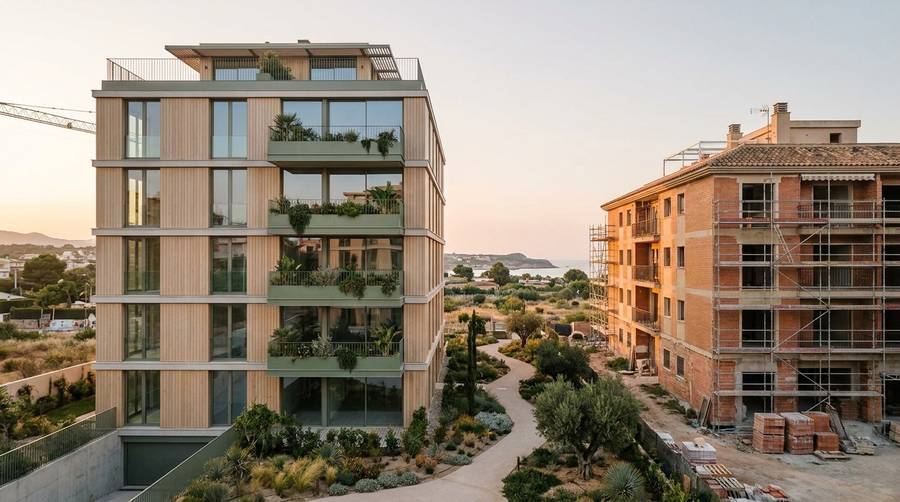
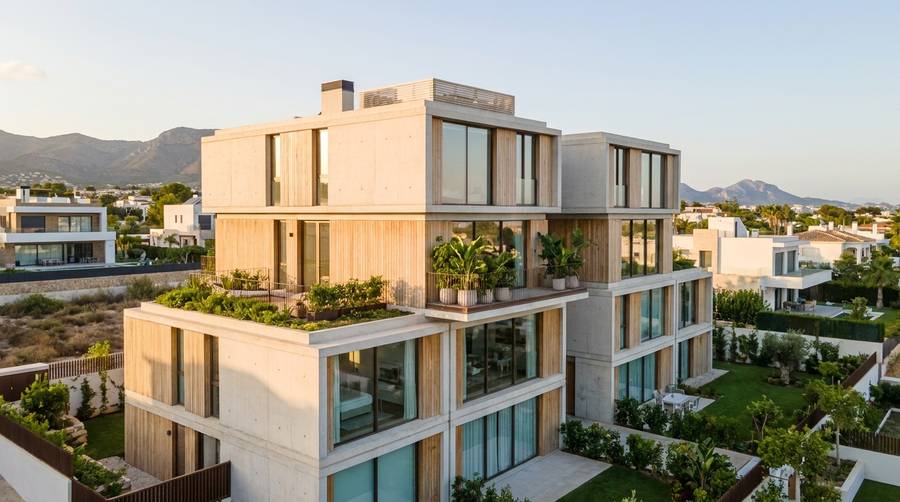
Modular Housing Success: A High-Rise Case Study
A Spanish autopromoter transformed a constrained urban lot into a premium modular mid-rise building. This case study details decisions, materials, timelines and finance—offering actionable guidance for anyone considering modular housing in Spain.