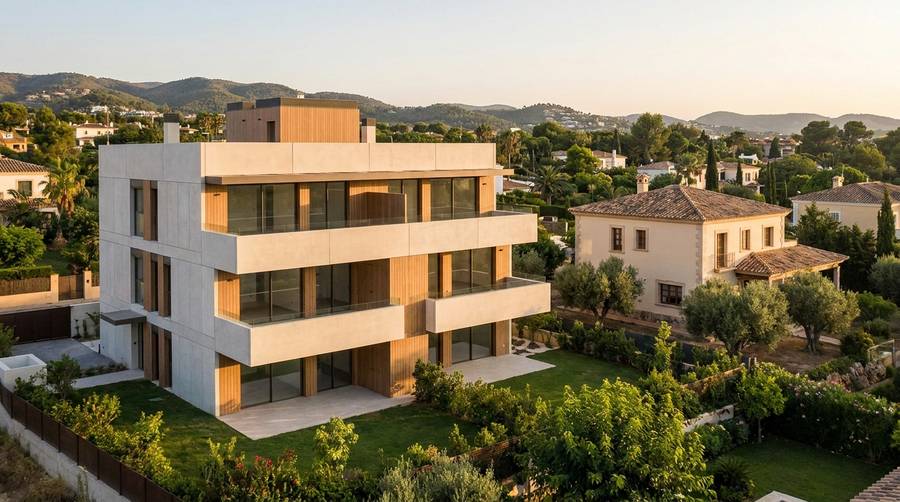
Modular Housing vs Traditional Homes: Clear, Practical Comparison
The fastest path from plot to a high-performance home is rarely the one people expect. For many self-builders in Spain, the choice between modular housing and a traditional build defines budget, calendar and long-term energy bills. This article cuts through marketing and provides practical evidence, comparisons and checklists to decide which route fits your project.
Why choose modular housing in Spain today?
Objective summary: what industrialized housing is and who benefits
Modular housing (industrialized housing) means most of the building is manufactured in controlled factory conditions and assembled on site. It benefits:
- Self-builders seeking predictable schedules and budgets.
- Owners prioritising energy performance and reduced waste.
- Developers who need faster delivery without sacrificing design quality.
2026 trends: market, regulations and self-builder demand
Spain's regulatory climate increasingly rewards energy-efficient buildings. Incentive programs and stricter thermal codes make off-site construction attractive because factories can achieve tighter tolerances for insulation and airtightness. Market demand from families and small developers is rising, driven by shorter delivery times and clearer cost visibility.
What to expect from this article: a balanced comparative guide
This is a practical comparison that highlights measurable differences—time, cost predictability, materials, sustainability outcomes and financing—so you can match the construction approach to your site, budget and long-term goals.
Practical comparison: modular housing vs traditional construction
Construction time and schedule control: factory manufacture vs on-site work
Modular advantage: Factory production compresses on-site duration. Typical timelines for a modular single-family home in Spain:
- Design and permits: 2–4 months (parallel activities possible)
- Factory manufacture: 6–12 weeks
- On-site assembly and finishes: 4–8 weeks
Traditional builds often see longer on-site phases (6–18 months) and are more sensitive to weather, subcontractor availability and supply-chain delays.
Total cost and financial predictability: fixed price, surprises and adjustments
Modular housing typically offers greater cost certainty. Factory-controlled processes translate into fixed-price contracts with clearer scope. Common financial outcomes:
- Lower risk of mid-project budget overruns tied to weather and scheduling.
- Material waste is reduced; labour costs are more predictable.
- However, initial procurement and transport of modules requires precise planning and can add logistical costs for difficult access plots.
Traditional builds may start with a lower initial quote but often accumulate change orders and contingency spend.
Build quality and durability: tolerances, finishes and factory QA
Factory settings enable consistent quality control: dimensional tolerances, airtightness testing and repeatable finishes. For many projects, this improves long-term performance and reduces on-site rework. Yet, quality still depends on the manufacturer's processes and finish options. Insist on sample panels, third-party testing results and references.
Modular delivers schedule certainty and repeatable quality; traditional can offer on-site flexibility and lower perceived upfront cost—but often with higher schedule risk.
Advantages and disadvantages by material and system
Industrialized concrete: performance, thermal behavior and structure
Strengths:
- Excellent structural robustness and fire resistance.
- High thermal mass can stabilise indoor temperatures.
- Good long-term durability and low maintenance.
Considerations:
- Heavier modules increase transport complexity and foundation requirements.
- Lower embodied carbon unless mixes use low-carbon binders and recycled aggregates.
Light timber frame: efficiency, low carbon footprint and upkeep
Strengths:
- High thermal and ecological performance; low embodied carbon.
- Fast to manufacture and easy to adapt on site.
- Natural aesthetics align with Mediterranean design choices.
Considerations:
- Requires careful moisture management to ensure longevity.
- Perceived market value varies by region—quality certification helps.
Steel frame: speed, flexibility and cost considerations
Strengths:
- Very precise, supports large spans and modern open-plan layouts.
- Rapid assembly; well-suited to multi-storey modular units.
Considerations:
- Higher embodied carbon than timber unless recycled steel is used.
- Thermal bridging must be addressed with careful detailing.
Sustainability and energy efficiency: is modular greener?
Applying Passivhaus strategies to modular homes
Modular factories can integrate Passivhaus principles at scale: high-performance insulation, continuous airtight layers and controlled ventilation with heat recovery. The controlled environment helps meet airtightness targets that are harder to achieve on a wet site.
Reducing carbon footprint: lifecycle impacts and material choices
To judge sustainability fairly, evaluate whole-life emissions (embodied + operational). Timber-frame modular homes typically present lower embodied carbon. Concrete and steel can be lower impact when using recycled content or low-carbon binders. Transport emissions for modules should be included in life-cycle analysis.
Operational efficiency and medium/long-term savings
Higher upfront costs for better envelopes often pay back via lower energy bills. Look for realistic modelling of annual heating/cooling demand, not just certificate claims. Factory precision helps achieve the results predicted by simulations.
Turnkey process for self-builders: steps, timelines and common risks
From plot to handover: phases, responsibilities and milestones
A typical turnkey modular process:
- Site appraisal and plot suitability check (2–4 weeks).
- Preliminary design and budget (1–2 months).
- Permitting and approvals (2–4 months, parallel with factory scheduling).
- Factory production (6–12 weeks).
- Transport, assembly and on-site finalisation (4–8 weeks).
- Testing, commissioning and handover (1–2 weeks).
In a turnkey contract, a single supplier coordinates these phases and assumes interface risks.
Permits, coordination and quality control: Spanish regulatory needs
Local building codes, municipal urban plans and the Código Técnico de la Edificación (CTE) apply equally to modular homes. Key points:
- Ensure the manufacturer provides documentation for structural calculations and thermal compliance.
- Local inspections still apply at foundation, assembly and final stages.
- Check zoning rules about façade materials, heights and occupancy.
Common risks and mitigation: warranties, insurance and oversight
Frequent risks include delivery delays, incomplete scope and hidden site issues. Mitigation measures:
- Request performance bonds and clear warranty clauses (structure, airtightness, finishes).
- Hire an independent technical supervisor for milestone inspections.
- Keep buffer time and contingency in the schedule and budget.
Financing and viability: mortgages for self-build and payment models
Financing options in Spain for modular self-builds
Financing a modular project can use the same instruments as traditional builds, but lenders may require:
- Detailed turnkey contract specifying delivery milestones.
- Valuations that consider factory-built quality and resale comparables.
- Stage payments aligned with factory produce and on-site completion.
Comparing financial costs: terms, guarantees and payment structure
Key financial aspects to compare:
- Interest during construction: shorter on-site periods can reduce this cost.
- Stage disbursements: modular turnkey offers clearer release milestones.
- Guarantees: check how guarantees cover defects discovered after handover.
Tools to evaluate viability: ROI, cost per m2 and sensitivity scenarios
Evaluate three scenarios (conservative, expected, optimistic) and compare cost per m2, projected energy savings and resale value. Include sensitivity to transport or permit delays. Use real-case metrics where possible: typical modular single-family homes show 10–20% shorter delivery times and 5–15% lower variance in final cost versus comparable traditional builds.
Practical conclusion: how to decide between modular and traditional
Checklist to make an objective decision for your plot and project
- Is timeline critical? (If yes, modular favours you.)
- Do you need firm budget predictability? (If yes, modular helps.)
- Is access for large module transport feasible? (If no, traditional may be easier.)
- Is low embodied carbon and airtight performance a priority? (Timber modular or Passivhaus-oriented industrialised concrete are strong options.)
- Do local planning rules restrict façade materials or heights? Check before choosing system.
Typical cases: when modular is the better choice and when it is not
Modular is often best when:
- You value speed and predictable budgets.
- You aim for high energy performance with tight tolerances.
- Your plot allows module deliveries and standard foundations.
Traditional may be preferable when:
- Site access is extremely constrained (narrow urban lots without crane access).
- You need a high degree of on-site custom craftwork tied to local materials and heritage rules.
Recommended next steps: get a tailored study and a pilot plan
Start with a site appraisal and two competing quotes: a turnkey modular proposal and a detailed traditional build estimate. Ask for a sample module, airtightness and thermal test reports, and at least two client references. If you want an example of an in-depth modular vs traditional comparison, see Vivienda modular: comparar casa prefabricada y tradicional. For real multi-storey modular success stories, explore Vivienda modular: caso real de éxito en altura.
Deciding framework: weigh time, cost certainty, site logistics, energy goals and resale expectations. Use a shortlist of three manufacturers and demand measurable performance data before committing.
If you want practical help tailored to your plot—a feasibility study, a timeline and a transparent cost breakdown—request a personalised review from a qualified industrialized housing advisor. A brief technical appraisal often clarifies whether modular or traditional construction best matches your objectives.
Artículos relacionados
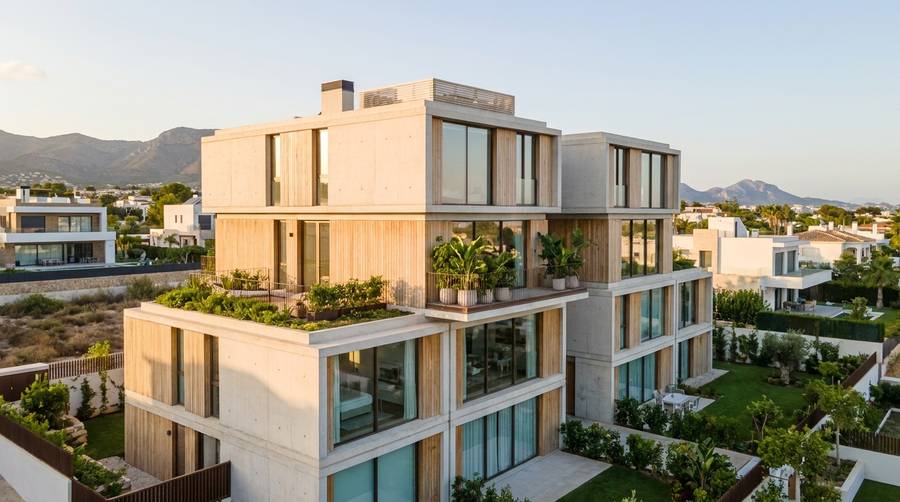
Modular Housing Success: A High-Rise Case Study
A Spanish autopromoter transformed a constrained urban lot into a premium modular mid-rise building. This case study details decisions, materials, timelines and finance—offering actionable guidance for anyone considering modular housing in Spain.