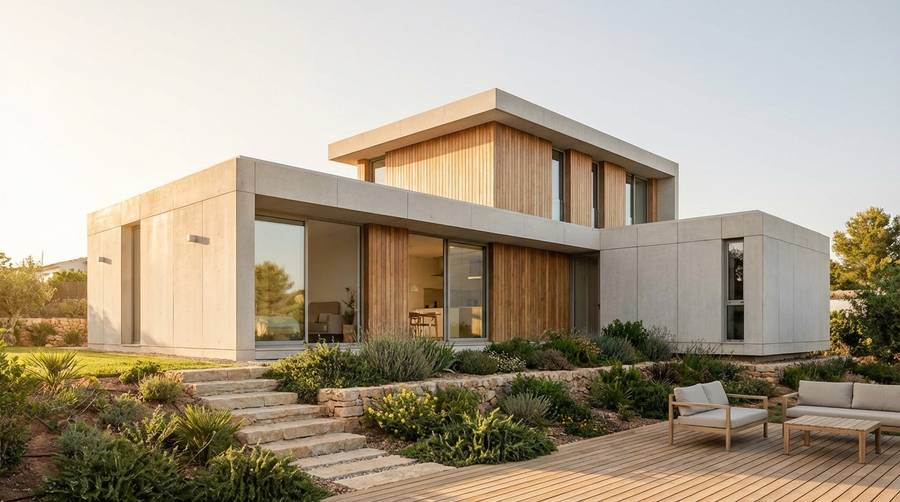
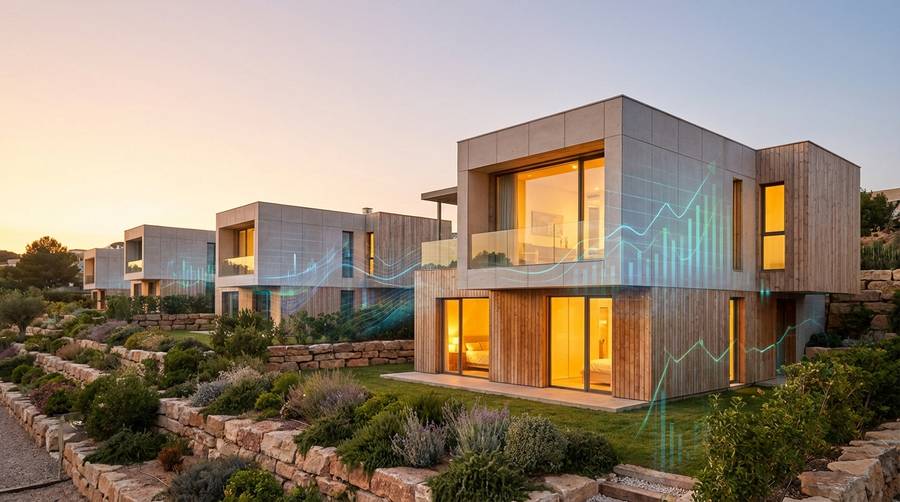
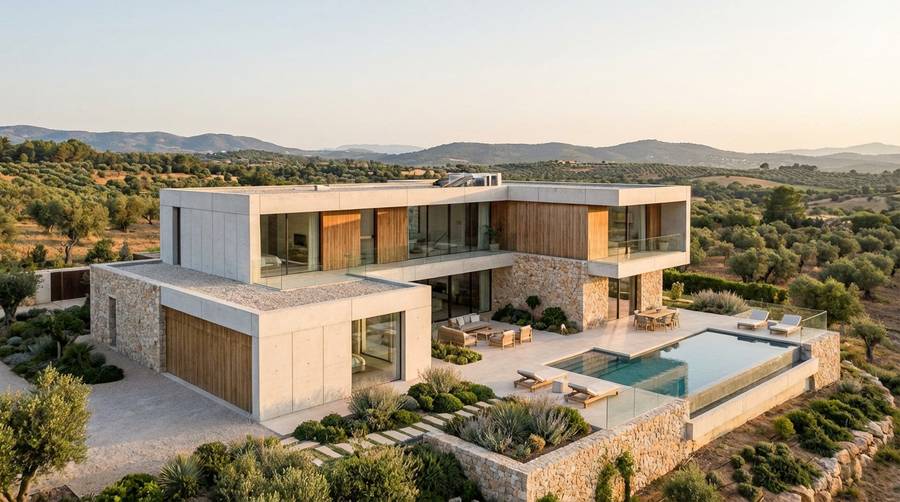
Turnkey Modular Home: Prefabricated vs Traditional in Spain
Why consider a scalable turnkey modular home in 2026
Imagine signing a fixed-price contract and moving into a finished house within months, not years. That promise is why more families and local developers in Spain are evaluating a turnkey modular home rather than a conventional build. This article cuts through marketing claims to show measurable trade-offs, actionable criteria and real guidance for autopromotores.
Current landscape of industrialized housing in Spain
Industrialized housing in Spain has moved from niche pilot projects to mainstream solutions. Increased factory capacity, wider material choices and new financing models make modular solutions practical for suburban plots and rural estates alike. Key trends include better integration with Passivhaus standards, faster site schedules, and clearer fixed-price offerings.
What 'turnkey' means for modular projects
Turnkey means the provider coordinates design, permits, manufacturing, transport, on-site assembly and final handover, delivering a ready-to-live home. For autopromotores this reduces coordination risk but concentrates responsibility with the provider—so contract clarity is essential.
Who benefits: self-builders, families, and local developers
Turnkey modular homes suit three clear profiles:
- Self-builders who lack time to manage complex permits and contractors.
- Families prioritizing schedule certainty and energy performance.
- Local developers/promoters targeting repeatable products and shorter cash cycles.
Fast, predictable delivery and certified energy performance are the decisive advantages for 62% of Spanish autopromotores who choose industrialized housing over traditional methods.
Comparative analysis: turnkey prefabricated vs traditional construction
This section compares the two approaches across measurable dimensions: time, cost transparency, and long-term quality. The aim is practical clarity for decision-making.
Execution timelines and schedule control (measurable examples)
Typical timelines (real-world metrics):
- Turnkey modular home: design to delivery 6–9 months (assuming permits within 2–3 months).
- Traditional build: design to delivery 12–24 months (permits plus on-site uncertainties).
Case metric: a medium-sized 140 m² home built with a steel-frame modular system recorded factory production 8 weeks, on-site assembly 2 weeks, and final finishes 6 weeks—total 4 months once permits were cleared. The largest time risk is obtaining local permits and utility connections—both approaches face the same municipal processes.
Costs and transparency: fixed price, overruns and warranties
Turnkey advantage: fixed-price contracts with clearly defined scope reduce budget surprises. Factory workflows mean fewer hidden labor costs and less on-site rework.
Traditional reality: higher variability. Cost overruns often stem from on-site delays, weather, subcontractor claims and design changes.
- Average delivered cost (Spain, 2026 estimates): turnkey modular home: €1,200–€1,800/m² (turnkey, finished); traditional: €1,400–€2,200/m² (dependant on finishes and delays).
- Contingency: modular projects usually include lower contingency (5–8%) vs traditional (10–20%).
Warranty and performance: factory-assembled elements often come with manufacturer warranties on structure and thermal envelope. Ensure the contract also includes on-site workmanship warranties and clear acceptance testing.
Quality, durability and long-term maintenance
Quality depends on materials and detailing, not the method alone. Factories deliver consistent workmanship, controlled curing for concrete elements and better airtightness—factors that improve long-term energy performance.
- Durability: concrete and steel systems deliver proven lifespans comparable to traditional builds when properly detailed.
- Maintenance: modular homes with accessible service panels simplify maintenance; however, bespoke finishes may require similar upkeep to traditional homes.
Technical and functional pros and cons
Below are the most relevant technical trade-offs to weigh for Spanish autopromotores.
Energy efficiency and sustainability (Passivhaus and certifications)
Strengths: modular construction supports high thermal performance and airtightness. Factory-installed insulation, continuous vapor control layers and factory QA enable easier compliance with Passivhaus or equivalent Spanish certifications.
Considerations: to reach Passivhaus, coordination of windows, ventilation and shading is essential. Ensure the provider includes blower-door testing and certified installers for MVHR systems.
Design flexibility and constructive limitations
Modular systems offer flexibility but within constraints: module widths, transportable heights and connection details limit some geometries.
- Open-plan layouts work well when the structural strategy is resolved in advance.
- Complex curves, large cantilevers or highly custom façades can be achieved but at higher cost.
Logistics, transport and planning restrictions
Transport dimensions and crane access set site constraints. Narrow rural roads, restrictive town planning or protected landscapes may add cost or require partial on-site assembly. Early site surveys and logistic studies are non-negotiable.
Recommended materials and construction systems
Selecting the right structural system is a balance of performance, carbon footprint and budget. Below are three recommended approaches with practical notes.
Industrialized precast concrete: performance and use cases
Advantages: excellent thermal mass, robustness and acoustic performance. Precast elements accelerate enclosure build and ensure dimensional accuracy.
Use cases: multi-family buildings, basements, ground floors in coastal environments. Example cost indicator: precast envelope may add 5–10% to unit structural costs compared to light systems but reduces long-term maintenance risks.
Light timber frame: efficiency, carbon and design
Advantages: low embodied carbon, high thermal performance and quick assembly. Timber systems adapt well to complex shapes and provide a warm interior aesthetic aligned with Mediterranean design.
Notes: ensure durable detailing at wet areas and termite protection where applicable. Timber enters naturally into Passivhaus strategies thanks to predictable thermal behavior.
Steel frame (steel-to-frame): speed and structural capability
Advantages: high strength-to-weight ratio, long clear spans and rapid realization of modules. Steel performs well in modular factory assembly and simplifies integration of large glazing.
Consider: thermal bridging in steel requires careful insulation design and thermal breaks to achieve high energy performance.
The turnkey process explained, step by step
Below is a practical roadmap with responsibilities, realistic durations and action points for each phase.
From plot search to permits: timelines and responsibilities
- Plot acquisition and feasibility (2–8 weeks): geotechnical study, basic topography, and urban compatibility check.
- Permitting (2–6 months): municipal planning and building permits. Turnkey providers can prepare documentation but cannot override municipal timelines.
- Tip: start permit-required studies early to avoid blocking factory schedules.
Design, factory production and on-site assembly
Design phase (4–12 weeks): schematic to final design for manufacturing. Use BIM or 3D models for clash detection and costing.
Factory production (4–12 weeks): panels, modules or precast elements manufactured under controlled conditions with QA checkpoints.
On-site assembly (1–8 weeks): depends on system: modular assemblies are swift; panel systems need longer for finishing.
Handover, certifications and post-sales
Handover should include commissioning reports, blower-door and thermal imaging where applicable, energy certificates and a clear defects list with defined rectification windows. Ensure a written post-sale service schedule and response times.
Financing and mortgages for autopromoters
Financing a modular turnkey home follows similar principles to traditional self-promotion but with some differences in draw schedules and risk profiles.
Self-build mortgages: what Spanish banks offer
Banks increasingly accept modular projects under self-build mortgage products. Common features:
- Progressive disbursements tied to milestones (design, factory completion, on-site assembly, final delivery).
- Lower margin requests where the turnkey provider offers guarantees and retention mechanisms.
Project cashflow: milestones and disbursements
Typical milestone structure for turnkey modular financing:
- Initial purchase of plot (loan or equity).
- Factory production start (first draw).
- Module shipment/arrival (second draw).
- Final handover (final draw and conversion to mortgage or long-term loan).
Advice: require transparent invoicing and evidenced production milestones to satisfy lenders and reduce release disputes.
Incentives for energy efficiency and carbon reduction
Regional incentives and EU programs reward low-energy homes. Documented Passivhaus-level performance or verified CO2 savings can unlock grants, tax rebates or preferential loan rates—check local Andalucía, Catalonia and Madrid schemes, which vary by year.
Practical guide and case studies to decide
This section offers an actionable checklist and two anonymized case studies with metrics that illustrate realistic outcomes.
How to design a modular house step by step in Spain (2026 checklist)
- Confirm plot constraints: access, orientation, microclimate, utilities.
- Define fixed budget and contingency; prefer turnkey fixed-price offers with clear exclusions.
- Select structural system early (concrete, timber or steel) and verify transport/pricing implications.
- Require energy modelling and blower-door targets in the contract.
- Agree on milestone-linked payment schedule and warranty terms.
- Plan interior finishes and utilities integration before factory production starts.
Case study A: 140 m² family home (timelines, costs, satisfaction)
System: timber frame modules; Location: near Valencia.
- Permits: 3 months.
- Factory production: 8 weeks.
- Site assembly and finishes: 10 weeks.
- Total: 7 months from contract signature to handover.
- Delivered cost: €1,350/m² (turnkey).
- Client satisfaction: 9/10; main positives were schedule certainty and indoor air quality.
Case study B: 220 m² touristic rental villa (timelines, costs)
System: precast concrete panels with steel frame upper floor; Location: Costa Blanca.
- Permits: 4 months due to coastal setbacks.
- Factory production: 10 weeks.
- Assembly and finishes: 12 weeks.
- Total: 9 months; Delivered cost: €1,700/m² (higher-end finishes).
- Commercial outcome: 15% higher seasonal occupancy attributed to thermal comfort and finishes.
Technical comparison with competitors: metrics and lessons
When comparing providers, request the following metrics and documents:
- Typical production lead times and factory capacity.
- Measured airtightness results and energy modelling reports.
- Standard warranties and exclusions.
- Transport limitations and contingency plans for site access.
Lesson: choose a provider with transparent KPIs and documented third-party test results rather than marketing claims.
Is a scalable turnkey modular home right for you?
Balanced summary: choose a turnkey modular home if you value schedule certainty, energy performance and predictable budgeting. Prefer traditional build if your project demands extreme architectural uniqueness, phased site development, or local craftsmanship as a primary value.
Decision criteria by client profile
- Time-sensitive family: modular is usually superior.
- Budget-conscious self-builder: modular can reduce overruns if scope is fixed.
- Developer seeking repeatability: modular enables faster project turnover and predictable margins.
Recommended next steps
If you are considering a project, take these immediate actions:
- Commission a plot feasibility and logistic study.
- Request three turnkey proposals with identical program and energy targets.
- Insist on factory visit or verified production photos and QA checkpoints.
Ready to explore options tailored to your plot and budget? Speak with specialists who can produce a comparative quote and timeline for your site—small steps now avoid large surprises later.
Artículos relacionados