Industrialized Housing: Complete Guide for Spain 2026
Imagine closing a fixed-price contract and moving into a finished, energy-efficient home in less than a year. That outcome is increasingly common with industrialized housing in Spain. This guide explains how to plan, design, finance and deliver a turnkey modular home with real data and clear steps.
Why choose industrialized housing in Spain: core advantages
Industrialized housing changes the game for self-builders. It reduces uncertainty, shortens schedules and improves energy performance compared with conventional construction. Below are the most tangible benefits and what they mean for your project.
Efficiency and time savings: predictable, closed timelines
Shorter on-site duration: manufacturing components off-site drastically cuts time exposed to weather delays. Typical on-site assembly ranges from 4 to 12 weeks, while total project delivery averages 6–10 months.
- Why it matters: fewer months of neighbour conflicts, lower interim living costs and earlier occupancy.
- How it’s achieved: parallel processes—site works and factory production run simultaneously.
Controlled cost: fixed price and fewer surprises
Price certainty: many industrialized providers offer fixed-price contracts that include design, manufacture, transport and installation. This reduces the common scope creep of traditional projects.
- Contingency reduction: less on-site labour variability means fewer hidden costs.
- Procurement clarity: factory-controlled supply chains lower material price volatility.
Quality and sustainability: energy efficiency and lower carbon footprint
Industrialized systems allow rigorous quality control. Panels and modules pass factory testing that is hard to replicate in-situ. That improves airtightness, insulation continuity and long-term performance.
Well-executed industrialized housing can cut construction waste by up to 60% and halve on-site CO2 emissions versus traditional builds.
Energy performance: combining precise envelopes with modern HVAC strategies makes achieving high efficiency—and even Passivhaus-level performance—feasible at competitive cost.
Local materials and modern structural systems
Choosing the right system is a balance between performance, aesthetics and budget. Below are three proven construction systems used in Spain’s industrialized housing.
Industrialized concrete: performance and durability
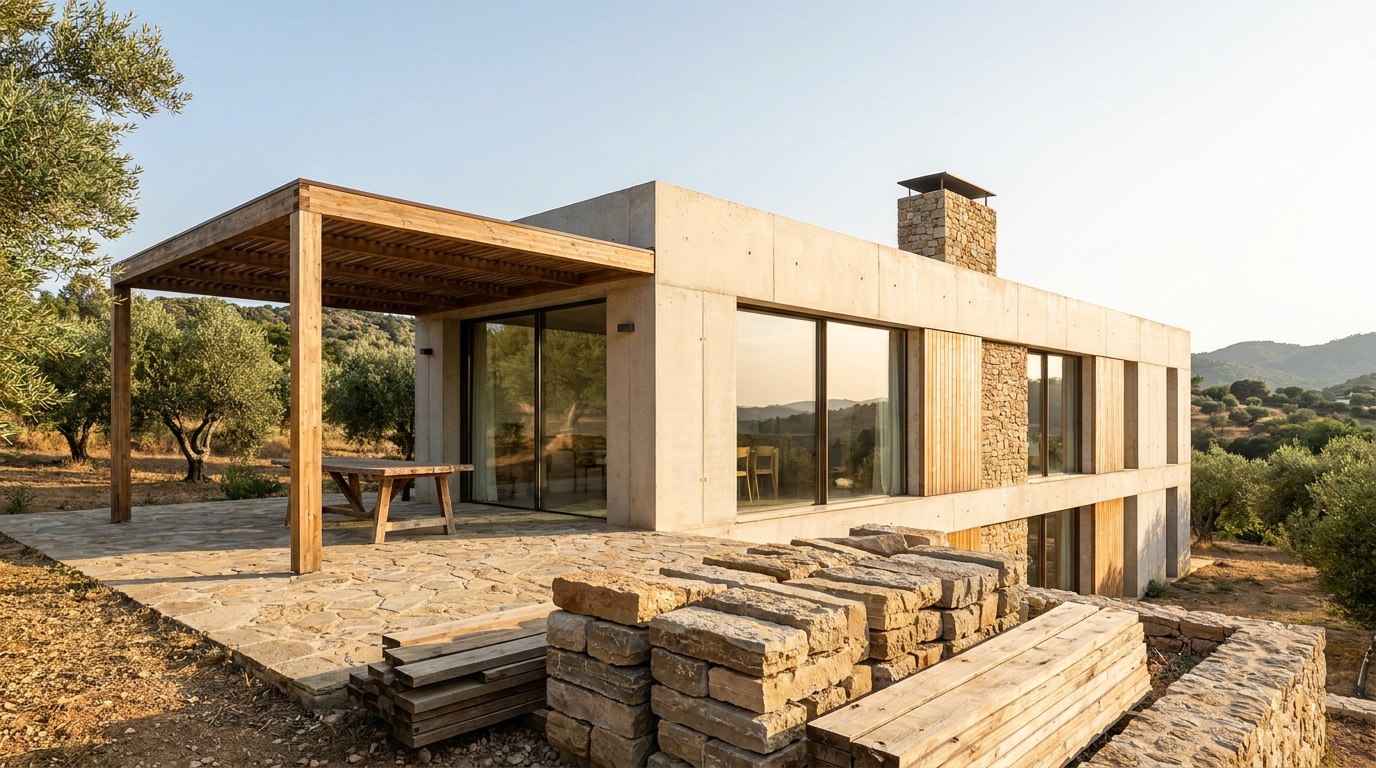
What it offers: high thermal mass, durability and fire resistance. Precast concrete panels and insulated sandwich elements deliver robust Mediterranean façades.
- Best use: coastal or exposed sites where durability is crucial.
- Considerations: higher transport and lifting requirements. Early coordination of foundation tolerances is essential.
Timber light-frame: lightness, insulation and sustainability
What it offers: excellent thermal performance, rapid assembly and a low embodied carbon profile when sourced locally.
- Advantages: adaptable interiors, good acoustic behaviour with correct details.
- Key caution: design moisture management into the envelope and use certified, locally sourced timber where possible.
Steel frame: speed, precision and finish compatibility
What it offers: high strength-to-weight ratio and predictable tolerances. Steel is ideal for larger spans and flexible layouts consistent with Mediterranean architecture.
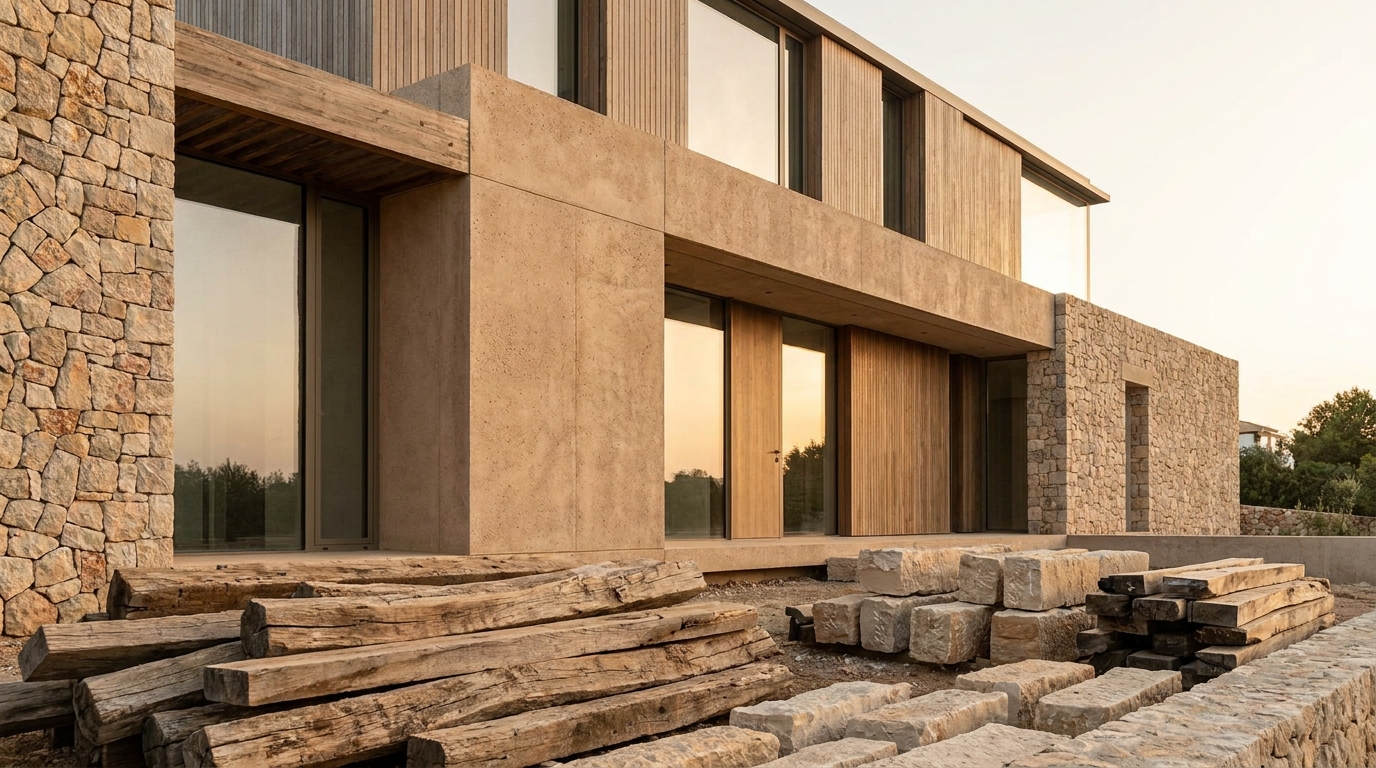
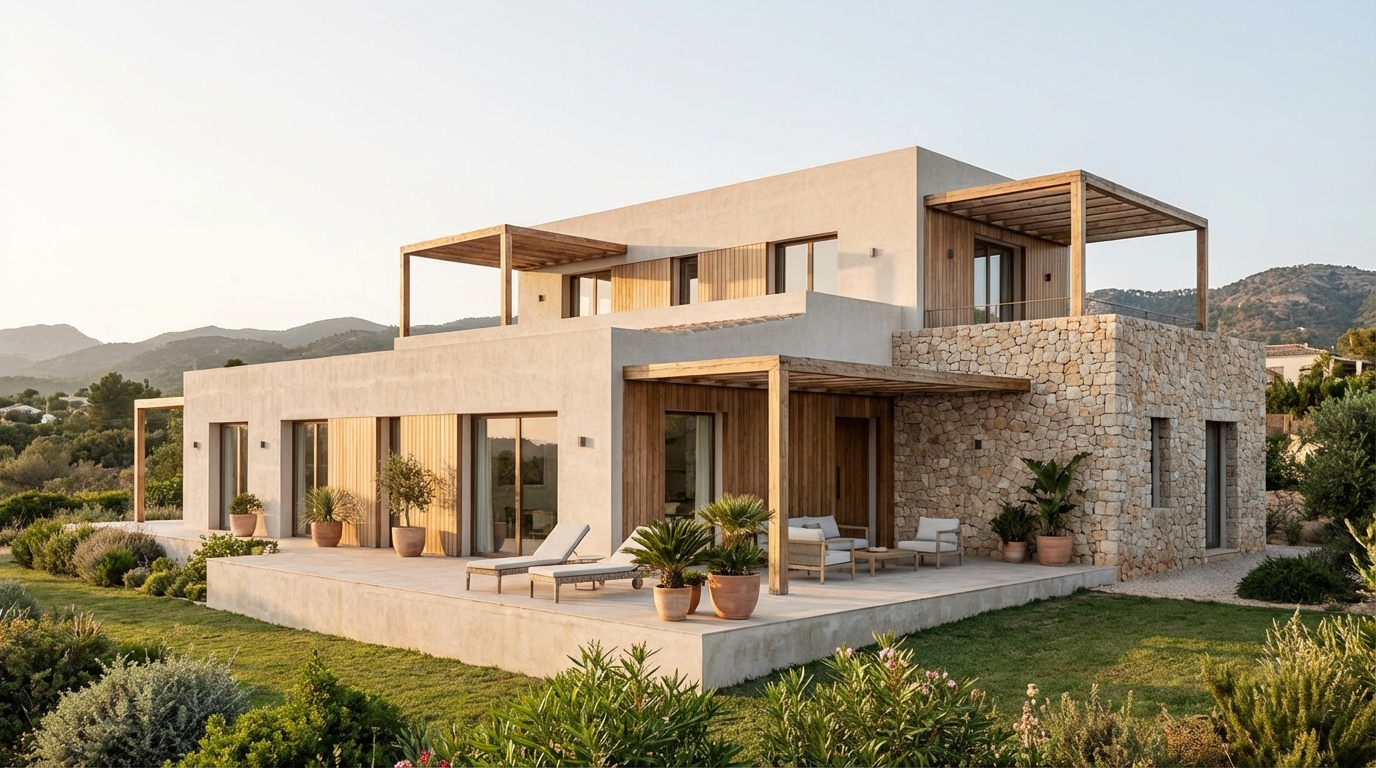
- Finish integration: seamless integration with rendered façades, wood cladding or stone accents typical in Spain.
- Thermal bridging: address with thermal breaks and continuous insulation to meet efficiency targets.
For more on materials, construction times and local sourcing, consult Vivienda industrializada: comparativa de materiales y ventajas.
How to design an industrialized house step by step in Spain (Guide 2026)
Design for industrialized housing begins with clear decisions. Below is a practical roadmap segmented by stage.
Initial planning: brief, regulations and plot choice
- Define the program: rooms, orientation, and key systems (solar PV, hot water, ventilation).
- Check regulations: local zoning, buildable area, permitted heights and coastal/heritage constraints.
- Plot appraisal: topography, access for transport, soil reports and utilities. Ensure the plot supports off-site delivery logistics.
Design and prototyping: layout, thermal envelope and Passivhaus needs
Start with the envelope: fix the wall, roof and window system early. The envelope defines factory modules and thermal continuity.
- Prototyping: create a full-scale mock-up for critical junctions—windows, corners and roof connections.
- Passivhaus-ready: design for airtight details, continuous insulation and mechanical ventilation with heat recovery.
Approvals and technical coordination: permits and QA
Secure planning permission and a building permit early. Coordinate structural, MEP and factory drawings to avoid clashes.
- Quality plan: agree quality checks with the manufacturer and client sign-offs at milestones.
- Testing: plan airtightness and thermal imaging tests after assembly and before final finishes.
Turnkey process explained: from plot to handover
A turnkey delivery simplifies the client journey. Below are the practical phases and what to expect at each step.
Plot search and preparation: studies, connections and foundations
Pre-construction studies: geotechnical report, topographic survey and utility availability. These determine foundation type and site access needs.
- Connections: water, sewer, electricity and telecoms—book early with local utilities.
- Site works: access road, crane pads and temporary storage for modules.
Factory production and on-site assembly: sequencing and logistics
Parallel processes: while foundations cure, the factory builds panels or modules. This overlap cuts total program time.
- Typical timeline: factory production 6–12 weeks; on-site erection 2–8 weeks depending on complexity.
- Logistics: detailed route studies and heavy transport permits are essential for oversized elements.
Finishes, final checks and client handover: guarantees and commissioning
Final phase: complete finishes, utility commissioning and performance tests. Deliver documentation and warranty certificates at handover.
- Guarantees: structural and waterproofing warranties plus manufacturer guarantees for systems.
- Client training: brief homeowners on systems operation and maintenance.
Financing and solutions for self-builders
Financing an industrialized house differs from a standard mortgage. Lenders treat staged disbursements and project risk differently.
Self-build mortgages: how they differ
Key differences: mortgages for self-build typically release funds in stages tied to milestones: plot purchase, foundations, completion.
- Documentation: construction contract, detailed budget and schedule are required.
- Risk assessment: lenders prefer proven manufacturers with delivery guarantees.
Financing modular homes: phased disbursements
Modular projects often have fewer disbursement phases because factory production compresses risk. Still, expect at least three tranches.
- Plot purchase
- Foundations and site work
- Final assembly and handover
Practical tips to manage budget and reduce risk
- Fix scope early: decisions on envelope, bathrooms and kitchens reduce change orders.
- Choose reputable manufacturers: banks view them more favourably.
- Include contingency: keep a 5–8% buffer for unforeseen items.
Comparisons and real case studies: metrics, times and costs
Numbers help decide. Below are comparative figures and a real example to ground expectations.
Comparative study: industrialized vs traditional build
Typical comparative metrics for a 150 m2 single-family home:
- Total delivery time: industrialized 6–10 months vs traditional 12–20 months.
- On-site time: industrialized 4–12 weeks vs traditional 30–40 weeks.
- Cost variance: similar base cost; industrialized often reduces unexpected overruns by 15–25%.
Findnido case study: real project metrics
Project snapshot (single-family, Mediterranean style):
- Plot prep to handover: 8 months.
- Factory production: 7 weeks.
- On-site assembly: 3 weeks.
- Final cost deviation: within 4% of fixed price.
- Client satisfaction: post-occupancy survey score 4.7/5 for delivery and performance.
These metrics show industrialized delivery can be faster and more predictable while meeting high-quality Mediterranean finishes.
Lessons: interpreting metrics and choosing the right solution
- Don’t overvalue cheapest bid: low initial price may hide incomplete scopes.
- Assess manufacturer processes: visit the factory or request production evidence.
- Prioritise envelope quality: airtightness and insulation pay dividends in energy bills.
Practical closure: maintenance, certifications and final checklist
Long-term maintenance of industrialized homes
Maintenance needs are similar to traditional homes but often simpler due to controlled installations.
- Annual HVAC and ventilation check-ups.
- Inspect façades and roof drainage every 2–3 years.
- Follow manufacturer guidance for façade and joinery maintenance.
Energy upgrades and certifications
Passivhaus and efficiency: industrialized methods make meeting strict certification requirements achievable with careful detailing.
- Plan MVHR systems early and size ducts during factory design.
- Use continuous insulation and thermally broken frames.
Quick decision checklist for self-builders
- Plot suitability and access for modular delivery.
- Fixed price contract with clear scope and milestones.
- Factory QA plan and test schedule (airtightness, thermal camera).
- Financing staged to project milestones with contingency.
- Post-handover warranty and client training included.
Takeaway: Industrialized housing is a viable, modern route to build a Mediterranean-style home in Spain with predictable schedules and strong energy performance. The method is not about cheap copies; it enables high-quality, desirable homes with lower risk.
When you combine local materials, factory precision and a clear turnkey process, you get a faster build, a lower carbon footprint and a home that performs for decades.
If you are planning a self-build, start by defining the program and confirming plot logistics. Then select a manufacturer with demonstrable delivery records. If you want to compare materials and construction strategies in depth, see Vivienda industrializada: el futuro de la autopromoción en España and Errores con materiales de proximidad en vivienda industrializada for common pitfalls.
Ready to move forward? Use the checklist above to prepare your brief, then request factory references and a mock-up before signing a fixed-price contract. If you’d like, we can help review a brief or contractor proposal to spot gaps and protect your budget.
Artículos relacionados