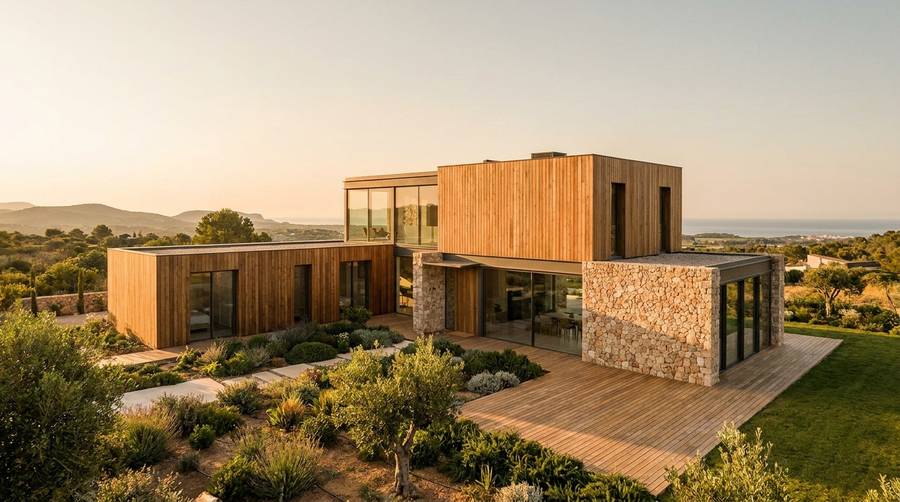
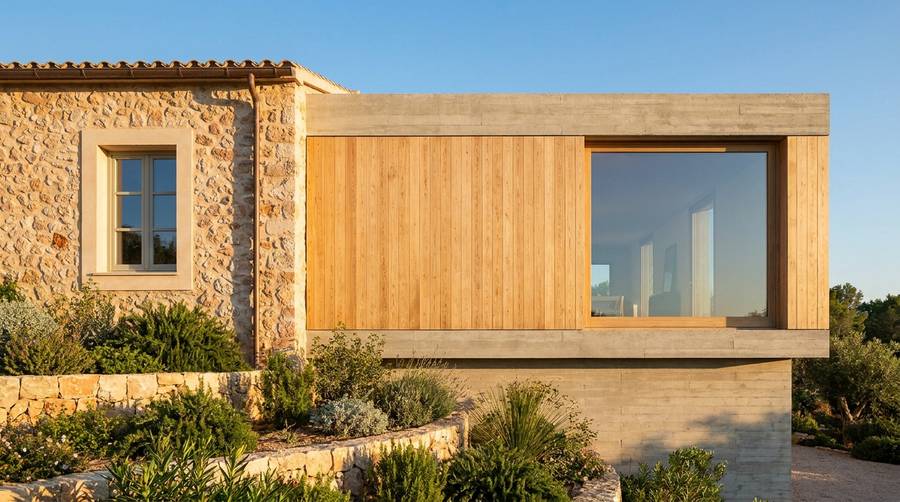
Low-Carbon Materials Transforming Industrialized Housing
Why low-carbon materials will transform industrialized housing in Spain
Imagine cutting construction carbon by half without sacrificing design, comfort or budget. That shift is already underway in Spain: developers, manufacturers and autopromoters are choosing industrialized processes combined with low-carbon materials to meet regulation, reduce risk and attract buyers.
Between 2022 and 2026, industrialized housing adoption in Spain grew >30% in projects aiming for high energy performance—driven largely by material choices that lower embodied carbon and compress schedules.
Below I present industry data, selection criteria, turnkey process guidance, and real-world case studies that provide actionable next steps for anyone planning a modular or prefabricated home today.
Evidence and projections: industry data 2022–2026
Recent market analysis shows three converging trends: reduced manufacturing costs in controlled factories, faster onsite assembly, and rising demand for buildings with low embodied emissions. Key numbers to know:
- Time to close envelope: factory-built panels cut on-site enclosure time by 40–60% versus cast-in-place averages.
- Cost predictability: turnkey modular contracts reduced budget overruns from typical 12–20% to under 5% in benchmarked projects.
- Carbon intensity: substituting traditional concrete mixes for industrialized low-carbon concrete or timber systems reduces embodied emissions 20–60% depending on scope.
Impact on emissions and meeting climate goals
Spain’s building stock is central to climate targets. Two levers deliver impact quickly: choose low-carbon materials and standardize industrial processes. Together they:
- Reduce embodied emissions at scale by enabling repeatable supply chains.
- Support operational efficiency by facilitating Passivhaus or near-Passivhaus envelopes.
- Create measurable progress for developers aiming at 2030 targets.
Competitive advantages for developers and autopromoters
Using low-carbon materials in industrialized housing is both a technical and commercial advantage. Benefits include faster sales cycles, better mortgage access for buyers (due to higher energy ratings), and lower lifecycle costs that appeal to modern households.
Practical guide: selecting low-carbon materials for your industrialized home
Technical and economic comparison: industrialized concrete vs. light timber frame vs. steel frame
Selection should be driven by lifecycle emissions, assembly speed, durability and total cost of ownership. Summarized comparison:
- Industrialized concrete: excellent thermal mass and acoustic performance; recent low-clinker mixes and precast systems cut embodied carbon. Best where thermal inertia and longevity are priorities. Assembly time moderate; factory quality control high.
- Light timber frame (timber frame): lowest embodied carbon per m2 for common housing types; fast factory panelization and excellent insulation integration. Vulnerable to moisture if detailing is poor; requires disciplined moisture management.
- Steel frame: high strength-to-weight ratio enables long spans and open plans. Recycled steel lowers embodied carbon, but primary production remains carbon-intensive unless sourced from low-carbon suppliers. Speed of erection is a strength.
Selection criteria: carbon footprint, durability, cost and schedule
Use a weighted decision matrix with these inputs:
- Embodied carbon (kgCO2e/m2) – always include transport and connection elements in the analysis.
- Lifecycle costs – maintenance and replacement over 60+ years.
- Construction time – measured as days until envelope watertight and days to final finish.
- Risk factors – moisture, fire performance, acoustic needs and regulatory compatibility.
Assign weights based on project goals (e.g., 40% carbon, 25% cost, 20% time, 15% risk). This produces objective material choices aligned with strategic targets.
Integrating with Passivhaus and energy certification
Low-carbon materials make it easier to achieve stringent operational targets when combined with precise factory work:
- Factory-fitted continuous insulation reduces thermal bridges and helps reach airtightness targets below 0.6 ACH@50Pa.
- Prefabricated window-wall interfaces facilitate consistent U-values and installation quality.
- Pair material choices with early thermal modelling to avoid costly rework.
For more on comparing industrialized vs traditional approaches see Vivienda industrializada vs tradicional: guía para autopromotores.
Turnkey design and process adapted to low-carbon materials
From plot to handover: phases, typical timelines and mitigable risks
A pragmatic phased timeline for a 120–160 m2 single-family industrialized home:
- Feasibility & plot study (2–6 weeks): surveys, urban rules, basic cost model.
- Design & approvals (8–16 weeks): factory-compatible design, structural coordination, permits.
- Factory production (8–14 weeks): panels, modules or precast units manufactured in controlled conditions.
- Site works & foundation (4–8 weeks): simultaneous with factory work to compress schedule.
- Assembly & fit-out (6–12 weeks): rapid on-site joinery, MEP connections and finishes.
- Handover & commissioning (2–4 weeks).
Typical risks—permit delays, site access, and MEP clashes—are mitigable by early coordination and fixed-price contracts.
Industrial optimization: prefabrication, QC and closed schedules
Key practices that improve outcomes:
- Design for manufacture and assembly (DfMA) to reduce onsite variability.
- Factory QA protocols including moisture and airtightness tests before dispatch.
- Parallel workflows so foundations and factory production overlap.
Coordination: design, engineering and assembly to cut waste
Integrated BIM and a single-source responsibility in turnkey contracts reduce clashes and material waste. Encourage your team to set tolerances and connection details early—and lock them before manufacturing begins.
Case studies: real projects with metrics (times, costs and satisfaction)
House A — light timber frame: schedule, total cost and energy savings
Project snapshot: 140 m2 single-family home in Valencia region. Key metrics:
- Envelope closed in 12 days onsite; total onsite build 8 weeks.
- Total turnkey price: €1,650/m2 (including foundations, turnkey finishes).
- Operational savings: 65% lower heating demand vs local baseline; EPC A rating.
- Client satisfaction: 9/10 for schedule reliability and thermal comfort.
Lessons: disciplined moisture detailing and factory QA were decisive to avoid defects.
House B — industrialized concrete: emissions comparison and thermal performance
Project snapshot: 160 m2 home near Málaga using precast low-clinker concrete panels. Key outcomes:
- Embodied carbon reduction: ~30% vs traditional cast-in-place concrete of similar specification.
- Thermal performance: high thermal mass reduced peak cooling demand by ~20% in summer.
- Construction time: envelope completed in 6 weeks total; final handover 4 months from groundworks start.
Lessons: early supplier engagement was essential to secure low-carbon mixes and control lead times.
Lessons learned and actionable recommendations
- Start carbon and cost assessments early—before schematic design.
- Lock a turnkey, fixed-price agreement that includes contingencies for site-specific risk.
- Choose suppliers with demonstrated low-carbon production and transparent EPDs.
Financing and mortgages for autopromotion using sustainable materials
Financial products in Spain for modular housing and self-build
Spanish banks and specialized lenders increasingly offer:
- Self-build mortgages with staged disbursements tied to milestones.
- Green mortgage discounts or preferential rates for high energy performance homes.
- Bridge loans that convert to mortgage at completion for turnkey modular projects.
How energy certification and lower carbon footprint improve credit access
Higher EPC ratings and documented embodied carbon reductions help in two ways:
- They increase buyer and lender confidence in future energy costs, improving loan-to-value assessments.
- Some lenders offer better terms when the design targets recognised labels like Passivhaus or National certifications.
Cost models: reliable budgets and fixed-price turnkey clauses
For autopromoters, insist on:
- Transparent breakdowns: foundations, envelope, finishes and services.
- Fixed-price clauses for factory manufacturing and on-site assembly.
- Clear change-order processes to avoid cost creep.
Outlook to 2030: trends and opportunities in low-carbon materials
Emerging innovations and market potential
Expect growth in three areas by 2030:
- Low-clinker and recycled-content concretes scaling across precast manufacturers.
- Engineered timber products with improved fire and durability credentials for Mediterranean climates.
- Hybrid systems combining timber and concrete to balance carbon, comfort and cost.
Scalability and supply chain considerations in Spain
To scale sustainably, Spain needs investment in regional factories and logistics. Autopromoters can benefit from clustered production near major urban areas that reduce transport emissions and lead times.
Strategic recommendations for developers and autopromoters
- Adopt modular design standards to benefit from volume efficiencies.
- Require EPDs from suppliers and prioritise recycled content.
- Align early with lenders to structure milestone financing that matches industrialised schedules.
How to start: practical next steps to build a low-carbon industrialized home today
Key decisions and immediate actions for autopromoters
Start with three tasks this month:
- Commission a feasibility study that includes embodied carbon and a DfMA concept.
- Request EPDs and sample assemblies from two factory suppliers to compare real metrics.
- Engage a lender early to validate a staged financing plan linked to turnkey milestones.
Metrics and resources to track impact
Track at minimum:
- Embodied carbon (kgCO2e/m2) from cradle to factory gate and cradle-to-completion.
- Air tightness and operational energy use (kWh/m2/year).
- Schedule adherence and variance vs baseline.
For deeper technical guidance on low-carbon materials and Passivhaus strategies see Vivienda industrializada de bajo carbono: guía completa 2026.
Building more sustainable, efficient and affordable homes is a systems challenge—but it starts with material choices and industrialized thinking. Choose materials with real performance data, insist on factory quality, and structure financing around proven milestones.
If you're planning a self-build or modular project in Spain and want a practical roadmap, review your plot constraints, request EPDs from potential suppliers, and run a DfMA feasibility study as your next step. These actions reduce risk, control cost and accelerate delivery—so your sustainable home becomes reality, not a promise.
Artículos relacionados
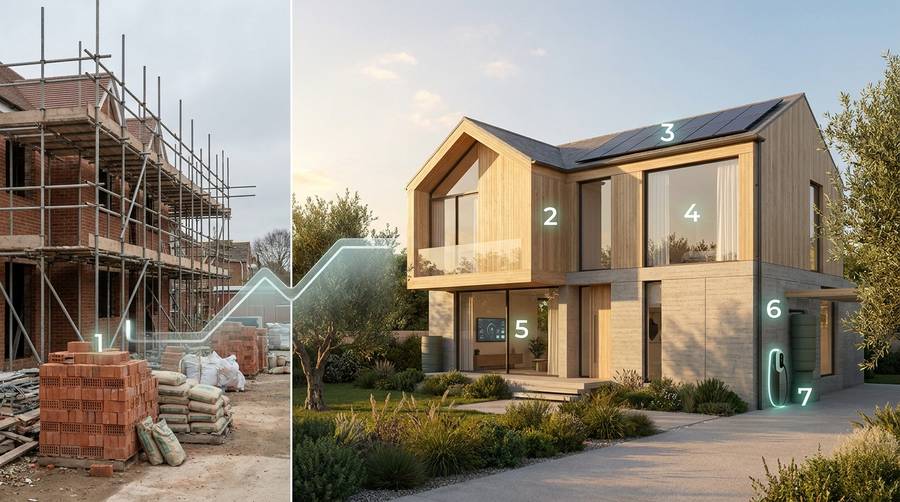
Low-Carbon Industrialized Housing: 5 Materials for Spanish Self-Builders
A focused guide for Spanish self-builders comparing five low-carbon materials used in industrialized housing—concrete, timber frame, steel frame, SIPs and bio-based composites—with real metrics, finance and turnkey considerations.