Prefabricated House Success: A Spanish Turnkey Case
A home that changed the course: story of an industrialized project in Spain
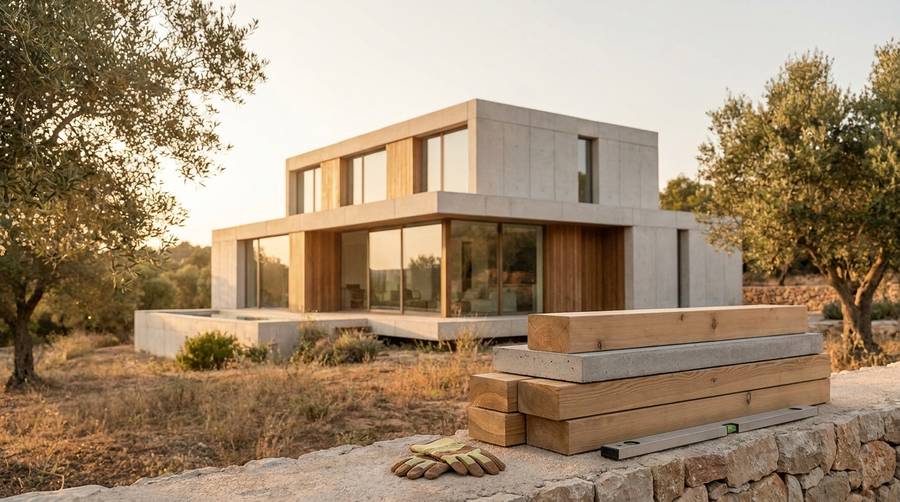
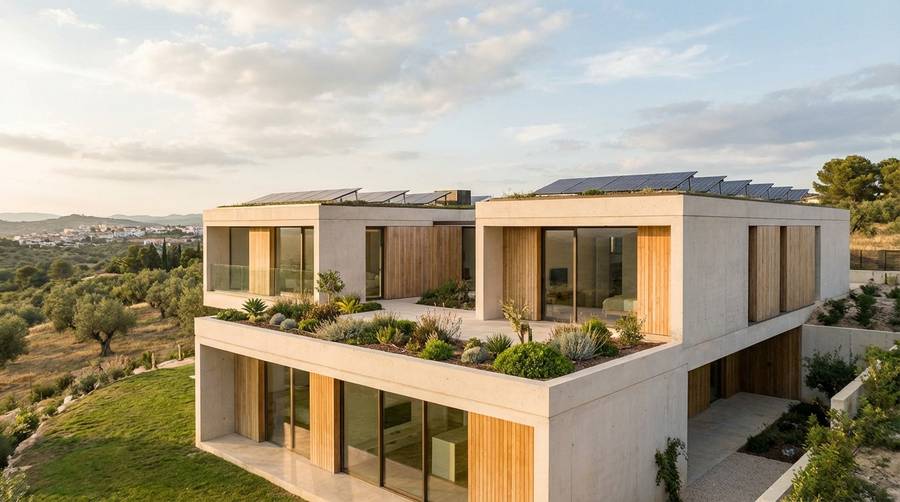
They needed a durable, energy-efficient home delivered on a fixed budget—fast. Within nine months, they moved in. This is the condensed truth behind a real prefabricated house built for a family near Valencia in 2025. The project's clarity of goals and use of industrialized construction turned an uncertain building process into a predictable outcome.
Case presentation: the family, the plot and the housing need
The clients were a four-person family—two professionals and two school-age children—seeking long-term comfort and low running costs. They owned a 600 m² plot on the outskirts of Valencia with a 20% slope and Mediterranean exposure. Their constraints were clear: a hard cap on budget, intolerance for long onsite disruption, and a firm desire for high energy performance (near Passivhaus standards).
Why they chose industrialization over traditional construction
After four quotes from local builders, the family found traditional construction proposals either over budget or open-ended on timing. The industrialized option promised:
- Fixed price contracts with defined scope;
- Predictable schedules due to parallel offsite manufacturing;
- Higher quality control from factory production; and
- Lower operational costs through better insulation and airtightness.
That alignment with their priorities made the decision straightforward.
“We could accept an upfront investment for better comfort if we were certain about final costs and move-in dates.” — Project homeowner
Context and challenge: housing crisis and need for scalable solutions
Local diagnosis: build times, costs and scarce affordable supply
In many Spanish regions in 2024–2025, average build times for a custom home ranged from 12 to 24 months. Price volatility (material and labor) inflated budgets mid-project. For autopromoters—people who commission their own house—this uncertainty often meant cost overruns above 15% and emotional fatigue.
Limitations of the traditional process that pushed them to seek alternatives
The traditional model depends heavily on onsite sequencing: foundations, structure, envelope, and finishes. Delays in any phase cascade. Weather, workforce shortages, and supply chain bottlenecks commonly extended schedules and raised costs.
Promoter objectives: quality, schedule and budget control
The family’s measurable targets were:
- Move-in within 10 months from contract signature;
- Keep total cost within a fixed limit (including contingencies);
- Reach annual heating demand below 15 kWh/m²a (near low-energy standards);
- Obtain a marketable, modern Mediterranean design with natural materials.
The industrialized solution: technical choices and modern materials
Choosing a construction system: industrialized concrete, light timber frame or steel frame
The project evaluated three systems. The final selection combined an industrialized precast concrete basement with a light timber frame (entramado ligero) upper structure. Reasons:
- Precast concrete foundation and plinth gave durable, damp-resistant base for the sloped plot.
- Timber frame for the envelope enabled fast panelized manufacturing, high insulation and a warm interior aesthetic consistent with Mediterranean homes.
- Steel was considered for larger spans but rejected to preserve thermal balance and natural material feel.
Energy efficiency and sustainability: Passivhaus measures and carbon reduction
Key sustainability measures included:
- Continuous external insulation (EPS and mineral wool) with U-values targeting 0.18 W/m²K for walls;
- Airtightness target of n50 ≤ 1.0 h⁻¹ achieved in factory pretests and confirmed post-assembly;
- High-performance triple glazing with solar control and thermally broken frames;
- Mechanical ventilation with heat recovery (MVHR) sized per actual occupancy patterns;
- Low-carbon choices in finishes (locally sourced timber, recyclable insulation).
Combined, these measures reduced expected heating/cooling energy by roughly 65% compared with a typical new-build in the region.
Advantages versus onsite work: fixed timelines, fixed price and predictability
Because the panels and assemblies were manufactured simultaneously with onsite groundwork, the total program shortened substantially. Benefits realized:
- Factory QA controlled material tolerances and installation details.
- The client signed a fixed-price turnkey contract covering design, permits, manufacturing, transport, assembly and final finishes.
- Transparent milestones and liquidated damages clauses created shared incentives for schedule adherence.
Turnkey process: from plot to delivery in record time
Clear phases: site assessment, design, prefabrication, assembly and finishes
The timeline (months from contract signature):
- Month 0–1: Detailed site survey, geotechnical study and concept design;
- Month 1–3: Technical design and permit submission (design-for-manufacture principles applied);
- Month 3–6: Offsite prefabrication of panels, MVHR units and bathroom pods; foundations completed onsite in parallel;
- Month 6–7: Transport and rapid assembly (crane-assisted) over 10 working days;
- Month 7–9: Interior finishes, systems commissioning and final handover.
This sequencing cut what would typically be a 15–18 month project to under nine months.
Integrated management and coordination: reducing uncertainty for the autopromoter
A single project management team handled permits, supply chain logistics and coordination between factory and site teams. Tools used:
- Simple milestone dashboard shared with the family;
- Weekly site/factory coordination calls;
- Pre-delivery mock-ups in the factory to validate finishes and interfaces.
These actions reduced surprises and kept decision points timely and documented.
Practical financing: autopromoter mortgages and payment options
Financing combined a dedicated self-build mortgage (hipoteca para autopromoción) during construction with a conversion to a standard mortgage at handover. Practical points:
- Use of staged payments tied to factory completion and site milestones minimized interest on unused funds.
- Clear fixed-price contracts helped banks underwrite risk more favorably, lowering margins.
- Some clients used mixed financing: part traditional mortgage, part personal equity to avoid increased loan-to-value during construction.
Measurable results: timelines, costs and real satisfaction
Project metrics: manufacturing and assembly time, cost vs traditional
Final measurable outcomes for this project:
- Total calendar time from contract to handover: 9 months;
- Factory lead time for panels and pods: 12 weeks;
- Onsite assembly: 10 working days; full finishes: 8 weeks;
- Total project cost: roughly 7% lower than the average traditional-build quotes received earlier, once lifecycle energy savings were considered;
- Change orders: below 2% of contract value, due to decisions made during design stage and fixed-price structure.
Comfort and efficiency indicators: energy use and certifications
Measured first-year results:
- Heating demand: 14 kWh/m²a (near the initial target);
- Airtightness measured at n50 = 0.9 h⁻¹;
- Electricity consumption for the household (including MVHR and appliances): 30% lower than comparable new local homes;
- Certification: Passive-approach verification achieved (not full Passivhaus certified, but meeting most performance criteria).
Testimonial and client satisfaction metrics
Client-reported satisfaction (12 months post-occupancy):
- Overall satisfaction: 9.4/10;
- Value-for-money: 8.8/10;
- Disruption tolerance (construction impact): 9.6/10;
- Would recommend industrialized route to family/friends: 92% said yes.
“It felt like buying a high-quality product rather than gambling on a long, stressful build.” — Homeowner survey response
Technical comparison and positioning: why industrialization is gaining ground
Objective analysis versus competitors: thermal performance, quality control and durability
Compared to traditional masonry builds, industrialized systems often deliver:
- Better factory-level QA and repeatable details, lowering onsite rework;
- More reliable thermal continuity and airtightness, yielding predictable energy performance;
- Faster timelines that make housing supply more scalable when replicated.
Risks and mitigations: avoiding negative perceptions of prefabrication
Common concerns—homogenization, perceived low quality, limited customization—are mitigated by:
- Customizable facades and material choices (local stone, wood cladding, textures);
- Early involvement of end-users in design options and factory mock-ups;
- Transparent documentation and warranty packages covering structure and services.
Recommendations for autopromoters prioritizing sustainability and predictability
Actionable advice:
- Start with a clear, prioritized brief (budget cap, timeline, energy target).
- Choose systems that align with local climate and aesthetic expectations (timber frames for Mediterranean warmth).
- Insist on factory QA metrics and airtightness guarantees in contracts.
- Plan financing early; fixed-price turnkey offers banks easier underwriting.
Lessons learned and an invitation to act on the housing challenge
Replicable keys from the case: scalability, transparency and collaboration
What made this project repeatable:
- Design-for-manufacture rules that cut decision cycles;
- Shared digital milestones between factory, site and client;
- Open budgeting with visible contingencies and change-order controls;
- Use of modern materials balanced with Mediterranean design language.
How to start your own industrialized house project in 2026: practical steps
Step-by-step:
- Clarify your brief: budget cap, energy targets, must-have spaces;
- Assess your plot: access, slope, connection costs and microclimate;
- Request turnkey proposals from reputable industrialized providers with factory visits;
- Compare fixed-price offers, lead times and warranty terms;
- Secure staged financing (autopromotion mortgage) to align payment with milestones;
- Use a neutral technical advisor for contract review and commissioning tests (airtightness, MVHR balance).
For a broader, structured guide on choosing between approaches, see Guía 2026: casa prefabricada y vivienda industrializada which walks through comparisons and procurement checklists.
Final inspirational message: building accessible, quality and sustainable housing
Industrialized housing is not a shortcut—it is a disciplined approach that aligns design, manufacturing and finance to produce homes that are faster, more predictable and often more sustainable. For autopromoters who demand control over cost, time and performance, the industrialized route is a viable and increasingly proven path.
If you're ready to explore a turnkey prefabricated route for your plot, start by listing your three non-negotiables—budget cap, move-in date and energy target—and request two factory-validated proposals. Clear priorities create predictable outcomes.
Artículos relacionados