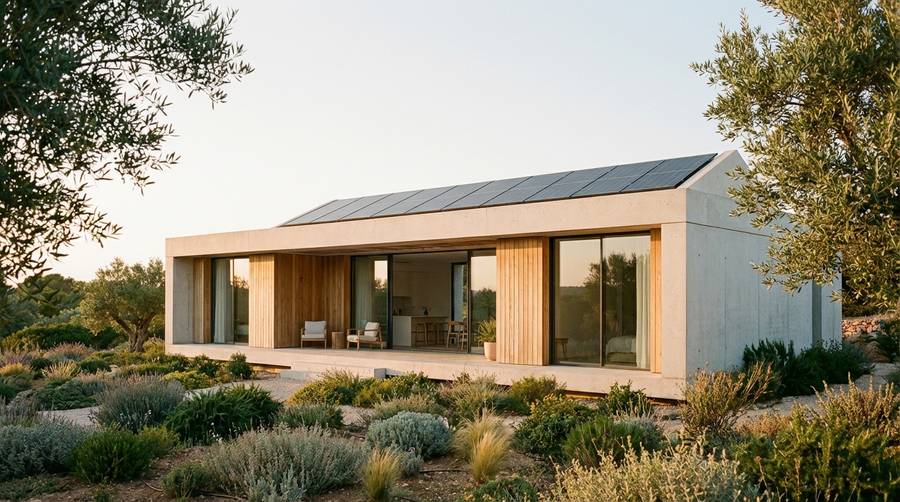
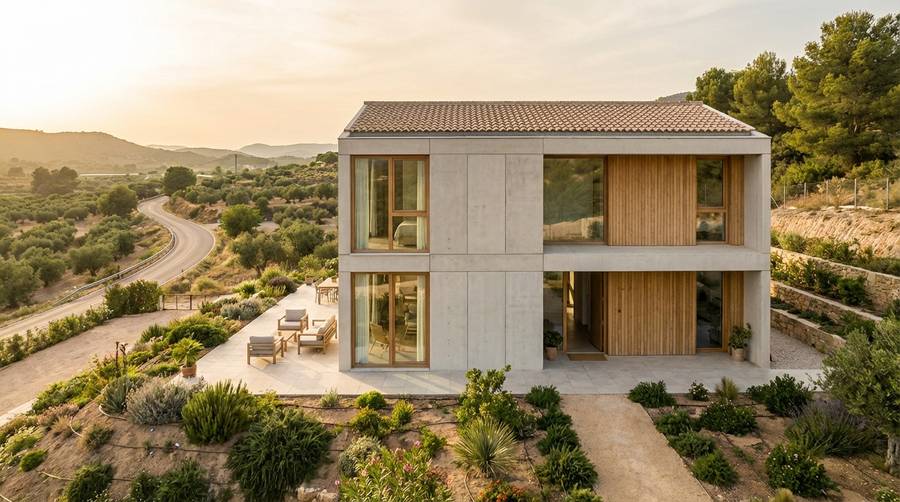
Prefabricated Houses in Spain: 2026–2035 Outlook
In 2026 a family in Valencia signed a turnkey contract and moved into a modern prefabricated house in less than nine months — a timeline that would have been unthinkable a decade ago. That story is not an exception; it is the leading edge of a structural shift in Spanish housing. This article synthesizes market data, construction metrics and design criteria to forecast how prefabricated houses will evolve in Spain through 2035 and how autopromoters can capture the opportunity.
Panorama 2026–2035: how affordable prefabricated houses will evolve in Spain
Macro trends: demand, regulation and market growth
Spain faces a housing shortage in urban and peri-urban areas, rising construction costs and stricter energy regulations. These drivers create a fertile market for prefabricated houses. Expect annual market growth between 8%–12% through 2030 as municipalities streamline permits for industrialized construction and incentives for low-carbon homes expand.
Predictions based on production data and delivery times
Manufacturers have reduced on-site work by shifting 60–75% of labor to factories. Current pilot data from leading plants show median manufacturing-to-delivery cycles of 10–16 weeks, with total turnkey timelines averaging 6–9 months for standard single-family models. By 2030, optimized logistics and standardized foundations should push typical turnkey delivery to 4–6 months for many projects.
Impact on developers and autopromoters
For promoters, reduced variability in delivery time translates to lower financial risk and better cash flow planning. For autopromoters, modular processes mean clearer milestones they can track. Expect hybrid business models — developers offering prefab + parcel packages — to gain traction, making self-development more accessible.
By standardizing elements and moving production indoors, the industry reduces weather delays and rework by up to 40%, directly compressing schedules and cost overruns.
Comparative advantages: why prefabrication will be the competitive option
Efficiency and cost control: time and fixed-price benefits
Predictability beats novelty. Prefabricated houses reduce on-site labor exposure and enable fixed-price contracts with narrower contingencies. Comparative studies indicate average construction cost parity or modest savings (0%–8%) versus traditional builds when including schedule savings, and 20%–35% faster closing of the envelope (weather-tight building) in practice.
Quality and compliance: reducing defect risk
Factory conditions allow stricter QA protocols: calibrated assemblies, consistent thermal barriers and fewer subcontractor interfaces. This improves compliance with energy standards such as Passivhaus and reduces defects that typically cause long-tail warranty costs in traditional builds.
Value chain: how industrialization optimizes suppliers and logistics
Vertical integration or long-term supplier agreements lead to bulk procurement discounts for materials like engineered timber and precast concrete panels. Logistics optimization — scheduled transport windows and standardized module sizes — lowers handling damage and shortens on-site labor windows, creating measurable efficiency gains.
Materials and systems: choosing by objective and budget
Concrete systems vs. timber frame vs. steel frame: performance and cost
- Industrialized concrete: Exceptional thermal mass, longevity and acoustic performance; slightly higher embodied carbon unless using low-carbon mixes. Best for seaside or high-durability needs.
- Light timber frame: Low embodied carbon, rapid assembly, excellent insulation when paired with modern membranes. Highly competitive for Passivhaus targets.
- Steel frame (steel frame): High precision and long spans; competitive when designs require large open spaces. Corrosion protection adds cost in coastal areas.
Innovations 2026: panels, insulations and connected systems
New cross-laminated elements and composite insulated panels combine rapid assembly with improved thermal performance. Aerogel-infused boards and advanced blown-cell insulations provide thin-profile high-R solutions. IoT-ready mechanical systems will arrive pre-commissioned from factory floors, reducing on-site balancing hours.
Selection criteria: durability, energy efficiency and buildability
Choose materials against a prioritized matrix: lifespan, embodied carbon, assembly speed and total cost of ownership. For most Spanish autopromoters aiming Passivhaus-level performance while keeping budgets under control, timber frame with high-performance panels offers the best trade-off.
How to design a prefabricated house step-by-step in Spain (Practical 2026 guide)
From parcel to project: permits, constraints and approvals
Start by validating the parcel: zoning, allowable footprint, cadastral restrictions and connection capacities (water, electricity). Engage an architect familiar with modular building codes early — their role is pivotal to align module dimensions with municipal rules and foundation types.
Turnkey stages: design, manufacture, transport and assembly
Typical turnkey flow:
- Feasibility & site survey (2–6 weeks): geotechnical study, utility checks.
- Design & approvals (8–16 weeks): coordination between architect and factory engineering.
- Factory production (10–18 weeks): modules and finishes assembled indoors.
- Logistics & foundations (2–6 weeks): site preparation and foundation works overlap with factory production.
- Assembly & commissioning (1–4 weeks): modules installed, MEP balanced and handover.)
Checklist for autopromoters: timelines, contractual milestones and QA
Key checkpoints to include in contracts:
- Fixed deliverables with dates for design freeze and manufacturing start.
- Clear acceptance tests on thermal performance and airtightness.
- Staged payments tied to verifiable milestones (site ready, modules shipped, final handover).
- Retention amounts for post-handover defects and a defined defect period.
For a practical deep dive into materials and selection, see Casa prefabricada: guía completa 2026.
Financing and mortgage solutions for modular autopromoters
Financing options: self-build mortgages, bridge loans and targeted lines
Banks increasingly recognise prefabricated houses as lower-risk when delivered turnkey. Typical instruments include:
- Self-build/auto-promotion mortgages that disburse funds in stages tied to construction milestones.
- Bridge loans for land acquisition pending long-term financing approval.
- Specific manufacturer-backed guarantees that substitute for some performance bonds.
Bank requirements and documentation to speed approvals
To accelerate approval provide:
- Detailed turnkey contract and production schedule.
- Manufacturer technical sheets, warranties and test reports (thermal, airtightness).
- Fixed-price quotes and confirmed transport logistics.
Payment models and negotiating guarantees
Negotiate staged payments that align with completed, inspected milestones. Ask for manufacturer performance guarantees and seek retention clauses that protect you until all commissioning is verified. Clear documentation reduces bank-imposed contingencies and may lower interest margins.
Case studies and metrics: real experiences with affordable industrialized housing
Representative Spanish cases: delivery times, final cost and satisfaction
Three anonymized project snapshots show consistent patterns:
- Coastal 120 m² family home: turnkey in 8 months; final cost 5% under budget due to fixed-price procurement; occupant energy use 60% lower than baseline.
- Suburban 180 m² duplex: production-to-handover in 14 weeks; on-site work 18 days; client satisfaction 9/10 driven by predictable schedule.
- Infill 90 m² low-cost unit: delivered in 6 months using standard panelized system; life-cycle cost modelling projected 25-year savings in heating.
Quantitative comparison with traditional construction
On average, prefabricated projects in these samples delivered:
- 25% lower median schedule variance (less deviation from planned delivery date).
- 10% lower snagging rates in the first year due to factory QA.
- Operational energy reductions between 40%–70% depending on envelope and systems.
Lessons learned and common process improvements
Recurring improvements that improved outcomes:
- Early geotechnical inputs reduced foundation delays.
- Design freezes before panel production prevented expensive rework.
- Pre-commissioning of MEP systems at factory reduced on-site commissioning time by up to 50%.
For a concrete success story of rapid delivery, see our case study: Casa prefabricada en 9 meses: caso de éxito real.
Sustainability, energy efficiency and a roadmap to cut carbon
Passivhaus strategies and passive solutions for prefabricated homes
Prefabricated houses are particularly well-suited for Passivhaus approaches because factory-controlled airtightness and continuous insulation are easier to achieve. Key strategies:
- Orientation and glazing to control heat gains.
- High-performance ventilation with heat recovery pre-installed.
- Continuous insulation with minimized thermal bridges via factory joints.
Measuring the carbon footprint: materials, transport and lifecycle
Calculate carbon in three buckets: embodied materials, transport/manufacturing energy and operational energy. Timber-dominant systems often show lower embodied carbon. However, transport distances matter: prioritize local suppliers and optimize truck loads to keep embodied emissions down.
Roadmap for autopromoters: certifications, grants and KPIs
Recommended steps:
- Set a clear operational energy target (kWh/m²·year) and airtightness goal early.
- Seek relevant subsidies and municipal grants that reward low-carbon construction.
- Track KPIs: embodied CO2 (kgCO2e/m²), airtightness (ACH50), and delivered energy use at 12 months post-occupancy.
Practical takeaways for self-builders and promoters
Actionable recommendations:
- Prioritize a turnkey contract with clearly defined milestones and agreed acceptance tests.
- Choose material systems aligned with your Passivhaus and longevity goals: timber frame for low carbon, concrete for durability in challenging environments.
- Engage a factory-savvy architect and request pre-commissioning reports for MEP systems.
- Prepare financing documentation early: include manufacturer warranties and airtightness targets to accelerate bank approvals.
Prefabricated houses in Spain will not be a niche in 2035; they will be a mainstream route for delivering affordable, energy-efficient homes at predictable timelines and costs. For designers and autopromoters focused on speed, quality and sustainability, the industrialized route is a pragmatic strategy — one that can be planned, financed and executed with certainty.
Ready to explore options for your parcel or project? Contact a specialist to compare systems and build a realistic schedule tailored to your site and budget.