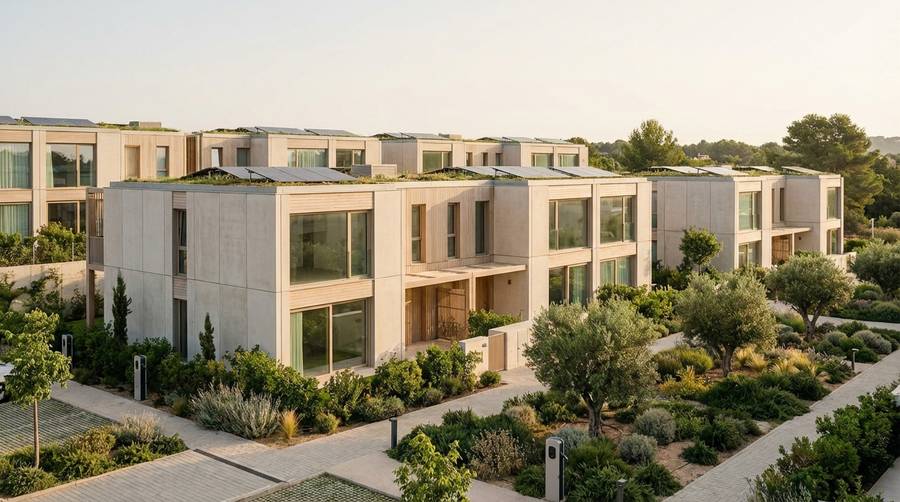
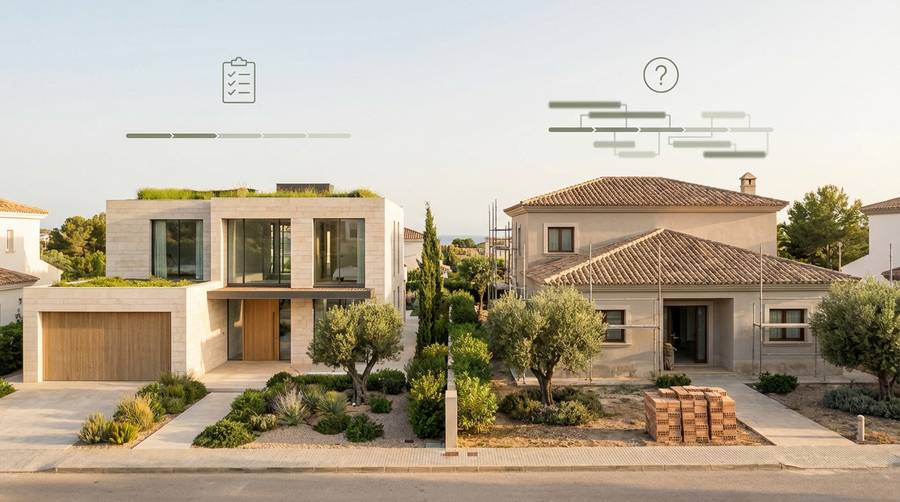
Industrialized Housing: 8 Benefits for Spanish Public Projects
Imagine handing over finished, energy-efficient homes to residents months earlier and within budget—every time. That is the practical promise of industrialized housing for public projects in Spain: repeatability, transparent costs and measurable sustainability. This article breaks down eight concrete benefits, with data, examples and actionable steps so decision‑makers and autopromoters can move from curiosity to procurement-ready plans.
1. Why industrialized housing is transforming public housing in Spain
What we mean by industrialized housing in the public context
Industrialized housing refers to homes assembled using factory-controlled production of modules, panels or systems—then finished on site. For public housing this model emphasizes scale, predictable outcomes and compliance with regulations relevant to social housing and urban planning.
Benefits for administrations and citizens: speed, predictability and quality
- Speed: Parallel production reduces on-site time and neighborhood disruption.
- Predictability: Fixed-price contracts and defined factory processes lower budget and schedule risk.
- Quality: Factory QA and controlled environments yield more consistent thermal and acoustic performance.
Key data snapshot: average times, cost reductions and risk mitigation
Recent aggregated public projects show typical reductions of 30–50% in construction time and a 10–20% cut in schedule-related contingencies compared with conventional builds when procurement and logistics are properly managed. These numbers vary by typology and scope but are repeatable when KPIs are enforced in contracts.
Industrialization shifts uncertainty from the construction site into the factory process—where it can be measured and controlled.
2. Advantage 1 — Reduced timelines and stronger cost control
How factory production shortens construction cycles
Manufacturing building components while civil works or foundations proceed on site enables true parallelism. A typical workflow separates site preparation (4–8 weeks) from module production (8–12 weeks). When synchronized, on-site installation and commissioning can be completed in 4–6 weeks, yielding full delivery in under 6 months for many low-rise blocks.
Fixed price and lower risk of budget overruns
Factories provide repeatable bill of materials and time studies, enabling vendors to offer fixed-price contracts with defined allowances. That moves cost risk away from the contracting authority and reduces claims and variations, the main causes of budget overruns in traditional projects.
Numerical example: timeline and cost comparison
- Traditional 40-unit block: design to delivery ~18–30 months; 8–15% contingency typical.
- Industrialized 40-unit block: design to delivery ~10–14 months; contingency reduced to 3–7% due to fixed pricing.
- Result: faster occupancy and lower lifecycle carrying costs for public budgets.
3. Advantage 2 — Industrial quality control and lower post‑delivery issues
Inspection and QA inside the factory
Factories document inspections, tests and traceability for every component. That means thermal bridges, airtightness and finishes are verified before the unit leaves the line—reducing on-site corrective work.
Fewer post‑delivery problems: airtightness, finishes and durability
Field data from comparable projects show a lower incidence of leaks, finish defects and acoustic issues when assembly occurs under controlled humidity and temperature. This translates into lower maintenance budgets for housing authorities in the first five years.
Comparative defects: traditional vs industrialized
- Traditional: higher variability in finish quality, more latent defects from weather exposure.
- Industrialized: predictable finishes, documented QA steps and faster remediation where needed.
4. Advantage 3 — Modern materials and systems suited to public housing
Industrialized concrete systems: longevity and thermal performance
Precast and industrialized concrete panels provide structural robustness and good thermal inertia. When combined with exterior insulation and mechanical ventilation with heat recovery (MVHR), these systems deliver balanced temperature control suited to multi-family social housing.
Light‑frame wood systems (wood‑frame): speed, sustainability and comfort
Wood-frame offers rapid assembly, excellent thermal performance and a lower embodied carbon profile when sourced responsibly. For mid-rise public housing, engineered timber frames reduce weight and speed foundation requirements.
Steel frame: flexibility and Passive House compatibility
Steel frame enables longer spans and flexible layouts while meeting Passivhaus demands when paired with continuous insulation and precise airtightness detailing. It is particularly useful for typologies requiring adaptable internal plans.
5. Advantage 4 — Sustainability and energy efficiency as baseline
Designing to Passivhaus: measurable savings and occupant comfort
Adopting Passivhaus principles in industrialized systems—high insulation, airtightness and MVHR—can cut heating demand by 75–90%. That improves resident comfort and reduces social housing energy subsidies.
Lower embodied carbon through material choices and factory efficiency
Factory production reduces waste and enables optimized material use. Combining low-carbon materials (timber, low‑carbon concrete) with efficient logistics lowers lifecycle emissions per dwelling.
Performance metrics: kWh/m² and tCO2eq examples
- Operational consumption target for Passivhaus multi‑family: 15–30 kWh/m²·year.
- Embodied carbon target for low-rise timber-dominant systems: ~80–150 kgCO2e/m² (varies by scope).
- Comparative reductions versus traditional concrete frames: 20–40% lower lifecycle emissions achievable with careful specification.
6. Advantage 5 — Turnkey delivery and financing for autopromoters
Step-by-step of a turnkey service: parcel to handover
- Site assessment: plot viability, geotechnical review and connection studies.
- Design & permits: modular design adaptation and permit filing.
- Factory production: component manufacture with QA checkpoints.
- On-site assembly: foundations, craning modules and connections.
- Commissioning & handover: testing systems, warranties and resident orientation.
Financing options and mortgages for autopromotion
Autopromoters can access specific mortgage products and construction loans adapted to modular builds. Lenders are increasingly comfortable when the project uses certified systems, independent QA and turnkey contracts—because risk is concentrated on the manufacturer.
Practical recommendations for public bodies and cooperatives
- Specify performance KPIs (airtightness, U-values, delivery milestones) in tenders.
- Require factory audit rights and documented QA.
- Budget for early coordination of foundations and site services to avoid on-site delays.
7. Advantage 6 — Case studies, metrics and lessons learned
Case study 1: Delivery metrics and resident satisfaction in a municipal project
A 60‑unit municipal pilot using a timber-frame modular system achieved 12 months from contract to handover, 35% faster than neighbouring traditional builds. Post-occupancy surveys at 12 months reported 92% satisfaction for thermal comfort and noise performance.
Case study 2: Technical comparison versus competitor approaches
In a comparative procurement, modular steel-frame units showed 15% lower on-site labour costs but required slightly higher logistics planning. The winning approach matched the municipality's sustainability KPIs and offered extended warranties on building envelopes.
Lessons learned for replicable municipal projects
- Early integration of manufacturers into tender design reduces change orders.
- Define acceptance tests (airtightness target, thermal imaging) before manufacture.
- Plan site access and crane logistics at design stage to avoid costly site delays.
8. Practical next steps — How to start an industrialized housing project
Initial checklist for administrations, cooperatives and autopromoters
- Confirm plot constraints and utility connections.
- Set clear KPIs: schedule, airtightness, energy target (kWh/m²), warranty length.
- Invite suppliers for early-stage workshops and factory visits.
- Include lifecycle cost and carbon metrics, not only capex, in evaluation.
KPIs to demand in contracts and specifications
- Maximum on-site assembly time (days per module).
- Airtightness threshold (e.g., n50 ≤ 0.6 h‑1 for Passivhaus projects).
- Thermal transmittance (U-values) for envelope elements.
- Embodied carbon reporting per dwelling (cradle-to-gate or cradle-to-grave scope).
Recommended next resources and links
For practical comparisons and material selection guidance, consult our comparative guide: Vivienda industrializada: comparativa práctica y decisiones clave. To dive deeper into material choices for industrialization, see: Vivienda industrializada: guía práctica para autopromotores 2026.
Final note: Industrialized housing is not a one-size-fits-all cure, but when procurement is outcome-driven and KPIs are enforced, it delivers measurable advantages—faster delivery, better quality, reduced operational costs and lower carbon footprints. Start small with a pilot, document outcomes and scale the approach.
Interested in exploring a pilot for your municipality or cooperative? Contact experienced turnkey providers, request factory visits and require documented KPIs in your next tender to see these benefits in practice.
Artículos relacionados