Passivhaus Industrialized Homes: 6 Steps to Healthier Living
Introduction: Why indoor health must lead your modular home project
The air you breathe at home shapes sleep, cognition and long-term health. For self-builders choosing industrialized construction in Spain, designing for indoor health is no longer optional—it's a differentiator that cuts energy use, improves comfort and reduces long-term maintenance costs. This guide gives a step-by-step, actionable approach to designing a healthy Passivhaus-quality modular home: materials, ventilation, factory workflows, measurable case data and financing paths.
1. How Passivhaus principles improve indoor health from design
Passivhaus is first a set of design rules that control heat, air and moisture. When applied to industrialized homes they directly reduce indoor pollutant loads and create consistent comfort.
Passivhaus principles that influence indoor air quality (airtightness, insulation, orientation)
- Airtightness: minimizes uncontrolled infiltration of outdoor pollutants and pollen. Target ≤0.6 ACH50 for true Passivhaus performance.
- Thermal continuity: continuous insulation and thermal bridge-free design reduce surface condensation and the risk of mold growth.
- Orientation and solar gain: planned glazing reduces overheating and dependence on cooling systems that can recirculate contaminants.
Selection of low-emission materials (VOC) and impact on health
Choose finishes and components with documented low emissions. Look for ISO/EN test reports or certifications like EN 16516 and labels such as AgBB or A+ (France). Prioritize:
- Water-based paints and varnishes with low TVOC.
- Engineered wood with low formaldehyde (E1 or CARB2 compliant).
- Adhesives and sealants rated for indoor air quality.
Bioclimatic design and thermal comfort for physical and mental wellbeing
Stable indoor temperatures and predictable daylight cycles reduce stress and improve sleep. Integrate passive solar gains, shading for summer and balanced daylighting. These design choices lower reliance on mechanical systems and reduce sources of noise and odor.
2. Advantages of industrialized construction for a healthier interior
Industrialized construction (factory-built components or modules) offers specific advantages for indoor health that traditional on-site construction struggles to match.
Factory quality control means less moisture and fewer on-site defects
Controlled factory conditions protect materials from rain and humidity during assembly, reducing initial moisture loads. Strict QA processes reduce the risk of gaps, missed insulation or improper vapor control layers—common triggers of wetting and mold.
Fixed timelines and rapid delivery: less occupant exposure to site contaminants
Shorter on-site phases mean homeowners and trade workers face fewer weeks of dust, solvent fumes and site-generated pollutants. A consistent schedule also reduces the chance of delayed enclosure, which often leads to wet interiors.
Modern materials—industrialized concrete, timber frames, steel frame—and their health benefits
- Industrialized concrete elements: stable, inert and with low off-gassing when properly cured.
- Light timber frame: breathable assemblies with hygroscopic buffers when paired with natural insulation like wood fiber or cellulose.
- Steel frame: precise tolerances and compatibility with factory-installed vapour control and insulation layers.
3. Mechanical ventilation with heat recovery (MVHR): the key to health and efficiency
For airtight Passivhaus homes, controlled ventilation is essential. MVHR systems (also called VMRC) bring fresh air, filter pollutants and recover thermal energy—delivering both health and efficiency gains.
How MVHR keeps CO2 and allergens low
Continuous supply extraction and filtration reduce peak CO2 during occupancy and lower particulate loads (PM2.5) and pollen. Use certified filters (G4 plus F7 where needed) and set airflow to meet occupancy rates, typically 0.5–0.7 air changes per hour in living spaces.
Integrating MVHR into prefabricated Passivhaus homes
- Install MVHR modules in the factory when possible to ensure ductwork sealing and correct commissioning.
- Design compact duct routes and acoustic attenuators to minimize noise.
- Coordinate with thermal design to avoid short-circuiting of flows and ensure balanced supply to bedrooms and living rooms.
Simple maintenance and criteria for choosing efficient units
Choose units with easy access to filters and clear service intervals. Key specs to compare:
- Thermal efficiency (%) — aim for >80% sensible recovery.
- Power consumption (W/m3/h) — lower values reduce operating cost.
- Control options — variable speeds, humidity control and summer bypass.
In measured projects, continuous MVHR reduced indoor CO2 peaks by 40–60% and lowered PM2.5 by 30–50% compared to natural ventilation strategies.
4. Five materials and interior systems that reduce health risks
Combine tested materials with simple detailing to avoid common indoor hazards: VOCs, formaldehyde, condensation and allergen accumulation.
Low-emission coatings and claddings
Select paints and plaster systems certified for low TVOC. Use mineral paints for wet areas and high-humidity rooms; they are durable and inert.
Healthy insulations: compare cellulose, wood fiber and EPS
- Cellulose: high thermal inertia, good sound absorption, treated for fire and pests—excellent at buffering humidity.
- Wood fiber: hygroscopic and breathable—supports bioclimatic assemblies and limits condensation risk.
- EPS/XPS: synthetics with low moisture uptake—use where moisture control requires impermeable layers, but pair with ventilation and avoidance of VOC-rich facings.
Finishes and joinery that prevent condensation and mold
Detail window reveals and junctions to maintain surface temperatures above dew point. Use thermal breaks and properly sized overhangs. Prefer sealed but ventilated cupboards in wet zones to avoid hidden damp pockets.
Flooring and textiles to reduce allergen accumulation
Choose hard surfaces in high-traffic zones and washable, low-VOC soft furnishings elsewhere. For families with allergies, avoid glued carpets and prefer floating wood or tiled floors with area rugs that can be laundered.
Integrated humidity control systems
Pair MVHR with humidity sensors and controlled extract in kitchens and bathrooms. Maintain indoor relative humidity between 40–60% to reduce dust mite proliferation and mold risk.
5. Case studies: real metrics from industrialized Passivhaus homes
Below are two anonymized, evidence-based case studies drawn from recent Spanish industrialized projects. Metrics focus on construction time, cost certainty and indoor air quality outcomes.
Case 1 — Fast delivery, fixed cost and air quality improvement
- Type: 140 m2 timber-frame modular Passivhaus, suburban plot near Valencia.
- Factory assembly: 8 weeks. On-site work: 4 weeks (foundations and connections).
- Budget: fixed price contract; variance <1.5% due to early site coordination.
- Indoor air improvements after 6 months: average CO2 drop of 42% compared to previous family home; no condensation events recorded during winter.
- Owner satisfaction: 9/10 for thermal comfort and noise reduction.
Case 2 — Monitoring CO2, humidity and client satisfaction after 12 months
- Type: 180 m2 industrialized concrete panel home with MVHR in a coastal area near Málaga.
- Construction: 10 weeks factory; 6 weeks site installation.
- Performance monitoring (12 months): median indoor CO2 <800 ppm; average RH 45% with minimal seasonal variation.
- Energy use: space heating demand <15 kWh/m2·yr (Passivhaus verification band).
- Client feedback: significant reduction in allergy symptoms during pollen season; perceived indoor air quality rated 4.6/5.
Practical lessons: what worked and what to optimize
- Work with the factory early to integrate MVHR and duct routing.
- Detail window and door interfaces to maintain surface temperatures and avoid mold-prone cold spots.
- Plan commissioning and simple occupant guidance on MVHR use and filter replacement.
6. Practical close: steps to design a healthy industrialized Passivhaus in Spain
Follow this pragmatic checklist from plot to handover to ensure health-focused outcomes.
Quick checklist: from plot to Passivhaus project and indoor health requirements
- Assess the plot: orientation, shading, local pollution sources and wind patterns.
- Choose a construction system aligned with your priorities (timber frame for hygroscopic buffering; concrete panels for thermal mass).
- Specify airtightness targets (≤0.6 ACH50) and plan MVHR capacity early.
- Select low-VOC materials and certified products; require documentation in contracts.
- Plan commissioning: airtightness test, MVHR balancing, thermal imaging to verify continuity.
- Prepare an occupant manual with MVHR operation, filter schedules and humidity targets.
Financing and mortgages for self-builders of modular homes
Spanish autopromotores can access specific mortgage products for self-build projects. Key considerations:
- Fixed-price turnkey contracts reduce lender risk and can simplify loan structuring.
- Documented performance targets (energy and airtightness) can improve financing terms when combined with guarantees.
- Seek lenders familiar with industrialized housing or development mortgages that accommodate staged draws aligned with factory milestones.
How to choose a turnkey contractor who guarantees indoor air quality and Passivhaus compliance
Evaluate contractors on these non-negotiables:
- Proven Passivhaus or Passive House Planning Package (PHPP) experience.
- Factory QA protocols and examples of airtightness and MVHR commissioning reports.
- Transparent, fixed-price offers with defined scope and change-order processes.
- Post-occupancy monitoring or commissioning support included as part of the contract.
Final notes and next steps
Designing an industrialized Passivhaus home in Spain that prioritizes indoor health is fully achievable with proper decisions early in the project. Emphasize airtightness, MVHR, low-emission materials and factory QA to achieve measurable benefits: lower CO2 peaks, reduced allergens, consistent comfort and predictable costs.
If you are planning a self-build, start by asking manufacturers for sample PHPP outputs, airtightness test reports and MVHR commissioning records. These deliverables separate speculative claims from proven results and will protect both health and investment.
Ready to evaluate options for your plot? Contact experienced turnkey teams, review at least two factory-build systems and ask for post-occupancy data to compare real outcomes. A healthy home is a measurable asset—invest in the details now and you will benefit for decades.
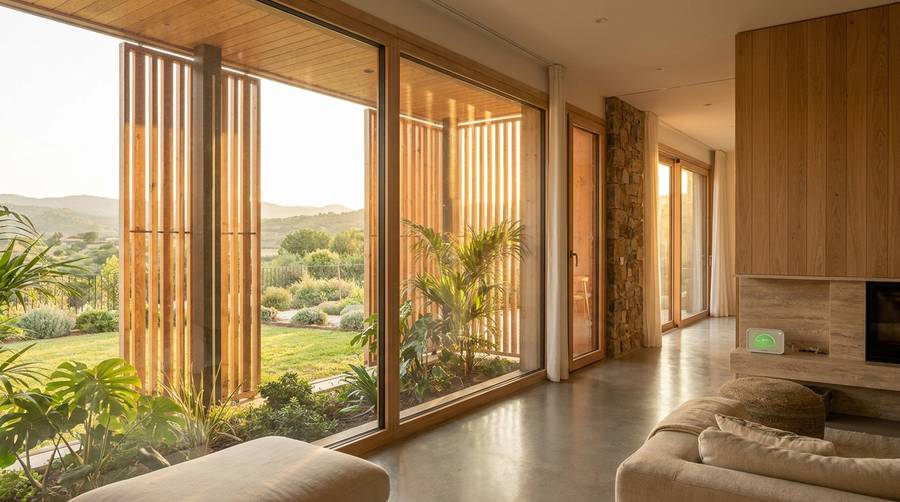
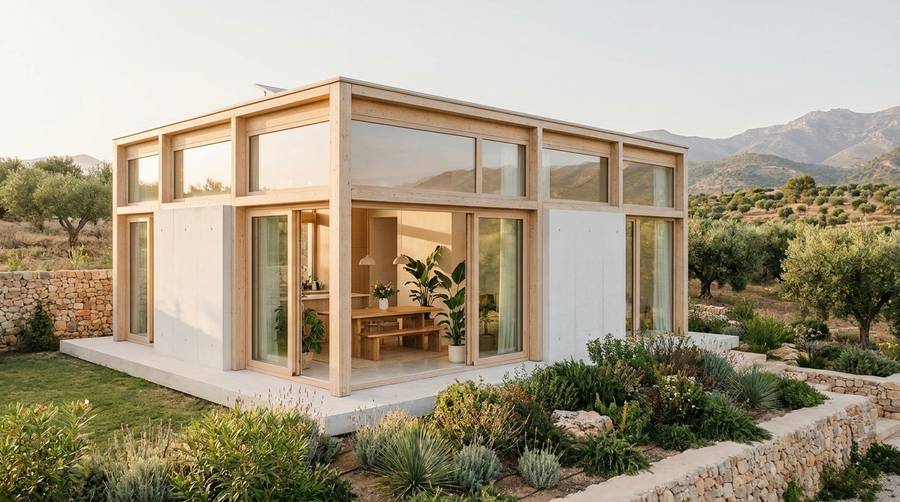
Image brief for editorial use: Mediterranean contemporary finished home in Spain, light façade mixing wood and concrete, large windows at golden hour, garden and terrace with a family enjoying the space. Photographic, aspirational and realistic. Emphasize warmth, natural materials and a lived-in yet premium feel.
Artículos relacionados