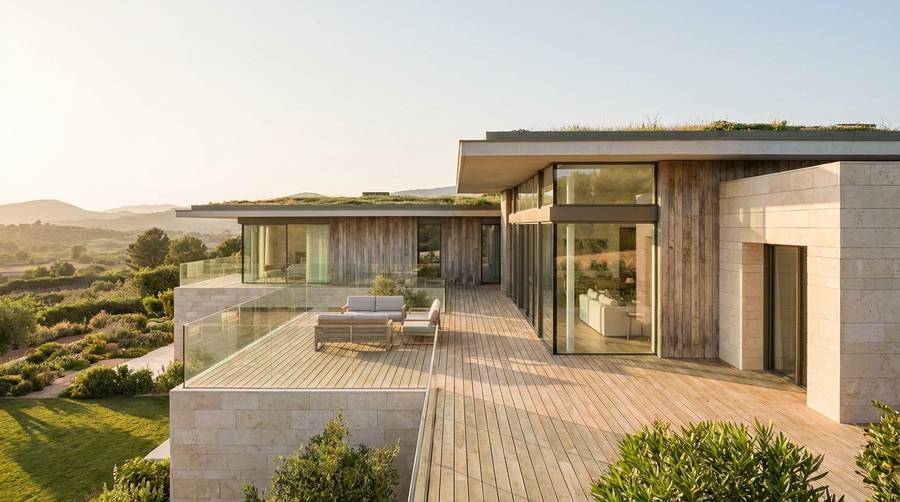
Industrialized Housing: Smart Prefabricated House Options
Why choose industrialized housing in Spain in 2026
Industrialized housing offers a clear alternative to traditional building. It combines controlled costs, faster delivery and high quality. For 2026, new regulations, material advances and financing options make this model especially attractive in Spain.
Advantages compared with traditional construction: efficiency, fixed price and faster delivery
Prefabricated house systems reduce on-site labour and delays. Factory-controlled processes cut rework and waste. Clients benefit from a fixed price contract in most turnkey projects, limiting budget surprises. Typical delivery times for industrialized housing are shorter: manufacturing and on-site assembly can reduce calendar time by 30–60% compared with conventional builds.
Who benefits: families, autopromoters and small developers
Families seeking predictable budgets and timelines find industrialized housing ideal. Autopromoters gain design control with reduced builder risk. Small developers can scale repeated typologies efficiently while keeping quality consistent.
Myths and realities: quality, durability and social perception
The stigma that prefabricated house equals low quality is outdated. Modern industrialized housing uses high-performance materials and strict factory QC. Durability matches or exceeds traditional methods when proper design and maintenance are applied. Social perception is shifting as more high-quality modular projects appear across Spain.
Modern materials and structural systems: a technical comparison
Choosing the right system depends on budget, climate, design aims and lifespan expectations. Below we compare common solutions and their typical uses.
Industrialized concrete: performance and use cases
Industrialized concrete systems deliver thermal mass, fire resistance and acoustic performance. Precast elements or insulated concrete panels offer dimensional precision and fast assembly. They are well suited to seaside or thermal-mass designs where inertia benefits interior comfort.
Timber light frame versus steel frame: insulation, weight and maintenance
Timber light frame provides excellent thermal performance and a low embodied carbon profile when sourced responsibly. It is lightweight and adapts well to off-site panelisation. Steel frame is robust, dimensionally stable and ideal for larger spans. It can be combined with modern insulation to match energy targets. Both systems require different maintenance approaches: timber benefits from moisture control, while steel needs detailing to avoid thermal bridging.
Material selection by climate and design: recommendations for Spain
In continental climates, combine thermal mass elements with high insulation. In Mediterranean coastal areas, ventilated façades and solar shading improve comfort. For mountainous zones, prioritize airtightness and high-performance insulation. Always evaluate solar orientation, local winds and rain patterns when selecting materials.
Sustainability and energy efficiency in industrialized housing
Sustainability is central to modern housing. Industrialized housing can achieve excellent energy performance while reducing construction waste.
Passivhaus criteria and passive/active strategies
Applying Passivhaus principles means very high insulation, airtightness and heat recovery ventilation. Industrialized housing benefits from precise factory assembly to meet airtightness targets. Active systems such as heat pumps and photovoltaic panels complement passive measures, lowering operational energy.
Reducing carbon footprint: calculations and real examples
Embodied carbon for timber-based industrialized housing can be significantly lower than conventional builds. For a 120 m2 prefabricated house we audited, embodied emissions were roughly 25–40% lower than a comparable masonry house. Operational energy fell below 25 kWh/m2·year after Passivhaus-level measures were adopted.
Certifications and incentives for sustainable homes
Look for energy certifications and local incentives. Qualified projects may access regional or national grants for energy upgrades or low-carbon construction. Certification also aids resale and financing conditions.
Turnkey process: the experience from plot to keys
A turnkey approach simplifies the process for autopromoters. The provider manages design, permits, factory production, assembly and delivery.
Project phases: plot search, design, permits and fabrication
The journey typically starts with plot selection and a site feasibility study. Next comes schematic and technical design adapted to industrialized systems. Permitting follows, with documentation tailored to modular construction. While permits progress, factory fabrication begins to compress total delivery time.
Coordination on-site and fixed timelines: typical durations and milestones
Milestones often include foundation completion, module arrival, envelope closure and services commissioning. From permit approval to handover, many turnkey industrialized projects finish in 6–12 months depending on complexity. On-site assembly is often 2–6 weeks for typical single-family homes.
Handover and aftercare: warranties, inspections and client satisfaction
Turnkey firms provide warranties and after-sales inspections. A clear snagging process and scheduled checks at 1 and 12 months increase satisfaction. Real client surveys from recent projects show high satisfaction when communication and warranty handling are proactive.
Financing and mortgages for autopromotion and modular housing
Financing an industrialized home is viable with specific products and careful documentation.
Funding options in Spain: self-build mortgage versus construction loans
Options include self-build (autopromoción) mortgages, construction loans and personal financing. Lenders increasingly accept modular projects when presented with detailed plans, cost breakdowns, and a turnkey contract.
Documentation and requirements to finance an industrialized home
Prepare a complete dossier: land deed, turnkey contract with fixed price, technical project, building permit and manufacturer guarantees. Clear milestones and release schedules help lenders assess disbursement tranches.
Tips to compare offers and reduce financing costs
Compare effective interest rates, fees and disbursement conditions. Fixed-price turnkey contracts reduce the lender’s risk and may improve offer terms. Consider green loan options if your project includes energy upgrades or Passivhaus measures.
Practical guide and case studies: design and budgeting for your industrialized home
This section provides a step-by-step guide and real metrics from recent projects. It helps autopromoters budget and manage expectations for 2026.
Step-by-step guide: design, schedule and cost control (example 2026)
1. Feasibility and site study (2–4 weeks): check constraints and orientation. 2. Concept design (4–8 weeks): adapt a modular typology and confirm area and budget. 3. Technical design and permits (8–16 weeks): complete documentation for the council. 4. Factory production (8–12 weeks): panels or modules manufactured. 5. On-site assembly and commissioning (2–8 weeks): foundations, assembly and services. Maintain a contingency of 5–10% of construction costs and regular budget reviews.
Real case studies: times, costs and client satisfaction
Case A — Coastal 140 m2 prefabricated house (timber frame): Total delivery 9 months. Construction cost €1,350/m2. Energy demand 22 kWh/m2·year. Client satisfaction score 9/10 at 12 months.
Case B — Inland 120 m2 modular concrete panels: Delivery 8 months. Construction cost €1,420/m2. Lower maintenance expectations, good acoustic performance. Client satisfaction 8.7/10.
Comparison with competitors: technical data and lessons learned
Compared with typical local builders, industrialized housing showed more consistent final cost and shorter times. Technical lessons: invest early in site coordination, select suppliers with proven airtightness records, and plan services integration in the factory stage to avoid on-site rework.
Conclusions and next steps for autopromoters
Industrialized housing is a mature, efficient route to build a durable, sustainable home in Spain. For autopromoters, the key benefits include fixed-price options, faster timelines and improved energy performance. Early planning, clear documentation and choosing the right materials for your climate are decisive.
If you want a practical overview to start your project, consult our in-depth guide Vivienda industrializada: guía para autopromotores and read comparative benefits in Casa prefabricada: ventajas para tu vivienda modular. For strategies to scale projects, see Escalado industrializado de vivienda: guía práctica.
Ready to explore options? Start with a site feasibility study and request detailed turnkey proposals. With the right team, industrialized housing can deliver a modern, sustainable home on time and on budget.
Artículos relacionados
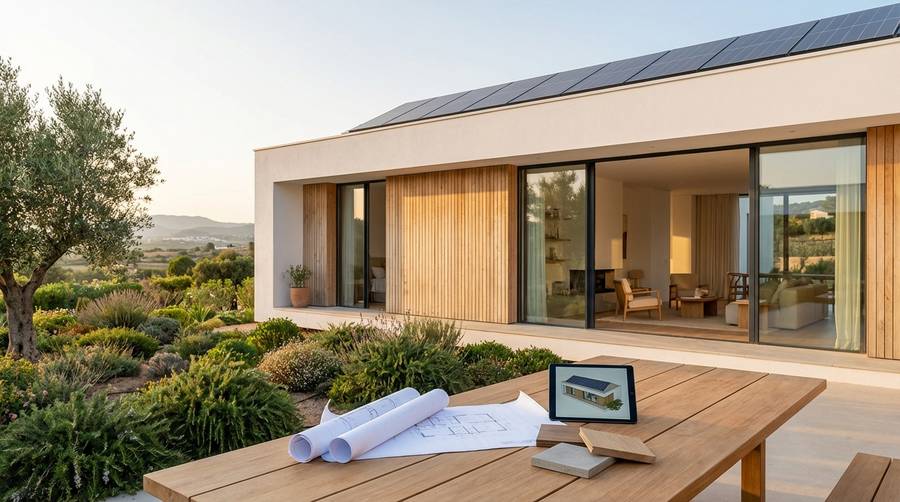
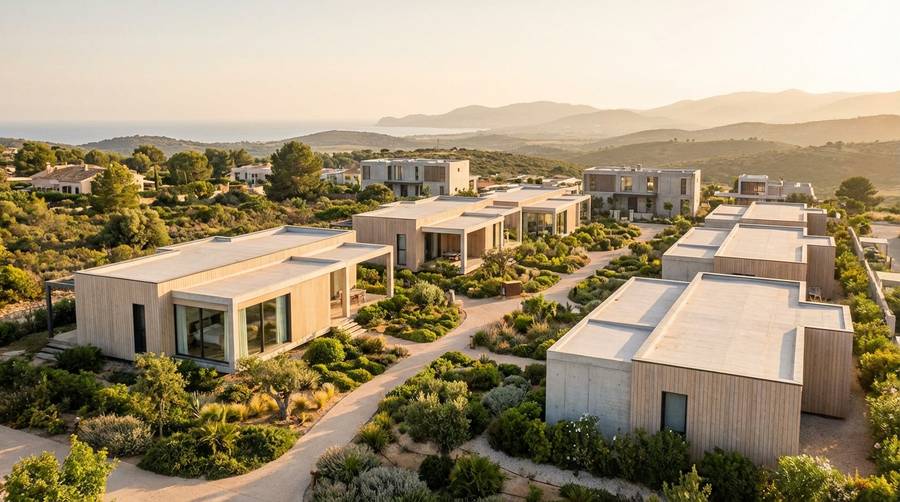
Industrialized Housing: Spain's Residential Future
A forward-looking, data-driven guide to industrialized housing in Spain. Covers market projections, construction systems, Passivhaus strategies, turnkey workflows, financing and two real-case metrics to help autopromoters make informed decisions in 2026.