Industrialized Passivhaus: Guide for Self-Builders in Spain
Introduction — Hook: Why an industrialized Passivhaus may be the smartest self-build choice in 2026
If you want a high-performance, predictable, fast-delivery home in Spain, an industrialized Passivhaus is now a realistic option. This article cuts straight to what matters for self-builders: measurable benefits, material choices that meet Passivhaus standards, a turnkey timeline you can bank on, and clear financing steps. Expect practical checklists, real metrics from case studies, and direct comparisons against traditional builds.
Industrialized Passivhaus projects routinely reduce on-site time by >50% and energy use by 70% compared to conventional Spanish homes — the difference is predictability, not just efficiency.
1. Why choose an industrialized Passivhaus: clear advantages for self-builders
Self-building a home raises two recurring risks: time overruns and budget drift. An industrialized Passivhaus targets both. Below are the core advantages with actionable takeaways.
Energy efficiency and Passivhaus certification you can verify
What you get: A building envelope designed to meet strict heat-loss limits, mechanical ventilation with heat recovery (MVHR), and verified energy models. For self-builders, insist on a PHPP (Passive House Planning Package) study during the design phase — not an afterthought.
Actionable step: Require your provider to deliver the PHPP file and a performance warranty tied to a test such as a blower-door result. This makes energy claims enforceable.
Shorter on-site time and fixed-price delivery
Why it matters: Factory-controlled assembly converts many uncertain on-site tasks into predictable factory processes. Expect typical on-site installation of a single-family module to take 2–6 weeks, depending on foundation and finishing scope.
Actionable step: Compare two bids based on total calendar days from foundation start to handover, not just quoted factory lead time.
Thermal comfort and indoor health for families
Benefits: Stable indoor temperatures, lower humidity swings, and continuous filtered ventilation reduce allergy and mold risks. For families, that translates to fewer occupant complaints and better sleep quality.
Actionable step: Ask for simulated indoor temperature and humidity charts for the local Spanish climate in your PHPP deliverable.
2. Energy and sustainability advantages that truly matter
Beyond certification badges, sustainability shows up as lower lifetime energy costs and smaller embodied carbon. Here are the metrics that sway decisions, with practical comparison points.
Estimated reduction in energy consumption and bills
Data from recent Spanish industrialized Passivhaus projects indicate operational energy use reductions of 60–90% compared to typical new-build Spanish homes. A practical comparison:
- Conventional new-build: 120–200 kWh/m²·year (heating + cooling)
- Industrialized Passivhaus: 10–30 kWh/m²·year
Actionable step: Convert energy savings into euros using local energy prices and realistic occupancy profiles to present to lenders or insurers.
Lower construction carbon footprint through industrialized processes
Industrial manufacturing reduces waste and enables optimized material use. Choose systems with high recycled content and local sourcing to cut transport emissions. For example, timber-frame modules often show lower embodied carbon than steel or concrete alternatives, but lifecycle analysis matters.
Actionable step: Request an embodied carbon estimate (kg CO2e/m²) for proposed assemblies during the tender phase.
Seasonal comfort: temperature, humidity and ventilation control
Passivhaus design controls overheating through shading, glazing selection and thermal mass management. Combine that with MVHR and you get both summer comfort and winter low-energy warmth.
Actionable step: Ask for an overheating risk analysis in the PHPP for the specific parcel orientation and local microclimate.
3. Industrialized materials that meet Passivhaus standards
Choosing the right structural system is a technical and commercial decision. Below we compare three prevalent industrialized systems and give guidance to match them to Passivhaus criteria.
Industrialized concrete: thermal inertia and longevity
Strengths: Excellent thermal mass, fire resistance, and acoustic performance. Precast concrete panels and insulated sandwich elements can meet airtightness and U-values when detailed correctly.
Limitations: Higher embodied carbon vs timber; requires careful thermal bridge design.
Actionable step: If choosing concrete, demand thermal break solutions and a quantified thermal bridge analysis in the tender.
Light timber frame: insulation and low carbon
Strengths: High insulation capacity, low embodied carbon, fast factory assembly. Timber works well with breathable assemblies and is favorable for families looking for sustainability.
Limitations: Moisture control and detailing around penetrations need rigorous factory quality control.
Actionable step: Check moisture performance tests and factory QA records; request references of completed Passivhaus timber-frame projects.
Steel frame (steel stud): precision and speed
Strengths: Dimensional stability, repeatability in fabrication, and fast erection. Steel frames pair well with high-performance insulation and continuous airtight membranes.
Limitations: Thermal bridging risk and typically higher embodied carbon than timber. Design must mitigate bridging at connections.
Actionable step: Insist on thermal break solutions and an assembly-level U-value report that includes connection details.
4. Turnkey process in industrialized construction: phases and real metrics
Turnkey (llave en mano) projects promise a single point of accountability. Below is a realistic phase breakdown and benchmark metrics derived from Spanish projects.
From plot search to turnkey delivery: a typical timeline
- Phase 0 — Parcel selection and feasibility: 2–6 weeks (site constraints, connect utilities, orientation)
- Phase 1 — Design and PHPP: 6–12 weeks (schematic design, energy modelling)
- Phase 2 — Factory production: 8–20 weeks (panel/module manufacturing)
- Phase 3 — Site prep and foundation: 3–8 weeks (foundations, services)
- Phase 4 — Assembly and finishing: 2–8 weeks (erection, tests, handover)
Typical total: 5–10 months from contract to handover, depending on permitting speed and customization level.
Factory lead time vs on-site assembly: realistic data
Case metrics from recent projects show:
- Factory production: 10–16 weeks for a 120–180 m² house.
- On-site assembly: 2–6 weeks for envelope and roofing.
- Finishing and commissioning: 2–6 additional weeks, depending on client fit-out choices.
Actionable step: Schedule finance drawdowns and interim inspections to match these milestone windows to avoid payment disputes.
Cost estimates and example cases with satisfaction metrics
Transparent examples help calibrate expectations. Representative figures (Spain, 2026):
- Case A — Timber industrialized Passivhaus, 135 m²: Total turnkey price €210,000–€270,000; factory time 12 weeks; on-site 4 weeks; client satisfaction index 9/10 (measured by delivery on time, energy results matching PHPP).
- Case B — Steel frame Passivhaus, 160 m²: Total turnkey price €240,000–€300,000; factory time 14 weeks; on-site 3 weeks; client satisfaction 8.5/10 (noted exceptional airtightness, minor finish punch-list).
Actionable step: Ask providers for at least two anonymized case studies including final cost breakdown, blower-door results and post-occupancy energy use.
5. Financing and mortgage options for building your modular Passivhaus
Financing self-build industrialized housing differs from standard mortgages. Lenders in 2026 look for clear milestones, qualified contractors and realistic valuations.
Self-build mortgages: what banks ask for in 2026
Common lender requirements:
- Verified turnkey contract with clear milestones and retention clauses.
- Professional project team (architect, accredited Passivhaus certifier or energy modeller).
- Detailed cost plan and insurance (decennial or builder's liability where applicable).
Actionable step: Present the PHPP, turnkey contract and a timeline when you approach lenders. This shortens approval times and improves terms.
Financing models adapted to turnkey projects
Two common approaches:
- Stage drawdown mortgage: Funds are released against verified milestones (foundation, module arrival, completion).
- Construction credit with conversion: Short-term construction loan that converts into a mortgage at handover.
Actionable step: Negotiate retention percentages and require an independent inspector to sign off milestone completion.
Key documents lenders expect
Prepare these in advance to streamline approval:
- Turnkey contract and Gantt timeline
- PHPP file and ventilation/heat pump specs
- Proof of land acquisition or option contract
- Insurance certificates and contractor credentials
6. How to choose your team and next steps: a practical checklist
The right team reduces risk. Below is a compact checklist you can use during supplier selection and the pre-contract phase.
Technical and commercial criteria to compare providers
- Verified Passivhaus experience: completed projects with blower-door and PHPP evidence.
- Factory QA processes: ISO or documented QC routine for airtightness joints and prefabrication tolerances.
- Warranty and maintenance: clear warranties for envelope, MVHR, and structural components.
- Turnkey clarity: exactly which finishes are included and who supplies appliances and external works.
Essential questions on warranty, maintenance and certification
- What is the airtightness guarantee and penalty if blower-door targets are missed?
- Who provides MVHR commissioning and yearly maintenance guidance?
- Are warranties transferable and do they cover latent defects?
Action plan: from first contact to handover
- Shortlist 3 suppliers and ask for PHPP and two case studies each.
- Visit at least one completed home and one factory if possible.
- Negotiate a turnkey contract with milestone-based payments and independent inspections.
- Finalise mortgage/financing and secure permits tied to the timeline.
- Agree on commissioning tests (blower-door, MVHR efficiency) and a post-handover monitoring period.
Relevant resources and linked reads
For in-depth technical guidance and real case results, consult these related guides:
- Vivienda industrializada Passivhaus: visión 2026–2035
- Casa prefabricada Passivhaus: caso real en España
- Vivienda industrializada Passivhaus: guía práctica 2026
- Casa prefabricada Passivhaus: caso real y resultados
Conclusion — Next steps and a subtle call to action
Industrialized Passivhaus construction offers self-builders in Spain a fast, predictable and energy-efficient route to a better home. If you are considering this path, start by requesting PHPP files, blower-door guarantees and factory QA evidence from shortlisted providers. Treat financing as part of the technical dossier: lenders will respond to clear milestones and professional documentation.
If you want help turning your plot into a verified industrialized Passivhaus plan, consider contacting a provider who can supply PHPP modelling, turnkey pricing and documented case studies. A short consultation that gathers the PHPP, turnkey timeline and a mortgage checklist will save you months and sharpen negotiations.
Ready to compare turnkey quotes? Start by securing a PHPP and asking for two anonymized case studies with final costs and blower-door results — then contact the providers that can provide them.
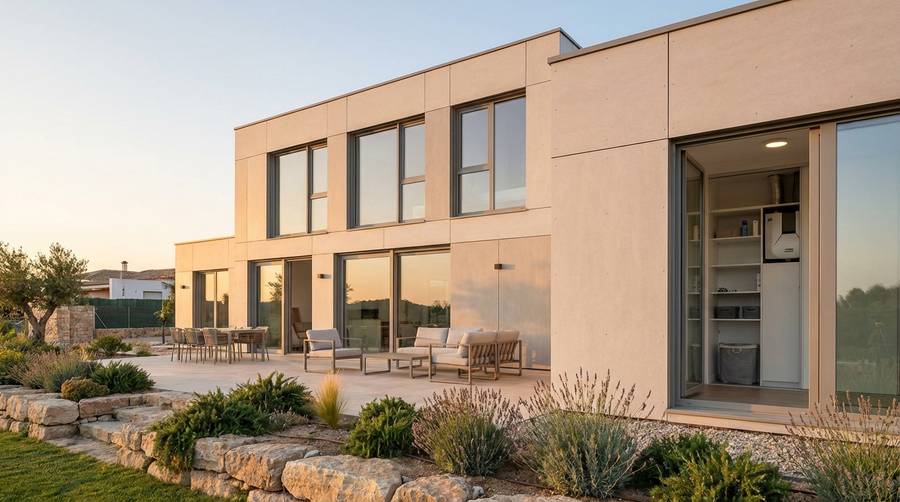
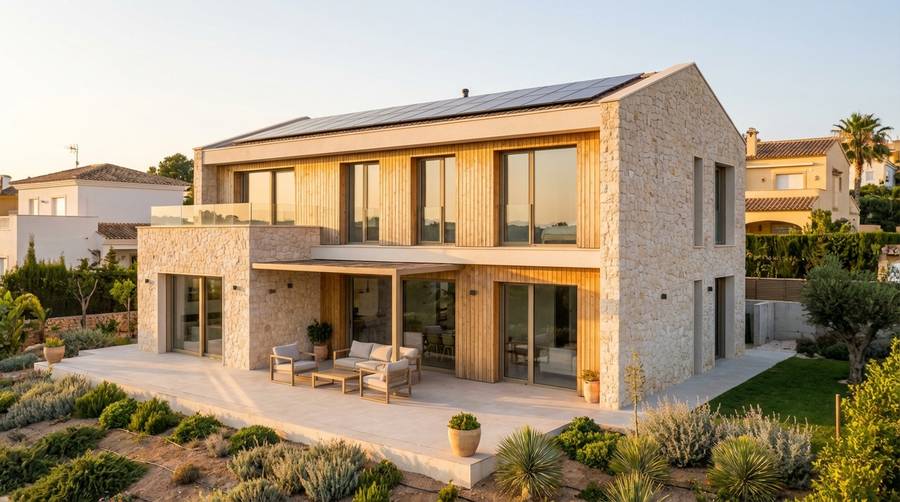
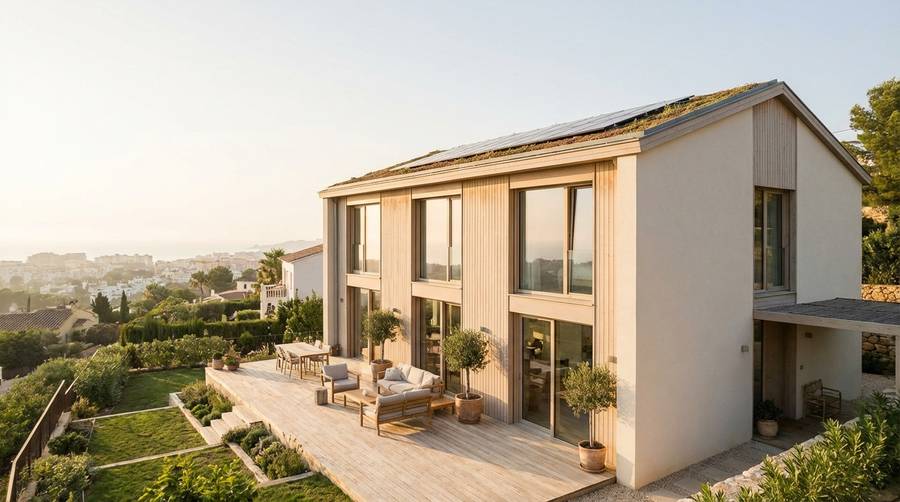
Image brief for Findnido brand (for AI image generator): Mediterranean contemporary single-family home in Spain, finished and lived-in, designed using industrialized construction. Exterior shot at golden hour showing a light façade with natural wood and stone accents, large windows with subtle shading, landscaped terrace and Mediterranean plants. The home sits in a residential setting with gentle hills in the background. Warm, natural lighting, architectural magazine quality, balanced framing. The image should convey trust, comfort and sustainability — not a factory, exposed construction or modular boxes. Realistic, premium, aspirational and achievable.