Industrialized Housing: Modern Modular Homes in Spain
Why choose industrialized housing over traditional construction
Industrialized housing offers a clear alternative to conventional on-site building. For self-builders in Spain, the difference is more than a method: it is a shift in predictability, quality control and timeline management. Industrialized housing brings factory-controlled processes that reduce weather delays and offer a fixed-price approach. This helps families and developers plan with confidence.
Key advantages: efficiency, controlled timelines and fixed pricing
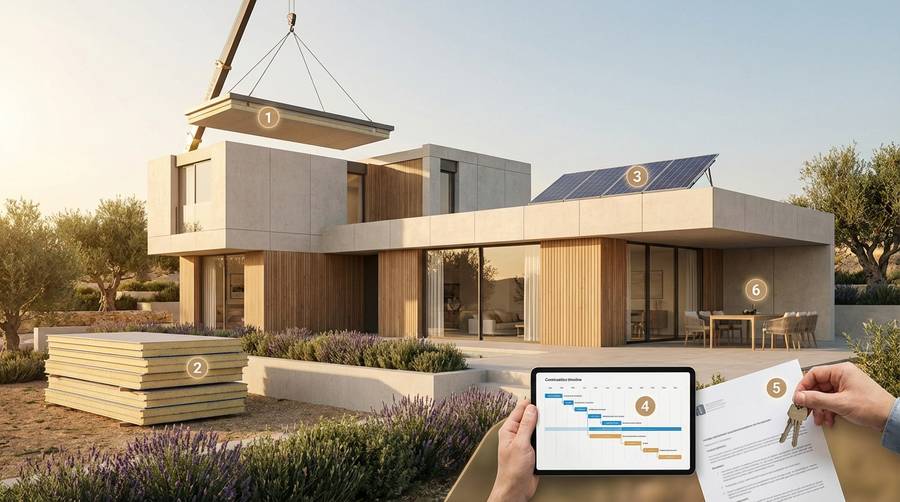
One of the strongest benefits of industrialized housing is efficiency. Components are manufactured in a controlled environment and then assembled on site. This reduces on-site work and exposure to weather. As a result, projects close faster and budgets stay predictable. A fixed-price contract with clear milestones minimizes the risk of unexpected cost overruns common in traditional builds.
Quality and durability: industrial materials and controlled processes
Quality in industrialized housing comes from consistent factory processes. Components such as walls, frames and envelope systems are produced under strict tolerances. This precision improves thermal performance and reduces air leakage. By choosing reliable systems and modern materials, homeowners gain long-term durability and lower maintenance needs.
Common myths and how to identify professional solutions
There are lingering myths that prefabricated equals poor quality or temporary. Those ideas derive from low-end examples. Modern industrialized housing is designed for permanence and high performance. To distinguish professional solutions, ask for:
- References and completed projects.
- Detailed technical specifications and warranties.
- Information on material suppliers and testing procedures.
Look for builders who manage the full process and offer turnkey delivery. A good provider will share references, independent test reports and transparent timelines.
Modern building materials and systems used in industrialized housing
Choosing the right structural system affects comfort, cost and build speed. Today, three systems dominate modern modular construction in Spain: industrialized concrete, light timber framing and steel frame systems. Each has clear strengths and well-known use cases.
Industrialized concrete: strength and premium finishes
Industrialized concrete systems deliver excellent structural resilience and refined finishes. Panels and precast elements are produced in controlled conditions. This allows consistent surface quality and rapid on-site assembly. For coastal or seismic zones, concrete provides added durability and sound insulation advantages.
Light timber framing: thermal comfort and speed
Light timber framing offers high thermal performance and a reduced embodied carbon footprint compared to some alternatives. Wood is an effective insulator. When combined with breathable membranes and high-quality insulation, timber-framed modules achieve good comfort and low energy demand. This system is fast to manufacture and assemble, making it popular for family homes and low-rise developments.
Steel frame: structural lightness and precision
Steel frame systems bring exceptional dimensional accuracy and structural lightness. Steel allows long spans and open-plan layouts without heavy supports. Fabrication tolerances are tight, which accelerates on-site assembly and reduces rework. Steel frame homes are compatible with high-performance envelopes and modern facades.
Sustainability and energy efficiency: homes designed for the future
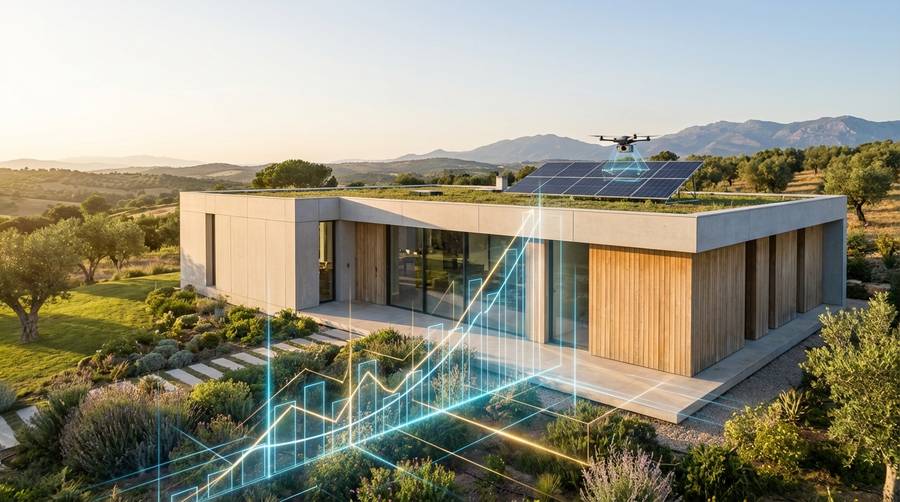
Sustainability is a core benefit of industrialized housing. Precision manufacturing reduces waste. It also allows integration of advanced envelopes and services that cut operational energy use. For many families in Spain, these homes combine comfort, lower bills and reduced environmental impact.
Passivhaus design and passive measures to cut energy demand
Applying Passivhaus principles to industrialized housing yields major gains. Tight envelopes, high insulation levels and controlled ventilation reduce heating and cooling needs. Industrialized components are often fabricated to meet tight air-tightness specifications, simplifying certification. Even when full Passivhaus certification is not pursued, passive strategies significantly lower energy demand.
Reducing carbon footprint through material choices
Material selection influences the embodied carbon of a home. Timber and responsibly sourced wood products often show lower embodied carbon than heavy concrete. However, industrialized concrete can be optimized using recycled aggregates and efficient mix designs. Choosing systems that minimize transport distances and use recycled content reduces overall impact.
Certifications and benefits during operation and maintenance
Certifications such as Passivhaus or national energy ratings provide measurable benefits. Higher-rated homes typically enjoy lower monthly energy bills and improved comfort. Additionally, these certifications can support better resale value and ease access to green financing programs. Regular maintenance is simpler when factory-made components are well documented and replaceable.
The turnkey process explained for self-builders
The "Llave en mano" or turnkey model is ideal for self-builders who want a single point of responsibility. Turnkey delivery covers the entire path from plot selection to home handover. This model reduces coordination stress for families and speeds project delivery.
Plot search and feasibility: what to assess before purchase
Before buying land, evaluate orientation, access, urban regulations and utilities. Check local zoning rules and allowable build area. Soil quality and topography affect foundation cost. A feasibility study early in the process helps estimate costs, solar potential and planning constraints. Many builders provide pre-feasibility services to avoid surprises.
Design, permits and manufacturing: timelines and coordination
Once feasibility is positive, design starts. In industrialized projects, the design and manufacturing phases overlap. Fabrication of modules can begin while permits are being processed, if local rules and planning allow. This parallel approach shortens total delivery time. Clear coordination between the design team, factory and site is vital to avoid delays.
Handover and after-sales: commissioning, guarantees and adaptations
Turnkey delivery typically includes on-site assembly, commissioning of systems and a final handover package. Ask about post-delivery guarantees, response times for defects and options for future adaptations. A transparent warranty and service plan ensure confidence in the long-term performance of your modular home.
Financing for self-build and purchase of modular housing
Securing finance for a modular or industrialized home follows many of the same rules as traditional construction loans, but there are nuances. Lenders increasingly recognise the lower risk profile of modular projects due to fixed prices and shorter construction times.
Self-build mortgages: types and requirements in Spain
In Spain, self-build mortgages for autopromotion typically disburse funds in stages aligned with project milestones. Lenders request a project dossier, permits and builder credentials. They also evaluate the final market value and the borrower’s financial capacity. Because industrialized housing often has a predictable schedule, banks may view these loans more favorably.
Alternative financing and schemes for modular projects
Besides traditional banks, consider green loans or lines tied to energy efficiency improvements. Some institutions offer specific products for off-site construction or sustainable homes. Leasing and developer-led financing are other options, depending on the provider.
How to present a project to the bank: key documents
When approaching a lender, present a clear and consolidated packet: architectural plans, structural reports, energy-calculation reports, a detailed budget and the turnkey contract. Include the factory production schedule and references from the modular builder. This documentation reduces perceived risk and speeds the credit decision.
Practical tips for self-builders choosing an industrialized home
To make the most of industrialized housing, follow a few practical recommendations:
- Choose a turnkey provider with proven projects and transparent warranties.
- Check material certifications and thermal performance claims.
- Plan early for solar orientation and shading to maximize comfort.
- Ask for a clear timeline and milestone-linked payments.
For a broader overview of the advantages of off-site construction and turnkey delivery, see Vivienda industrializada: ventajas y guía llave en mano and Vivienda industrializada: ventajas para autopromotores. If you want deeper guidance on choosing modular systems, read Vivienda industrializada: ventajas de la casa modular.
Conclusion: why industrialized housing is an inspiring choice for Spanish self-builders
Industrialized housing combines speed, cost control and high performance. Modern materials such as industrialized concrete, timber framing and steel frame systems offer diverse options for durability and comfort. When paired with Passivhaus strategies and careful material selection, these homes deliver lower carbon footprints and reduced energy bills.
The turnkey model simplifies the process from plot search to handover. For many families, this is the most efficient path to a bespoke home without the common headaches of traditional builds. With transparent financing options and clear documentation, modular projects are increasingly accessible.
If you are ready to explore turnkey modular options or want practical, project-level guidance, consider consulting experts who manage the full process. For inspiration on contemporary villas built with industrialized methods, visit Santana Homes: villas in Alhaurín de la Torre.
Image description for Findnido
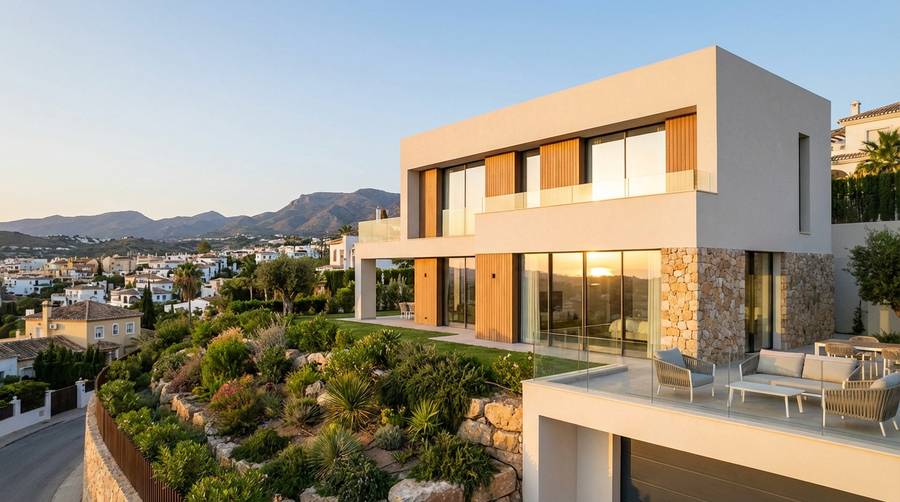
Brand-aligned architectural photograph for Findnido. Category: industrialized housing. Article title: Industrialized Housing: Modern Modular Homes in Spain. Keywords: industrialized housing, modular home, prefabricated house. Scene: Mediterranean contemporary finished home in Spain — a premium, livable modular residence that looks real and inhabited. Exterior view at golden hour showing light façades combining natural stone, warm wood and smooth concrete. Large floor-to-ceiling windows, a terrace with subtle outdoor furniture and native landscaping including Mediterranean plants. A small family or couple interacting naturally on the terrace to convey lifestyle and comfort. Mood: trust, modern comfort, sustainable living, aspirational but achievable. Photography style: architectural magazine quality, natural colors, balanced framing, soft warm light, realistic details. Avoid construction, exposed systems, tiny houses, warehouses or mobile homes. The image should read as a finished Spanish home consistent with Findnido’s brand identity.
Artículos relacionados