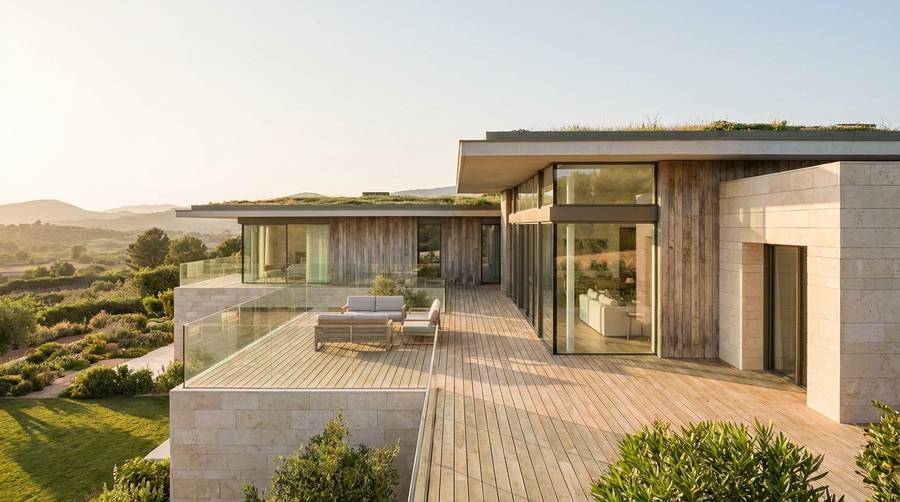
Prefabricated House Benefits for Spanish Homebuilders
What industrialized housing scaling means and why it matters
Industrialized housing scaling transforms how homes are planned, manufactured and delivered. It uses factory processes and repeatable workflows to produce high-quality homes at scale. Compared with site-built work, this approach reduces uncertainty. Families and self-builders gain control of time, cost and quality.
Definition and differences with traditional construction
A prefabricated house is produced using controlled factory processes. Parts or full modules are built off-site, then assembled on the plot. Traditional construction largely happens on-site, with more exposure to weather and subcontractor variability. The result: a prefabricated house typically has shorter build cycles and fewer surprises.
Trends in Spain and the self-builder market
Spain is adopting industrialized housing at scale. Local developers and independent self-builders value speed and fixed pricing. Demand rises in coastal and peri-urban areas where modern Mediterranean homes fit lifestyle expectations. This trend supports greater specialization and better financing products for autopromoters.
Benefits for developers and families
Promoters achieve repeatability and cost control. Families access predictable timelines and transparent budgets. A prefabricated house lowers exposure to schedule delays and cost overruns, while offering high standards of finish and energy performance.
Advantages of a prefabricated house versus traditional building
Choosing a prefabricated house brings clear advantages. The process emphasizes efficiency, price transparency and consistent quality. These benefits matter for families and autopromoters seeking certainty.
Efficiency and time control: fixed schedules
Factory production enables tight scheduling. Weather interruptions are minimal. Site assembly is rapid, often reducing on-site time by months. A prefabricated house project follows a predictable calendar. That predictability is valuable when coordinating permits, financing and moving plans.
Cost and transparency: fixed price and fewer deviations
Many providers offer fixed-price contracts for a prefabricated house. Standardized components and industrial purchasing reduce unexpected price swings. Fewer on-site variations mean fewer change orders. For autopromoters, a fixed price simplifies financial planning.
Construction quality and guaranteed industrial process
Quality control in factories is systematic. The controlled environment reduces waste and improves accuracy. A prefabricated house often achieves consistent finishes and higher thermal performance. Warranties and testing protocols back the final delivery.
Modern materials and constructive systems
Modern industrialized housing uses a range of materials. Each system balances speed, durability and comfort. Choosing the right material aligns with climate, budget and design intent.
Industrialized concrete: performance and longevity
Precast and industrialized concrete elements bring robustness and thermal mass. They offer excellent durability and fire resistance. For Mediterranean climates, concrete helps regulate interior temperatures. A prefabricated house with industrialized concrete combines strength with refined finishes.
Lightwood framing: lightness and hygrothermal comfort
Timber frame systems deliver warmth, natural aesthetics and good hygrothermal behaviour. Wood is renewable and easy to insulate to Passivhaus standards. A prefabricated house using lightwood framing can feel cozy and healthy while achieving low energy use.
Steel frame: speed and construction precision
Steel frame systems suit projects that require high precision and rapid assembly. Steel elements are dimensionally stable and allow long spans. In a prefabricated house, steel helps deliver tight tolerances and fast erection on site.
Sustainability and energy efficiency in industrialized homes
Sustainability is central to modern modular housing. Industrialized processes and careful material choices reduce waste and energy use across the life cycle of a home.
Passivhaus strategies and real energy savings
Designing a prefabricated house to Passivhaus principles yields significant heating and cooling reductions. High insulation levels, airtight envelopes and controlled ventilation produce real energy savings. Factory assembly helps deliver the precision needed for these standards.
Lowering carbon footprint through process and materials
Industrialized production can reduce on-site waste and transport-related emissions. Material selection matters: responsibly sourced timber, low-carbon concrete mixes and recycled materials lower embodied carbon. A prefabricated house offers opportunities to optimize these choices at scale.
Certifications and long-term owner advantages
Energy and sustainability certifications add market value and comfort. Owners benefit from lower utility bills and increased resilience. A prefabricated house designed for efficiency often qualifies for grants or favorable mortgage conditions tied to green performance.
The turnkey process and financing options for self-builders
A turnkey approach simplifies the self-build experience. From plot search to final handover, a single provider coordinates the project. For many families, this reduces complexity and risk.
Stages: plot search, design, manufacture, assembly and delivery
The turnkey process typically follows clear stages. First, identify and secure a suitable plot. Next, define design and approvals. Then the home is manufactured in the factory. Assembly on site follows, culminating in final finishes and handover. This flow reduces overlap and streamlines decision points for the homeowner.
Mortgages for self-development and modular financing options
Financial products for a prefabricated house have matured. Banks offer mortgages for self-promotion and tailored drawdown schedules. Some lenders recognise turnkey contracts and energy performance as positive factors. This recognition can ease loan approval and improve conditions.
How to plan budget and timelines with transparency
Start with a detailed turnkey quote and a clear schedule. Verify what is included: foundation, connections, finishes and landscaping. Ask for payment milestones tied to deliverables. A prefabricated house provider typically offers fixed-price packages that make budgeting straightforward.
Choosing the right partner and protecting your investment
Selecting an experienced industrialized housing partner is essential. Look for proven references, clear contracts and transparent production processes. Visit completed projects and request performance data on energy and durability.
What to evaluate in a supplier
- Track record of completed projects and client testimonials.
- Factory and production quality control practices.
- Warranty coverage and aftercare services.
- Clarity in the turnkey contract and included scopes.
Common questions from self-builders
Will a prefabricated house fit my plot and local rules? Yes — modular solutions adapt to site constraints and local codes. Can I customise finishes? Most providers offer a range of customisation options. How long does delivery take? Typical timelines are much shorter than traditional builds, with clear milestones.
Practical tips for a successful prefabricated house project
Site selection and early approvals
Choose a plot with good access and compatible zoning. Early engagement with local planning authorities avoids delays. A qualified technical advisor helps identify potential constraints before committing.
Design choices that balance cost, performance and aesthetics
Select systems that suit local climate and lifestyle. Combining timber or steel framing with high-performance insulation delivers both comfort and speed. Prioritise glazing orientation and shading for Mediterranean sun. Keep layouts efficient to control build cost.
Preparing for delivery and handover
Coordinate utilities and foundation work ahead of the arrival date. Ensure the site is accessible for transport and cranes. Plan the final inspection with the supplier and document the handover conditions in writing.
Conclusion: why many Spanish self-builders choose prefab
A prefabricated house gives autopromoters a modern path to homeownership. It combines shorter schedules, fixed pricing and high quality. Modern materials such as industrialized concrete, lightwood framing and steel frame systems provide options for both comfort and longevity. When paired with Passivhaus strategies and transparent turnkey delivery, a prefabricated house becomes a reliable and sustainable choice for families in Spain.
For a deeper comparison and practical guidance, see Casa prefabricada: ventajas para tu vivienda modular and explore scaling methods in our Escalado industrializado de vivienda: guía práctica. These resources expand on the benefits and implementation of industrialized housing.
Artículos relacionados
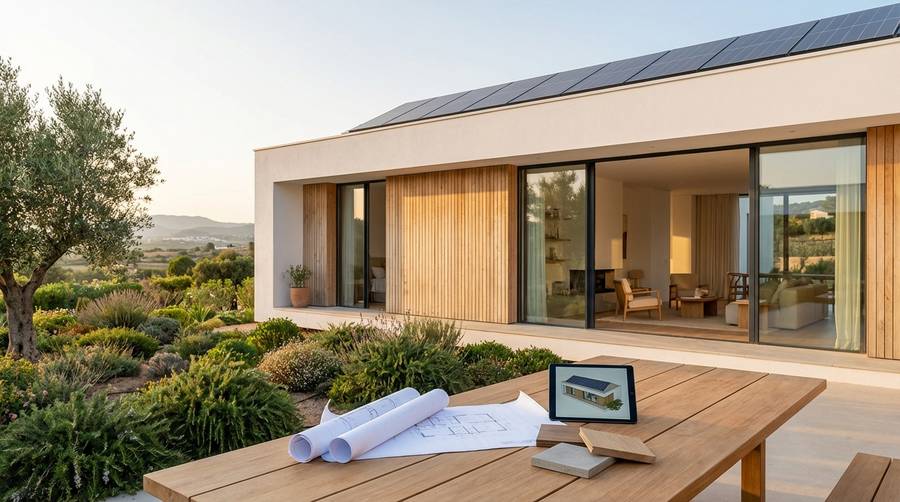
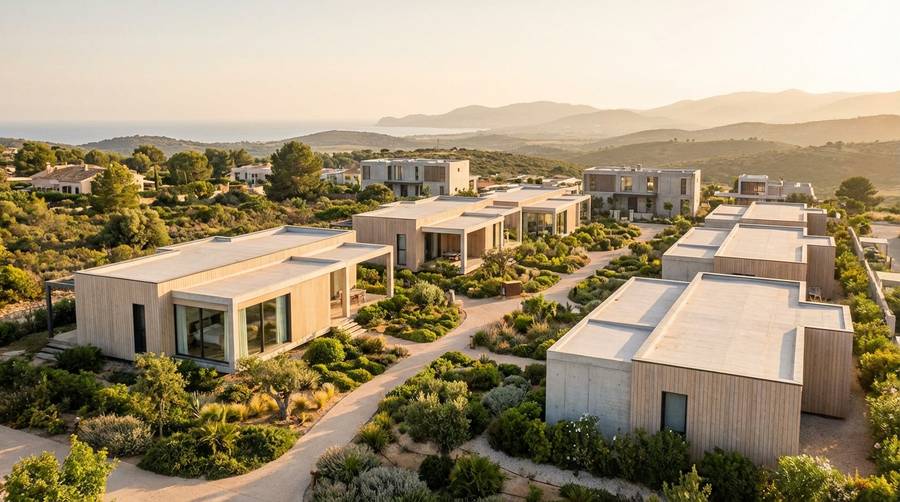
Industrialized Housing: Spain's Residential Future
A forward-looking, data-driven guide to industrialized housing in Spain. Covers market projections, construction systems, Passivhaus strategies, turnkey workflows, financing and two real-case metrics to help autopromoters make informed decisions in 2026.