Industrialized Housing Spain: Step-by-Step Design Guide 2026
Complete guide: How to design an industrialized house step by step in Spain 2026
This guide helps Spanish self-builders plan an industrialized home from concept to keys in 2026. It explains choices that affect cost, schedule, sustainability and comfort. Read each section to understand materials, energy standards, the turnkey workflow and financing options. We include case studies with real metrics so you can compare outcomes and make informed decisions.
Define objectives: program, Mediterranean style and Passivhaus requirements
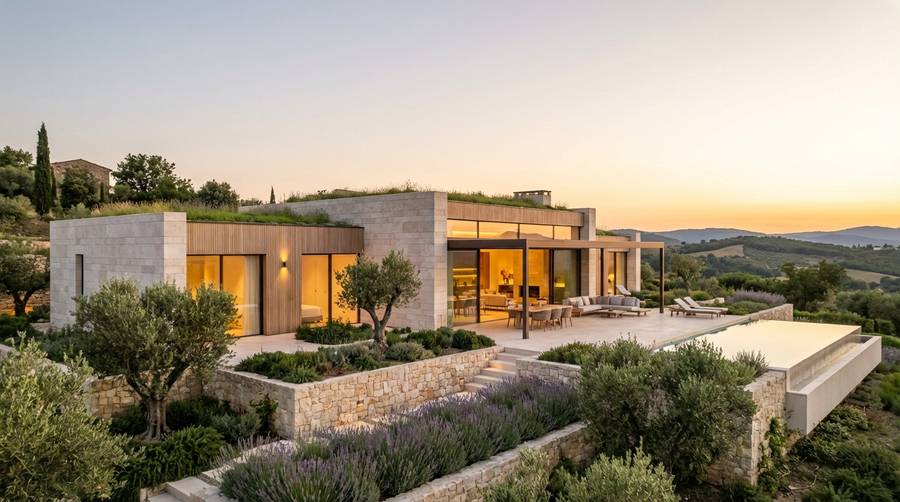
Start by writing a clear program: number of bedrooms, workspaces, storage, and outdoor spaces. Define preferred Mediterranean contemporary style: light façades, natural stone and wood accents, large windows and shaded terraces. Prioritize thermal comfort and airtightness early if you aim for Passivhaus certification. A precise brief reduces later changes and controls costs.
Choose the right plot and orientation considerations
Plot selection influences passive gains, access costs and feasibility. Seek plots with good solar orientation for mains living spaces. Check local regulations, building envelope rules and permitted heights. Consider views, access to utilities and proximity to services. If needed, commission a site survey early to detect constraints.
Assemble the design team and set performance targets
Work with architects experienced in industrialized housing and Passivhaus. Agree measurable targets: U-values, airtightness (n50), whole-building energy demand and embodied carbon goals. Clear targets align manufacturing, assembly and certification processes for a smoother delivery.
Advantages of industrialized housing versus traditional construction
Industrialized housing offers measurable benefits across time, cost and quality. Below we break these advantages down so autopromoters can compare realistic outcomes.
Time efficiency: shorter schedules and fixed delivery dates
Factory production allows parallel design and sitework. Typical schedules compress: foundation and site prep in 4–8 weeks, off-site fabrication 8–12 weeks, and assembly 1–3 weeks depending on size. In many projects the total from permit to handover is 4–6 months for a single-family home. Predictable factory cycles enable fixed delivery windows, which reduces exposure to weather delays common on traditional sites.
Cost control: fixed price and economic predictability
Industrialized projects often use fixed-price contracts. Standardized components and repeatable manufacturing reduce variation. That leads to fewer unplanned overruns compared with open-site builds. For autopromoters this predictability simplifies financing and budgeting.
Quality and precision: industrial processes reduce variability
Controlled factory environments yield consistently high tolerances. Prefinished elements arrive ready to install, improving finish quality and reducing onsite rework. This precision also contributes to energy performance and airtightness targets.
Materials and modern construction systems: technical comparison and benefits
Material choice shapes durability, thermal performance and embodied carbon. Below are three commonly used systems in Spain for industrialized housing.
Industrialized concrete: durability, insulation and thermal mass
Precast or industrialized concrete panels deliver long-term durability and thermal inertia. Benefits include excellent fire resistance and low maintenance. When combined with external insulation, concrete walls can meet strict thermal targets. Embodied carbon is higher than lighter systems but can be offset with low-carbon mixes and recycled aggregates.
Light timber frame: speed, sustainability and interior comfort
Timber frame with engineered wood panels offers rapid fabrication and low embodied carbon. Wood provides a warm interior climate and high living comfort. Modern systems include prefitted insulation and vapor control layers to meet airtightness and thermal regulations. Timber works well for Passivhaus targets when combined with high-performance windows and ventilation systems.
Steel frame: strength, design flexibility and fast assembly
Steel frame (steel stud systems) gives structural strength and long spans for open-plan layouts. It is dimensionally stable and allows fast on-site erection. Steel must be protected against thermal bridging and corrosion, and designers often pair it with high-performance insulation panels. Time to finish is typically shorter than traditional masonry.
Sustainability and energy efficiency: Passivhaus and carbon reduction
Sustainability is central to modern industrialized housing. Factories can implement precise installation of insulation and airtightness, which favors low-energy standards like Passivhaus.
Passivhaus strategies applied to industrialized homes
Key measures include continuous insulation, minimized thermal bridges, high-performance windows, balanced mechanical ventilation with heat recovery (MVHR), and strict airtightness. Industrialized components arrive pre-assembled to tight tolerances, making certified n50 results of 0.6 h-1 or better achievable in practice.
Low-carbon materials and renewable energy solutions
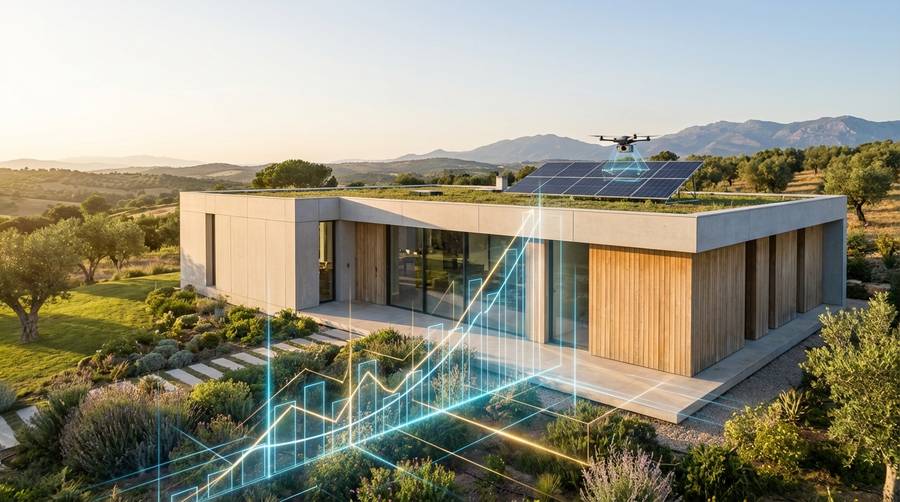
Choose low-carbon concrete mixes or timber where appropriate. Integrate solar PV, heat pumps and battery storage for operational carbon reduction. Factories can optimize material use to minimize waste and enable material recycling. These choices reduce lifetime emissions and improve resale value.
Measurable environmental impact: energy use and life cycle emissions
Track both operational energy and embodied carbon. A typical Passivhaus single-family industrialized home in Spain can cut heating demand by 75–90% compared with a conventional new build. Lifecycle assessments help compare systems; timber often shows lower embodied carbon, while concrete can offer longevity advantages.
The turnkey process: from plot search to handover
The turnkey model simplifies the self-build journey. It bundles design, permits, manufacturing, site work and finishes into one coordinated scope.
Plot search and evaluation: regulations, access and solar orientation
Start with zoning checks, maximum footprint and permitted uses. Verify legal access and utility connections. Orient living spaces to the best solar exposure. A proper evaluation reduces surprises and supports the energy strategy.
Turnkey project phases: design, manufacturing, assembly and finishes
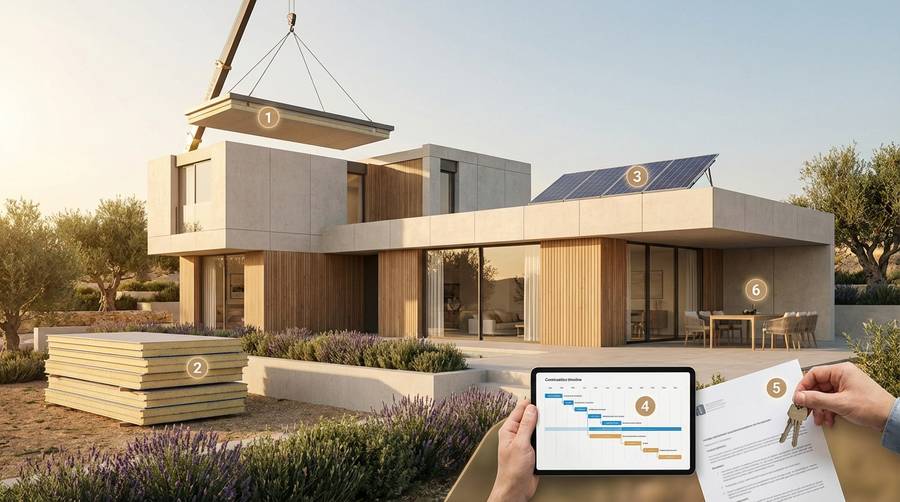
Typical phases are: schematic design and approvals, detailed design and factory engineering, site foundations and infrastructure, off-site fabrication, on-site assembly and final finishes. Coordinated scheduling ensures components arrive when the site is ready, shortening overall time.
Quality control and handover: warranties, documentation and aftercare
Require factory and site QA reports, airtightness and energy test results, and full as-built documentation. Check warranty coverages for structure, envelope and systems. A professional turnkey provider includes post-delivery support for defects and system tuning.
Financing and self-builder mortgages for modular homes in Spain
Financing industrialized housing combines traditional mortgage models and specific autopromoter options. Early financial planning is essential.
Financing options: self-builder mortgage vs modular loans
Banks offer autopromoter mortgages that disburse in stages linked to project milestones. Some lenders now understand industrialized models and accept factory contracts as collateral. Compare interest rates, stage payments and required guarantees.
Preparing technical and economic documentation for lenders
Provide a complete project file: technical drawings, fixed-price contract, timeline, manufacturer credentials, permits and cost breakdowns. Clear documents speed bank appraisal and reduce conditionalities.
Tips to optimize terms: guarantees, costs and payment schedules
Negotiate staged disbursements aligned with manufacture and assembly milestones. Minimize contingency buffers by securing fixed-price offers. Where possible, offer completed or near-complete collateral to reduce lender risk and improve rates.
Case studies and technical comparisons: real metrics and lessons learned
Below are anonymized examples showing timelines, costs and client satisfaction to help set expectations.
Case 1: 120 m² home in Andalusia — schedule, cost and client satisfaction
- System: timber frame with high-performance insulation.
- Schedule: 18 weeks from permit to handover (site prep 4 wks; factory 8 wks; assembly and finishes 6 wks).
- Cost: €1,450/m² all-in turnkey (including plot improvements).
- Energy: estimated heating demand 12 kWh/m²·yr after commissioning.
- Client satisfaction: 9/10 — praised speed, finish quality and predictable budget.
Case 2: Passivhaus coastal house — energy use and payback
- System: hybrid concrete floor plates with timber superstructure.
- Performance: certified Passivhaus with heating demand below 15 kWh/m²·yr.
- Renewables: 6 kW PV and air-source heat pump supplied 85% of annual energy.
- Payback: estimated 8–12 years for energy upgrade premium in local context.
Technical comparison vs competitors: timelines, price/m² and guarantees
Compared to typical on-site builds, industrialized housing reduced project time by 30–60% and improved budget certainty. Price per square metre varies with specification: mid-range turnkey typically €1,200–1,800/m². Factory warranties and documented QA often exceed informal on-site guarantees.
Frequently asked questions and recommendations for self-builders
Below are common legal, technical and management questions autopromoters ask during an industrialized project.
Common legal and planning questions
Check whether the municipal plan demands certain materials or shapes. Verify that factory-built elements meet local building codes and that the project obtains a building license. Engage a local architect to handle permits and coordinate with the turnkey supplier.
Practical checklist to supervise an industrialized project
- Confirm contract scope and fixed-price items.
- Approve factory shop drawings before production.
- Monitor site foundations and utility readiness one week before deliveries.
- Schedule airtightness and commissioning tests in the final phase.
- Collect all documentation at handover: warranties, manuals and test reports.
Common mistakes and how to avoid them: professional tips
Avoid late design changes after factory orders. Early clarity on finishes and interfaces prevents costly rework. Ensure the site program and logistics support large deliveries and crane access. Finally, work with experienced suppliers who provide transparent QA and post-delivery support.
Conclusions and next steps for autopromoters
Industrialized housing in Spain offers fast schedules, predictable costs and high-quality outcomes when planned carefully. Define performance targets, choose materials that match your sustainability goals and secure financing with clear technical documentation. For more on the turnkey process and benefits, see our related article Vivienda industrializada: ventajas y guía llave en mano and practical tips for self-builders in Vivienda industrializada: ventajas para autopromotores. If you want a luxury example of industrialized villas, explore Santana Homes Alhaurín de la Torre: villas de lujo.
If you are planning a project, start by drafting a clear program and securing a plot assessment. Use the checklists above to prepare lenders and suppliers. A well-run industrialized project can deliver comfort, low running costs and an enjoyable home-building experience.
Artículos relacionados