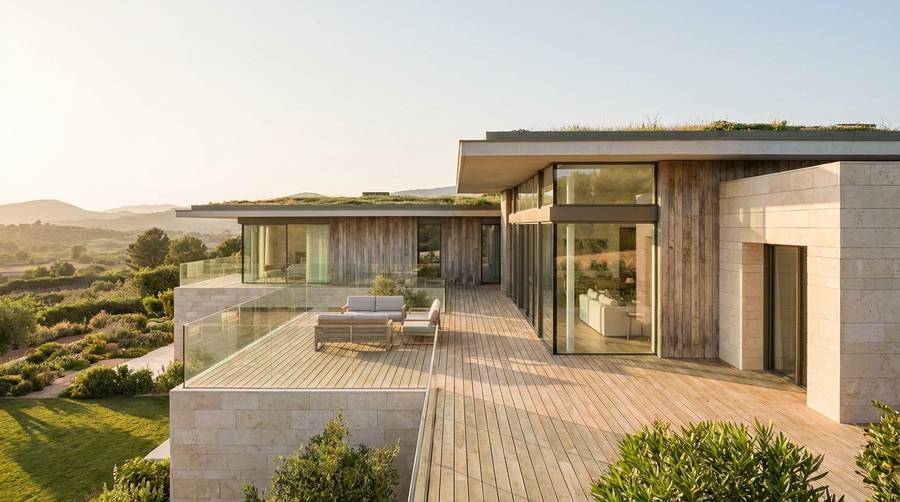
Industrialized Housing vs Traditional: Practical 2026 Guide
Hook: If you plan to build in Spain in 2026, choosing the right construction approach will define your budget, schedule and long-term comfort. This guide gives a clear, data-driven comparison of industrialized housing versus traditional construction to help you decide.
Why consider industrialized housing in 2026: market context and key takeaways
Quick premise: Industrialized housing is not a single product—it's a delivery model focused on off-site manufacturing, quality control and repeatable processes. The difference matters where time certainty, fixed pricing and energy performance are priorities.
Spanish market trends and the rise of self-build
- Demand for self-build and customizable homes has risen since 2020, driven by remote work and desire for higher-quality living.
- Developers and specialist manufacturers now offer turnkey modular solutions adapted to Spanish planning and climate.
- Regulatory focus on energy performance (nearly-ZEB goals) makes factory-controlled envelopes attractive.
What “industrialized” means vs “prefabricated” — and common myths
- Industrialized housing emphasizes process: factory assembly lines, standardized quality controls and integrated logistics.
- Prefabricated is often used broadly; not all prefabrication equals industrialized methods or premium finishes.
- Myth: modular = cheap and low-quality. Reality: high-end industrialized systems deliver finishes and warranties comparable to traditional builds.
Snapshot: main advantages and decision points
- Advantages: shorter on-site time, fixed-price offers, consistent quality, better thermal performance potential.
- Considerations: transportation limits, plot constraints, degree of design customization and local permitting timelines.
Data point: A recent case study of steel frame industrialized housing in Spain recorded a 40–60% reduction in on-site assembly time and a 10–15% reduction in total project cost variability versus comparable traditional builds.
Technical comparison: industrialized vs traditional construction
Build quality and factory control: tolerances and finishes
Industrialized: Factory environments enable repeatable tolerances (± a few millimetres on finishes), dry assembly methods and controlled curing for concrete elements. This reduces rework and improves airtightness.
Traditional: On-site variability is higher due to weather, labour skill mix and sequencing. Achieving high airtightness and consistent finishes requires stricter supervision and can increase cost.
Timelines: fixed schedules vs uncertainty
- Industrialized: Typical lead times in 2026: 8–20 weeks factory production + 1–6 weeks on-site assembly for a single-family home (depending on complexity). Overall calendar often 4–7 months from permit to handover once production starts.
- Traditional: Average calendar often 12–24 months from permit to handover for similar homes, with weather and subcontractor delays as common causes of blowouts.
Costs: fixed-price offerings, variations and a numerical example
Industrialized: Many manufacturers provide fixed-price, turnkey contracts. This limits cost overruns but requires detailed early scope. Example (orientative 2026): turnkey industrialized 120 m² home in Spain: €1,600–€2,400/m² depending on materials and finishes.
Traditional: Typical built-up cost might range €1,400–€2,200/m², but contingency and variation risk can add 10–25% during execution.
Actionable tip: When comparing quotes, ask for a line-by-line scope, an assumptions list and a change-order policy. That reveals the real comparability of prices.
Modern materials: options, advantages and limitations
Industrialized concrete: durability, insulation and performance
Advantages: Precast and industrialized concrete deliver thermal mass, long-term durability and low maintenance. They work well where structural robustness and fire resistance are priorities.
Limitations: Higher transport cost per m³ and heavier foundations may increase site costs. Detailing airtightness and thermal bridge mitigation must be carefully designed.
Light timber frame: speed, sustainability and regulatory aspects
Advantages: Timber frame systems are lightweight, fast to assemble and have a favorable embodied carbon profile. They integrate well with high-performance insulation and ventilated façades.
Limitations: Moisture management and acoustic separation require careful design to meet Spanish regulations and Passivhaus-level criteria.
Steel frame: resilience, design flexibility and acoustics
Advantages: Steel frame gives long spans and design freedom. It is ideal for modular units with tight tolerances.
Limitations: Steel has higher embodied carbon than timber unless recycled content is used. Acoustic insulation must be engineered—solutions include double-stud partitions and mass-loaded finishes.
Sustainability and energy efficiency in industrialized homes
Passivhaus and energy compliance: what to expect and how to certify
Factory-controlled envelopes are well suited to achieve low air leakage and continuous insulation—core requirements for Passivhaus. Expect easier commissioning results for ventilation heat-recovery systems when components are pre-sized.
Practical step: Contract a certified PHPP designer early. Run an energy model during the design freeze to avoid costly mid-project changes.
Reducing carbon footprint: materials, process and quantified example
Choice of material drives embodied carbon. Example comparative estimate (per m² gross floor area):
- Timber frame (with responsibly sourced timber): lower embodied carbon, approximate 150–250 kg CO2e/m².
- Steel frame (with recycled content): 250–400 kg CO2e/m².
- Industrialized concrete elements: 300–500 kg CO2e/m² unless low-carbon mixes are used.
Actionable advice: Ask manufacturers for Environmental Product Declarations (EPDs) and include embodied carbon targets in the contract.
Bioclimatic design and operational efficiency
- Orient the living areas to maximize winter solar gain and summer shading.
- Specify high-performance glazing and continuous insulation; factory installation reduces on-site errors.
- Include simple water-saving measures: low-flow fittings, rainwater harvesting for irrigation and appliances with high efficiency labels.
Turnkey process for self-builders: steps, responsibilities and a practical checklist
Finding and analysing the plot: constraints and costs
Key checks before purchase:
- Local planning regime (constructible land, max footprint, height limits).
- Topography and access for large modules or delivery trucks.
- Utility connections and geotechnical constraints (foundation cost drivers).
Design, permits and coordination: timelines and risks
Industrialized projects require early design freeze. Typical permit path: 3–6 months for standard municipal dossiers in many Spanish provinces, but always confirm with the local town hall.
Risk to avoid: Late architectural changes after factory orders will trigger change orders and delays. Lock finishes and structural decisions before manufacturing starts.
Production, transport, assembly and final delivery: reception checklist
- Factory inspection reports and QA sign-offs.
- Delivery sequence and crane requirements confirmed in writing.
- On-site checklist at handover: airtightness test, services commissioning, façade and interior finishes review, as-built drawings and warranties.
For practical guidance see Vivienda industrializada: guía para autopromotores and a real example in Vivienda industrializada: caso real en 12 meses.
Financing and mortgages for self-build and modular homes
Financing options in Spain: land, construction and delivery mortgages
Banks typically separate finance into three stages: land loan, construction financing and mortgage on delivery. Many institutions recognise turnkey industrialized projects positively when a fixed-price contract and a reliable manufacturer are present.
Bank requirements and documentation
- Detailed budget and fixed-price contract with manufacturer.
- Construction schedule and milestones for staged disbursements.
- Guarantees and retention clauses—manufacturers with warranty and solvency evidence improve bank acceptance.
Budget strategies: payment phases, bonds and insurance
Negotiate payments tied to factory completion and on-site handover. Require performance bonds and structural warranties. Consider a 5–10% contingency for client-initiated changes.
Practical conclusion: how to choose based on your project and priorities
Profile of the ideal self-builder for industrialized housing
- You prioritise time certainty and want a predictable budget.
- You value high thermal performance and lower operational costs.
- You accept some design standardisation in exchange for quality and speed.
Decision checklist: cost, time, sustainability and risk
- Estimate total cost including foundations and site works—compare turnkey versus traditional tender carefully.
- Map the critical path: permit milestones, factory lead times, transport windows.
- Ask for EPDs, airtightness test guarantees and a clear change-order policy.
Next practical steps
- Arrange a feasibility study with an industrialized provider and a local architect.
- Visit at least one finished project and review performance data (energy bills, timelines, client feedback). See Casa prefabricada: ventajas para tu vivienda modular for benefits orientation.
- Engage early with lenders to outline acceptable documentation and payment staging.
Final thought: Industrialized housing is not universally better—but for many self-builders in Spain in 2026 it offers a compelling combination of speed, predictability and higher energy performance when chosen and managed correctly.
Practical conclusion: If your priorities are time certainty, energy performance and transparent cost control, industrialized housing deserves strong consideration. If bespoke, on-site artisanal detailing is your priority, traditional construction may still be preferable.
Call to action: If you want help matching your plot, budget and goals to the best delivery method, consider requesting a feasibility review or visiting a completed project to see metrics and finishes in person.
Artículos relacionados
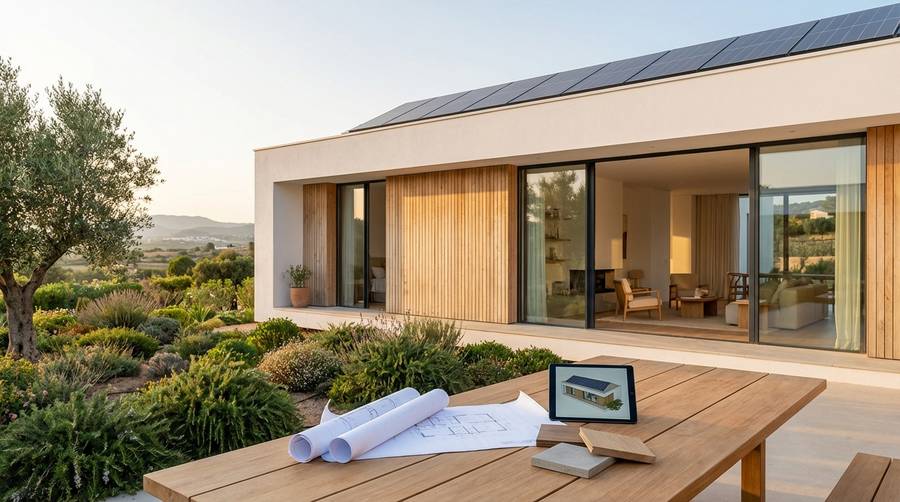
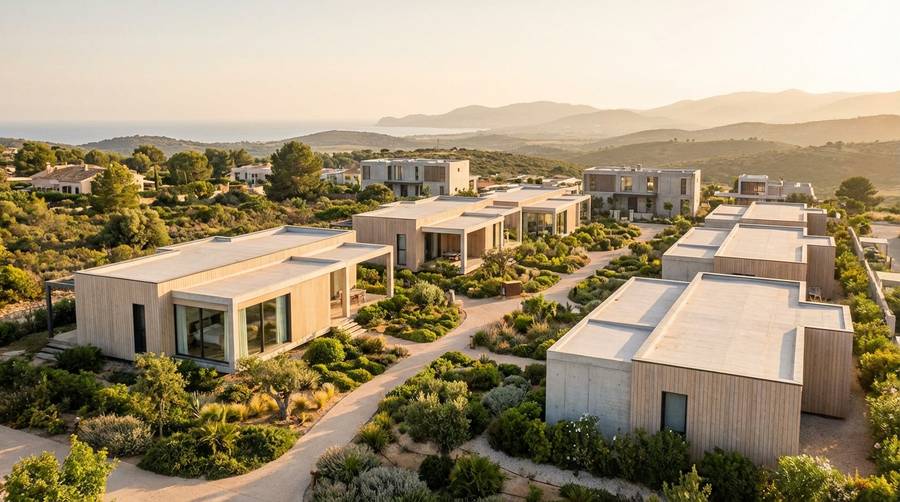
Industrialized Housing: Spain's Residential Future
A forward-looking, data-driven guide to industrialized housing in Spain. Covers market projections, construction systems, Passivhaus strategies, turnkey workflows, financing and two real-case metrics to help autopromoters make informed decisions in 2026.