


Prefabricated Housing After Disaster: 7-Step Recovery Guide
Introduction — Hook: Rebuild faster, safer and with predictable costs
When disaster strikes, time and certainty matter more than ever. Prefabricated housing offers a route to rapid habitability, controlled budgets and improved energy performance. This guide gives autopromoters and local coordinators in Spain a practical 7-step roadmap, backed by real metrics and actionable checklists.
Prefabricated homes can reduce on-site construction time by up to 70% and cut project-level carbon emissions when using industrialized materials and centralized quality control.
1. Why prefabrication after disaster is the most efficient option
Choosing industrialized housing after an emergency is not just about speed: it changes the risk profile of the whole recovery operation. Below, we break down what matters most.
Advantages versus traditional construction: fixed timelines, predictable costs and quality control
Predictable delivery. Factory workflows let you lock production weeks or months in advance. That means a fixed assembly window on site—critical when people need homes quickly. Fixed-price contracts with transparent line items lower the chance of surprise bills that often plague traditional rebuilds.
Controlled quality. ISO-style production and indoor assembly reduce weather-related delays and variability in finishing. For families recovering from trauma, consistent quality equals faster psychological recovery.
Recovery impact: rapid response and minimal on-site disruption
Speed of deployment. Prefab units arrive largely finished: windows, insulation, systems and finishes come preinstalled. That cuts site labor and exposure to hazardous conditions. Logistics-focused projects reach handover faster, reducing the time people spend in temporary shelters.
Benefits for families and communities: safety, comfort and stability
Immediate habitability. Units configured for thermal comfort and airtightness provide stable indoor environments from day one. That improves health outcomes and reduces ongoing energy costs. Community-level planning becomes easier when delivery windows are reliable.
2. Top 5 advantages of industrialized homes after an emergency
These five advantages drive the choice for many commissioners and autopromoters:
1. Rapid assembly and reduced time to handover
- Weeks, not months: Typical modules can be installed and commissioned in weeks once foundations and services are in place.
- Parallel workflows: Design and site-preparation happen while modules are built.
2. Fixed budgets and lower risk of overruns
- Transparent cost structure: Factory pricing separates material, labor and assembly costs, limiting unforeseen increases.
- Better procurement leverage: Bulk material purchasing reduces unit prices.
3. Higher energy performance from day one
Thermal control and airtightness are easier to deliver in controlled production. That translates to lower energy bills and faster compliance with passive or near-passive standards popular in Spain.
4. Improved safety and resilience
Selected structural systems emphasize seismic performance and durable envelopes—critical in zones with aftershocks or severe weather.
5. Scalability for community rehousing
Standardized modules simplify replication across neighborhoods, helping planners prioritize street layout, utilities and public space reconstruction.
3. Recommended modern materials for post-disaster reconstruction
Material choice affects speed, durability, cost and embodied carbon. Below are three materials families that balance these factors well.
Industrialized concrete: durability, thermal mass and fast fabrication
When to choose it: For coastal or high-exposure sites where durability and low maintenance matter. Precast concrete panels and elements are cast in controlled conditions for consistent quality.
Benefits: High inertia reduces indoor temperature swings; modular precast systems offer rapid connection details and excellent fire performance.
Light timber frame: low weight, carbon storage and design flexibility
When to choose it: For inland sites prioritizing speed, lightweight foundations and a lower carbon footprint. Timber systems are quick to assemble and adapt to different layouts.
Benefits: Lower embodied carbon (biogenic carbon storage), excellent acoustic and thermal performance when combined with modern insulation.
Steel frame: seismic resistance and system compatibility
When to choose it: In seismic-prone areas or projects requiring long clear spans and precise tolerances. Steel frames integrate easily with mechanical systems and façade choices.
Benefits: High strength-to-weight ratio, predictable behavior in connectors and fast bolted or welded assembly.
4. Turnkey process for post-disaster housing (step-by-step)
A credible turnkey approach coordinates parcel selection to handover. Here is a practical roadmap with actions and checkpoints.
Step A — Parcel search and legal-technical evaluation
- Check zoning and occupancy rules: Confirm permitted uses and maximum build density.
- Assess services: Water, electricity, sewer and road access—plan temporary solutions if necessary.
- Soil and foundation scope: Lightweight systems reduce foundation needs, but a geotechnical quick-scan is mandatory.
Step B — Design, approvals and prefabrication scheduling
- Freeze the scope early: Lock finishes, window schedules and systems to avoid factory rework.
- Coordinate permits alongside production: Start module production only after critical approvals to avoid storage costs.
- Quality control protocols: Establish factory acceptance tests for systems and interfaces.
Step C — Transport, assembly and commissioning
- Logistics planning: Route surveys, crane requirements and traffic coordination reduce on-site surprises.
- Assembly sequence: Utilities first, modules second, then finishing trades and commissioning.
- Certification and handover: Ensure energy certificates, occupancy permits and a documented snag-list for post-delivery repairs.
5. Financing and mortgages for self-build modular projects
Financing modular rebuilds is feasible but requires clearer documentation than typical home loans. Below are practical options and tips for autopromoters.
Options: self-build mortgages, bridge loans and staged releases
Self-build mortgages (hipotecas para autopromoción) are structured around milestones: land purchase, production, assembly and final certificate. Bridge loans can cover interim expenses until formal mortgage release.
Project valuation and required documentation
- Bank-ready pack: Site plan, production schedule, supplier contracts and a turnkey price.
- Performance evidence: Factory QA documentation, thermal calculations, and example case metrics help banks underwrite faster.
Cashflow tips to maintain liquidity
- Negotiate staged payments tied to discrete deliverables.
- Keep a contingency reserve of 5–10% for logistics or certification delays.
- Consider supplier retention clauses that release final payment after successful 6–12 month performance checks.
6. Real cases and technical comparisons: the metrics that matter
Numbers help make decisions. Below are representative, anonymized metrics based on recent industrialized housing projects in Spain and comparable traditional builds.
Case study 1: Post-earthquake intervention — timeline, costs and satisfaction
Scope: Ten-family development, mixed timber and steel frames, turnkey delivery.
- Production time: 8 weeks in factory per batch.
- On-site assembly: 3 weeks for foundations plus 4 weeks for module placement and finishes.
- Total delivery: 15 weeks from contract to keys delivered.
- Cost: Comparable to traditional rebuild but with ≤5% variance versus typical 15–30% overruns in conventional projects.
- User satisfaction: Post-occupancy survey showed 88% satisfaction for thermal comfort and 82% for overall build speed.
These metrics show that the predictability of prefabricated approaches often trumps marginal cost differences.
Technical comparison: industrialized vs traditional
- Energy performance: Industrialized units routinely achieve better airtightness and lower thermal bridging.
- Embodied carbon: Timber-framed modules can reduce embodied CO2 by 20–40% compared to heavy masonry, depending on transport distances and finishes.
- Maintenance: Pre-finished external façades reduce early maintenance cycles.
Checklist of KPIs to evaluate suppliers
- Factory lead time and capacity
- On-time delivery rate (target ≥95%)
- Defect rate at handover (target ≤3% items on snag list)
- Warranty coverage and response time
- Energy performance guarantees and third-party certification
When comparing providers, ask for documented references and actual measured KPIs, not only promises.
7. Practical conclusion: checklist and next steps for autopromoters
Summary of key criteria when choosing industrialized housing after a disaster
- Speed and predictability: Factory scheduling and fixed-price contracts reduce uncertainty.
- Material fit-for-purpose: Select concrete, timber or steel based on exposure, seismic risk and carbon goals.
- Financing readiness: Prepare a complete bank pack and negotiate staged payments.
- Supplier KPIs: Demand measurable delivery, defect and warranty metrics.
First steps recommended for autopromoters
- Secure or evaluate suitable parcels and complete a quick geotechnical scan.
- Request a turnkey proposal with a factory schedule and a clear milestone payment plan.
- Engage a technical coordinator to align permits, logistics and quality control.
- Review financing options with banks experienced in self-build mortgages.
Resources and further reading
For a real example of rapid industrialized housing delivery, see this success story: Vivienda industrializada: renacer tras la inundación en 6 meses. Use it as a template when preparing your bank-ready materials and supplier KPIs.
Final thoughts and call to action
Prefabricated housing is a practical, measurable way to restore shelter quickly while improving long-term resilience and energy performance. If you are planning a post-disaster recovery project, start by defining your timeline and financing structure, then request factory-verified proposals from at least three suppliers. Small differences in logistics or warranty terms can have a big impact on final delivery.
If you'd like a structured checklist tailored to your site and budget, contact our team for a free initial assessment and a sample turnkey proposal.
Artículos relacionados

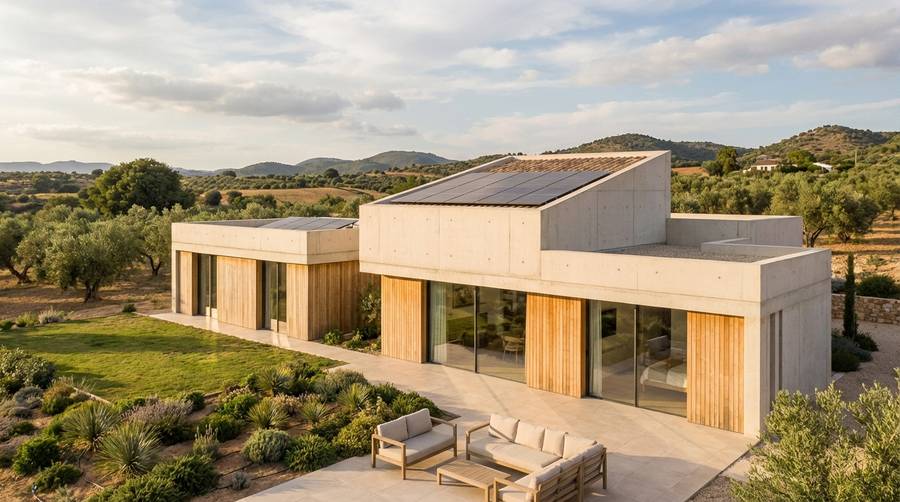
Prefabricated House Case Study: Community Recovery
A coastal Spanish village rebuilt in six months using industrialized housing. This case study shows exact timelines, costs, energy gains and the turnkey process that transformed lives with predictable budgets and measurable sustainability.
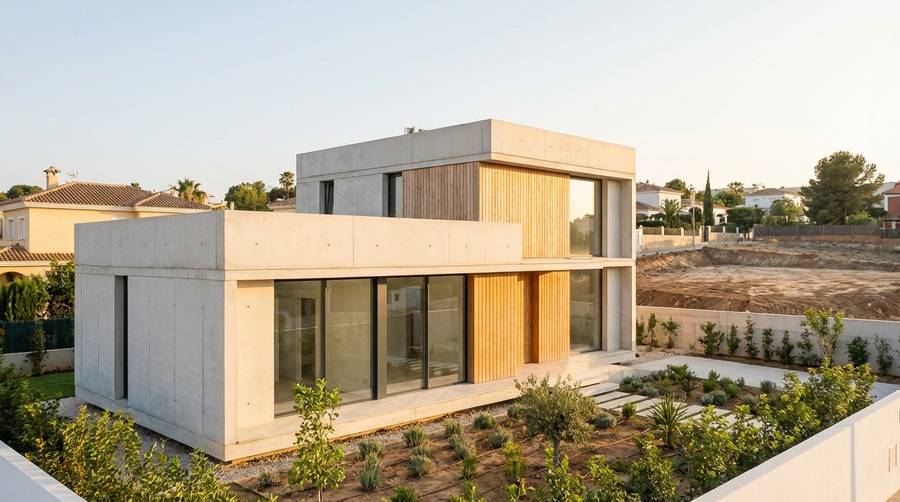
Industrialized Housing Recovery: Flood-to-Home in 6 Months
A family devastated by a flood rebuilt a modern Mediterranean home in six months using industrialized construction. This case study details decisions, timelines, materials, energy results and practical guidance for autopromoters in Spain.