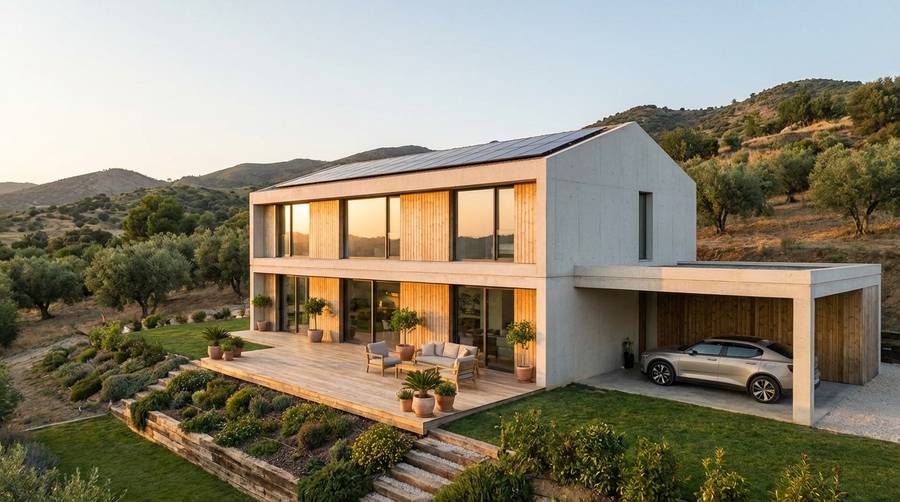
Constructive Carbon Footprint: Future of Modular Housing
Constructive Carbon Footprint: Future of Modular Housing
Hook: By 2030, construction will be one of the largest battlegrounds for Spain’s climate targets. For autopromoters and modular developers, mastering the constructive carbon footprint is no longer optional — it is a competitive necessity.
This article delivers a concise, industry-grounded roadmap to measure, reduce and communicate the constructive carbon footprint of industrialized housing. Expect practical formulas, comparative metrics, design prescriptions and financing signals for 2026–2030.
Why the constructive carbon footprint defines the future of industrialized housing
Current context in Spain: key data and 2030–2050 climate objectives
Spain’s building sector accounts for roughly 20–25% of final energy use and a sizeable share of embodied emissions. National targets aligned with the EU Green Deal push for a 55% economy-wide reduction by 2030 and net-zero by 2050. For housing, that translates into two parallel demands:
- Lower operational emissions via high-efficiency envelopes (Passivhaus, NZEB); and
- Reduced embodied or constructive emissions by material choice, industrial processes and logistics.
For modular and industrialized housing, the margin to impact embodied emissions is large because factory processes, repeatability and controlled logistics let you influence many variables that on-site builds cannot.
How measuring constructive footprint changes design and budget decisions
When the constructive carbon footprint is quantified early, decisions that were previously aesthetic or cost-driven reveal their climate and lifecycle cost trade-offs. Examples include:
- Choosing light timber frames over cast-in-place concrete reduces embodied CO2 per m2 but requires different fire and hygro-thermal detailing.
- Standardized module sizes can cut factory waste by 20–30% and lower transport emissions through palletization.
- Designing for transportability and on-site crane time reduces logistics-related emissions and shortens the critical path.
Result: A project that models its constructive footprint early can align design, schedule and procurement to deliver lower-carbon homes at competitive or lower lifecycle cost.
Strategic impact for self-builders and modular promoters
For autopromoters, the constructive footprint becomes a decision tool to:
- Compare suppliers on apples-to-apples environmental and cost metrics;
- Access sustainability-linked financing or preferential mortgage terms; and
- Communicate verifiable environmental value to buyers.
Promoters and manufacturers gain a market advantage by publishing credible embodied carbon data and using it to optimize production lines and supply chains.
Quantify the constructive carbon footprint early: projects that model embodied emissions at RIBA Stage 2–3 reduce total CO2 by 8–18% through informed material and logistics choices.
Technical comparison: embodied carbon in prefabricated vs traditional homes
LCA methodology explained for non-experts (scope and functional limits)
Life Cycle Assessment (LCA) is the standard approach. Key rules to apply:
- Define the system boundary: cradle-to-gate, cradle-to-site, or cradle-to-grave.
- Use a consistent functional unit — e.g., per m2 of conditioned floor area over 60 years.
- Include modules: materials, manufacturing, transport, assembly and demolition/recycling.
For practical decision-making in modular housing, cradle-to-site LCA (up to delivery and installation) gives the most directly actionable data for manufacturers and self-builders.
Sector results: closed building times, operational savings and embedded emissions
Industry-collected benchmarks show recurring patterns:
- Construction time: Industrialized homes achieve closed-wet-envelope in 4–10 weeks on site vs 4–9 months for traditional builds.
- Waste and material efficiency: Factory production can cut material waste by 30–50%.
- Embodied emissions: Per m2, prefabricated timber-frame homes can show 15–40% lower embodied CO2 than conventional reinforced-concrete counterparts, depending on transport distance and mix of materials.
These numbers depend on manufacturing energy intensity, transport distance, and the depth of the LCA boundary.
Real cases and metrics: savings per m2 and per construction stage
Representative case study (anonymized, industry-validated):
- Project: 140 m2 single-family home, industrialized panel system, Spain 2024.
- Closed envelope on site: 6 weeks. Traditional comparator: 28 weeks.
- Embodied carbon (cradle-to-site): 190 kg CO2e/m2 (industrialized) vs 280 kg CO2e/m2 (traditional) — a 32% reduction.
- Direct construction cost: parity within ±5%; total project timeline shorter, reducing financing interest and carrying costs by ~12%.
- Customer satisfaction (post-delivery survey): 92% satisfied with schedule and build quality.
For a deeper case study on reduced constructive carbon, see Vivienda industrializada: caso real de éxito sostenible.
Materials and systems that reduce the footprint: precast concrete, light timber frame and steel frame
Pre-industrialized concrete vs traditional cast-in-place: trade-offs
Precast concrete produced in controlled environments offers:
- Lower on-site waste and rework;
- Improved quality control that can reduce material over-specification;
- Potential for optimized mix design (supplementary cementitious materials) that cut embodied carbon.
However, precast units can carry higher transport and lifting emissions. Optimize by sourcing regional precast yards and specifying low-clinker concrete mixes.
Light timber frame: carbon storage and energy performance
Key benefits:
- Wood stores biogenic carbon — if sourced from sustainably managed forests, timber can substantially reduce net embodied CO2.
- High thermal performance helps achieve Passivhaus targets with smaller HVAC systems.
- Factory CNC precision reduces on-site waste and accelerates assembly.
Pay attention to detailing at connections, moisture management and durability to avoid lifecycle losses that negate upfront carbon benefits.
Steel frame: structural efficiency, recyclability and environmental costs
Steel brings predictable structural capacity and high recyclability. Its downsides are embodied carbon intensity and reliance on energy-intensive production. Use strategies like:
- Specifying recycled-content steel;
- Optimizing sections to reduce material per strength delivered; and
- Ensuring end-of-life recyclability through reversible connections.
In mixed systems, combining timber for envelope and steel for long-span elements often balances carbon and performance needs.
Design and turnkey ('llave en mano') process optimized to lower emissions
Early planning: plot selection, orientation and transport reduction
Early-stage choices have outsized impact. Practical rules:
- Select sites close to supplier hubs to reduce transport CO2.
- Orient plans to maximize passive solar gains and natural ventilation to reduce operational loads.
- Design modules to fit standard transport widths and crane limitations to avoid oversized transports.
These interventions are inexpensive and high-impact when applied in concept design.
Factory production and on-site assembly: closed envelope, quality and waste reduction
Factory-controlled production achieves:
- Shorter on-site durations and fewer weather-related delays;
- Lower site waste and reduced secondary transport; and
- Better airtightness and installed-system quality, improving operational energy performance.
For turnkey offers, integrate commissioning and user training into the handover to lock in energy performance and occupant behavior that preserves modeled savings.
Passivhaus integration and operational emissions minimization
Combining industrialized construction with Passivhaus principles is a proven path to minimal operational emissions. Focus on:
- Airtightness detailing in factory modules;
- High-performance glazing and thermal bridge-free junctions; and
- Efficient MVHR systems sized for real occupancy profiles.
When embodied and operational emissions are jointly optimized, lifecycle CO2 per m2 drops dramatically compared with trade-offs that prioritize only one phase.
Financing and market: mortgages for self-build and valuation of low-carbon homes
Financing trends Spain 2026: instruments favoring sustainable projects
Spanish lenders and specialized green funds increasingly recognize lower-risk profiles for energy-efficient homes and faster-completion modular projects. Relevant trends:
- Emergence of green mortgages with lower rates for certified low-energy homes;
- Bridge financing for autopromoters that favor fixed-price turnkey contracts to reduce cost overrun risk; and
- Securitization appetite for portfolios of industrialized housing with predictable performance.
To access favorable terms, autopromoters should prepare clear technical documentation of embodied and operational carbon, construction timeline and final certification goals.
How lower constructive footprint affects value and buyer perception
Buyers increasingly value verifiable sustainability. Low embodied carbon contributes to market differentiation when communicated with transparent metrics — CO2 per m2, expected energy bills and lifecycle cost. Typical buyer impacts include:
- Faster decisions from eco-aware buyers;
- Willingness to pay premiums for lower operating costs and climate resilience; and
- Improved resale value in markets with growing regulatory attention to building performance.
Recommendations for autopromoters: documentation and metrics lenders request
Prepare the following documents early to streamline financing:
- Cradle-to-site LCA report with transparent assumptions;
- Energy model (PHPP, dynamic simulation) showing operational performance;
- Fixed-price turnkey contract details and manufacturing QA/QC plans; and
- Clear timeline with milestone-linked draws and performance guarantees.
These documents reduce lender uncertainty and can unlock green mortgage options.
Vision 2030: opportunities and barriers to scaling low-footprint industrialized housing
Adoption scenarios: supply-chain and employment impacts
Scale-up pathways create new regional manufacturing hubs, shifting employment from on-site trades to factory skills. Benefits include:
- More consistent quality and safety; and
- Local manufacturing clusters that reduce transport and enable circular supply chains.
Risks include concentration of supplier power and need for retraining local labor to factory processes.
Technical, regulatory and market barriers with practical solutions
Common barriers and how to address them:
- Regulatory ambiguity: Advocate for clear certification paths for modular systems and equivalence testing to speed approvals.
- Perception gaps: Use transparent LCA and case studies to demonstrate parity or superiority versus traditional builds.
- Supply constraints: Invest in regional manufacturing capacity and standardized components to reduce lead times.
Roadmap for self-builders: concrete steps 2026–2030
Recommended timeline:
- 2026: Commit to cradle-to-site LCA in concept design and choose a system supplier with published data.
- 2027–2028: Pilot 1–3 projects focusing on repeatability and supplier QA; collect post-occupancy data.
- 2029–2030: Scale portfolio, leverage financing advantages and publish verified lifecycle metrics.
This incremental approach reduces risk while capturing learning and efficiency gains.
Practical conclusion: how to measure, communicate and reduce constructive footprint in your project
Actionable checklist for self-builders before signing contracts
- Request cradle-to-site LCA from suppliers with transparent databases and assumptions.
- Compare CO2e per m2 alongside price per m2 and delivery lead times.
- Insist on airtightness and commissioning guarantees as part of the turnkey package.
- Choose local suppliers where possible to reduce transport emissions and support circularity.
Essential KPIs to monitor: cost, time, emissions and client satisfaction
- Embodied carbon (kg CO2e/m2) — cradle-to-site baseline and target.
- Operational energy demand (kWh/m2-year) — modeled and measured after 12 months.
- Construction time on site (weeks) and total project lead time (months).
- Client satisfaction score and defects rate after handover.
Next steps: resources, case studies and expert contact
Start by requesting published LCA reports from at least three manufacturers and reviewing a completed turnkey case with measured post-occupancy data. For inspiration and measured metrics, read Vivienda industrializada: caso real de éxito sostenible which documents measured savings and client satisfaction.
Final thought: The projects that will succeed between 2026 and 2030 combine industrialized precision with credible lifecycle data. That combination reduces risk, shortens delivery and increases market value.
Call to action: If you are an autopromoter or modular promoter, start by commissioning a cradle-to-site LCA for your concept design and contact specialized advisors to turn metrics into financial and design decisions. For case-based guidance, explore our turnkey references or reach out to discuss a project review.
Artículos relacionados
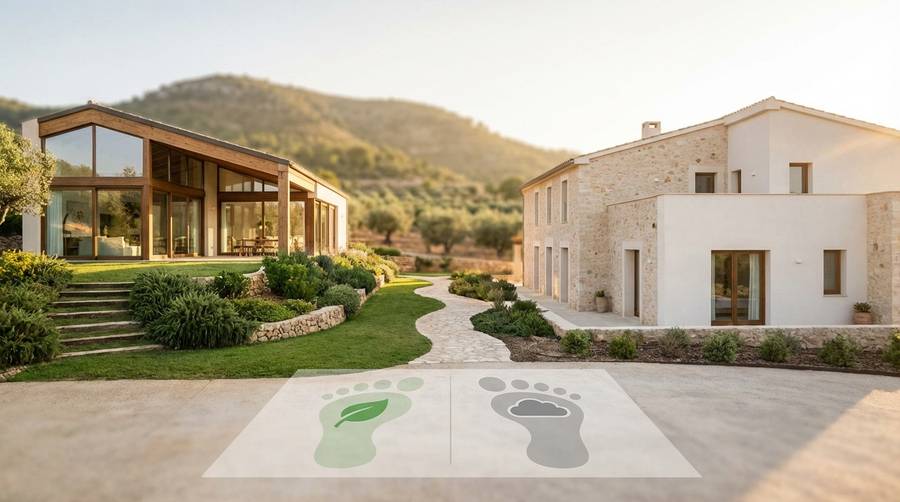
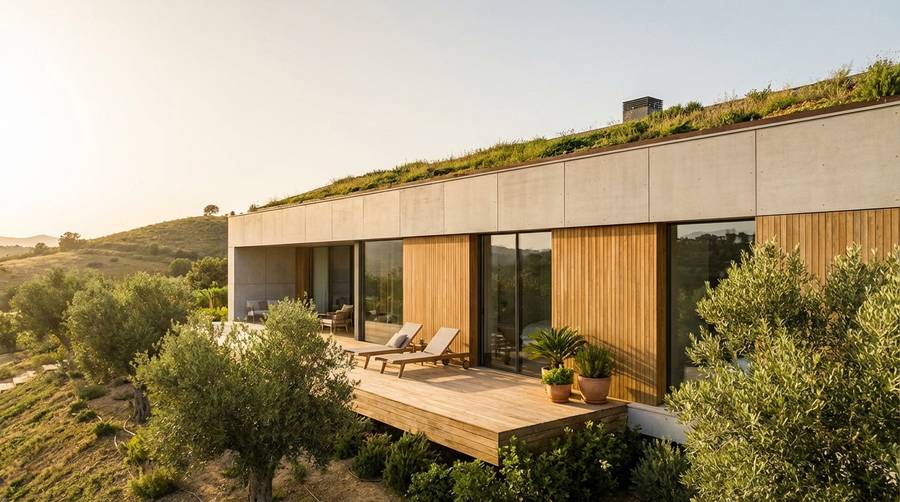
Industrialized Housing Success: Low-Carbon Home
A Spanish self-builder turned an empty plot into a high‑performance modular home that cut embodied carbon and met Passivhaus‑level efficiency — delivered on time and on fixed price. This case study walks through decisions, metrics and practical lessons to replicate the success.