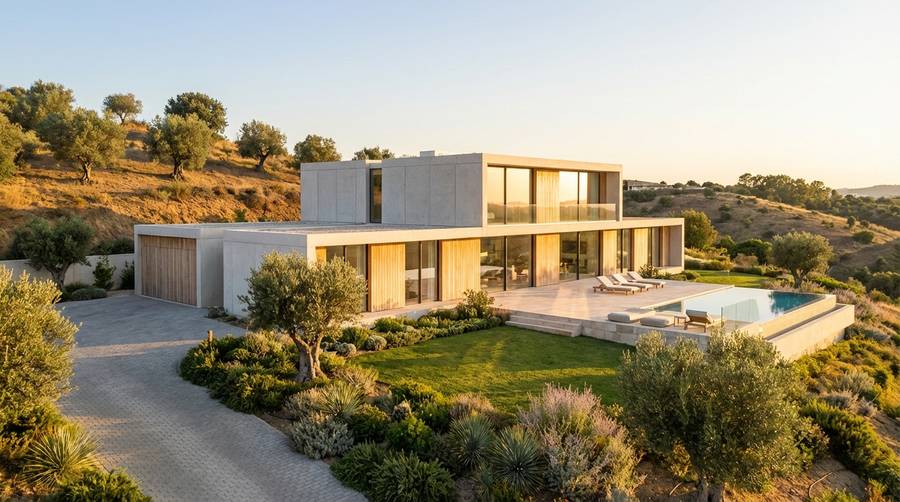
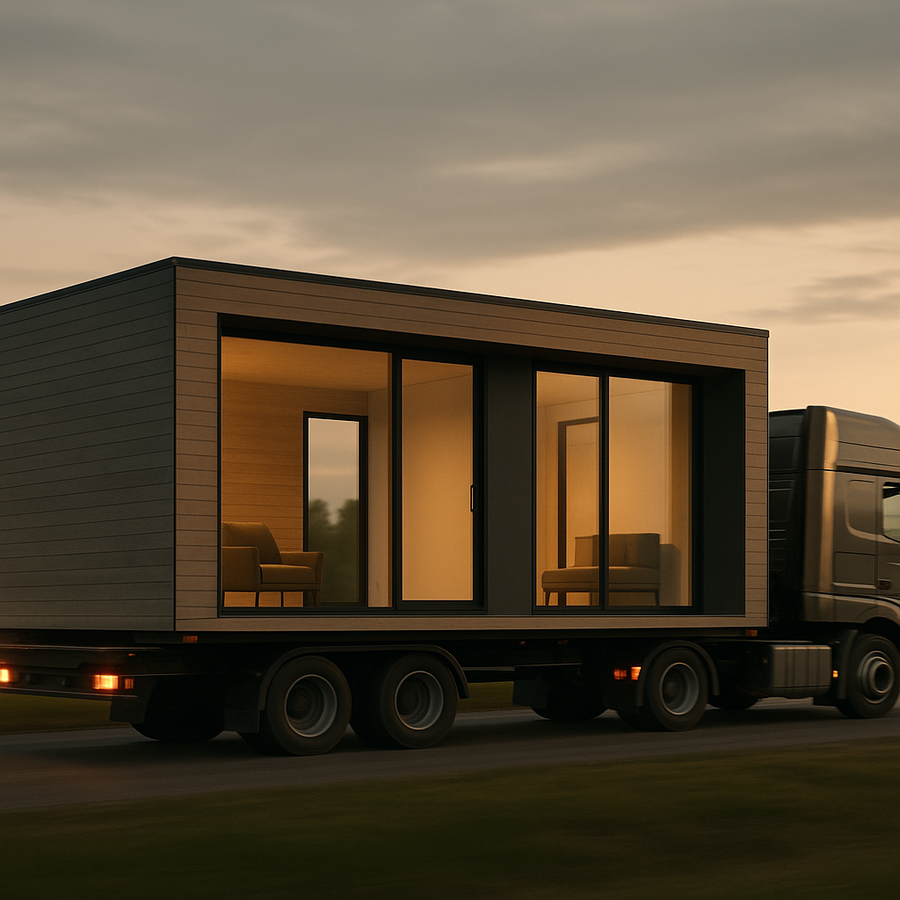
Modular housing case study: From plot to move-in
Introduction — Hook: how we cut time and uncertainty for an autopromoter
What if you could go from plot purchase to moving day in under a year, with fixed costs and high energy performance? That was the brief from our clients: a family in Spain seeking a durable, comfortable home without the typical delays and budget drift of traditional construction. This case study describes the full journey—decisions, metrics, trade-offs and practical advice—so other autopromoters can evaluate whether modular housing is the right route.
In this project, total delivery time was 11 months from final design to keys in hand, with a 6% variance against the fixed budget—far below typical deviations in traditional builds.
De la parcela a la primera visita: project kickoff
Client context and self-build criteria
The family wanted a 180 m² home near Valencia with high thermal comfort, low operational costs and predictable cashflow. Key constraints:
- Fixed maximum budget set before selecting construction method.
- Target performance: near-Passivhaus levels for heating/cooling balance.
- Timeline: occupied within 12 months from contract signature.
Plot selection and preliminary studies
We ran a compact feasibility review: urban classification, site slope, and available utility connections. Early checks reduced surprises later:
- Urban rules verified: max buildable area, setbacks and permitted heights.
- Topography study identified a 1.2 m level change—managed in foundation design rather than costly retaining works.
- Connection points for water, electricity and sewage located within 30 m, avoiding major excavations.
Choosing industrialized construction: time, cost and sustainability goals
The decision to go modular was driven by three measurable objectives:
- Time certainty: factory manufacture can proceed in parallel with site prep.
- Budget control: fixed-price modules reduce scope creep and on-site contingencies.
- Sustainability: optimized thermal envelope and controlled material waste.
Why we opted for modular housing: advantages that mattered
Time efficiency: guaranteed schedules vs traditional builds
Modular manufacturing compressed the on-site phase. While a similar traditional build would typically take 16–24 months, our modular path split activities: factory production (12 weeks) concurrent with site works (10 weeks). The net result was a substantially shorter calendar delivery.
Budget control: fixed price and lower unexpected costs
By procuring a turnkey modular package, the client benefited from a clear scope and predefined unit costs. This reduced variation orders and hidden costs common in on-site projects—such as extended labour or weather-related delays.
Quality and comfort: finishes, airtightness and energy performance
Factory conditions improved quality control: airtightness tests, consistent insulation installation and precision joinery. The final home achieved U-values and air tightness consistent with high-efficiency standards, reducing expected heating demand by more than 60% compared to a baseline conventional build in the same climate.
Materials and construction system: a pragmatic technical explanation
Comparing industrialized concrete, light timber frame and steel frame
We assessed three systems on four dimensions: durability, cost, speed and sustainability.
- Precast concrete: high thermal mass and durability, higher transport and foundation demands, longer lead times.
- Light timber frame: excellent thermal performance and low embodied carbon, fast factory cycles, highly adaptable finishes.
- Steel frame: high precision and modular repeatability, good fire and structural performance but higher embodied carbon than timber.
Why timber frame was chosen
For this project, light timber frame balanced speed, sustainability and cost. Key reasons:
- Lower embodied carbon versus concrete and steel.
- Faster fabrication with fewer heavy lifting constraints on site.
- Excellent integration with high-performance insulation and triple-glazed carpentry for a Passivhaus-like envelope.
Finishes and Passivhaus-oriented solutions
We applied practical measures to maximize comfort and energy efficiency without overcomplicating the build:
- Continuous external insulation (mineral wool with ventilated rainscreen) to avoid thermal bridges.
- High-performance windows with low-e coatings and certified frames.
- Mechanical ventilation with heat recovery sized to measured occupancy profiles.
Delivery speed: real timeline and metrics
Project timeline: phases and durations
Actual timeline from contract signature to keys in hand:
- Design and permits: 12 weeks (including coordination with local urban authorities).
- Factory production of modules: 10 weeks (panels and pre-assembled sections).
- Site works and foundations: 8 weeks (excavation, footings, connections).
- On-site assembly and finishings: 6 weeks (craning modules, sealing, utilities).
Net calendar time: 11 months including permitting and final inspections.
Key metrics: delivery time, cost savings and deviation rates
Measured performance versus a conservative traditional benchmark:
- Total delivery time: 11 months modular vs estimated 20 months traditional (45% faster).
- Cost variance: final cost within 6% of fixed-price quote; traditional projects often exceed estimates by 15–25%.
- Energy savings: projected operational energy reduced ~60% for heating and cooling compared with similar conventional builds.
Challenges and how we resolved them
Major challenges were predictable and resolvable:
- Permit delays: early engagement with local planners and a pre-application reduced two-week wait periods.
- Site access for crane operations: sequencing site logistics and a short staged road closure avoided extra lift costs.
- Supply-chain pressure on carpentry: locking key suppliers with deposit payments secured lead times.
Turnkey delivery and financing: managing the full autopromotion process
Turnkey services included
The delivered package covered end-to-end services so the client could focus on decisions rather than coordination:
- Plot search support and feasibility checks.
- Complete design, engineering and permit management.
- Factory manufacture, site assembly and interior finishes.
- Commissioning, warranty handover and an owner briefing on systems.
Where helpful, the text referenced our explanatory pieces on scheduling and delivery: see Vivienda modular: rapidez, eficiencia y llave en mano and Casa prefabricada: rapidez y calidad para tu proyecto for deeper reading on timelines and project management.
Financing options for self-builders in Spain
We coordinated financing solutions tailored for autopromoters:
- Self-build mortgages (hipoteca de autopromoción) with staged draws linked to construction milestones.
- Alternative credit lines to cover plot purchase and early-phase expenses.
- Support preparing bank-ready documentation: cashflow forecast, fixed-price contracts and insured warranties to reduce lender risk.
Guarantees, permits and risk minimization
Risk mitigation included:
- Performance guarantees on manufacture and on-site assembly.
- Clear handover protocols and a defects liability period.
- Assisted documentation for final occupancy permits to speed inspections.
Results, client satisfaction and practical advice
Measurable outcomes
Final metrics delivered to the client:
- Final cost: within 6% of the contract maximum.
- Energy performance: projected reduction in annual heating energy by ~60% compared to regional baseline.
- Delivery time: occupied in month 11 from design start.
Owner testimony
"We never imagined finishing so quickly with so little stress. The fixed price and the quality of finishes gave us real peace of mind. Our bills already show a difference in the first winter." — homeowner
Actionable tips for future autopromoters
Based on this case, practical recommendations:
- Start early with plot feasibility checks—topography and utilities drive hidden costs.
- Choose a turnkey partner that offers transparent fixed-price contracts tied to clear deliverables.
- Prioritize airtightness and mechanical ventilation early in design to avoid expensive retrofits.
- Lock critical suppliers (windows, MVHR units) to secure lead times.
- Prepare a realistic permit timeline and budget for minor administrative delays.
Closing: building faster, greener and more affordably
Key takeaways and market opportunities
This case demonstrates that modular housing can deliver on its promises: shorter delivery times, stronger cost certainty and measurable energy savings. For Spain’s growing self-build market, industrialized systems offer a pathway to affordable, high-performance homes without sacrificing design quality.
Call to action
If you are considering an industrialized home, start with a focused feasibility review of your plot and priorities. Contact our team for a tailored assessment and see whether a turnkey modular approach can meet your goals.
Artículos relacionados
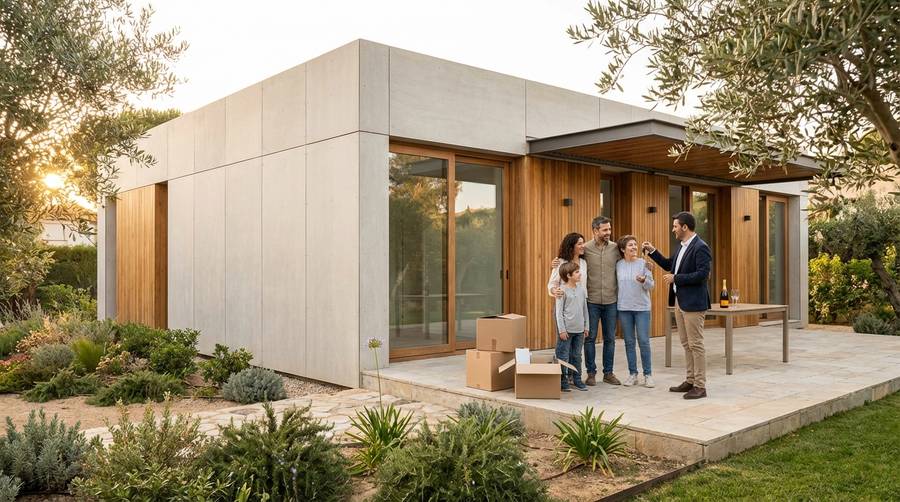
Modular housing success: a fast, high-quality turnkey case
A Spanish family's turnkey modular home project shortened delivery by months and kept costs predictable. This case study reveals timelines, real metrics, materials used and practical lessons for autopromoters seeking speed without compromise.