Prefabricated House Benefits in Spain
Introduction to industrialized enclosure systems
Industrialized housing is changing how homes are designed, built and delivered in Spain. At its core, an industrialized enclosure system is a prefabricated approach to walls, roofs and façades assembled with factory quality control. For self-builders, the appeal of a prefabricated house lies in predictable timelines, consistent quality and transparent costs.
Below you will find an overview of why modern industrialized methods matter, how they compare with traditional construction, and a clear image brief for editorial visuals that reflect the finished living environment.
What industrialized enclosures are and why they matter in industrialized housing
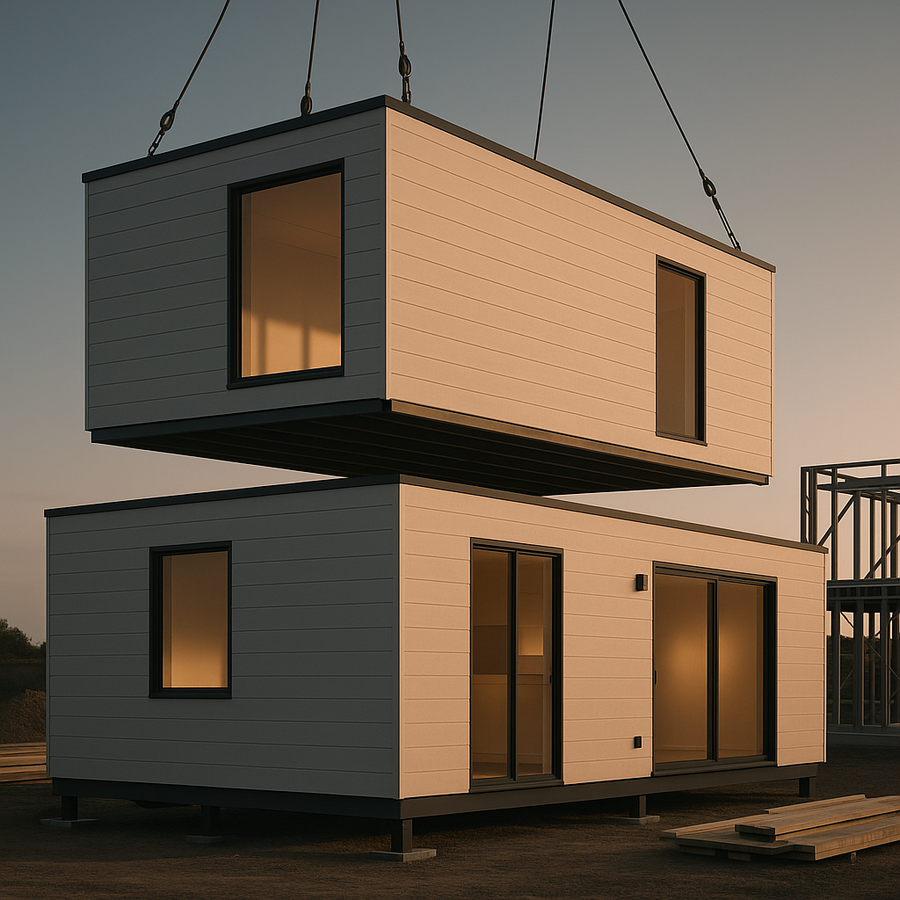
Industrialized enclosure systems are pre-manufactured components made under controlled conditions. They include insulated panels, framed façades and precision-fitted windows. These elements arrive on site ready for quick assembly. A prefabricated house built with such systems reduces exposure to weather delays and on-site variability. This improves predictability for schedules and budgets.
Differences versus traditional enclosure systems
Traditional construction relies on sequential trades working mostly on site. That increases coordination needs and the risk of unexpected delays. By contrast, a prefabricated house emphasizes off-site production, standardized components and rigorous factory inspection. The result is a shorter on-site period and fewer surprises for the homeowner.
Image for AI: editorial-quality photograph of a finished Mediterranean home
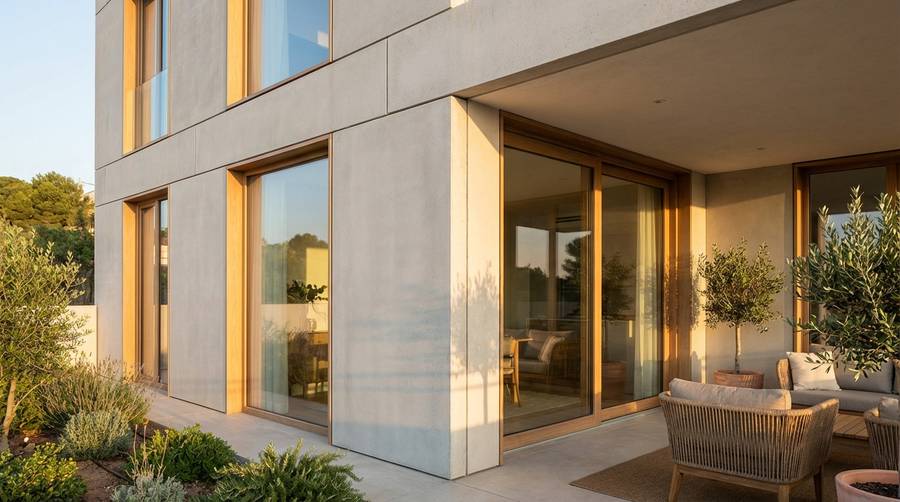
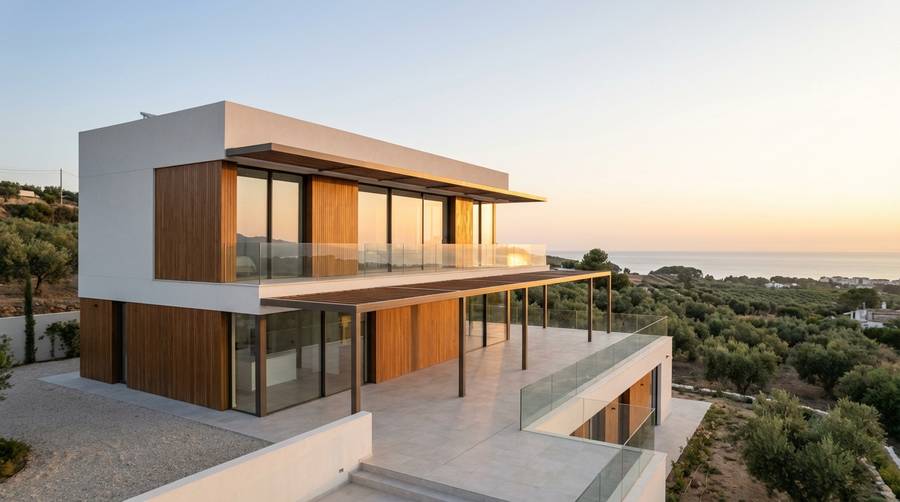
AI image brief (Findnido visual style): A Mediterranean contemporary single-family home in Spain at golden hour. Light-colored façades with natural stone and warm timber accents. Large windows reveal warm interior light. A modest garden and terrace with typical Spanish plants frame the house. The scene is lifestyle-driven and residential, conveying comfort, modernity and sustainability. Photographic, magazine-quality composition with natural colors. The house appears finished and lived-in. Avoid any exposed construction elements, modular boxes, container motifs or tiny houses.
Advantages of the prefabricated house versus traditional construction
Choosing a prefabricated house for a self-build project brings measurable advantages. These benefits matter for families and professionals who value time, budget control and long-term performance.
Faster on-site schedules and fixed timelines
A prefabricated house dramatically shortens the time spent on site. Many enclosure modules arrive pre-finished and ready to install. This reduces the risk of weather-related delays. For self-builders, that means a faster route to habitation and less disruption to daily life.
Predictable cost and fixed-price projects
Factory production reduces uncertainty. A prefabricated house typically sits within a fixed-price framework. Costs are clearer from the start because many components are standardized. That helps owners plan financing and avoid last-minute cost overruns.
Factory quality control reduces unexpected issues
Production under controlled conditions delivers consistent quality. Inspections occur at key stages in the factory, so a prefabricated house arrives on site with fewer defects and less rework. This lowers risk and improves the final finish that occupants will enjoy.
Modern materials and construction systems
Modern industrialized housing relies on a palette of materials chosen for performance, durability and comfort. Below we describe three common systems used in Spain today.
Industrialized concrete: durability and premium finish
Industrialized concrete panels provide a robust and enduring façade. They offer fire resistance and acoustic performance while enabling sleek, modern aesthetics. For self-builders who want a premium finish and low maintenance, concrete panels are an excellent option for a prefabricated house.
Light timber framing: thermal comfort and speed
Light wood frame systems combine excellent thermal performance with rapid assembly. Timber framing is well suited to passive design strategies. It delivers a warm interior feel and can be paired with high-performance insulation to meet rigorous energy goals.
Steel frame (steel frame): structural versatility and design freedom
Steel frame structures bring structural accuracy and slender profiles. Their strength-to-weight ratio allows open floor plans and large window openings. A steel-framed prefabricated house offers design flexibility while keeping on-site time short.
Sustainability and energy efficiency
Sustainability is central to modern industrialized housing. A prefabricated house can achieve high energy performance and a lower carbon footprint through design, materials and factory efficiencies.
Passivhaus design and carbon reduction
Applying Passivhaus principles to a prefabricated house reduces heating and cooling needs. Tight envelopes, high-quality insulation and thermal-bridge-free detailing are more reliably produced in a factory. That leads to lower operational emissions and a smaller lifecycle carbon footprint.
Responsible materials and life-cycle thinking
Selecting responsibly sourced timber, recycled aggregates in concrete and long-lasting finishes extends the life of a prefabricated house. Off-site production also reduces waste and energy use during construction compared to many traditional builds.
Comfort and long-term savings
A well-sealed envelope and controlled ventilation deliver steady indoor temperatures and healthy air quality. The result is comfort for occupants and lower energy bills over decades. For self-builders, those savings often justify a small initial premium.
The turnkey process for self-builders
A turnkey project simplifies the path from plot to keys. The process coordinates procurement, approvals and construction under a single delivery model. For many self-builders, a turnkey prefabricated house means clarity, reduced administrative burden and a single point of responsibility.
From plot search to final delivery
The turnkey journey begins with land selection and feasibility. After that, design and factory production follow. Finally, the modules or panels are assembled on site. The turnkey model streamlines each stage so the self-builder can focus on decisions that matter: layout, finishes and budget.
Managing permits, approvals and technical oversight
A turnkey provider typically manages planning permissions and technical compliance. This reduces coordination work for the owner. Having a dedicated team improves transparency and helps keep the project on schedule.
Transparent timelines and stage payments
Turnkey contracts usually define clear milestones and payment schedules. That transparency supports bank financing and helps self-builders track progress. A prefabricated house often shortens the on-site milestone period compared with traditional projects.
Financing and options for modular housing
Financing a prefabricated house involves similar steps to financing other new builds. However, some specific products and considerations are important for self-builders in Spain.
Self-build mortgages: key points and requirements in Spain
Self-build mortgages or autopromoción loans fund the stages of construction. Banks often release funds in tranches tied to completed milestones. Clear turnkey contracts and fixed-price quotes make lenders more comfortable financing a prefabricated house.
Alternative financing and planning your budget
Beyond traditional banks, private lenders and specialized finance options exist for modular projects. Early cost certainty from a prefabricated house improves loan approval odds. Always include contingency in the budget for land costs, connections and regulatory fees.
Practical advice for presenting your project to banks
Provide a complete package: site plan, turnkey contract, production timeline and fixed-price estimates. Demonstrate technical compliance and energy performance targets. A transparent approach shortens the approval process and builds lender confidence.
Practical guide: choosing the right prefabricated solution
Selecting the right system depends on design goals, budget and site constraints. Consider these practical steps when planning your prefabricated house.
Define goals: comfort, budget and timeline
Start by prioritizing what matters most. Do you want Passivhaus-level efficiency? Is a fixed price essential? Clarifying priorities simplifies trade-offs and the selection of materials like timber or concrete.
Visit completed projects and request factory tours
Seeing finished homes and visiting factories helps evaluate build quality. Ask for references from other self-builders. A prefabricated house should look and feel like a finished home, not a temporary structure.
Integrate sustainable standards from the start
Incorporate energy targets and material choices early in the design. That enables the manufacturer to optimize the envelope and systems. A prefabricated house benefits most when sustainability is embedded from the outset.
Further reading and related systems
For more on industrialized façades and enclosure design, explore our practical guides on prefabricated enclosure systems. These resources explain detailing, performance and design considerations in depth. For example, learn more about modern façade systems in Cerramientos industrializados para diseño sostenible and compare full technical guidance in our Sistemas de cerramiento industrializado: guía completa.
Conclusion: Why choose a prefabricated house in Spain
A prefabricated house offers a compelling combination of speed, cost certainty and high performance. Modern materials like industrialized concrete, timber framing and steel frame systems deliver durable, efficient and attractive homes. For self-builders seeking a transparent turnkey path, prefabrication reduces risk and improves predictability. The result is a beautiful, comfortable and sustainable home adapted to Spanish life.
If you are planning to self-build, consider a prefabricated house as a practical and modern route. It aligns design freedom with factory precision, and it turns an ambitious project into an achievable reality.