Hybrid Construction Systems vs Traditional Homes
Why choose hybrid construction systems: overview and context
Hook: If you want a high-quality Spanish home delivered faster than traditional build times, with better cost predictability and modern sustainability, hybrid systems deserve a close look.
Hybrid construction systems combine factory-made elements with conventional on-site work. They aim to capture the benefits of industrialized production while keeping design flexibility. For autopromoters in Spain, hybrids often sit between full prefabrication and traditional masonry builds.
What is a hybrid construction system and how it fits industrialized housing
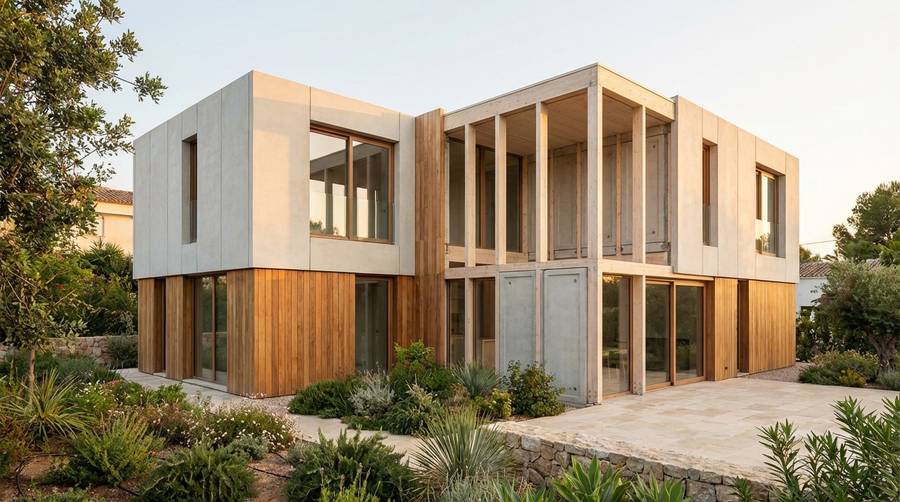
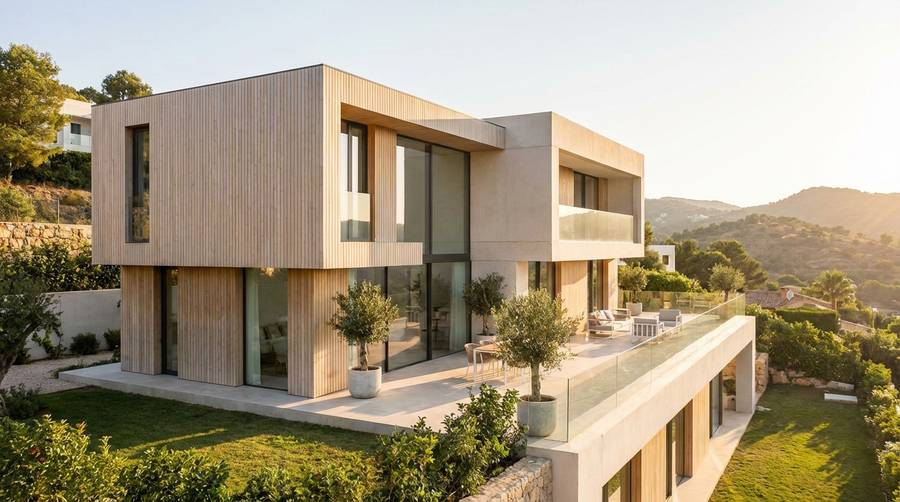
Definition: A hybrid home uses prefabricated structural or envelope modules (concrete panels, timber panels, steel frames) plus in-situ work for foundations, bespoke elements or finishes. This mix targets efficiency without forcing a single-system approach.
Trends in Spain: demand, regulation and advantages over alternatives
Spain is seeing growing demand for industrialized housing driven by:
- Faster delivery needs as labor shortages increase on-site schedules.
- Energy regulations pushing higher thermal performance and lower emissions.
- Buyer preference for predictable costs and quality.
Hybrid systems align with EU and Spanish policy goals on energy efficiency and circular construction. They often outperform traditional masonry in on-site time and waste control.
Who benefits: autopromoters, developers and sustainable families
Best fits:
- Autopromoters who want control over design but prefer shorter site times.
- Developers seeking repeatable, reliable delivery with reduced uncertainty.
- Families targeting high energy performance standards like Passivhaus.
Objective comparison: hybrid vs full prefab vs traditional
Below is a practical, evidence-focused comparison across key decision areas.
Execution time and schedule control: factory, on-site assembly and quick enclosures
- Traditional: Site-built homes commonly take 12–24 months from groundworks to handover, depending on complexity and weather.
- Full prefabrication: Off-site manufacturing compresses on-site time to 1–3 months for assembly, but overall project can still require 6–12 months when you include design and approvals.
- Hybrid: Typical hybrid projects reduce on-site enclosure time by 40–60% compared to traditional builds. Example: a 160 m2 single-family home achieved watertight status in 6 weeks of on-site work while total delivery (permits excluded) was 5–7 months.
Costs and budget certainty: fixed price, deviations and hidden costs
Cost dynamics:
- Traditional contracts often show larger variance due to site complexities and material price volatility.
- Full-prefab suppliers may offer fixed-price packages, but customization and transport can add unexpected costs.
- Hybrid solutions frequently offer the best balance: predictable factory costs for repeatable elements plus controlled on-site budgets for bespoke parts.
Example metric: in a 2024 Spanish pilot, hybrid delivery reduced cost variance to ±4% versus ±10% for traditional builds.
Quality and performance: insulation, acoustic comfort, durability and customization
Performance comparison:
- Factory-made components usually ensure tighter tolerances and superior airtightness.
- Hybrid designs can combine high-performance concrete panels for thermal mass with light timber framing for interior flexibility.
- Acoustic and durability outcomes depend on detailing; hybrids must manage interfaces carefully to avoid thermal bridges or moisture risks.
Hybrid systems often deliver the best compromise: factory-controlled components for performance, and on-site adaptability for design nuances.
Key advantages of hybrid systems (data and practical examples)
Construction efficiency and reduced timelines with real metrics
Practical data points:
- A hybrid 120–160 m2 home: foundation and services 6–8 weeks; factory modules delivered in 6–9 weeks; on-site assembly 4–8 weeks. Total typical build: 4–6 months (excluding permits).
- Waste reduction: off-site cutting and batching lowered material waste by ~20–30% in monitored projects.
- Quality control: factory-tested assemblies reduce rework by up to 60% compared with dispersed on-site checks.
Better cost-quality balance: optimizing materials and processes
Hybrid projects can shortlist expensive on-site trades without losing finish options. For example:
- Use industrialized concrete panels for structure and thermal inertia.
- Apply light timber panels internally for speed, lower embodied carbon and easy changes.
These combinations typically reduce lifecycle cost while keeping high-end finishes.
Sustainability and energy efficiency: compatibility with Passivhaus
Hybrid solutions are particularly compatible with Passivhaus targets because factory processes enable:
- Tight tolerances and controlled insulation continuity.
- Pre-installed high-performance windows and airtight membranes.
- Measured thermal bridges reduction through engineered connections.
Case study: a 140 m2 hybrid home in Valencia achieved a heating demand under 15 kWh/m2·year after intentional detailing and continuous insulation.
Disadvantages and risks to consider for a balanced decision
Coordination and design risks: interfaces between prefabricated and in-situ work
Risk points:
- Interfaces are the most common source of defects—waterproofing and airtightness at connections must be detailed.
- Early coordination between factory engineering and on-site teams is mandatory to avoid delays.
Limitations in design and customization versus traditional builds
Although hybrids are flexible, constraints exist:
- Large, irregular geometries force more on-site work, reducing prefab benefits.
- Highly bespoke facades or non-standard structural spans may increase cost compared with traditional methods.
Financial and contractual risks: warranties, lead times and change orders
Key financial considerations:
- Factory lead times must be matched with financing milestones to avoid interest drift.
- Contracts must clearly assign responsibility for defects at interfaces and include latent defect cover.
- Autopromoters should verify delivery guarantees and include clauses for schedule deviations.
Materials and technical combinations: industrialized concrete, timber frame and steel
Industrialized concrete: uses, structural benefits and energy performance
Use cases: Precast concrete panels are excellent for foundations, load-bearing facades and thermal mass. Benefits include durability, fire resistance and acoustic isolation.
Energy impact: concrete mass stabilizes indoor temperatures, reducing peak heating needs when combined with continuous insulation.
Light timber frame: speed, embodied carbon and protection considerations
Timber framing offers fast assembly and low embodied carbon. It excels in interior partitions and upper floors. Key considerations:
- Fire protection strategies and moisture control are essential.
- Timber is ideal for Passivhaus assemblies due to good thermal behavior and ease of airtight detailing.
Steel frame and mixed solutions: strength, compatibility and common details
Steel frames provide long spans and slender profiles. They pair well with timber or concrete elements. Typical hybrids use steel for structural cores and timber or concrete panels for envelopes.
How turnkey hybrid house delivery works in Spain
Stages: from parcel search and permits to manufacture and assembly
Typical turnkey workflow:
- Parcel analysis and geotechnical study.
- Concept design and budget validation.
- Planning permissions and technical approvals.
- Factory production of panels/modules.
- Site foundations, utility connections and assembly.
- Finishes, commissioning and handover.
Findnido-style turnkey service coordinates these steps to minimize friction for autopromoters.
Timelines and milestones: real examples of project timeframes
Example schedule for a 150 m2 turnkey hybrid home in Spain (permits granted):
- Weeks 1–6: final design, structural calculation and factory scheduling.
- Weeks 6–14: factory production of elements in parallel with foundation works.
- Weeks 14–22: on-site assembly, weather-tight enclosure and internal trades.
- Weeks 22–26: finishes, systems commissioning and handover.
Contracts, guarantees and coordination with financing and self-build mortgages
Key contractual items for autopromoters:
- Fixed-price offers for factory-made elements.
- Clear milestone-linked payments for construction and assembly.
- Warranty clauses covering factory defects and on-site workmanship.
Discuss mortgage options for autopromoters with your bank early. Many lenders offer staged disbursements for turnkey and hybrid projects—align payment schedule with factory and site milestones to reduce interest exposure.
Practical conclusion: when to choose a hybrid system
Autopromoter profile that best suits the hybrid option
Choose hybrid if you want:
- Predictable budgets with good design freedom.
- Shorter on-site time and lower disruption.
- High energy performance with potential for Passivhaus standards.
Quick checklist to compare offers: time, cost, sustainability and customization
Ask each supplier for:
- Detailed schedule with factory lead times and on-site milestones.
- Breakdown of fixed and variable costs, including transport and connections.
- Thermal and airtightness targets with test guarantees.
- Warranty terms for factory and site works.
Next steps: request quotes, visit projects and ask for case studies
Practical actions:
- Request detailed references and visit at least one finished hybrid home.
- Ask for measured performance data (airtightness, U-values, energy demand).
- Compare turnkey proposals and include financing timing with your bank.
For design inspiration and technical guidance, see our related guides such as Casa prefabricada: guía paso a paso para autopromotores and Casa prefabricada híbrida: guía para autopromotores.
Final thought: Hybrid systems are not a one-size-fits-all silver bullet. They are, however, a pragmatic and high-performing option for most Spanish autopromoters who want speed, predictability and strong energy performance without sacrificing thoughtful design.
Call to action: If you're considering an industrialized hybrid home, gather two or three turnkey offers, request measurable performance data and schedule site visits. Contact our team if you want help preparing a shortlist or interpreting technical proposals.
Artículos relacionados