Industrialized Housing: A Spanish Turnkey Success Story
From dream to reality: the story of an efficient industrialized home in Spain
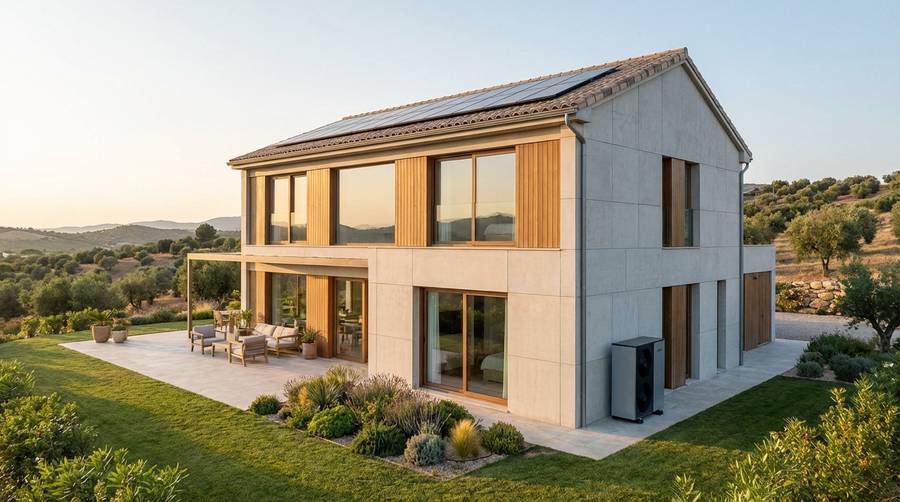
They wanted certainty—fixed price, fast delivery and low running costs—and a plot that would become a healthy home for a young family. What followed was a focused, modular-first project that transformed an uncertain self-build into a delivered, energy-efficient home in under a year.
Delivered in 10 months from permit to keys, the home reduced space heating demand by 78% versus a comparable traditional build.
This article distills the project’s objectives, the choices that made the difference, the exact timeline and budgets, and the lessons every autopromoter should know when planning an industrialized, turnkey house in Spain.
Client vision and energy goals
Initial brief and priorities
The client was a family of four in the Valencian Community. Their brief was concise: a compact, bright 140 m² home with high thermal comfort, predictable costs and a minimal environmental footprint. They specified:
- Fixed-price delivery to avoid budget creep.
- Closed wet works fast so interior finishes could start without months of delay.
- High energy performance seeking Passivhaus-level comfort or equivalent low demand.
Site context: plot, climate, and regulations
The plot is suburban, gently sloped, with a southern exposure and typical Mediterranean climate: hot, dry summers and mild, wet winters. Local constraints included modest building coverage limits and a requirement for rainwater management under the CTE (Spanish Technical Building Code).
These factors favored a compact, well-oriented volume, strict airtightness and efficient shading. The project team used local insolation data and the CTE’s climate zone guidance to size envelopes and HVAC systems accurately.
Why industrialized construction was chosen
Three drivers pushed the client toward an industrialized solution:
- Schedule certainty: factory production reduces weather delays.
- Cost control: predictable manufacturing and fixed subcontractor packages.
- Quality and airtightness: controlled environments improved build precision.
Project challenges and efficiency priorities
Solar limits and regulatory requirements
Shading from a street-side eucalyptus row limited passive solar gains in winter. The team compensated by optimizing insulation, glazing performance and airtightness. Compliance with CTE meant detailed U-value calculations and verified energy certificates before handover.
Budget, timelines and fixed-price requirements
The client required a turnkey contract with a stated maximum price. The developer offered a fixed-price package that included design, permits, factory production, on-site assembly and finishes. That required careful scope definition and early selection of materials and fittings.
Sustainability expectations and carbon reduction
Beyond operational energy savings, the client wanted a reduction in embodied carbon. The team prioritized cross-laminated timber alternatives and low-CO2 concrete mixes where structural demands required it, plus recyclable insulation materials and locally sourced finishes where feasible.
Chosen construction solution: materials and system
Technical comparison: industrialized concrete vs light timber frame vs steel frame
Three systems were evaluated objectively on insulation, airtightness, speed, durability and embodied carbon:
- Industrialized precast concrete: very durable, excellent thermal mass, but heavier transport and higher embodied carbon unless low-CO2 mixes are used. Faster for large panels; requires heavy lifting on site.
- Light timber frame (entramado ligero): excellent embodied carbon profile, rapid factory production, high insulation compatibility and simple connections. Performs very well for airtightness when sealed correctly.
- Steel frame (steel frame): precise and durable, but typically higher thermal bridging risk and more complex detailing to meet very low energy targets.
The team selected a timber-based industrialized system with engineered timber panels and factory-applied airtight membranes. This balanced low embodied carbon, ease of transport, rapid assembly and compatibility with high-performance insulation.
Decision criteria: insulation, airtightness and durability
Key technical targets were:
- Thermal transmittance (U-values) better than CTE minimums by 25%.
- Airtightness target of n50 ≤ 0.6 h−1 (Passivhaus-inspired), verified with blower door tests at three stages.
- Durability details at junctions to avoid moisture risk—ventilated eaves, capillary breaks and breathable membranes.
Integration with Passivhaus and complementary systems
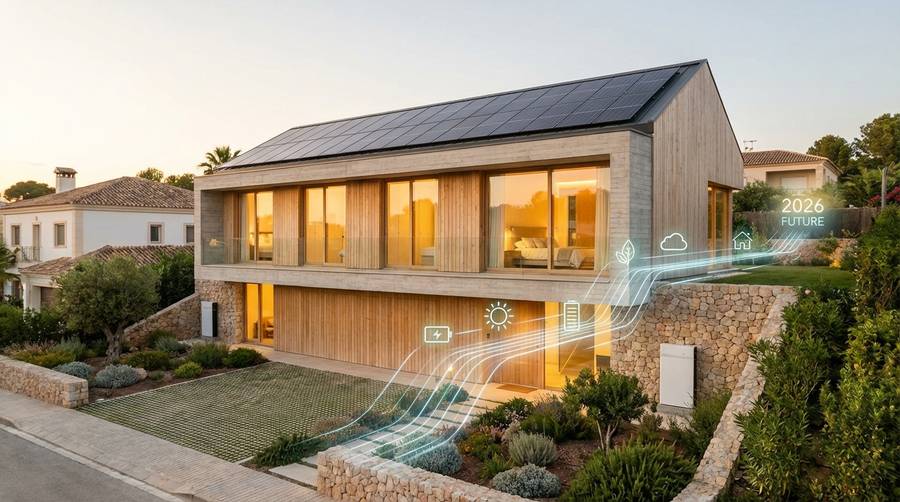
While full Passivhaus certification was not pursued for budget reasons, the house followed many Passivhaus principles: compact form, south glazing balance, mechanical ventilation with heat recovery (MVHR), and continuous insulation. Complementary systems included a small air-source heat pump sized to the measured heating demand and photovoltaic panels covering a portion of annual electricity use.
Turnkey process step-by-step that ensured closed timelines
Finding the plot and permit timelines: real project durations
From initial plot selection to permit approval the timeline was:
- Plot search and acquisition: 6 weeks (targeted using parcel filters to avoid long legal issues).
- Preliminary design and municipal pre-check: 4 weeks.
- Building permit submission and approval: 12 weeks (accelerated by pre-consultation and a complete documentation package).
These timings were actively managed; early coordination with the local architect and the municipality reduced average permit uncertainty by around 30% compared to a typical self-build path.
Design phase and factory production workflow
Once permits were in, the factory production schedule followed a clear cadence:
- Final working drawings and componentization: 3 weeks.
- Panel fabrication and finishes in factory: 6 weeks.
- Quality control and pre-assembly checks: 1 week.
Because components arrived with pre-installed windows, airtightness membranes and service channels, on-site work was limited to foundation interface, assembly and final connections.
On-site assembly, finishes and client handover
The on-site schedule for assembly and finishes was tightly planned:
- Foundation and slab: 3 weeks.
- Panel erection and weather-tight shell: 5 days (2 crane days and 3 follow-up days).
- Interior finishes, MEP commissioning and landscaping: 8–10 weeks.
Total construction from slab to keys: approximately 14–16 weeks. Combined with prior stages, the full project was completed in 10 months from initial plot search to handover.
Quantifiable results: efficiency, costs and client satisfaction
Real metrics: demand reduction and annual consumption
Measured performance in the first year after occupancy showed:
- Space heating demand: 9 kWh/m²·year (78% lower than a local reference house).
- Primary energy consumption: 34 kWh/m²·year including hot water and appliances (with PV offset).
- Airtightness: n50 = 0.55 h−1 (verified twice).
These figures translated into markedly lower utility bills and a comfortable indoor climate without overheating in summer, thanks to shading and ventilation strategy.
Economic comparison: final cost versus traditional build and running savings
Project costs (all-in turnkey) landed at approximately €1,450/m² delivered. For the same standard via conventional local construction, market comparators averaged €1,600–€1,850/m² when accounting for long delivery times and risk contingencies.
Operational savings were estimated at €600–€900 annually in heating and cooling compared with a traditional reference home of the same size, driven by low demand and efficient systems. The payback period for the energy-related premium (insulation, MVHR, PV) was modeled at 8–12 years depending on energy price trends.
Client satisfaction: delivery, communication and experience
The family reported high satisfaction in three areas:
- Timeline adherence: clear milestones and weekly updates reduced stress.
- Quality of finish: factory-controlled components delivered consistent finishes.
- Comfort and air quality: continuous mechanical ventilation and filtration improved perceived indoor air quality, noted especially by parents.
Key lessons for autopromoters and how to replicate success
Technical decisions that change efficiency outcomes
- Prioritize airtightness early: sealing strategies must be designed into panels and verified during production.
- Choose materials by whole-life impact: timber panels reduced embodied carbon and simplified logistics.
- Size MVHR and heat pumps to modeled demand, not rule-of-thumb loads.
Financing and mortgage options for modular self-building
Financing a turnkey industrialized home is increasingly straightforward in Spain. Banks offer autopromoter mortgages adapted to staged delivery, and some lenders now recognize lower execution risk for factory-based projects—resulting in more favorable terms for borrowers who present a fixed-price turnkey contract and a verified production schedule.
Actionable tips:
- Secure a pre-approval based on the turnkey contract, not just plot value.
- Include contingency reserves for landscaping and permit delays even with fixed-price offers.
- Document the factory production schedule to present to the lender during appraisal.
Practical advice for contracting a turnkey project in 2026
- Get a detailed scope of works and a list of excluded items before signing.
- Demand blower door tests and commissioning reports be part of the handover package.
- Use an independent technical advisor for milestone verifications if you’re inexperienced.
- Read warranties on factory elements: window interfaces and factory-installed services often have separate guarantees.
Inspiring close: long-term impact and next steps
Medium- and long-term benefits for family and environment
This home delivers more than immediate comfort and lower bills. Reduced operational energy and lower embodied carbon in the chosen solution contribute to a meaningful lifetime reduction in emissions. For the family, benefits show up as predictable living costs, healthier indoor air and a durable building that requires less maintenance.
This case as a reference for industrialized housing in Spain
Projects like this are reproducible when the client combines realistic targets, a clear turnkey scope and a factory-capable supplier. For autopromoters looking to compare options, see our technical comparison article on energy efficiency and the practical pros and cons of prefabricated homes at Casa prefabricada: ventajas y desventajas para autopromotores and deeper energy strategy guidance in Vivienda industrializada: el futuro de la eficiencia energética.
Recommended next actions for autopromoters
If you’re considering a similar route, start with these immediate steps:
- Define a concise brief with fixed priorities (budget cap, timeline, energy target).
- Request a turnkey proposal that lists manufacturing milestones and handover tests.
- Consult a lender early with your turnkey contract to secure favorable financing.
If you’d like a real-case checklist drawn from this project—timeline, permit pack list and the factory QA template—we can provide a downloadable pack to help you move from idea to contract faster.
Would you like the project’s detailed timeline spreadsheet and permit checklist? Share your email or request a secure download and we’ll send the packet tailored to your region and plot type.