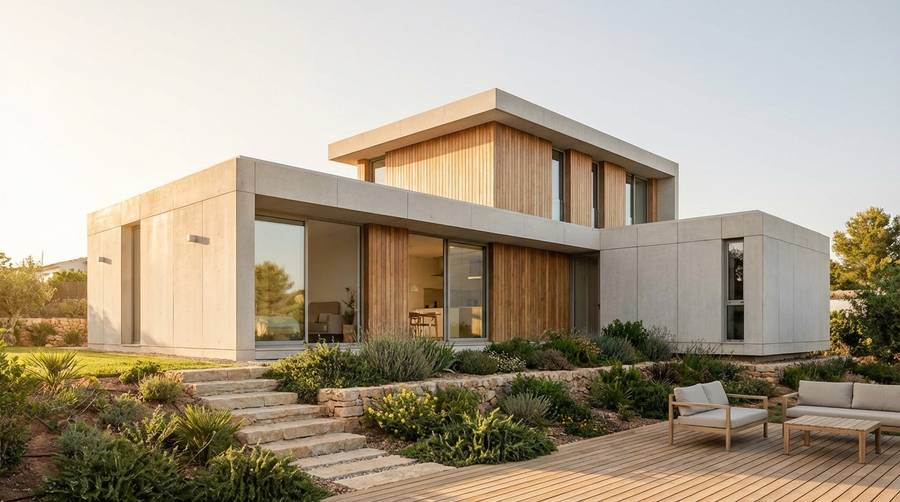
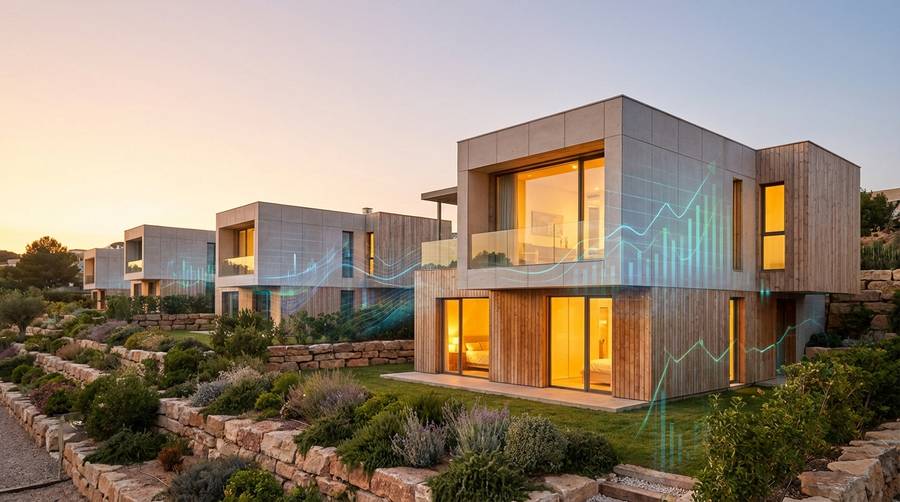
Modular Turnkey Homes: Common Mistakes and Fixes
Why choose scalable turnkey models: myths and realities you need to know
The promise of a fast, predictable home can change everything for an autopromoter—but only if you know what to ask. Many people assume modular turnkey homes automatically solve time, cost and performance. The truth is nuanced: the model delivers those benefits when process, materials and contracts are aligned. When they are not, risks multiply.
What this section covers: real advantages versus common misconceptions, the exact questions that filter competent suppliers, and the quality signals that matter for long-term performance.
Advantages vs traditional construction: fixed price, closed schedules and efficiency
Compared to conventional builds, industrialized housing provides three tangible advantages when executed correctly:
- Shorter on-site time: most structural assembly and weather-dependent works happen in factories, reducing exposure to delays.
- Greater schedule predictability: controlled production lines lower variability—if the supplier has proven throughput.
- Cost transparency: modular turnkey homes often come with defined scopes and fixed-price options that limit scope creep.
However, these benefits depend on site compatibility, permit timing, logistical planning and a clear contract.
Questions to ask your supplier to avoid surprises
- What elements are included in the turnkey scope (landscaping, connections, VAT, taxes)?
- Can you provide recent project timelines and references with contactable clients?
- Which certifications and energy standards do your homes meet (e.g., Passivhaus, NZEB)?
- Who manages on-site coordination and third-party installers after delivery?
- What is your contingency for factory or transport delays?
Quality signals: materials, energy certifications and references
Prefer suppliers who can show sample materials, third-party test reports and complete delivered projects. Look for:
- Thermal and airtightness test results (blower door, U-values).
- Material certificates for engineered timber, industrialized concrete or steel frame.
- Full project references that confirm promised timelines and final costs.
Choosing a turnkey supplier is not a bet on a concept; it's a bet on process. Verify the process before signing.
Error 1 — Underestimating the parcel study and local regulations
Failing to validate the lot is the single fastest way to add months and tens of thousands of euros to your project. Urban parameters, easements and access rules shape what can actually be built and how modules can be transported and assembled.
Common consequences: delays, extra costs and design changes
- Unexpected setbacks in approval due to mismatched land use or buildable area.
- Costly changes to foundation design or module size after permit submission.
- Transport limitations forcing an alternative, more expensive logistics plan.
Practical solutions: how to verify viability, easements and zoning
- Start with an official land registry extract (nota simple) and municipality archive check.
- Order a topographic survey and photographic record of current access and services.
- Request the local planning officer’s written confirmation of permitted uses when rules are ambiguous.
Key tools and professionals: surveyor, technical architect and planning manager
Assemble a compact team early:
- A topographer to map levels, boundaries and easements.
- An architect or technical architect with modular experience to adapt modules to the plot.
- A planning manager or gestor to fast-track administrative checks with the town hall.
Error 2 — Not defining the scope of the turnkey contract clearly
Ambiguity in the contract is the main source of disputes at handover. Without precise definitions, parties will have different expectations about what 'turnkey' includes.
Critical clauses: supplies, finishes and warranties
- Define all included items: scaffolding, connections to mains, road access works, landscaping, and final cleaning.
- List finishes by brand/model or provide a materials schedule with acceptable alternates.
- State warranty terms clearly: structural, envelope airtightness, and service installations.
How to negotiate milestones and delay penalties
- Split payments by verifiable milestones: factory completion, transport to site, structural assembly, utilities connected and final handover.
- Include liquidated damages for missed dates but allow short force-majeure windows for extreme events.
- Link a small retention to post-handover snag completion (e.g., 3–6 months).
Deliverables checklist for final acceptance
Ensure the contract requires delivery of:
- As-built drawings and operation manuals.
- Certificates (electrical, gas, thermal tests, airtightness report).
- Supplier warranties and maintenance schedules.
Error 3 — Choosing materials or systems without assessing sustainability and true cost
Lower upfront cost can hide higher life-cycle expense and lower performance. Evaluate embodied carbon, energy performance, maintenance needs and resale value alongside initial price.
Practical comparison: industrialized concrete vs light timber frame vs steel frame
- Industrialized concrete: robust, excellent fire resistance, higher embodied carbon but long service life. Often provides strong acoustic performance.
- Light timber frame: low embodied carbon, fast factory assembly, excellent thermal performance when combined with modern insulation. Requires careful detailing for moisture control.
- Steel frame: high strength-to-weight, precise tolerances and good off-site prefabrication. Watch for thermal bridging and corrosion protection.
Impact on energy efficiency and carbon footprint: selection criteria
Ask for quantified data:
- Declared thermal transmittance (U-values) for envelope elements.
- Measured airtightness (m3/h·m2 at 50 Pa) from completed projects.
- Embodied carbon (kg CO2e/m2) or Environmental Product Declarations (EPD) where available.
Tips to request technical sheets, warranties and similar project examples
- Request manufacturer datasheets and EPDs before signing.
- Ask for at least two completed projects built with the same system and materials—ideally in a similar climate.
- Check maintenance schedules and realistic life spans of finishes and systems.
Error 4 — Failing to plan financing and mortgage paperwork for self-build projects
Financing modular turnkey homes requires documentation and milestones different to standard mortgages. Banks often use staged disbursements tied to progress and want evidence of supplier solvency and project viability.
Financing options specific to modular homes and self-build
- Construction loans with staged payments based on agreed milestones.
- Mortgage products for self-promoters that convert to a regular mortgage after completion.
- Bridge loans to acquire the plot while permits and approvals are completed.
Typical documents banks request and how to prepare them
- Detailed budget and cash-flow plan with supplier contract and payment schedule.
- Building permit or pending approval evidence and the parcel registry extract.
- Supplier company accounts, insurance certificates and references from other financed projects.
Strategies to control cost and avoid overleveraging
- Keep a conservative contingency (5–10%) and document how it will be used.
- Negotiate fixed-price clauses for major components and index small consumables separately.
- Avoid simultaneous large loans—structure payments to keep debt service predictable.
Error 5 — Ignoring realistic timelines for logistics, assembly and finishes
Logistics are often the overlooked bottleneck: a factory-ready home can still be delayed by transport, cranes, or on-site utilities. Treat logistics as a parallel project with its own milestones, vendors and risks.
Real timings: factory, transport, on-site assembly and commissioning (metrics)
Typical timeline snapshots from recent Spanish projects (examples, not guarantees):
- Factory manufacturing: 6–12 weeks for a 150–200 m2 home, depending on workload.
- Transport and permits for abnormal loads: 1–3 weeks, but can extend with municipal restrictions.
- On-site assembly and closures: 1–3 weeks for structural assembly; 4–8 weeks for finishes, utilities and commissioning.
Combined, a realistic window from order to keys-in-hand is commonly 4–6 months for standard homes on prepared plots, and up to 9–12 months when permitting or site works are complex.
Coordinating schedule with subcontractors and suppliers
- Create a shared digital calendar with milestones and responsibilities.
- Assign a single coordinator to manage interfaces between supplier, crane operator and trades.
- Confirm material lead times for finishes that must be installed after structural assembly (bathroom kits, kitchen units).
Plan B: storage, insurance and client communication
- Have storage options for modules if assembly is delayed (insured, dry and secure).
- Secure transport and installation insurance that covers handling and third-party damage.
- Maintain transparent client communication: weekly updates and photographic records reduce friction.
How to apply these fixes in your project: practical steps for autopromoters
Turn knowledge into a repeatable process. Use the steps below as your project spine.
Step-by-step guide from finding a parcel to turnkey delivery
- Pre-purchase: obtain nota simple, local planning extract and an initial topographic check.
- Supplier selection: request sample projects, technical sheets, EPDs and a full scope quote.
- Financing: prepare a realistic cash-flow with contingencies and secure staged funding approval.
- Contracting: sign a clear turnkey contract with milestones, penalties and deliverable lists.
- Production and logistics: confirm manufacturing dates, abnormal load permits and crane windows.
- On-site: coordinate utilities, foundation readiness and final assembly supervision.
- Handover: run acceptance checklist, obtain certifications and retain small sum for snag list completion.
Checklist model for meetings with supplier and milestone tracking
- Document every change order and price adjustment in writing.
- Confirm dates for: factory completion, delivery, crane installation, rough-in inspections, final inspection and keys.
- Include acceptance criteria: airtightness target, thermal insulation values, and operational HVAC/ventilation.
Brief case study: timeline, costs and client satisfaction metrics
Example project (Spain, Mediterranean climate): 165 m2 two-storey modular turnkey home using timber frame.
- Factory production: 8 weeks. Transport and permits: 2 weeks. On-site assembly and finishes: 10 weeks. Total from order to handover: 20 weeks.
- Budget: fixed-price contract €220,000 + plot + connections. Contingency used: 4% (minor changes).
- Performance: measured airtightness 0.6 ACH at 50 Pa; energy demand reduction estimated 35% vs a comparable masonry build.
- Client satisfaction: post-handover survey scored 9/10 for timeline transparency and 8.5/10 for finish quality.
This case highlights how clear scope, tested supplier processes and early logistics planning convert the theoretical benefits of modular turnkey homes into reality.
Next steps for autopromoters ready to move forward
If you are considering modular turnkey homes, start by validating your parcel and assembling a compact professional team. Early checks prevent the largest, costliest errors.
For a deep dive into turnkey model comparisons—scopes, times, costs and risks—see Vivienda prefabricada llave en mano: comparativa y guía 2026. That guide complements this checklist with side-by-side model analysis.
Ready to reduce risk and accelerate delivery? Begin with a verified parcel study and a shortlist of pre-vetted turnkey suppliers who can show real delivered projects. Small, focused investments in those steps save months and significant cost later.
Take the next step: request a parcel viability review or a supplier comparison from a specialist—your future home depends on these decisions.
Artículos relacionados