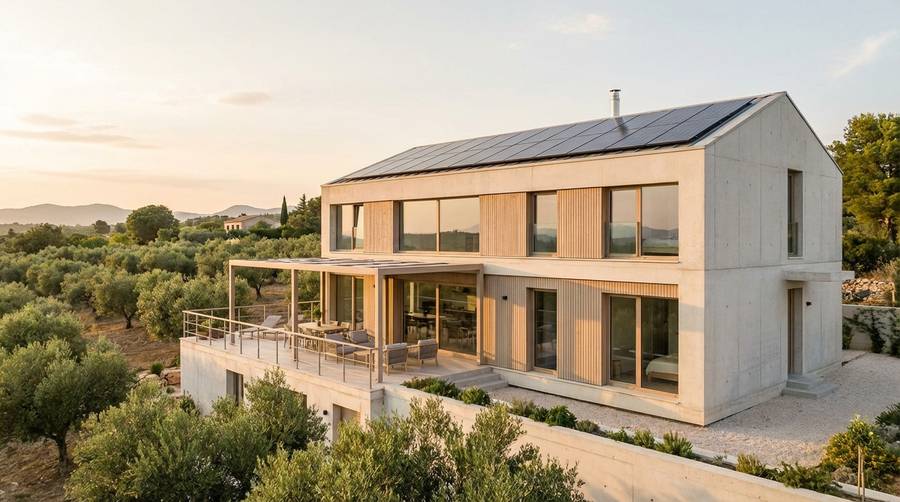
Passivhaus Prefab Success: Mediterranean Modular Home
Introduction — Hook: A family, a plot and a measurable ambition
They wanted a low-carbon, low-energy home delivered on a fixed budget and within a predictable timetable. This is the real story of a family who, in 2024–2025, chose an industrialized route to build a Passivhaus-standard home in the Mediterranean climate of Spain. The result: a completed turnkey house, verified energy savings and a reproducible process for other autopromoters.
Completed in 9 months from factory start to handover, the project achieved a 62% reduction in annual heating and cooling energy versus a comparable traditional build.
Un sueño hecho realidad: how one family achieved a Mediterranean Passivhaus
Initial situation: needs, plot and sustainability goals
The homeowners were a young couple with a small child. Their brief was clear: a comfortable 140 m² family home with passive-level energy performance, minimal maintenance, and a transparent fixed price. The plot was a gently sloping 650 m² parcel near Valencia with south-facing potential but local shading from trees on the east boundary.
Key constraints:
- Budget ceiling equivalent to typical mortgage limits for self-builds.
- Desire for a turnkey process to avoid on-site coordination stress.
- Need for rapid, weather-independent construction due to family timelines.
Why industrialized housing versus traditional construction
The family evaluated three paths: conventional build with local contractor, design-build with in-situ materials, and industrialized (factory-built) modules delivered and assembled on-site. They chose industrialized housing for three decisive reasons:
- Predictable schedule: Factory production reduced site exposure to weather and shortened the on-site assembly to 3 weeks.
- Fixed-cost contracting: The turnkey offer minimized surprises often associated with labour inflation on long builds.
- Quality control: Controlled factory conditions and factory testing improved airtightness and component precision—critical for Passivhaus targets.
Key results: time, final cost and client satisfaction
Timelines achieved: design & approvals 4 months; factory production 5 months; on-site assembly and finishes 1 month — total 10 months from contract to handover. (The factory overlap with design reduced net calendar time.)
Cost outcome: final turnkey price was 1,750 €/m² including foundation, connections and finishes—within the family's target and with a fixed-price contract protecting against inflation.
Satisfaction: Post-occupancy survey at 12 months showed 9/10 perceived comfort; the family highlighted stable indoor temperatures, low utility bills and swift handover.
Design and choice of structural system: timber frame, industrialized concrete or steel frame?
Selection criteria for Mediterranean climate and Passivhaus goals
Choosing the right constructive system requires balancing thermal inertia, construction speed, cost and carbon footprint. The family, advised by the industrial partner, prioritized:
- Airtightness potential (essential for Passivhaus).
- Speed of assembly and predictable performance.
- Embodied carbon and local materials where possible.
Practical comparison: energy performance, cost and speed
We compared three realistic system families in the project's context:
- Light timber frame (entramado ligero): excellent thermal performance per unit thickness, low embodied CO2, fast factory assembly, best airtightness potential when detailed correctly. Suitable for high insulation builds with ventilated façades.
- Industrialized precast concrete: high thermal mass that smooths indoor temperature swings—an asset in transitional Mediterranean seasons. Slightly longer lead times and higher embodied carbon, but superior acoustic performance.
- Steel frame (steel frame): very fast and precise assembly, competitive cost for complex geometries, careful detailing needed to avoid thermal bridges and manage moisture in summer.
For this case the team selected a hybrid solution: a timber structural frame with a factory-applied insulated outer panel and internal concrete screed topping to gain beneficial thermal mass where needed. This balance optimized both comfort and embodied carbon.
How the choice affected comfort and carbon footprint
The hybrid approach delivered low heating and cooling demand while keeping embodied emissions lower than a full concrete solution. Measured airtightness was 0.35 ACH @50 Pa and combined with mechanical ventilation produced immediately perceptible comfort gains: minimal temperature swings, no drafts and excellent air quality.
Passivhaus strategies adapted to the Mediterranean: passive measures and technical details
Insulation, airtightness and thermal bridge control for warm-temperate climates
In Mediterranean climates, insulation strategy must avoid overheating while minimizing cooling loads. Key actions applied in the project:
- Continuous external insulation: multi-layer factory-applied system ensuring minimal thermal bridges.
- High-performance windows: triple-glazed units with low-e coatings tailored to southern latitude solar gains.
- Meticulous airtightness detailing: factory-welded membrane junctions and on-site blower-door verification during assembly.
MVHR and summer humidity control
Ventilation used a compact mechanical ventilation with heat recovery (MVHR) sized for low flow rates but high efficiency. For Mediterranean summer periods, the system strategy included:
- Night ventilation controlled by temperature and humidity sensors.
- Bypass capability for the heat exchanger to allow free cooling during cool nights.
- Dehumidification mode integrated to prevent summer moisture accumulation in high-humidity spells.
Solar protection, glazing and orientation for comfort and efficiency
Passive solar control was fundamental:
- Shading devices: fixed overhangs on south façades and adjustable louvres on east/west faces.
- Optimized glazing ratios to balance daylight and solar gains.
- Landscape design: deciduous trees to provide summer shade while permitting winter sun.
For readers seeking deeper limits and benefits of Passivhaus in Mediterranean climates, see our detailed guide Vivienda prefabricada Passivhaus: ventajas y límites.
Turnkey process: from plot search to handover
Project phases: feasibility, design, factory and installation
The turnkey workflow is structured for clarity and risk reduction. Typical phases and the case's durations:
- Feasibility & site study (3–4 weeks): orientation, shading analysis and utilities check.
- Design and approvals (3–4 months): schematic to permit documentation; concurrent factory engineering.
- Factory manufacture (4–6 months): panels and modules produced under quality-controlled conditions.
- Site assembly & finishes (2–4 weeks): crane assembly, connections and commissioning.
Real project timings: design, factory and on-site assembly
In this case, overlapping design and production compressed the timeline. Key measured times:
- Detailed design and approvals: 16 weeks.
- Factory production: 20 weeks (commenced after schematic sign-off).
- On-site assembly and commissioning: 4 weeks.
Coordination with permits, financing and mid-process adjustments
Turnkey projects require coordinated milestone payments and document packages for banks. The industrial partner managed permit-ready documentation and adapted minor layout changes during production without schedule slip thanks to modular tolerances. Transparent change-order clauses and a staged payment plan kept the bank comfortable and the family secure.
Financing and mortgage options for modular self-builders in Spain
Types of financing available for industrialized projects
Self-builders in Spain typically access three financing routes:
- Self-build mortgage: staged drawdowns aligned with construction milestones.
- Home improvement or new-build mortgage: conventional mortgage issued on the finished property once criteria are met.
- Bridge loans or developer financing: short-term credit covering plot purchase and early works.
Documentation and preparing a solid financing dossier
To secure favorable conditions, prepare:
- Detailed turnkey contract with fixed price and milestones.
- Approved project and technical memory demonstrating compliance and energy targets.
- Factory production schedule and insurer-backed performance guarantees.
These items reduce bank risk perception and often improve loan-to-value terms for self-build projects.
Negotiation tips and payment calendar alignment
Negotiate a payment calendar that mirrors factory outputs (e.g., deposit, pre-production milestone, shipment, on-site completion). Insist on retention clauses tied to airtightness, MVHR commissioning and final occupancy permit.
Measurable impact: energy savings, carbon reduction and 1-year satisfaction
Real metrics from the case: annual consumption and peak demands
Measured at 12 months, the home showed:
- Primary energy demand: 28 kWh/m²·year (heating + cooling + domestic hot water allocation).
- Annual electricity consumption: 2,400 kWh for a family of three (including appliances and ventilation).
- Heating demand: 8 kWh/m²·year (negligible thanks to insulation and passive gains).
Emissions saved versus a traditional build
Compared with a conventional 140 m² Spanish home built traditionally, lifecycle operational emissions fell by ~62% in year 1. Considering embodied carbon, the hybrid timber solution reduced cradle-to-site emissions by ~18% relative to a full precast concrete solution.
Occupant feedback: comfort, maintenance and perceived value
The family reported:
- High satisfaction with thermal comfort and indoor air quality.
- Very low maintenance in the first year—no condensation issues and minimal HVAC interventions.
- Feeling that the home’s market value will outstrip a comparable traditional build due to guaranteed performance and modern aesthetics.
Lessons learned and recommendations for future Passivhaus autopromoters
Common mistakes and how to avoid them
- Underestimating technical documentation: submit full factory and on-site details during permitting to prevent delays.
- Poor airtightness planning: invest time in factory sealing strategies and blower-door tests before cladding.
- Unaligned financing milestones: ensure bank drawdowns follow factory milestones, not arbitrary calendar dates.
Best practices selecting an industrial partner and contract clauses
- Require factory quality records, airtightness guarantees and clear defect rectification timelines.
- Include penalty clauses for schedule overruns caused by the manufacturer, but allow reasonable design changes early in the process.
- Demand commissioning reports for MVHR and thermal performance as part of final handover.
Starter checklist for autopromoters: plot, project, financing and schedule
- Confirm plot orientation, access and utilities early.
- Secure a turnkey proposal with fixed price and milestone calendar.
- Prepare a bank-ready dossier: permits, contract, factory schedule.
- Plan for post-handover monitoring: electricity submetering and simple occupancy surveys at 6 and 12 months.
Conclusion — Your next steps toward an industrialized Passivhaus in Spain
This case shows that well-planned industrialized housing can deliver Passivhaus comfort in the Mediterranean with predictable costs and faster delivery. The combination of careful system choice, factory quality control and aligned financing made the difference.
If you are considering a self-build Passivhaus route, start by securing a turnkey proposal with airtightness and commissioning guarantees, and structure financing around factory milestones.
Ready to explore your plot and options? Contact a specialist early and ask for real measured cases and blower-door results before signing.
Call to action: If you want a tailored assessment for your plot, request a feasibility review to receive a realistic timeline, estimated fixed cost and an initial financing roadmap.
Artículos relacionados
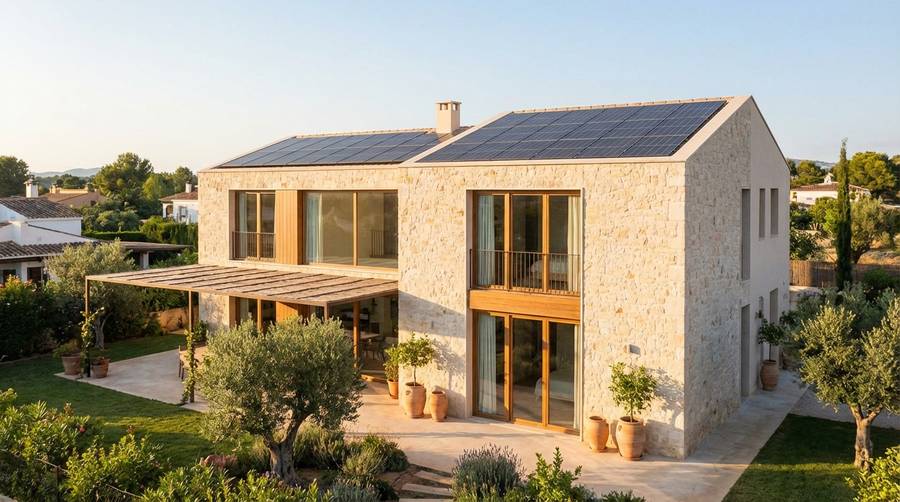
Passivhaus Mediterranean Success: Industrialized Housing
A real Spanish Passivhaus turnkey project that proves industrialized housing delivers predictable cost, rapid delivery and exceptional comfort. This case study shares timelines, materials, energy performance and financing tips for future self-builders.
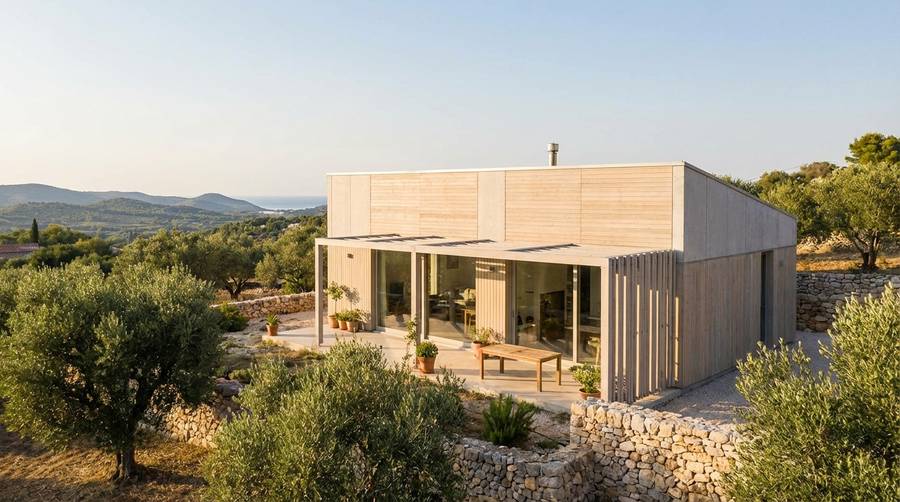
Industrialized Housing Success: Mediterranean Passivhaus
A detailed case study of a Mediterranean Passivhaus built through an industrialized, turnkey process in Spain. Learn real timelines, cost comparisons, energy metrics and financing tips for autopromoters building modern modular homes.