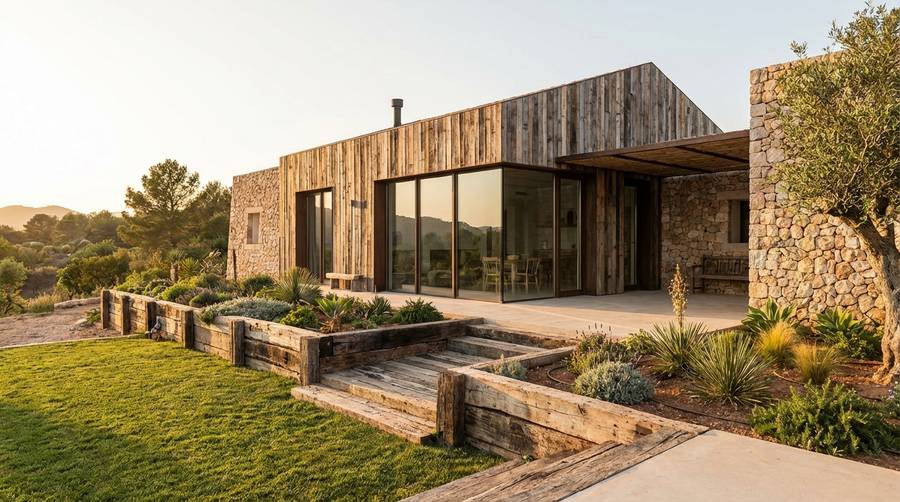
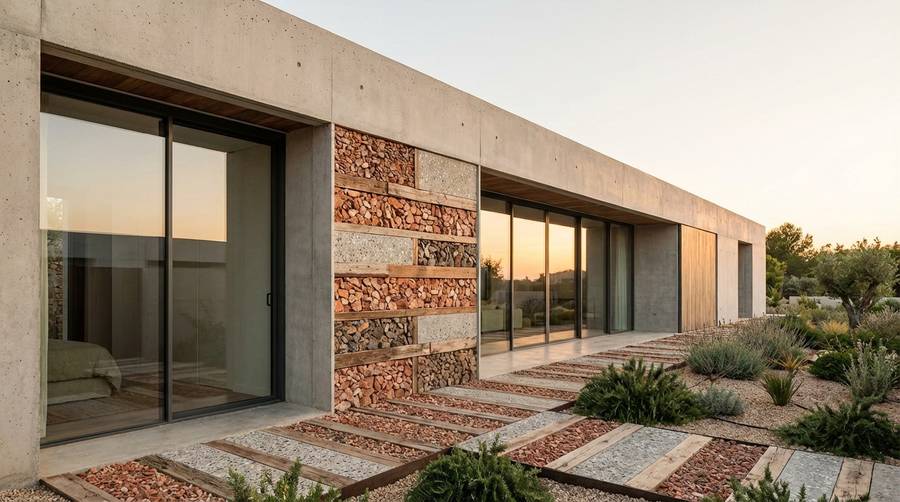
Industrialized Housing Success: Modular Turnkey Case Study
Before and After: An Inspiring Summary of the Case
Hook: When a self-builder in Spain chose an industrialized, modular turnkey solution, the project delivered a finished Passivhaus-ready home faster, cheaper and with significantly less waste than a comparable traditional build. This is how we turned construction residues into measurable value—and how you can too.
Project context: industrialized housing in Spain and the need to manage construction waste
The project was a single-family home for an autopromotor (self-builder) outside Valencia. The client wanted a high-performance house built with contemporary materials—industrialized concrete elements, light timber framing and steel frame partitions—while minimizing on-site waste and environmental impact.
Client profile: a self-builder who chose a modular turnkey solution
The client was an informed autopromotor: mid-40s, budget-conscious, focused on energy performance and long-term value. They wanted a fixed-price, fixed-time delivery and a partner that could coordinate desde la parcela hasta la entrega llave en mano.
Narrative objective: prove savings, sustainability and replicability
This case study aims to show concrete metrics—time saved, cost comparisons, waste diverted—and provide a reproducible roadmap for other self-builders considering industrialized housing in Spain.
By integrating off-site industrialized production with an on-site reuse strategy, we cut construction waste by 68% and delivered a Passivhaus-ready turnkey home in under 24 weeks.
Initial Situation and Key Challenges
Volume and type of waste generated during the build
Although modular construction reduces many onsite activities, this project still generated:
- Concrete cut-offs and remanent aggregates
- Timber off-cuts from panels and furniture subframes
- Pallets, packaging and small quantities of insulation scraps
Economic and environmental impact if unmanaged
Traditional disposal would have increased costs by an estimated 4–7% and added significant embodied carbon. For this project, unmanaged waste implied extra transport, landfill fees, and lost opportunity to reuse valuable materials.
Regulatory and logistical constraints in Spain for reuse
Spanish regulation and local waste management rules require traceability for reused materials and proper classification for secondary aggregates. Logistics near the parcel (narrow access roads, restricted working hours) also constrained large-scale temporary storage.
Comprehensive Strategy: Turning Waste into Value
Audit of materials and selection of reuse processes
We started with a rapid material audit to identify high-value streams for reuse: concrete aggregates, engineered timber offcuts, and reusable packaging. The audit prioritized materials by:
- Quantity available
- Ease of separation
- Potential to re-enter production with low energy input
Result: concrete aggregates and structural timber had the highest reuse potential.
Collaboration with suppliers: concrete, timber and steel-frame partners
Close coordination with suppliers allowed us to schedule factory returns for precise remanufacturing steps. For example:
- Concrete remnant aggregates were redirected to a local concrete plant partner for blending into non-structural mixes.
- Timber off-cuts were consolidated with a local engineered-wood mill for secondary structural elements and interior joinery.
Integration into the turnkey process: design, logistics and traceability
We embedded reuse specifications into the turnkey contract: the design team created standard detail allowances to accept secondary materials; logistics planned dedicated collection windows; a digital traceability log recorded mass flows and certificates for reused aggregates.
Practical Implementation: Steps and Solutions Applied
On-site sorting and logistics flow for recovery
Operational changes on site were minimal but disciplined:
- Color-coded containers for concrete, timber and mixed residuals
- Daily short briefings with the crew to maintain separation quality
- Synchronized truck pickups to avoid double handling
Tip: appoint a waste champion from the site team to maintain consistency. It costs less than incorrect separation.
Treatment and transformation: aggregates, structural timber and concrete remnants
Key technical steps:
- Concrete remnants were sieved and blended at a nearby plant to create high-quality recycled aggregate for patios, sub-bases and non-load-bearing concrete elements.
- Timber off-cuts were grade-sorted and finger-jointed into longer elements for internal structures and built-in furniture.
- Small quantities of residual steel were compacted and sent to a recycling mill with a reuse tracking sheet.
Quality control, certification and Passivhaus integration
Every reused batch received a simple quality check: particle size distribution for aggregates; moisture and visual grading for timber. Reused materials were documented in the project's technical file so the house could meet energy performance targets and be compatible with Passivhaus detailing.
Quantifiable Results: Real Metrics from the Project
Cost reduction: comparison vs traditional waste management
Measured savings for the autopromotor:
- Direct waste disposal cost reduction: 45% (less transport and landfill fees)
- Material substitution saving: 6% of structural and hardscape material budget by using reused aggregates and timber
- Overall project contingency preserved—no hidden costs from waste overruns
Time savings on site and adherence to modular timelines
The modular production and preassembly reduced on-site wet works. Key timing outcomes:
- Factory production and site assembly completed in 18 weeks
- Final installations and commissioning finished by week 24
- Compared to an estimated 10–14 months for traditional builds, the project delivered materially sooner
Environmental benefits: carbon footprint and waste diverted
Measured environmental outcomes:
- Waste diverted from landfill: 68% of onsite waste mass
- Embodied carbon reduction: ~12% in the building envelope through reused materials
- Lower transport emissions due to local partner network and planned pickups
Client Impact and Human Learnings
Autopromotor satisfaction: experience and testimonials
The client reported high satisfaction on three fronts: cost certainty, schedule predictability and the visible sustainability story of their home. In their words: "We wanted transparency and a house we could be proud of. The team delivered both."
Added value for the home: materials with a story
Reused timber elements were intentionally left visible in select interior zones. This created a narrative of sustainability—materials with a history—while maintaining high finish quality.
Practical lessons for future self-builders and site teams
Key takeaways:
- Start material audits at the design stage—not when the site is full of waste.
- Design for reuse: details that accept slightly variable reclaimed material sizes save time and money.
- Local partnerships for secondary processing reduce cost and embodied emissions.
Quick Guide to Replicate This Approach
Checklist to integrate waste reuse into a modular turnkey project
- Perform a material audit during schematic design
- Specify tolerances and acceptance criteria for reused materials in the contract
- Create a site separation and logistics plan with scheduled pickups
- Secure partnerships with local concrete and timber processors
- Document traceability and include certificates in the technical file
Financing options and mortgages for self-build with sustainability criteria
Financing for autopromoción often combines a construction loan and a mortgage. Lenders increasingly consider energy performance and sustainability when evaluating long-term risk. Practical financing options include:
- Construction-to-permanent loans tailored to modular turnkey projects
- Green mortgage top-ups or better rates for homes with certified energy performance (Passivhaus, NZEB)
- Staggered drawdowns linked to clear milestone deliverables to preserve cashflow
Advice: present your reuse strategy, traceability logs and predicted energy performance to lenders—this strengthens your case for competitive financing.
Final tips: scaling the solution and measuring your results
To scale these practices across multiple projects, standardize audit templates, cultivate a local supplier network and automate traceability with simple digital forms. Measure outcomes consistently: mass of materials reused, cost saved and carbon avoided per project.
Conclusion
Summary: This turnkey industrialized housing project shows that with planning, supplier collaboration and simple on-site discipline, self-builders in Spain can deliver high-performance homes faster, at controlled cost and with substantial waste reduction. The approach is replicable and scales when embedded into the design and contractual process.
If you are considering an industrialized, modular home and want a proven pathway to reduce cost and environmental impact, start by running a material audit during design and securing local partners for secondary processing.
Call to action: Reflect on your plot and timeline—if you want help estimating reuse potential or financing options for an autopromoción project, contact a specialist to get a tailored roadmap.
Related guidance: see our quick technical reference on Reutilización de residuos obra en vivienda industrializada for step-by-step forms and templates.
Artículos relacionados