Industrialized Home Design: Step-by-Step Guide 2026
Industrialized Home Design: Step-by-Step Guide 2026
Hook: If you want a high-performance home in Spain delivered faster, with predictable cost and low energy bills, industrialized Passivhaus construction is the clearest path — and this guide shows you how to get there, step by step.
Why choose an industrialized Passivhaus home today
Advantages vs traditional construction: efficiency, fixed price and predictable schedules
Industrialized homes combine factory-controlled production with on-site assembly. That model delivers three immediate advantages over conventional build:
- Shorter, fixed on-site time: controlled modules reduce weather-related delays and on-site labor needs.
- Price predictability: production and material procurement at scale cut variability and provide clearer fixed-price offers.
- Higher build quality: repeatable factory processes reduce defects and rework.
Real benefits: comfort, energy savings and lower carbon footprint
A properly executed industrialized Passivhaus delivers:
- Peak comfort: stable indoor temperatures with minimal active heating.
- Operational savings: reduced energy demand — often 75–90% lower heating consumption compared to typical Spanish builds.
- Lower embodied and operational emissions: efficient use of materials, reduced transport cycles, and high thermal performance.
What 'Passivhaus Premium' means and who it suits
Passivhaus Premium denotes a step beyond standard Passive House targets: tighter airtightness, higher glazing performance, and integrated systems tuned for Mediterranean climates. It best fits:
- Families seeking long-term energy security and comfort.
- Autopromoters who want a turnkey approach with high performance guarantees.
- Owners prioritizing resale value and low running costs.
Choosing industrialized Passivhaus construction reduces schedule risk and lifetime energy costs — the premium is an investment that pays back through savings, comfort and resilience.
Initial planning: parcel, regulations and feasibility
How to evaluate parcels for an industrialized home in Spain
Start with a checklist when assessing land:
- Zoning and land use: confirm residential use and maximum buildable area from the municipal plan.
- Access and logistics: ensure construction vehicle access and consider module transport routes.
- Topography and soil: simple, gently sloped plots reduce foundation costs for modular assemblies.
- Microclimate: orientation, shading and prevailing winds affect Passivhaus strategies.
Key permits and municipal procedures
Essential steps:
- Check local PGOU (general urban plan) and get a pre-application meeting with the town hall.
- Secure the building license with a certified project and required studies (solar, structural, thermal).
- Allow time for administrative review — some municipalities require 2–4 months.
Technical-economic feasibility and preliminary schedule
A short feasibility study should include:
- Preliminary budget estimate with fixed-price components.
- Production and on-site assembly timeline — typical total delivery: 6–10 months from contract for a 120–200 m² turnkey industrialized home.
- Risk matrix identifying regulatory, access and geotechnical constraints.
Architectural design and Passivhaus certification: step by step
Bioclimatic concept: orientation, envelope and solar gains
Design decisions that maximize passive performance:
- Orientation: prioritize solar gains for living spaces in cooler seasons while using shading devices for summer control.
- Compact envelope: simpler shapes reduce thermal bridge risk and improve airtightness.
- Glazing strategy: high-performance triple glazing on south façades; limit east/west glazing to avoid overheating.
Energy calculation and certification: PHPP, blower door and documentation
Certification workflow:
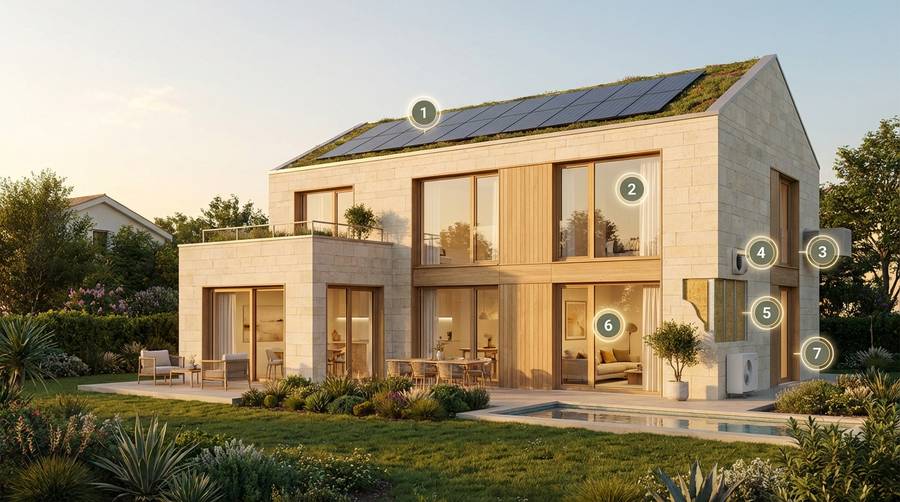
- Model the project in PHPP early to set targets for U-values, airtightness and ventilation heat recovery.
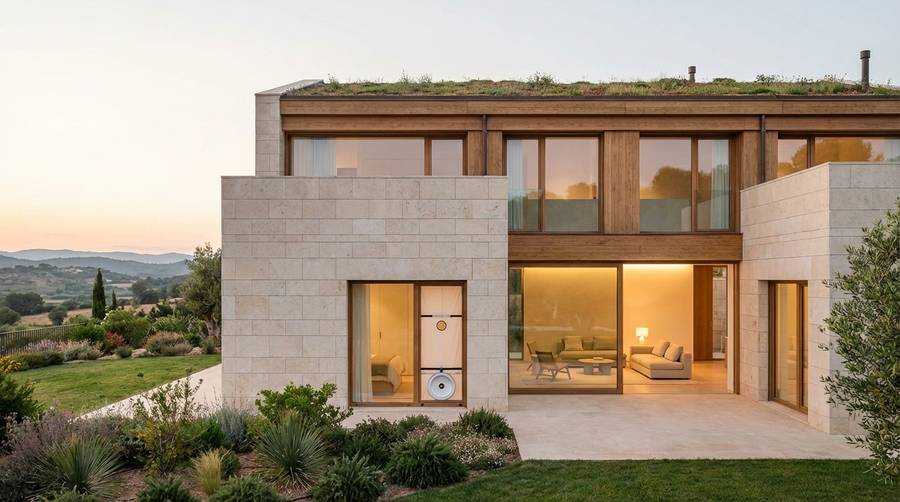
- Include blower door tests and commissioning in the contract to ensure measured performance matches the model.
- Prepare full certification documentation: plans, details, ventilation schemes and material specs.
Mediterranean integration: aesthetics, windows and materials
In Spain, Passivhaus can and should feel local. Use:
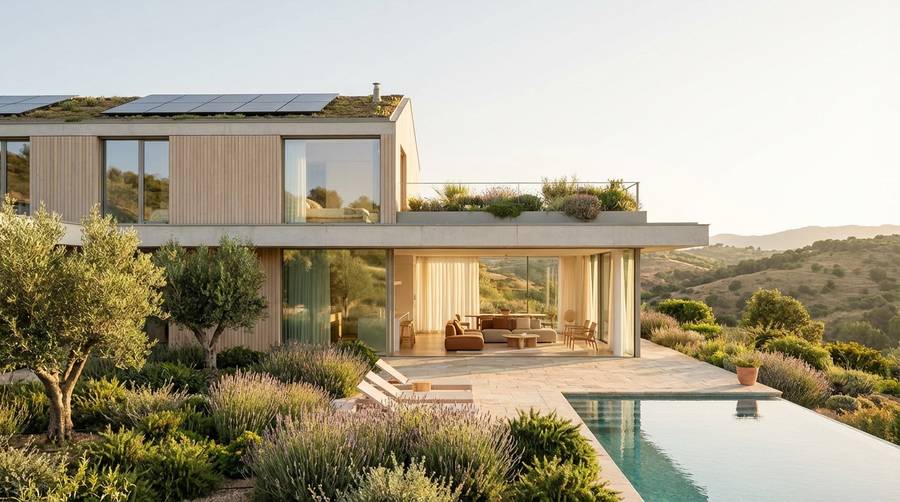
- Light-rendered façades, local stone accents and warm timber for a Mediterranean look.
- Large, well-detailed windows to connect interiors and outdoor spaces while maintaining thermal control.
- Integrated terraces and shading as design features rather than add-ons.
Materials and structural systems
Comparing: industrialized concrete, light timber frame and steel frame
Selection depends on performance targets, budget and aesthetics. Key trade-offs:
- Industrialized concrete: high thermal mass, durability, excellent acoustic performance; typically higher embodied emissions unless recycled content is used.
- Light timber frame: low embodied carbon, fast fabrication, very compatible with Passivhaus details; requires high-quality detailing for moisture control.
- Steel frame: precise industrial production, long spans, and good structural performance; must be thermally broken and detailed to avoid bridges.
Insulation systems, windows and mechanical ventilation
Prioritize:
- High-performance continuous insulation: avoid gaps and overlaps; factory-applied layers are most consistent.
- Certified passive house windows: low-e triple glazing with insulated frames and thermal breaks.
- MVHR (balanced mechanical ventilation): specify units with high heat recovery efficiency (>85%) and easy maintenance access.
Premium finishes that convey quality and durability
Choose finishes that align with the brand promise of a durable, premium home:
- Breathable lime or mineral renders on façades.
- Durable, low-maintenance timber or composite decking for terraces.
- Neutral, high-quality interior materials that age well and require minimal upkeep.
Turnkey process: from project to handover
Phases: design, factory production, assembly and finishing
Typical phases and timeframes:
- Design & approvals: 2–4 months.
- Factory production: 6–10 weeks depending on complexity.
- Transport & on-site assembly: 2–4 weeks.
- Finishes, commissioning & handover: 4–8 weeks.
Quality control, fixed schedules and coordination
Critical controls:
- Factory QA protocols and traceability for materials.
- On-site sequence planning to ensure trades are efficient during short assembly windows.
- Regular commissioning checks for heating, ventilation and airtightness.
Handover checklist: guarantees, manuals and maintenance
Ensure clients receive:
- Warranties and guarantees for structure, envelope and systems.
- Operation manuals for MVHR and renewable systems.
- A maintenance schedule and contact for after-sales issues.
Financing and options for autopromoters
Autopromotion mortgages: what banks ask for
Banks typically request:
- Detailed budget and cashflow tied to project milestones.
- Architect-signed plans and permits.
- Fixed-price contracts with reputable manufacturers to reduce lender risk.
Payment models and budget control in industrialized projects
Common models:
- Staged payments linked to design, factory completion and on-site handover.
- Retention for defects and commissioning until final performance is proven.
Subsidies and energy efficiency impacts on financing
Energy-efficient homes can access reduced interest loans, grants or tax incentives. Documented high-performance targets and certification improve the case for favorable lending terms.
Case studies and technical comparisons with real metrics
Case 1: Passivhaus beachfront home — timeline and cost
Summary (realistic metrics):
- Location: Mediterranean coast.
- Area: 150 m².
- Total delivery time: 8 months from contract.
- Delivered turnkey cost: indicative figure — €1,900/m² (including high-performance glazing and MVHR).
- Measured heating demand: 10 kWh/m²·yr — 80% reduction vs regional average.
Case 2: Light timber frame in rural plot — energy savings and satisfaction
Summary:
- Area: 120 m² single-family home.
- Delivery: 7 months from contract.
- Operational savings: yearly energy bills cut by ~70%.
- Client satisfaction: high scores for thermal comfort and indoor air quality in post-occupancy surveys.
Objective comparison: total cost, schedules and performance vs traditional build
Typical outcomes:
- Up-front cost: similar or slightly higher per m² than standard high-quality traditional builds depending on finish level.
- Time to occupancy: usually 30–50% faster.
- Lifetime operation: significantly lower energy costs and predictable maintenance.
Practical conclusion: how to start your industrialized project today
4-week priority decision checklist
First month actions:
- Secure the plot and confirm zoning constraints.
- Select a certified Passivhaus designer or agent to run a PHPP study early.
- Request three fixed-price offers from reputable industrialized manufacturers.
- Engage a finance advisor to structure an autopromotion mortgage scenario.
Common mistakes to avoid and professional recommendations
Avoid:
- Compromising on airtightness detailing to save small amounts up front.
- Choosing the cheapest manufacturer without visiting a completed project.
- Underestimating on-site logistics for module delivery and crane work.
Recommendations:
- Insist on measured commissioning (blower door and MVHR commissioning) before final payment.
- Prioritize long-term value over marginal initial savings.
- Consult resources on Passivhaus detailing; for typical issues and fixes see Passivhaus Premium: errores comunes y cómo solucionarlos and explore production efficiency in Passivhaus industrializada: el futuro de la vivienda modular.
Resources and next steps
To progress: request a feasibility pack that includes a PHPP sketch, a fixed preliminary budget and a proposed delivery timetable. Compare those packs side-by-side and visit a completed industrialized home before signing.
Final thoughts and call to action
Start with clarity: define performance targets first, then align site selection, structure type and financing to meet them. Industrialized Passivhaus homes deliver measurable benefits when planned end-to-end.
If you are ready to explore options for your plot or want an initial feasibility pack tailored to your needs, contact our team for a no-obligation review and next steps.
Artículos relacionados