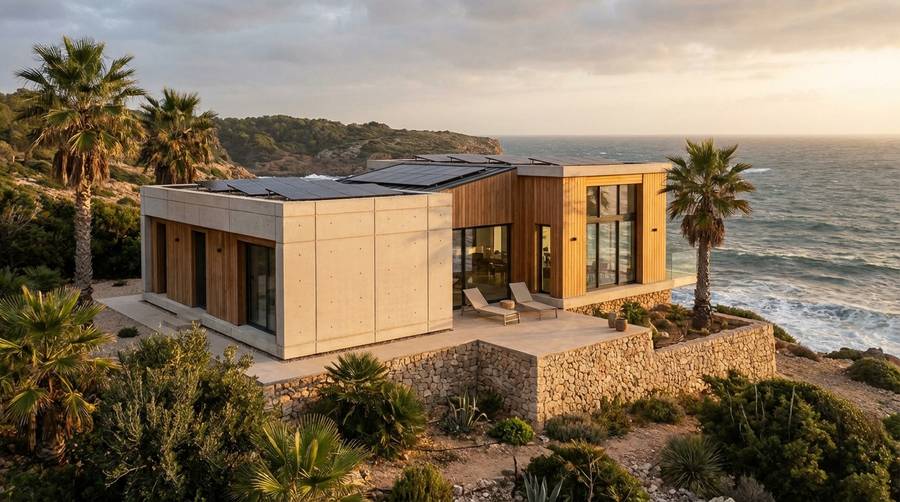
Storm-Resistant Modular Housing in Spain
Why choose storm-resistant modular housing in Spain
Choosing storm-resistant modular housing is a strategic decision for families and self-builders in Spain. Modular homes combine speed, predictable costs and industrial quality control. They also deliver robust performance against wind and heavy rain when designed with resilient systems. This section explains the core advantages, weather resilience and common myths about modular solutions.
Advantages versus traditional construction: efficiency, fixed schedules and predictable price
Modular construction shifts much of the work to a controlled factory environment. That reduces on-site time and weather-related delays. Lead times are shorter and more reliable. Costs are easier to fix with a turnkey contract. For autopromoters, this brings peace of mind: you can budget and plan with fewer surprises.
Climate resilience: how industrialization improves behavior under wind and rain
Factories deliver tighter tolerance and repeatability. Structural connections, cladding integration and waterproofing details are checked during assembly. Controlled conditions allow better curing of materials like industrialized concrete. As a result, the assembled home performs better in high winds and sustained rain. Combined with tested anchoring systems and sealed façades, performance approaches that of high-end traditional builds but with shorter timelines.
Myths and realities: quality, durability and social perception
Some still associate modular housing with low quality. The reality today is different. Modern modular homes use proven materials and standards. A properly specified modular house is durable and comfortable. Perception is shifting as more Mediterranean-styled, high-quality modular homes appear in Spanish neighborhoods. The focus is on design, materials and warranty, not on method alone.
Materials and construction systems for maximum resilience
Material choice drives resilience. The three systems most used in robust modular housing are industrialized concrete, light timber framing and steel frame. Each has strengths for coastal and inland Spanish climates. Good detailing and final finishes complete the performance picture.
Industrialized concrete: structural and thermal performance
Industrialized concrete systems offer high mass, fire resistance and durability. Factory-produced panels or cast-in-place modules allow precise thermal insulation installation. Concrete adds thermal inertia. That helps stabilize indoor temperatures during heat waves and cold snaps. Properly insulated concrete walls reduce maintenance and provide reliable protection against strong winds.
Light timber framing and steel frame: seismic advantages and flexibility
Light timber frame and steel frame models provide flexibility and lighter foundations. Timber framing is quick, renewable and thermally efficient when paired with modern insulation. Steel frame systems are precise, dimensionally stable and permit long clear spans. Both systems absorb dynamic loads differently, which can be an advantage in windy or seismic areas when details are engineered correctly.
Finishes and details that enhance watertightness and protection
Cladding, roof overhangs and window integration matter. Breathable membranes, sealed joints and continuous insulation reduce water infiltration risk. Mediterranean façades with ventilated cladding, quality windows and proper drainage keep moisture out and increase lifetime value. Attention to details at junctions delivers the best protection.
Sustainability and energy efficiency in modular homes
Sustainability is central to modern modular housing. Industrialized processes cut waste. High-performance design reduces energy demand. Combining passive strategies with efficient systems yields low running costs and smaller carbon footprints.
Passivhaus design and passive strategies adapted to the Spanish climate
Adapting Passivhaus principles to Spain focuses on solar control, summer ventilation and thermal inertia. South glazing must be managed with shading. Cross ventilation and thermal mass help cool interiors at night. High insulation and airtightness reduce heating needs in cooler months and improve summer comfort when combined with mechanical ventilation with heat recovery.
Reducing carbon footprint and choosing sustainable materials
Choose low-impact materials and local suppliers. Timber from certified forests, low-carbon concrete mixes and recycled steel reduce embodied carbon. Factory production minimizes waste and enables reuse of offcuts. Transport impacts fall if panels are produced regionally. The result is a modular house with a lower lifecycle footprint than many conventional alternatives.
Certifications, energy performance and real savings on bills
Certifications such as Passivhaus, energy labels and national efficiency ratings verify performance. Real cases show that well-designed modular homes can halve heating and cooling bills compared with standard new builds. Measured savings depend on user behavior, but certified solutions provide predictable, audited performance.
Practical guide: the turnkey process for a storm-resistant modular home
Turnkey delivery simplifies the project for self-builders. It covers the whole journey: site search, planning, design, factory production, assembly and handover. Below is a practical roadmap with typical times and checkpoints for 2026 projects in Spain.
From parcel search to permits: key steps and estimated times
Start with site viability: orientation, access, and connection to utilities. Obtain a topographic survey and geotechnical report. Apply for planning permission. Typical permitting times vary by municipality but plan for 3–9 months. Early feasibility avoids costly redesign.
Design, factory fabrication and on-site assembly: example timeline 2026
A practical, conservative timeline:
- Concept and approvals: 3–6 months.
- Detailed design and factory preparation: 2–3 months.
- Factory fabrication: 6–10 weeks depending on size.
- Site work and foundations: 4–8 weeks in parallel where possible.
- On-site assembly and connection: 1–3 weeks for a typical single-family home.
- Finishes, systems commissioning and handover: 2–6 weeks.
This timeline shows why modular projects often complete faster than traditional builds. Weather-sensitive steps move into the factory. Coordination and logistics remain essential to keep the schedule tight.
Handover, warranty and after-sales checklist for self-builders
At handover, verify documentation: as-built drawings, warranties, energy certificates and commissioning reports. Check airtightness tests and mechanical system commissioning. Confirm warranty periods for structure, finishes and installations. Good turnkey providers include a clear after-sales plan for maintenance and support.
Financing, technical comparisons and case studies
Financing and transparent comparisons help autopromoters evaluate options. This section covers mortgage routes, a technical-economic comparison and real case studies with metrics on times, costs and client satisfaction.
Self-build mortgages and financing options for modular housing
Spanish banks and specialised lenders offer mortgages for self-building. Options include staged drawdown loans that release funds as milestones complete. Modular turnkey contracts may be easier to finance because of fixed prices and short timelines. Discuss with lenders the guarantees, schedules and certified performance documents required for approval.
Technical and economic comparison: modular storm-resistant housing vs traditional competitors
Key comparison points:
- Schedule: modular reduces on-site time by up to 50% in many cases.
- Cost predictability: fixed-price turnkey reduces budget risk.
- Quality control: factory processes improve repeatability and lower defects.
- Performance: with correct detailing, storm resistance equals or exceeds traditional builds.
While initial unit costs can be similar to high-end conventional builds, the reduced time, lower overruns and predictable performance can make modular more economical overall.
Real case studies: timelines, costs and client satisfaction
Case study A: Mediterranean family home, 140 m².
- System: light timber frame with ventilated stone-and-wood façade.
- Construction timeline: 5 months from factory start to handover.
- Budget outcome: within 2% of fixed price.
- Client rating: 9/10 for comfort and delivery speed.
Case study B: Coastal house with industrialized concrete panels, 180 m².
- System: precast insulated concrete panels and sealed masonry-style finishes.
- Construction timeline: 6 months total; 3 weeks on-site assembly.
- Budget outcome: fixed turnkey price; lower maintenance expectations.
- Client rating: 8.5/10 for robustness and low energy bills.
These examples show patterns: shorter schedules, accurate budgets and high satisfaction when specification and site coordination are strong.
Choosing the right partner and next steps for autopromoters
Select a partner with proven experience in Mediterranean architecture, reliable references and transparent turnkey offers. Ask for real metrics, sample timetables and accessible warranties. A good provider will explain technical options and help secure financing.
Questions to ask suppliers and designers
- Can you show certified airtightness and performance tests?
- Do you provide a fixed-price turnkey contract with clear milestones?
- Which materials and suppliers do you use for façades and windows?
- How do you handle site logistics and anchoring for high winds?
Useful link: learn more about storm-resistant modular design
For detailed benefits and family-focused advantages, read our related article on Storm-resilient modular housing advantages for families. It complements this guide with practical family-oriented insights.
Conclusion
Storm-resistant modular housing in Spain offers a modern path for self-builders. It combines speed, predictable costs and strong performance when built with the right materials and detailing. Integrating Passivhaus strategies and sustainable materials further reduces lifetime costs and carbon footprint. For autopromoters, a clear turnkey workflow and reliable financing make modular a practical, high-quality choice.
If you are considering your own project, start with site viability and a clear turnkey proposal. Ask for real case metrics. A well-managed modular project delivers a durable, comfortable and beautiful Mediterranean home, ready for family life and resilient to climate challenges.