Modular Housing: Benefits, Materials & Financing
Why choose industrialized housing: advantages over traditional construction
Modular housing is transforming how families build homes in Spain. By combining factory precision with on-site assembly, industrialized housing delivers faster schedules, predictable budgets and consistent quality. For self-builders, or autopromotores, these traits reduce stress and risk across the project lifecycle.
Efficiency in timelines and fixed schedules: planning and execution
One of the strongest arguments for modular housing is time certainty. Factory production of modules or panels runs in parallel with site preparation. This overlap shortens overall delivery times and minimizes weather-related delays. A closed construction window means fewer surprises and a clearer path from contract to occupancy.
Contractual milestones are easier to enforce because much of the work happens off-site under controlled conditions. For homeowners who need reliable move-in dates, modular housing provides a clear advantage over traditional build methods that depend heavily on on-site labour, seasonal constraints and fragmented subcontracting.
Fixed price and cost control: transparency for self-builders
Modular projects often come with fixed-price offers. Factory workflows reduce variability and allow suppliers to quote more precise costs. That clarity helps autopromotores plan financing, avoid scope creep and manage contingencies without repeated price renegotiations.
Transparent pricing is paired with fewer on-site change orders. Because modules are made to approved plans, unexpected structural changes are rare. This leads to better budget adherence and a smoother relationship between client and builder.
Quality and warranty: factory controls and premium finishes
Quality assurance is intrinsic to industrialized housing. Manufacturing in a controlled environment enables systematic inspections, standardized finishes and repeatable performance. Components are tested and certified before they leave the factory, which raises the level of finish and reduces on-site rework.
Many modular homes come with clear warranty terms covering structure, envelope and systems. For autopromotores who value peace of mind, this combination of factory-built quality and formal guarantees is a compelling benefit.
Modern materials in modular construction
Material choice defines the character, durability and thermal performance of a home. Contemporary modular projects use a shortlist of proven systems that balance efficiency, aesthetics and sustainability.
Industrialized concrete: durability and contemporary finish
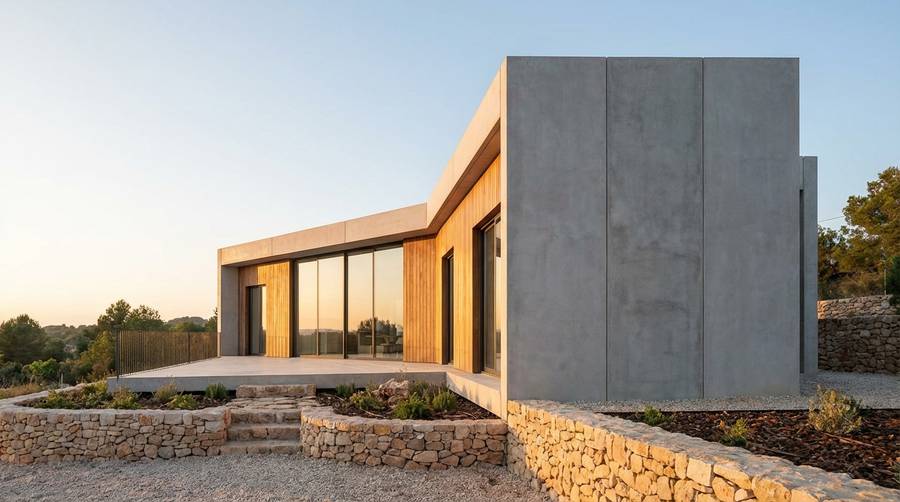
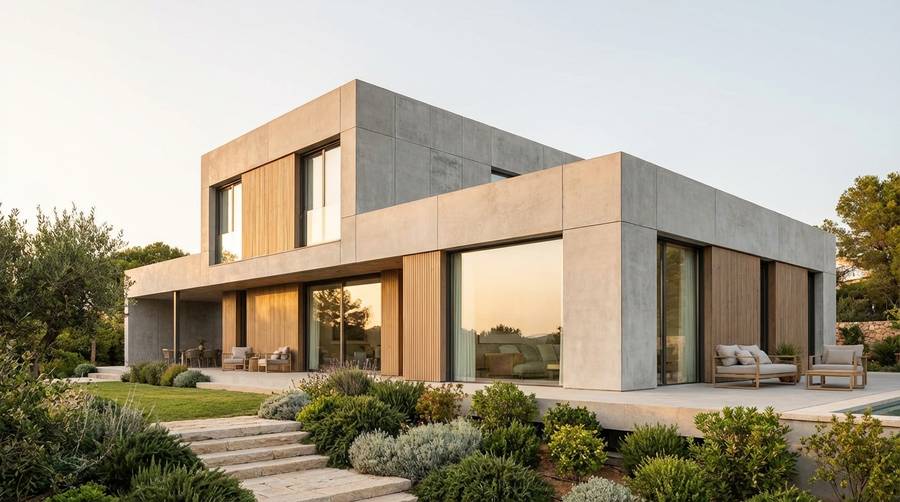
Precast and industrialized concrete elements provide robust structural solutions and elegant façades. Concrete panels can be finished on the factory line with textures, stains or polished surfaces to achieve a contemporary Mediterranean appearance. Their mass contributes to thermal comfort and long-term durability, ideal for coastal climates and urban plots alike.
Light timber frame: versatility and thermal efficiency
Light timber framing (entramado ligero de madera) is highly adaptable. It allows fast assembly, excellent insulation integration and clean interior finishes. Timber frames pair well with breathable membranes and natural insulation materials, offering low embodied energy when sourced responsibly.
Because timber is lightweight, it simplifies transportation and foundation requirements. It suits suburban plots and rural sites where a warm, natural aesthetic is desired.
Steel frame: speed and structural solutions
Steel frame systems (steel frame) deliver high strength-to-weight ratios and precise tolerances. They enable wider spans and open-plan interiors without heavy supports. Steel performs well in modular assembly lines and supports flexible architectural expressions while keeping build times short.
Modern steel is often used in hybrid solutions, combining the speed of steel with the thermal benefits of timber or the solidity of concrete where appropriate.
Sustainability and energy efficiency in industrialized homes
Industrialized housing offers clear pathways to low-energy living and reduced carbon footprints. Controlled construction, efficient material use and integrated systems make these homes easier to certifiy to high performance standards.
Passivhaus design and strategies to reduce energy demand
Passivhaus principles work well with modular methods. Tight envelopes, continuous insulation and precise detailing are easier to achieve in a factory. Attention to thermal bridges, airtightness and high-performance glazing reduces heating and cooling demand. For families in Spain, combining passive measures with well-oriented glazing can cut annual energy needs dramatically.
Materials and processes that lower carbon footprint
Industrialized construction reduces waste through repeatable production and optimized cutting. Choosing low-embodied-energy materials—responsibly sourced timber, low-carbon concrete mixes and recycled steel—further reduces life-cycle emissions. Modular housing also shortens on-site activity, reducing transport and machinery use on the plot.
Renewable energy and domestic solutions for efficient homes
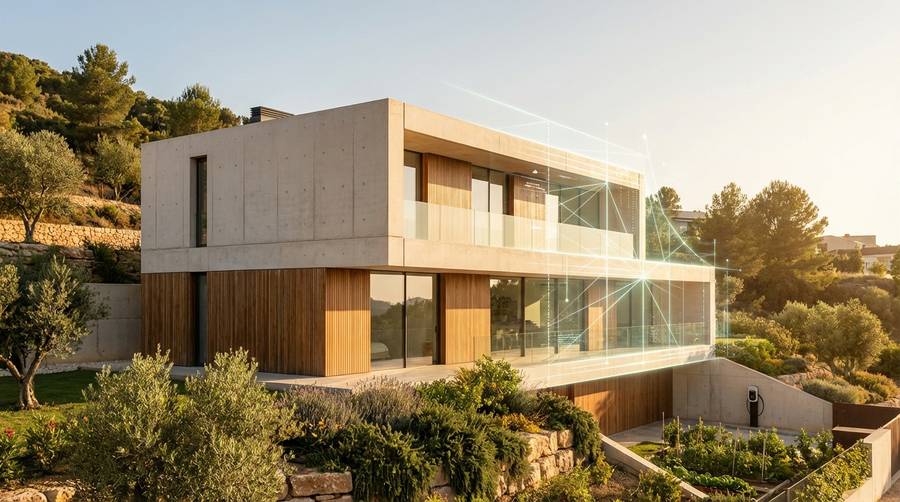
Integrated renewable solutions—solar PV, heat pumps and smart energy management—pair naturally with modular systems. Factory-installed tech such as pre-wired PV arrays or ducting for heat pumps simplifies on-site commissioning. Combined with battery storage and efficient hot water systems, these measures make truly low-energy, comfortable homes achievable for autopromotores.
The turnkey process: steps from plot to delivery
A turnkey approach packs planning, permissions, factory work and site assembly into a single, managed service. This model suits self-builders who want a single point of responsibility and clearer timelines.
Plot search and evaluation: planning rules, access and siting
Selecting the right plot is the first critical step. Evaluate local planning rules, permitted build area, maximum height and required setbacks. Consider access for module delivery, topography and connection to utilities. A thorough site assessment prevents later permitting issues and informs foundation design.
Design, permits and factory prefabrication
Once the site is secured, the design and permitting stage begins. Architectural plans are adapted to the chosen modular system so that modules are optimized for transport and assembly. Factory prefabrication starts after building permits are obtained and foundation preparations are complete. During this phase, the client benefits from regular updates from the production team and standardized quality checks.
Assembly, finishes and handover: schedules, coordination and final checks
On-site assembly typically lasts a fraction of the time of a conventional build. Cranes place modules or panels, followed by mechanical, electrical and plumbing connections. Final finishes, external landscaping and commissioning complete the process. The turnkey provider usually manages all subcontractors and organizes final inspections before handover to the homeowner.
Financing and paperwork for self-building a modular home
Financing an industrialized home has specific features that autopromotores should plan for early. Lenders familiar with self-build projects offer tailored products and clearer disbursement schedules.
Self-build mortgages: types, requirements and preparation
There are mortgage products tailored to self-builds that release funds in stages aligned with construction milestones. Lenders require detailed project documentation: approved plans, a fixed-price contract with the builder, permits and a construction timeline. A realistic budget and contingency plan improve approval odds.
Alternative finance and grants for industrialized construction
Beyond traditional mortgages, options include construction loans, bridging finance and targeted grants for energy-efficient housing. Local or national programmes that promote low-energy homes may offer incentives or subsidies. These can improve affordability when combined with a predictable modular budget.
Documentation, guarantees and payment schedules
Prepare a clear folder with permit copies, supplier warranties, factory QA reports and the turnkey contract. Lenders and purchasers look for formal guarantees on structure and systems. A staged payment calendar tied to physical milestones helps manage cashflow and risk for both client and contractor.
Practical advice for autopromotores
Choosing the right partner and staying engaged during design and factory production are key. Ask for references, visit factories if possible and review warranties closely. Embrace energy standards early in the design process to maximize long-term savings.
For a broader overview of industrialized housing models and the turnkey approach, see Vivienda industrializada: ventajas y guía llave en mano. If you'd like a practical comparison of modular systems, our guide Vivienda industrializada: ventajas y guía práctica explains material choices and workflows in more detail.
Conclusion: why modular housing makes sense for modern self-builders
Modular housing aligns with the priorities of contemporary self-builders in Spain. It offers transparent costs, shorter and more predictable schedules, premium finishes and strong opportunities for energy efficiency. With the right financing and a trusted turnkey partner, building a modern, sustainable home becomes a practical and inspiring path to ownership.
Image description for Findnido AI image generator:
Create a high-quality architectural photograph in the Findnido brand style showing a finished Mediterranean contemporary modular home in Spain. The house should look real and lived-in, with light façades combining smooth white render, warm timber cladding and subtle concrete details. Large windows and sliding glass doors open to a sunlit terrace and landscaped garden with native Mediterranean planting. The scene is captured at golden hour with soft natural light, warm tones and balanced framing. Include human presence subtly: a family or couple on the terrace to convey comfort and modern life. The setting should feel premium, trusted and sustainable, with no exposed construction systems, no container or boxy units, and no industrial or warehouse elements. Emphasize a calm residential neighborhood or gently rolling Spanish landscape in the background. Photography style: architectural magazine quality, natural colors, aspirational but achievable.