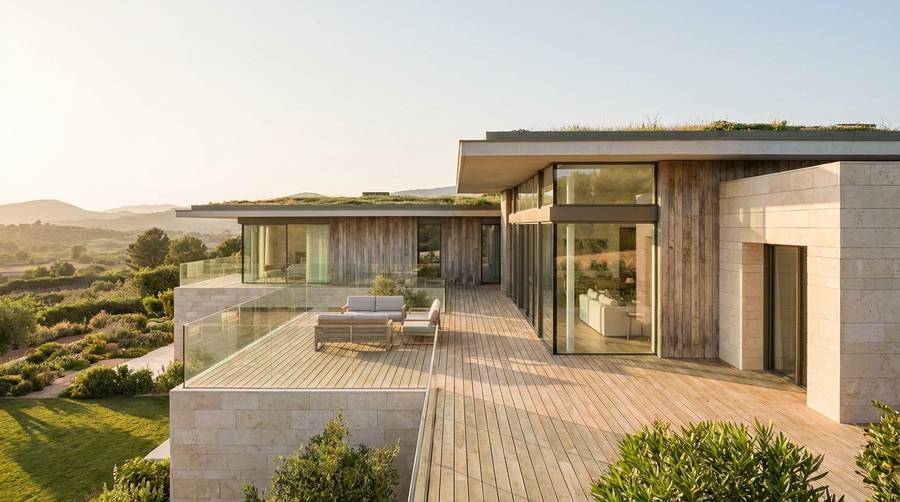
Industrialized Housing: Spain's Residential Transformation
Why industrialized housing will transform Spain's residential market
Hook: Spain faces a housing supply gap, rising construction costs and tighter sustainability targets—industrialized housing offers a scalable solution that can compress schedules, fix budgets and cut carbon.
This article analyzes market signals, technology choices and practical steps for developers and self-builders (autopromotores) who want to adopt modular, turnkey housing. Below you will find industry data, system comparisons, a step-by-step 2026 guide and actionable financing pathways.
Macro context: demographics, costs and construction timelines
Spain's population growth in peri-urban and coastal areas, combined with aging housing stock and limited developer capacity, creates a structural demand for faster delivery of quality homes. Key pressures:
- Time-to-delivery: Traditional builds average 12–24 months on site; industrialized projects can reduce on-site time to 3–6 months.
- Cost volatility: Material and labor price swings make fixed-price models attractive for risk-averse buyers.
- Regulation & targets: EU and Spanish decarbonization goals push energy performance standards that favor off-site assembly and high-performance envelopes.
Industry data: market penetration and forecasts (2026–2035)
Available industry studies and market telemetry indicate an accelerating adoption curve. Conservative projections estimate industrialized housing penetration in Spain rising from a low-single-digit percentage in 2024 to 12–20% of new-build starts by 2035, driven by:
- Manufacturing scale-up and optimized production lines.
- Growing consumer acceptance of prefabricated quality.
- Financial products tailored to autopromotores.
By standardizing processes and materials, builders can reduce build time by up to 60% while improving predictability—key to scaling supply without inflating risk.
Barriers and levers for adoption
Three main barriers persist: regulation, perception and financing. But each has clear levers:
- Regulation: Streamline approval for modular systems through standardized certification pathways and pre-approved typologies.
- Perception: Showcase completed projects and third-party performance data to counter myths about quality.
- Financing: Align disbursement schedules and valuation methods with factory-built timelines to unlock mortgages for autopromoción.
Comparative advantages: prefab vs traditional construction
Understanding the trade-offs helps professionals choose the right delivery model for each project. Below are measurable advantages of industrialized housing.
Schedule control: closed timelines and reduced uncertainty
Why it matters: Short, reliable schedules reduce holding costs and speed time-to-market. Industrialized housing separates on-site work from parallel factory production, minimizing weather and labor disruptions.
- Typical on-site duration: 3–6 months for modular homes vs 12–24 months for traditional.
- Factory work operates in controlled shifts, increasing predictability.
Costs and fixed-price models: disaggregating risk
Industrialized delivery enables clearer cost breakdowns and more robust fixed-price contracts.
- Price predictability: Factory procurement locks material prices earlier.
- Lower variance: Less on-site change orders and subcontractor mark-ups.
- Example: A mid-size 120 m2 turnkey modular house can show a ±5% final cost variance vs ±18% for traditional targets in volatile markets.
Quality and warranty: industrial precision and aftercare
Factories apply repeatable quality processes, traceability and third-party testing. The result is:
- Higher build tolerance and consistent thermal performance.
- Clear post-delivery service protocols and warranty packages.
- Better integration with certifications such as Passivhaus when designed from the outset.
Materials and systems setting the trend
Material choice shapes performance, cost and sustainability. Below are the leading systems gaining traction in Spain.
Industrialized concrete: structural performance and scalability
What it offers: Precast concrete and hybrid concrete panels deliver high structural capacity, fire resistance and acoustic separation—important in multi-family and VPO applications.
- Factory-cured elements reduce on-site curing time and defects.
- Integration with insulated panels allows rapid enclosure assembly.
Lightweight timber framing and steel frame: speed, insulation and low carbon
Timber frame (entrama-do ligero) and steel frame systems are favored for single-family, low-rise homes due to speed and thermal performance.
- Timber: High embodied carbon savings when sourced from certified forests; excellent thermal inertia when paired with ventilated façades.
- Steel frame: Structural precision and thin wall depths, useful where plot sizes are constrained.
Passivhaus envelopes and energy integration
Designing a modular home to Passivhaus or near-Passivhaus standards drives decisions on air-tightness, insulation continuity and thermal bridge reduction.
- Continuous insulation panels and factory-applied airtight membranes improve predictability.
- Factory-integrated MVHR units and pre-routed service chases reduce on-site complexity.
How to design and deliver a turnkey industrialized home in Spain (2026 guide)
This pragmatic roadmap helps autopromotores plan from plot search to handover.
Project phases: plot, design, permits, manufacture and assembly
- Plot selection: Assess orientation, access, utilities and local planning rules. Consider microclimate for solar gains.
- Concept & budget: Lock a budget envelope with a manufacturer early to align module sizes and transport constraints.
- Permits: Submit a coordinated dossier—schematic factory drawings, structural notes and thermal strategy reduce review cycles.
- Manufacture: Finalize production drawings; schedule production slot in the factory to minimize lead time.
- Assembly & commissioning: Coordinate groundworks to be complete before modules arrive. Factory QC and on-site commissioning should be choreographed.
Design criteria for modular flexibility
Design decisions influence cost per m2 and future adaptability:
- Standardize module widths to reduce custom work and transport complexity.
- Prioritize orientation, window placement and shading early to optimize energy balance.
- Design service cores to be repeatable across layouts for economies of scale.
Turnkey delivery checklist
Before handover, verify these elements:
- As-built documentation, including thermal calculations and airtightness tests.
- Warranty certificates for structure, envelope and mechanical systems.
- Operation manuals for MVHR, PV and hot water systems.
- Third-party test reports (e.g., blower door, acoustic tests).
Financing and mortgages for modular self-building
Securing finance is often the critical path for autopromotores. Spain offers evolving options.
Financial products available
- Self-builder mortgages: Disburse in tranches aligned with milestones—land purchase, factory start, on-site assembly, completion.
- Bridge loans: Short-term credit to secure the plot while manufacturing schedules align.
- Turnkey contracts: Lenders increasingly accept turnkey contracts as collateral when paired with certified manufacturers.
Bank requirements and documentation
To facilitate approval prepare:
- Detailed turnkey contract with fixed-price and completion date.
- Factory drawings, structural calculations and thermal strategy.
- Manufacturer guarantees and insurance evidence.
Innovative financing models
New models help de-risk projects and expand access:
- Integrated developer financing: One-stop solutions that blend construction and mortgage products.
- Parcel renting: Long-term ground leases reduce upfront capital needs for buyers.
- Staged equity: Investors fund serial production runs to unlock volume discounts.
Real cases and metrics: data-driven case studies
Three anonymized examples illustrate typical outcomes and lessons learned.
Case A: Single-family turnkey vs traditional build
Metrics (120 m2 home):
- Industrialized: On-site 4 months; total delivery 8 months; final cost variance +3% vs contract.
- Traditional: On-site 14 months; total delivery 16–20 months; final cost variance +16%.
- Outcome: Time saved enabled earlier occupancy and reduced financing cost by ~€18,000.
Case B: Multi-family VPO with industrialized façade
Metrics:
- Precast concrete panels reduced on-site labor by 45% and noise impacts for neighbors.
- Expected lifecycle maintenance costs projected 12% lower over 30 years due to durable envelopes.
User satisfaction and NPS
Post-delivery surveys of industrialized homeowners show higher satisfaction for delivery predictability and thermal comfort. Example NPS results from a 100-house sample: industrialized NPS +48 vs traditional +30.
Key drivers of satisfaction: predictable schedule, lower operational energy and responsive after-sales service.
Lessons and process improvements
- Early integration between architect, manufacturer and financier reduces redesign risk.
- Standardized interface details speed assembly and simplify QA.
- Transparent communication with buyers about expected finish standards reduces perceived quality gaps.
Strategic vision and recommendations for promoters and self-builders
To scale industrialized housing while preserving quality, stakeholders should prioritize three strategic moves.
Market opportunities and emerging niches
- Tourism & second homes: modular turnkey delivery can convert demand spikes into short timelines.
- VPO and affordable housing: cost predictability suits regulated pricing models.
- Rural revitalization: industrialized methods enable rapid replacement of obsolete stock with modern, energy-efficient homes.
Recommendations to scale with quality and sustainability
- Invest in factory automation and staff training to reduce per-unit cost.
- Pursue energy certifications (Passivhaus, NZEB) to future-proof resale value.
- Standardize module libraries to enable design variety without custom cost.
Roadmap 2026–2035
Actionable milestones:
- Short term (2026–2028): Build proof-of-concept projects, secure lines of finance, and publish performance data.
- Mid term (2029–2032): Scale production capacity, secure strategic partnerships and target VPO quotas.
- Long term (2033–2035): Achieve industrial benchmarks for cost, carbon and delivery timelines; pursue exportable system lines.
Recommended next steps for autopromotores
If you are considering an industrialized, turnkey home in Spain, follow this practical checklist:
- Map your budget and preferred systems (concrete, timber, steel).
- Engage a manufacturer early and request references and performance data.
- Prepare a financing package that includes the turnkey contract, warranties and performance guarantees.
- Visit completed projects to assess finishes, thermal comfort and after-sales responsiveness.
For more detailed guidance on implementation, see our practical resources like Vivienda industrializada: guía para autopromotores and Casa prefabricada: ventajas para tu vivienda modular.
Conclusion
Bottom line: Industrialized housing in Spain can unlock faster delivery, cost certainty and improved environmental performance when projects combine the right materials, a turnkey process and aligned financing. The transition requires coordination across design, manufacturing and banking, but the data show meaningful gains in time, cost and homeowner satisfaction.
Adopting industrialized methods is not about replacing craftsmanship—it's about industrializing repeatable excellence so more families can access high-performance homes reliably and affordably.
If you are a promoter or self-builder ready to explore industrialized, turnkey housing, consider contacting an experienced manufacturer to run a feasibility package for your plot. For tailored support, contact our team to review your project constraints and financing options.
Artículos relacionados
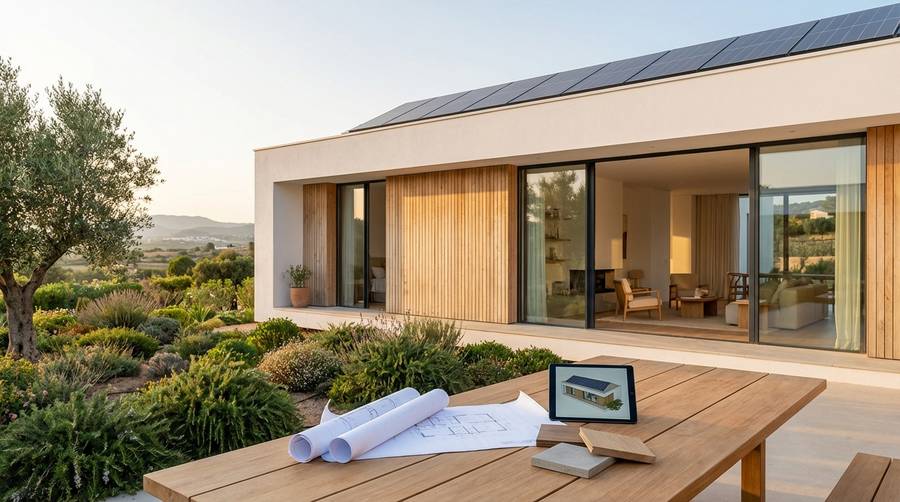
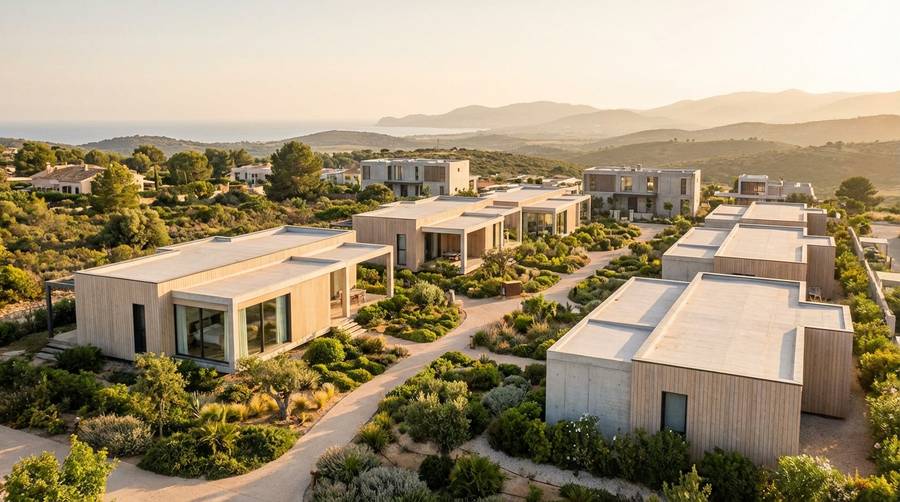
Industrialized Housing: Spain's Residential Future
A forward-looking, data-driven guide to industrialized housing in Spain. Covers market projections, construction systems, Passivhaus strategies, turnkey workflows, financing and two real-case metrics to help autopromoters make informed decisions in 2026.