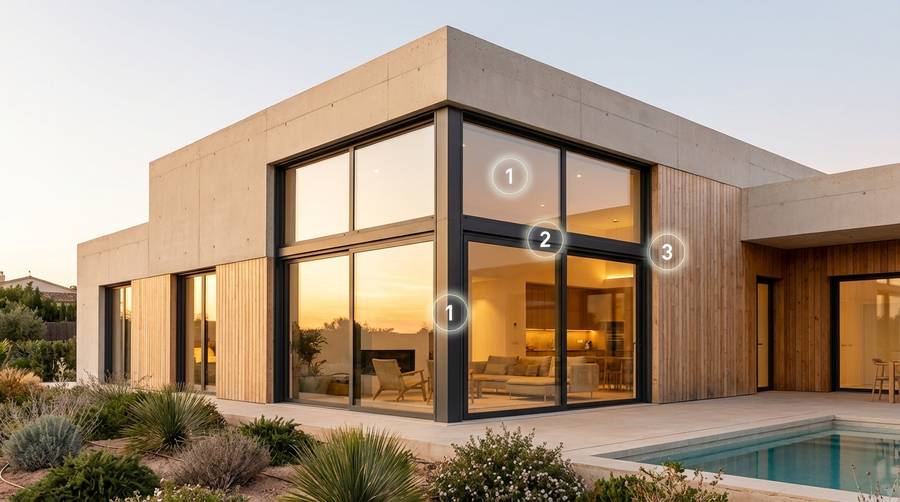
Passivhaus Windows for Modular Housing
Why Passivhaus windows matter in industrialized housing
When a family moves into a newly built modular home and immediately notices a cold edge or wind leak, the whole project’s credibility is at stake. Windows are not decorative glass; in an industrialized house they are the boundary where precision manufacturing meets on-site assembly. Get them wrong and you lose energy performance, occupant comfort and the Passivhaus credit you planned for.
This guide focuses on the practical errors we see repeatedly on Spanish modular builds and, more importantly, the concrete steps to prevent or fix them. Short paragraphs, checklists and real-world verification steps follow so teams and self-developers can act decisively.
Well-specified windows can reduce heating demand by up to 70% in a high-performance modular house; poor detailing can eliminate most of that benefit.
Why Passivhaus windows are key in industrialized housing
Impact on energy efficiency and Passivhaus certification
Windows set two critical metrics: fabric heat loss and solar gains. In Passivhaus methodology, glazing U-values, frame thermal performance (Uf), and whole-window Uw value determine heat transfer. If windows underperform, the building’s heating demand and peak loads rise—and certification targets become unreachable.
Advantages for prefabricated homes and fast on-site assembly
Prefabricated modules offer repeatability: the same frame and detail are produced under factory control. That gives an advantage for achieving airtightness and consistent installation quality—if the window systems and mounting details are designed specifically for modular junctions.
How windows influence comfort, indoor air quality and heat demand
Windows affect surface temperatures (comfort near glazing), daylighting and ventilation strategies. In a tight Passivhaus envelope, poor windows can cause cold radiating surfaces, condensation, and inadequate daylight distribution—leading occupants to open windows and compromise airtightness. Designing for controlled ventilation preserves indoor air quality without losing heat.
Failure 1: Choosing the wrong window system
Consequences: thermal losses, thermal bridges and condensation
Common symptoms include cold edges, visible condensation on frames, and higher-than-expected heating use. These usually indicate a mismatch between frame thermal properties and the intended insulation level of the wall system.
Solutions: criteria to select frame, glazing and airtightness (Uf, Uw, g-value)
- Set minimum performance targets: select Uf and Uw values aligned with your project’s heating demand target. For Mediterranean modular homes aiming Passivhaus, target Uw ≤ 0.9–1.1 W/m²K depending on orientation.
- Consider the g-value (solar factor) by orientation: higher g for winter sun exposures; lower g for west-facing glazed areas to avoid overheating.
- Prefer certified systems: certified Passivhaus components or systems tested in accredited labs reduce uncertainty.
- Frame material choice: timber or thermally-broken aluminum and high-performance PVC frames each have pros/cons—match to maintenance expectations and factory processes.
Practical tips to compare suppliers and datasheets
- Request full Uw, Uf and Psi (linear thermal bridge) values for the exact frame-glass combination, not generic ranges.
- Ask for window test reports (EN ISO 10077, EN 14024) and airtightness class results.
- Compare real whole-unit thermal bridges—corner and mounting details often increase heat loss beyond datasheet numbers.
Failure 2: Incorrect on-site installation and mounting details
Frequent errors: misalignment, poor leveling and insufficient sealing
Even top-spec windows fail if the opening is out of square, not supported properly, or seams are left exposed to wind-driven rain. With modular units, the factory-to-site handover is a critical moment where transport or site tolerances can compound.
Step-by-step solutions: structural anchoring, sealants and movement joints
- Pre-installation checks: confirm module opening dimensions against the ordered unit tolerances and check for plumb and level before insertion.
- Anchoring: use the manufacturer’s structural anchors and follow torque and support spacing to avoid frame distortion.
- External seal: install a continuous weatherproof membrane (breathable where required) and a UV-stable exterior sealant with adequate movement capability.
- Internal airtightness: place an internal airtight tape or membrane, sealed firmly to the window frame and to the module’s air barrier with a continuous bead—avoid point seals.
- Movement joints: allow designed gaps for thermal and structural movement—fill them with compressible backing foam and flexible sealant to maintain continuity.
Post-installation checks: airtightness testing and thermal control
- Perform a blower-door test after window installation of the module (or completed dwelling) and record leakage locations.
- Use an infrared camera on a cool morning to detect cold spots and verify internal surface temperatures.
- Inspect junctions after a rain event for leakage paths.
Failure 3: Poor integration with the envelope and insulation
Problems: incompatibilities between joinery and modular cladding systems
We often see windows chosen independently of the panel or façade system, creating gaps in continuity of insulation, vapour control layers or rainscreen cavities. That compromises both thermal continuity and moisture control.
Solutions: coordinated detailing between module-maker and joiner
- Develop a single assembly drawing showing window, insulation, air-sealing layer, rainscreen and flashings at scale.
- Agree on reference points: which plane is the weather plane, which is the thermal plane and who provides the overlap.
- Use shims and insulation inserts that maintain continuous thermal resistance around the frame—avoid gypsum or timber-only filler materials that compress or rot.
Good practices: continuity of airtightness, wind barrier and insulation
- Layer the details: external flashing → rainscreen cavity → outer sheathing → air barrier → insulation continuity → internal finish.
- Seal penetrations and mechanical fixings through the thermal plane—consider thermal breaks where fixings cross the insulation.
- Document and sign-off each detail during factory production and again on site.
Failure 4: Poorly designed ventilation and humidity control
Risks: internal condensation, poor indoor air quality and lost Passivhaus performance
Tight envelopes rely on mechanical ventilation to control humidity and CO2. If the VMC is undersized, placed incorrectly, or its ducts interfere with window details, occupants can get condensation at frames and panes, undoing the benefits of high-performance glazing.
Solutions: design and integrate mechanical ventilation with heat recovery (MVHR)
- Design ventilation rates to the occupancy and room function; use balanced MVHR with sensible heat recovery efficiency ≥ 75% where possible.
- Position supply diffusers away from glazing edges to avoid creating cold drafts that encourage occupants to open windows.
- Coordinate duct runs with window cassette locations to avoid breaching air barriers during service installation.
Use and maintenance tips for occupants
- Educate occupants on MVHR operation—boost modes for cooking and drying, and filter replacement intervals.
- Recommend window ventilation be limited to short purge periods; regular MVHR use keeps humidity under control without energy loss.
Failure 5: Insufficient maintenance and poor material selection
Common mistakes: ignoring manufacturer guidance and aged seals
Fast acceptance tests on handover are not a substitute for a maintenance regime. Degraded gaskets, blocked drainage channels, and corroded fasteners appear over time and erode performance.
Solutions: preventive maintenance plan and durable materials for Mediterranean climates
- Choose materials resistant to UV, salt air and thermal cycling—prefer coated aluminum, properly treated timber or high-grade PVC for coastal or sun-exposed sites.
- Prepare a maintenance schedule: yearly visual checks, cleaning drainage grooves twice a year, and gasket inspections every 3–5 years.
- Log serial numbers and installation dates—this helps claim warranties and schedule replacements.
Checklist for periodic inspections and when to call a specialist
- Inspect seals and frame-to-wall joints after the first winter and again after a year.
- Measure internal surface temperatures with a contact thermometer—if pane edges are close to dew point, consult a certified Passivhaus professional.
- Commission a re-test of airtightness and thermal imaging if occupants report drafts or persistent condensation.
Practical summary and steps to secure Passivhaus windows in your modular home
Final checklist before placing an order and during construction
- Confirm whole-unit Uw, Uf and Psi values for the exact configuration ordered.
- Obtain manufacturer installation drawings adapted to your modular junctions.
- Plan for continuous airtightness and a defined party responsible for each sealing layer.
- Schedule installation inspections and blower-door tests at staged milestones.
Quick guide to coordinate supplier, module-fabricator and installation team
- Early design: specify performance targets and mounting strategy in the module contract.
- Pre-production: circulate and approve window-to-panel detail drawings.
- Factory fit or site fit decision: if factory-fit, confirm transport and handling procedures; if site-fit, align tolerances and anchoring methods.
- On-site verification: use a simple acceptance form—dimensions, plumb, seal continuity and leak test results—signed by installer and site QC.
Recommended resources: standards, certifiers and Spanish examples
- Consult Passivhaus Institute guidance on component certification for validated performance.
- Look for case studies and product comparisons such as Ventanas Passivhaus for industrialized housing to compare real-world choices and costs.
- Review retrofit and window performance reports like Ventanas Passivhaus: real case study for measured outcomes on similar Spanish projects.
- Read common installation pitfalls in Ventanas Passivhaus: errors and solutions to avoid repeated mistakes.
Closing practical advice: treat windows as system components, not add-ons. Invest early in compatible details, factory checks and an owner-friendly maintenance plan. The extra design time pays back in verified energy savings and occupant satisfaction.
If you are planning a modular Passivhaus project in Spain and want a practical review of window specifications or on-site installation checklists, reach out for a focused technical audit tailored to your project timeline and budget.
Artículos relacionados
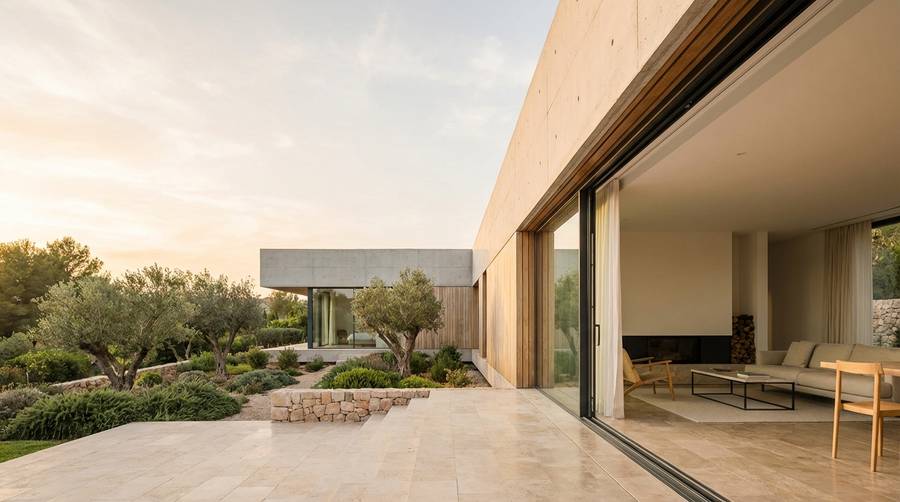
Passivhaus Windows: Common Mistakes and Fixes
Concrete, timber or steel frames can only deliver Passivhaus performance if windows and façades are specified, installed and maintained correctly. This guide pinpoints the most damaging mistakes and gives practical, prioritized fixes for autopromoters.