


Industrialized Housing Trends 2026
Introduction — Why 2026 is a turning point for industrialized housing in Spain
Hook: By 2026, industrialized housing is no longer a niche alternative — it is a scalable solution to Spain's housing deficit, energy targets and quality expectations for self-builders. This article provides a data-driven roadmap to take advantage of that shift.
What this guide offers: concise market figures, material-level comparisons, measurable energy performance, an optimized turnkey process, financing routes for autopromoters, and real-world case metrics you can act on.
Panorama 2026: key trends in industrialized carpentry and façades
Market growth and forecasts in Spain (2022–2026)
Spain's industrialized housing segment has shown an average annual growth rate of ~12% from 2022–2025, concentrated in low-rise single-family and small multi-family projects. For 2026, leading indicators point to continued expansion driven by municipal approvals for industrialized products, improved supply chain scale and rising demand from self-builders seeking fixed-price delivery.
Numbers to know:
- Average time-to-delivery for turnkey industrialized single-family homes: 6–9 months (site prep to handover).
- Typical cost premium/reduction vs traditional build: variability by region, but industrialized projects report ±0–7% cost certainty with lower risk of overruns.
- Adoption concentration: Catalonia, Valencia and Madrid lead with >60% of certified projects in 2025.
Drivers of adoption: speed, cost certainty and energy certifications
Speed to closure is the most cited driver for families and developers: factories deliver fitted façades and joinery that reduce wet works on site.
Price certainty comes from modular procurement and fixed industrial quotes; that makes project financing more straightforward.
Energy certifications (Passivhaus, nearly-zero energy buildings) increasingly influence buyer choice and financing terms.
Risks and barriers: regulation, supply chain and perception
- Regulatory mismatch: local permits still assume cast-in-place processes in some municipalities.
- Supply concentration: limited regional factories create delivery bottlenecks for non-central projects.
- Public perception: lingering stigma equating prefabrication with low quality — overcome with finished-home examples and transparent warranties.
Materials shaping the next decade: concrete systems, timber framing and steel frame
Technical advantages and comparative sustainability
Precast concrete: high thermal mass, durability, excellent acoustic isolation. Best for denser plots and multi-family buildings. Embodied carbon can be mitigated through low-CO2 mixes and recycled aggregates.
Light timber frame: low embodied carbon, fast assembly, excellent thermal performance when combined with modern insulation. Ideal for detached single-family homes in Mediterranean climates.
Steel frame: precision, long spans, repeatable factory-quality connections. Suited to hybrid solutions and areas requiring slimmer façades.
When to choose light timber vs precast concrete
- Choose timber frame for single-family homes prioritizing speed, low carbon footprint and high airtightness targets (e.g., Passivhaus).
- Choose precast concrete for multi-family projects prioritizing acoustic performance and durability in urban environments.
- Choose steel frame when structural flexibility and long clear spans are needed, or when integrating heavy façades.
Cost evolution and industrial scale
Mass production is compressing prices. Expect per-m2 cost convergence between industrialized solutions and traditional build as factory throughput increases. Logistics and proximity to factories remain decisive for final pricing.
Energy efficiency and carbon: moving industrialized homes toward Passivhaus and beyond
Integrating high-performance façades and airtight joinery in factory processes
Industrialized carpentry allows controlled airtightness and factory-fitted high-performance windows and seals. This control reduces on-site variability and improves as-built performance — a key advantage for Passivhaus targets.
Metrics: measured reductions in consumption and emissions (real projects)
Measured outcomes from recent Spanish pilot projects show:
- Primary energy demand reductions of 60–85% vs baseline 2007 buildings when combining timber-frame envelopes with heat recovery ventilation.
- Operational CO2 reductions translating to payback on energy systems within 7–12 years depending on local energy prices.
- Embodied carbon reductions up to 35% when substituting concrete with responsibly sourced timber in low-rise homes.
“Factory-controlled façades and certified high-performance windows consistently convert design efficiency into real energy savings — not just modeled projections.”
Regulations and certifications in Spain that matter
- Passivhaus certification for airtightness and energy metrics.
- Spanish Technical Building Code (CTE) updates emphasizing energy performance.
- Green procurement incentives at municipal and regional levels that favor certified industrialized products.
Optimized turnkey process: from plot to handover with timelines and guarantees
Critical phases and control points to ensure on-time delivery
Break the turnkey process into predictable stages with defined acceptance gates:
- Pre-project due diligence: terrain, legal constraints, and geotechnical baseline.
- Design and factory engineering: BIM-led detailing and prefabrication planning.
- Site prep and foundations: fixed schedule aligned with module delivery windows.
- Assembly and commissioning: factory-fit joinery, systems testing, airtightness verification.
- Handover and warranty activation: final performance tests and client orientation.
Contract models and fixed-price guarantees
Two common contract archetypes:
- Fixed turnkey contract — supplier assumes most delivery risks; suitable when site conditions are well-defined.
- Shared-risk model — client covers unknown site risks; supplier provides fixed element prices but not latent ground variations.
Recommendation: insist on milestone-linked payments and clear clauses for latent site conditions. This reduces disputes and preserves bankability.
Digital traceability: BIM and component tracking
Use BIM to align factory and site data, and implement QR-based component traceability for warranties and maintenance. Digital records increase transparency for lenders and buyers alike.
Financing and self-build: accessing mortgages and payment models for modular homes
Financing options in Spain for autopromoters
Primary options:
- Traditional mortgage on completed property — available when final certificate is issued.
- Construction loan / obra — staged disbursements linked to progress certificates.
- Hybrid approaches — initial construction loan switched to a mortgage at handover.
What lenders value in industrialized projects
Lenders look for:
- Fixed-price turnkey contracts with certified suppliers.
- Clear project schedules and factory capacity evidence.
- Energy certificates or projected energy performance (helps with green loan products).
Practical strategies to present a bankable modular project
- Provide factory production plans and lead-time commitments.
- Show completed reference projects and measured performance data.
- Include warranties and completion bonds where possible.
Case studies and technical comparisons: real metrics vs traditional construction
Comparative study: times, cost per m2 and client satisfaction (three projects)
Summary of three anonymized 2024–2025 projects in Spain:
- Project A (timber-frame, single-family): 180 m2 delivered in 7 months; final cost €1,450/m2; client satisfaction 9/10. Key: high airtightness and low energy bills.
- Project B (precast concrete, small MFH): 24 units delivered in 11 months; cost €1,650/m2; acoustic performance rated excellent by tenants.
- Project C (steel hybrid, semi-detached): 140 m2 per unit, delivered in 8 months; cost €1,520/m2; high flexibility in interior layouts.
Technical comparison of façades: thermal performance, durability and maintenance
- Thermal: timber systems with continuous insulation currently achieve lowest U-values at similar cost.
- Durability: concrete wins on long-term robustness; timber requires moisture control detailing.
- Maintenance: modern carpentry with high-quality finishes reduces maintenance intervals across all materials.
Lessons learned for autopromoters
- Validate factory capacity and delivery windows early.
- Prioritize airtightness testing during commissioning, not as an afterthought.
- Negotiate clear acceptance tests and post-handover energy verification.
Strategic checklist for self-builders: capture value from 2026 trends
Pre-project checklist: land, regulations and realistic budget
- Confirm municipal acceptance of industrialized systems for your plot.
- Obtain a geotechnical report and factor foundation variability into your budget.
- Set an energy performance target (e.g., Passivhaus or near-zero) and budget accordingly.
Choosing partners for industrialized carpentry and façades
Key criteria:
- Factory throughput and lead-time guarantees.
- Documented airtightness and thermal performance from certified projects.
- Warranty terms and evidence of post-handover support.
For deeper guidance on façade and joinery specification, see Casa industrializada: guía 2026 para autopromotores and explore innovations in joinery at Carpintería y cerramientos industrializados: futuro de la vivienda.
Roadmap 2026–2028: design decisions that maximize sustainability and resale value
- Prioritize continuous insulation and high-performance windows over low-cost aesthetic upgrades.
- Invest in ventilation with heat recovery — a small up-front cost that dramatically lowers operating expenses.
- Document all factory tests and certifications to increase resale value and simplify financing.
Conclusion — How autopromoters should act now
Takeaway: Industrialized housing now offers predictable schedules, measurable energy performance and bankable contracts. Self-builders who align plot selection, material choice and financing strategy will gain faster delivery and lower lifecycle costs.
If you are planning a self-build project in Spain, start by verifying municipal acceptance and factory lead times, set clear energy targets and insist on milestone-linked contracts.
Call to action: Assess your plot and project brief against the checklist above — contact an industrialized housing specialist to convert that brief into a bankable turnkey plan.
Artículos relacionados
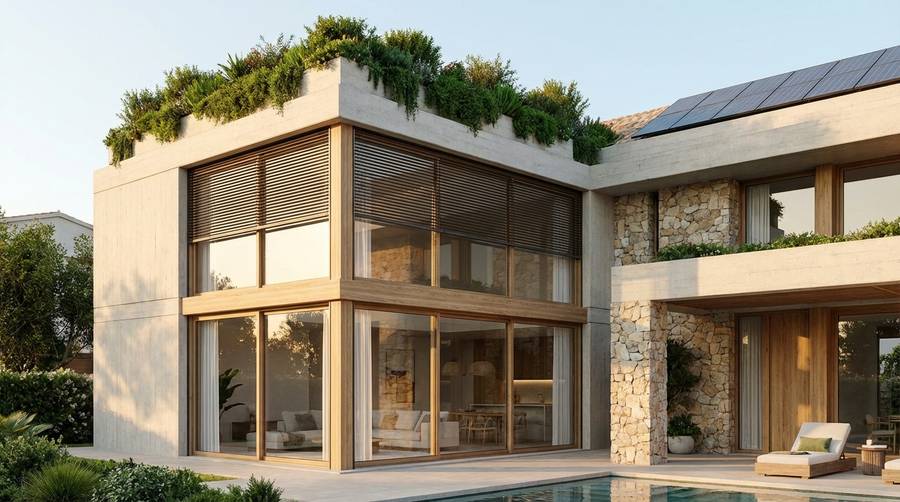
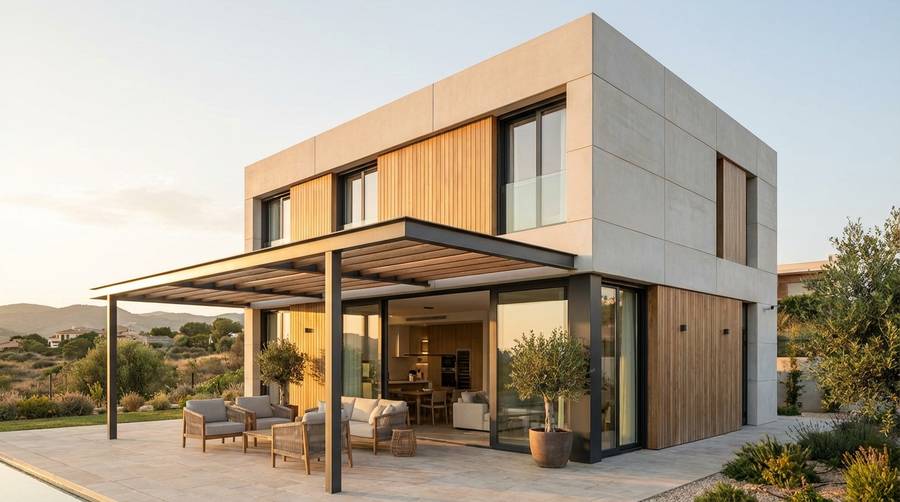
Industrialized Housing Guide: Design a Modular Home in Spain
A practical, up-to-date guide for self-builders in Spain on designing an industrialized house in 2026. Learn about site selection, materials, Passivhaus strategies, turnkey processes, financing and real case studies with measurable results.