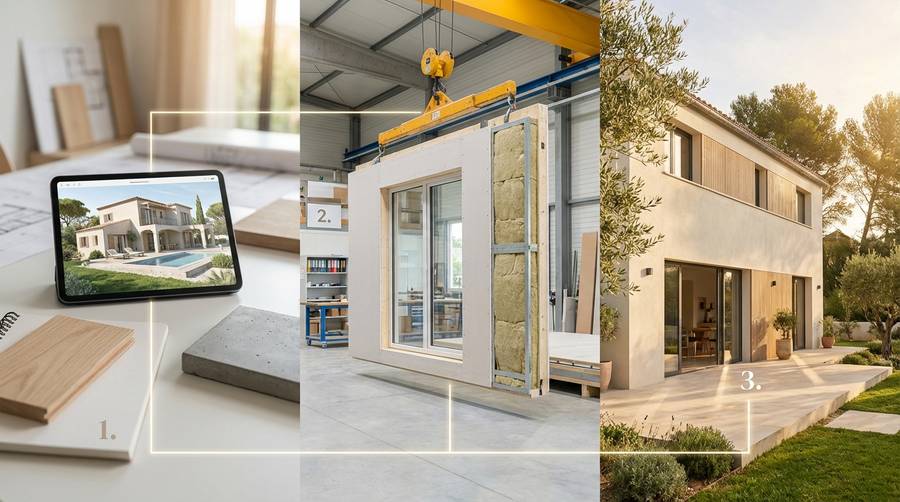
Modular Housing Spain: Scaling Industrialized Homes by 2030
Spain faces a housing shortage that cannot be solved by piecemeal traditional building alone. Imagine delivering safe, energy-efficient homes in months rather than years—at predictable cost and with measurable carbon savings. This article maps a realistic path for industrialized housing (modular and prefabricated) to scale across Spain through 2030, combining sector data, materials analysis, financing models and practical recommendations for self-builders.
Why modular construction can relieve Spain's housing crisis
Current supply and demand snapshot: key sector data 2024–2026
Demand remains strong in urban peripheries and secondary cities while supply is constrained by labor shortages, long permitting timelines and unpredictable site conditions. Industry surveys in 2024–2026 show:
- Delivery lag: average completion time for traditional single-family builds in Spain: 14–24 months from permit to handover.
- Cost variability: material and labor inflation has increased tender variance by 8–15% year-on-year for onsite builds.
- Modular capacity: factories operating near capacity can reduce onsite time by 40–70% and concentrate quality control.
These figures indicate a structural opportunity: scale factory production to decouple dwelling delivery from onsite uncertainty.
Production capacity and scalability versus traditional building
Industrialized housing scales by standardizing components and streamlining logistics. Key levers are:
- Factory throughput: a medium-sized plant (5,000–10,000 m2 annual output) can deliver 60–120 single-family units per year, depending on typology.
- Repeatable platforms: standardized floorplans and systems reduce engineering time and accelerate permits for subsequent batches.
- Supply chain integration: pre-qualifying material suppliers and consolidating logistics reduces lead times and price volatility.
Regulatory barriers and public policy opportunities
Spain's regulatory landscape presents both hurdles and levers for modular expansion. Barriers include regional variances in building codes and lengthy local permitting. Opportunities for acceleration:
- Implement national guidance recognizing factory-made components as equivalent in performance to onsite builds.
- Fast-track permits for certified modular product lines with pre-approved technical dossiers.
- Incentivize factory investment through industrial conversion grants and logistics hub planning.
Proven advantages of industrialized housing vs traditional construction
Time efficiency: factory vs onsite delivery times
Typical timelines show a clear advantage for modular workflows:
- Design to permit: 3–6 months for repeat modular designs (versus 6–12 months bespoke).
- Factory production: 6–12 weeks depending on complexity.
- Onsite installation: 2–8 weeks for single-family modules; finishing and connections 4–12 weeks.
Net effect: a predictable 4–9 month end-to-end timeline for a turnkey modular home compared with 12–24+ months traditionally.
Cost control and fixed-price delivery: risks and mitigation
Fixed-price offers are credible when factories lock major material costs and labor in advance. Common risk mitigation tactics:
- Use indexed supply contracts for critical materials with cap clauses.
- Standardize interfaces (plumbing, electrical) to limit bespoke engineering.
- Include clear contractual milestone payments tied to factory output and commissioning.
Actionable tip: self-builders should demand a cost breakdown that separates factory value, logistics and onsite works to assess risk exposure.
Constructive quality and factory QA processes
Factory environments allow consistent quality inspections and repeatable assembly. Benefits include:
- Controlled conditions reduce moisture and workmanship defects.
- Inline non-destructive testing and digital traceability of components.
- Fewer rework episodes and better warranty outcomes.
Materials and systems shaping 2026 industrialized homes
Industrialized concrete: structural performance and build speed
Precast and autoclaved concrete systems provide robust structural performance and fire resistance. Advantages:
- High thermal mass for stable indoor temperatures in Mediterranean climates.
- Short assembly time for structural frames and façade elements.
- Lower onsite labor for heavy works, reducing schedule risk.
Consideration: balance embodied carbon by specifying low-clinker cements and recycled aggregates.
Lightweight timber frame and steel frame: thermal and sustainability trade-offs
Both systems excel in industrialized workflows. Comparative highlights:
- Timber frame: superb thermal performance, carbon sequestration potential and speed for low-rise housing.
- Steel frame: higher strength-to-weight ratio, ideal for multi-storey modular stacking and tight tolerances.
- Hybrid designs let you place timber where thermal comfort matters and steel where structural spans demand it.
Selection criteria by climate, cost and longevity
Choose systems based on objective criteria:
- Coastal or humid sites: prioritize corrosion-resistant connectors and durable façades.
- Hot Mediterranean areas: pair mass (concrete) with high-performance insulation to reduce cooling loads.
- Budget-sensitive projects: timber platforms deliver fast, cost-efficient envelopes with lower embodied emissions.
Real sustainability: energy efficiency and carbon reduction
Integrating Passivhaus into industrialized projects
Passivhaus principles align well with factory precision. Key integration points:
- Factory-controlled airtightness details yield consistent results.
- Prefabricated high-performance windows and insulated panels reduce onsite variability.
- Mechanical ventilation with heat recovery (MVHR) can be factory-installed and commissioned early.
Factories reduce construction variance; when combined with Passivhaus detailing, operational energy can fall 60–90% compared to code-minimum homes.
Life-cycle analysis: embodied emissions and operational savings
To evaluate true sustainability, compare whole-life impacts:
- Embodied carbon in materials (concrete vs timber) should be offset by operational energy reductions over the building’s expected life.
- Factory processes can reduce material waste by 30–50% through precision cutting and reuse strategies.
- Renewables and efficient systems amplify lifecycle benefits—rooftop PV and heat pumps are common pairings.
Passive design strategies and renewables for modular homes
Practical passive measures that work well with modular platforms:
- Orientation and solar shading tailored to standardized floorplates.
- High-performance envelopes with continuous insulation and thermal breaks.
- Integrate roof-mounted photovoltaic systems into the module design for simple connection onsite.
From plot to handover: the turnkey process for self-builders
Key phases: plot search, design, production and assembly
The turnkey model bundles services for self-builders. Typical phases:
- Site appraisal: soil study, access, utilities and planning constraints.
- Design and approval: adapt a modular platform to the site, secure permits.
- Factory production: component fabrication, QA and logistics planning.
- Onsite assembly: crane installation, services connection and commissioning.
- Handover: testing, warranties and client orientation.
Timelines and contractual milestones: what to expect
Transparent contracts improve predictability. Essentials to include:
- Firm milestones for design sign-off, production start, shipment and onsite completion.
- Penalty and remedy clauses for missed milestones attributable to the manufacturer or installer.
- Clear definitions of scope for site works versus factory scope.
Case studies: metrics on time, cost and customer satisfaction
Evidence from recent projects illustrates outcomes:
- Case A: coastal single-family modular home—permitting to handover: 7 months; final cost within 3% of contract; client satisfaction 9/10 due to speed and thermal comfort.
- Case B: suburban duplex built with timber frames—factory production 9 weeks, onsite assembly 3 weeks; embodied carbon reduced by 18% versus a comparable concrete alternative.
These metrics reflect reproducible benefits when process controls and clear contracts are in place.
Practical financing: mortgages and options for modular self-builders
Financing models tailored to industrialized housing in Spain
Banks increasingly recognize modular construction. Viable models include:
- Construction-to-permanent mortgages: disbursed against milestones that include factory production and completion.
- Self-builder mortgages: structured for owners who manage part of the process and need staged funding.
- Developer-backed mortgages: where a manufacturer or builder offers a purchase agreement with financing support.
Bank requirements, guarantees and technical valuation
Lenders require rigorous documentation:
- Technical dossiers demonstrating compliance with local regulations and structural calculations.
- Third-party valuations that recognize factory-built quality and residual value.
- Guarantees or completion bonds for the works not yet delivered onsite.
Alternatives: leasing, crowdfunding and public grants
Non-traditional financing can bridge gaps:
- Operational leasing models for long-term asset users or rental portfolios.
- Real estate crowdfunding for community-led housing projects.
- Regional and EU grants supporting energy-efficient construction and industrial modernization.
Vision 2030: scenarios and recommendations to scale modular housing
Expected trends in demand, technology and regulation
By 2030 we expect:
- Growing market share for modular housing in the single-family and mid-rise segments.
- Wider adoption of digital design-to-manufacture workflows and BIM-integrated factories.
- Regulatory frameworks that expedite modular approvals and incentivize low-carbon materials.
Recommendations for promoters, authorities and manufacturers
To scale successfully:
- Promoters: invest in repeatable product lines and transparent customer journeys.
- Authorities: create permit pathways for certified modular products and support industrial hubs near transport links.
- Manufacturers: publish technical dossiers, lifecycle data and warranty performance to build trust with banks and buyers.
Key indicators to measure social impact and livability
Track measurable outcomes:
- Units delivered per factory per year.
- Average delivery lead time (permit to handover).
- Operational energy use compared to reference buildings.
- Customer satisfaction and post-occupancy performance.
Final thought: scaling industrialized housing in Spain is not a single technological fix but a systems challenge—aligning factories, finance, regulation and design standards to deliver predictable, affordable and low-carbon homes. For self-builders, the immediate priorities are selecting proven platforms, insisting on transparent contracts and evaluating lifecycle performance, not only upfront price.
If you are considering an industrialized project, start by asking for a full technical dossier, a milestone-driven finance plan and real post-occupancy data—these are the tangible signals of a mature modular partner. Reach out to suppliers who can provide those elements and plan your project around a standardized platform to benefit from scale advantages.
Artículos relacionados
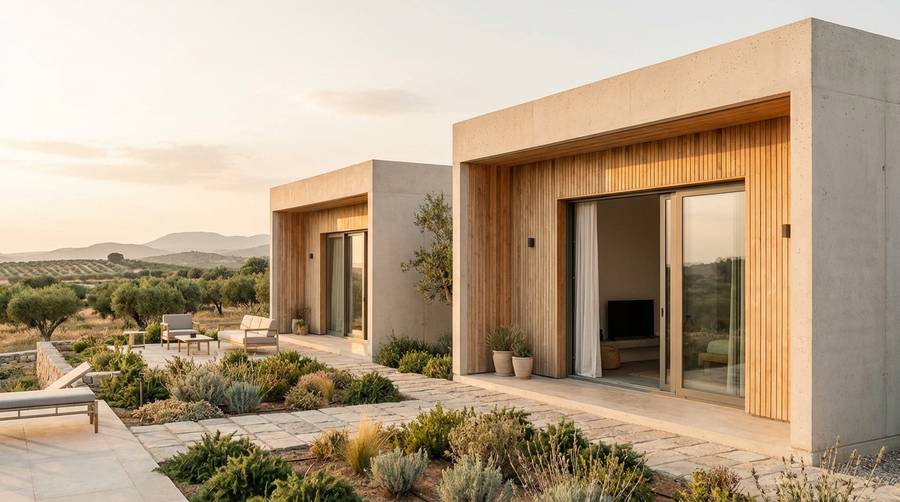
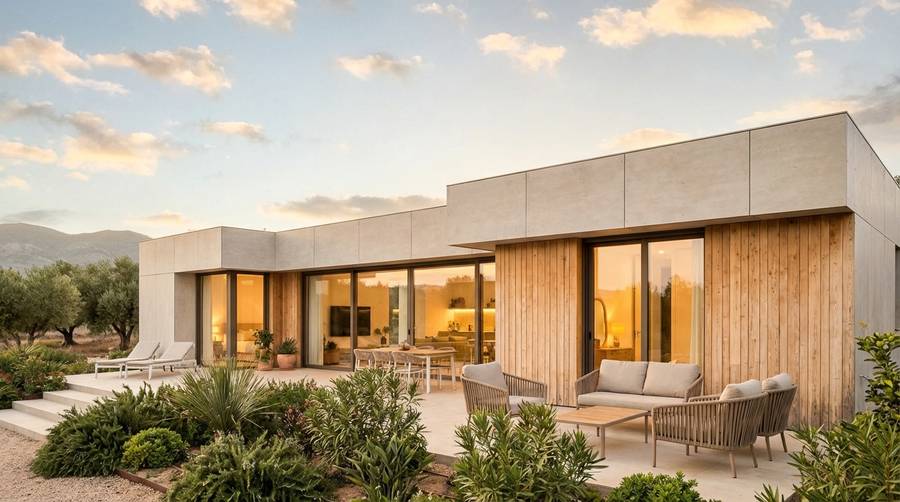
Modular Housing Success: A Spanish Family’s Real Case
A Spanish family faced rising rents and scarce homes — they built a modern, energy-efficient modular house on budget and on time. This case study details design choices, materials, financing, metrics and repeatable steps for autopromoters in Spain.