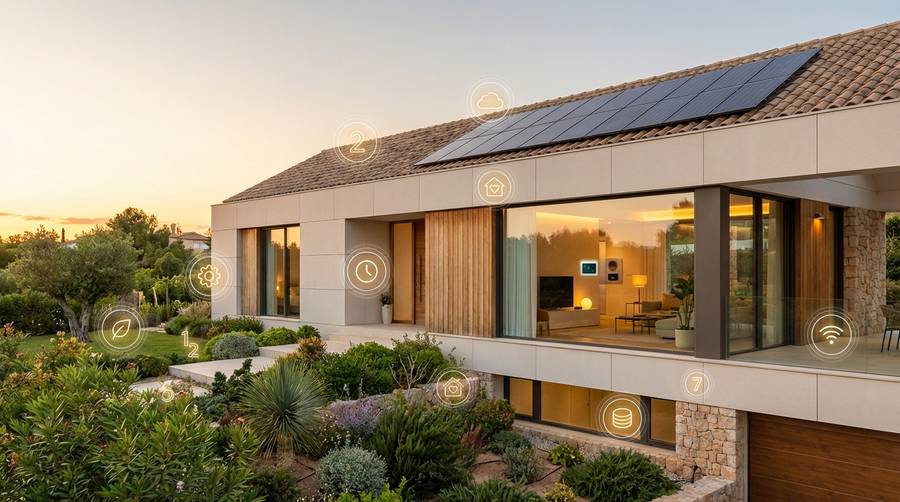
Passivhaus Modular Homes: Future of Industrialized Housing
Why Passivhaus connected homes will become the norm: landscape and key data
Hook: In Spain, a new generation of homeowners is choosing precision-built, energy-positive houses delivered in months, not years. This shift is driven by regulation, finance and measurable performance.
Between 2024 and 2026 the industrialized housing sector in Spain moved from niche to mainstream. Below I synthesize the most relevant data and draw practical implications for self-builders and stakeholders.
Industry figures 2024–2026: growth of industrialized housing in Spain
- Market growth: Industry reports show annual growth rates in modular and prefabricated housing between 12% and 20% in core regions (Catalonia, Valencia, Madrid) from 2024–2026.
- Lead times: Typical on-site completion for turnkey modular Passivhaus projects fell from 10–14 months to 5–8 months when factory schedules, permits and site works are coordinated.
- Adoption drivers: Stricter energy regulations, demand for predictability and increasing availability of financing for self-build projects.
Quantifiable benefits: energy savings, carbon reduction and delivery times
Measured outcomes from recent projects indicate operational energy reductions of 60–90% compared to standard new builds. Embodied carbon reductions vary by material, but factory optimization typically reduces waste by 30–50%.
Case-series monitoring shows average delivered airtightness of 0.3–0.6 ACH@50Pa and annual heating demand under 15 kWh/m² — levels consistent with Passivhaus performance in Mediterranean climates.
The modern self-builder profile: priorities, financing and expectations
- Priorities: energy performance, predictable budget, fast delivery and integrated digital controls.
- Financing: lenders increasingly offer self-builder mortgages that fund land acquisition, factory production and on-site installation in staged disbursements.
- Expectations: transparent costing, clear timelines and post-delivery performance guarantees.
Materials and systems that will define the next decade
Choosing the right structural approach changes outcomes on cost, schedule and lifetime carbon. Below is a concise, data-driven comparison.
Technical comparison: industrialized concrete vs timber light-frame vs steel frame
- Industrialized concrete: High thermal mass, excellent fire resistance and longevity. Best for multi-storey or highly durable elements. Embodied carbon can be high but is mitigated by optimized volumetrics and recycled aggregates.
- Light timber frame: Low embodied carbon, fast production, excellent insulation integration. Vulnerable to moisture if details fail, but modern factory processes minimize that risk.
- Steel frame: High strength-to-weight ratio, precise tolerances and excellent for large spans. Steel has higher embodied carbon than timber but lower than some concrete solutions when optimized.
Thermal performance and durability within a Passivhaus approach
Key performance levers: continuous insulation, thermal bridge-free junctions, high-performance windows and mechanical ventilation with heat recovery (MVHR). When factories control assembly, these levers are easier to guarantee.
Impact on costs and schedules: evidence from recent industrial projects
- Cost variance: Factory-built timber and steel systems often deliver narrower cost bands (±3–6%) compared to site-built (±10–20%).
- Schedule gains: Off-site panelization compresses critical path. On average, projects documented reduced on-site labor by 40–60% and delivered building enclosure closed within 6–12 weeks of installation start.
Competitive advantages of industrialized housing over traditional construction
The benefits are not theoretical. They are operational and financial — and increasingly visible to buyers and lenders.
Constructive efficiency: closed schedules and factory quality control
- Controlled environment: Manufacturing in a factory reduces weather-related delays and improves repeatable quality.
- Testing and commissioning: Systems like MVHR and airtightness are often pre-tested before shipment, reducing on-site commissioning time.
Budget and risk: fixed price, fewer surprises
Predictability is value: Fixed-price factory contracts shift a large share of cost risk from the client to the manufacturer. This reduces the need for large contingency budgets and improves lender confidence for self-build mortgages.
Real sustainability: life-cycle emissions and certifications
When assessed across full life-cycle phases, industrialized homes can outperform traditional builds due to:
- Lower site waste.
- Improved airtightness and systems efficiency yielding lower operational emissions.
- Opportunities for material circularity through standardized components.
Designing a Passivhaus modular home in Spain: strategic 2026 guide
This section is a pragmatic roadmap for self-builders who want a turnkey, high-performance home.
Essential phases: from parcel search to turnkey delivery
- Parcel evaluation (0–6 weeks): Assess orientation, shading, local microclimate and connection costs. Pay particular attention to permitted floor area and local building codes.
- Concept and feasibility (4–8 weeks): Choose structural system (timber/steel/concrete), preliminary energy model, and a budget envelope with the manufacturer.
- Detailed design and approvals (8–16 weeks): Finalize Passivhaus details, obtain municipal permits and secure staged finance.
- Factory production (8–20 weeks): Panels and modules produced concurrently with site preparation.
- On-site assembly and commissioning (4–12 weeks): Install, connect services, perform airtightness and MVHR tuning, handover.
Design decisions to prioritize: envelope, ventilation and integrated smart systems
- Envelope: Specify continuous insulation, triple-glazed windows with low-e coatings and thermal bridge-free junctions.
- Ventilation: Choose MVHR sized for real occupancy and include accessible filters for maintenance.
- Domotics: Integrate simple, interoperable controls for heating, solar generation and consumption monitoring to ensure occupant engagement and verified performance.
Financing options and permits: self-builder mortgages and municipal steps
Spanish self-builder mortgages typically disburse in stages linked to milestones: land, factory production, on-site assembly and final certification. Early lender engagement improves approval velocity.
Tip: prepare airtightness and energy models early for lender technical reviews. Many banks now accept Passivhaus certifications or equivalent modelling as underwriting evidence.
Relevant case studies: metrics, lessons and client satisfaction
Below are concise summaries of two representative projects with actionable takeaways.
Case 1 — Mediterranean Passivhaus in 6 months: costs, consumption and client feedback
- Type: Single-family, timber-frame panels, 150 m².
- Schedule: 22 weeks from contract to handover (including 12 weeks factory production).
- Costs: Fixed turnkey price 8% below comparable local bespoke builds after factoring in shorter financing periods.
- Performance: 12 kWh/m²·yr heating demand, airtightness 0.35 ACH@50Pa.
- Client satisfaction: High — primary benefits cited: predictability, indoor comfort, and lower monthly energy bills.
Case 2 — Steel frame for a large family: schedule, scope changes and solutions
- Type: 220 m² family home, steel frame modules.
- Schedule: 28 weeks from contract; on-site assembly completed in 6 weeks.
- Challenges: Mid-project scope change to add a study and ground insulation upgrade.
- Outcome: Manufacturer absorbed most changes within a tightened schedule; final cost variance +4% — well below traditional build overruns.
Common lessons: deviations, process improvements and recommendations for self-builders
- Engage early: involve the manufacturer during site due diligence to reduce later surprises.
- Prioritize details: moisture management and junction detailing prevent long-term issues in Mediterranean climates.
- Use performance contracts: link final payments to verified airtightness and energy performance where possible.
For a wider perspective on why industrialized housing is a smart choice today, see Vivienda industrializada: 7 razones para elegirla hoy.
Future scenarios and strategic recommendations through 2030
Planning a house today means anticipating regulations, supply-chain evolution and occupant expectations.
Technological and market trends: digitalization, industrialization and circularity
- Digital twin and BIM integration: Factory processes will increasingly use BIM for quality control and lifecycle tracking.
- Component standardization: Reusable modules and standardized systems will lower costs and speed approvals.
- Economy circularity: Expect higher uptake of reused timber, low-carbon concrete alternatives and formal material passports.
Emerging business models for promoters and manufacturers
- Performance-as-a-service: Manufacturers offering energy performance guarantees over multi-year periods.
- Turnkey partnerships: Platform models that bundle land search, permits and modular delivery for self-builders.
Roadmap for self-builders: decisions to make today for an efficient, connected home tomorrow
- Prioritize site orientation and shading studies during parcel selection.
- Choose a manufacturer with proven Passivhaus deliveries and transparent warranties.
- Secure staged financing and link disbursements to verifiable milestones.
- Plan for simple, interoperable home controls rather than proprietary ecosystems.
Conclusion: actionable takeaways and next steps
In short: Passivhaus modular homes combine speed, predictability and real sustainability advantages. The evidence — from airtightness metrics to reduced on-site time and narrower cost variance — points to industrialized housing becoming the standard for informed self-builders in Spain.
Adopt the factory-first mindset: design for assembly, secure performance guarantees and treat airtightness as a primary deliverable, not an afterthought.
If you are planning a self-build, start by aligning parcel selection, manufacturer capability and financing early. Small decisions at the outset determine long-term comfort, cost and carbon.
Call to action: If you want a tailored assessment for a Passivhaus modular project — parcel review, cost benchmark and financing options — contact a specialist to turn these scenarios into a concrete plan.
Artículos relacionados
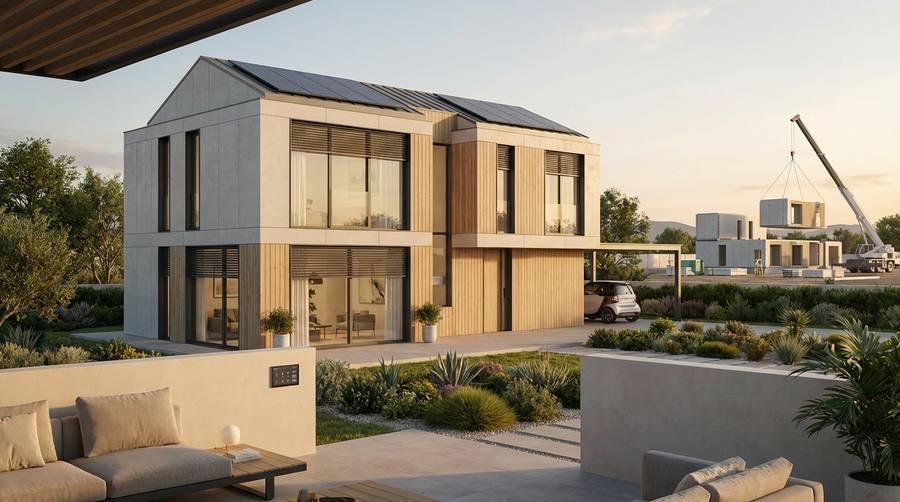
Industrialized Housing vs Traditional Homes: Pros & Cons
A balanced, data-driven guide for self-builders in Spain comparing industrialized housing and traditional construction. Practical checklists, materials analysis, Passivhaus feasibility, turnkey process and financing tips to decide which route fits your goals.