Common Errors in Prefabricated House Projects
Industrialized housing in the Mediterranean: what to expect and why it's worth it
Hook: If you're planning a prefabricated house in Spain, one wrong assumption can add months and tens of thousands of euros to your project. This article pinpoints the most common errors self‑builders make—and gives concrete solutions you can apply today.
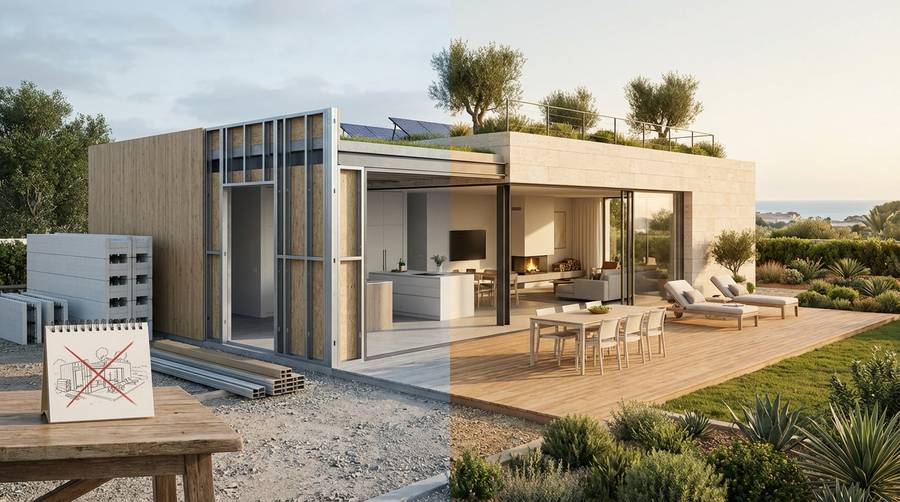
Industrialized housing (modular or prefabricated) in the Mediterranean blends speed, cost control and energy efficiency. Expect fixed-price offers, compressed schedules and modern materials like industrialized concrete, light timber framing and steel frame systems. But benefits are realized only when the project avoids predictable pitfalls.
Well‑planned modular projects regularly cut on-site time by 50% and reduce unexpected overruns—if the team solves site, technical and contractual risks early.
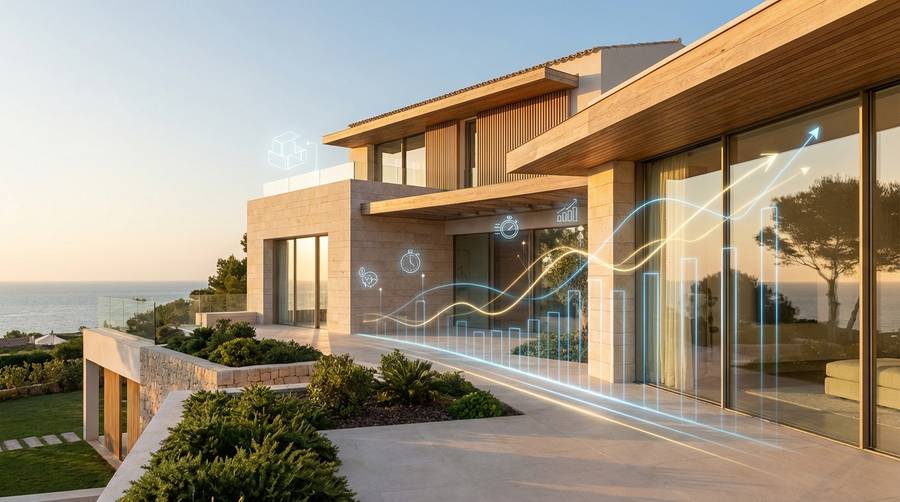
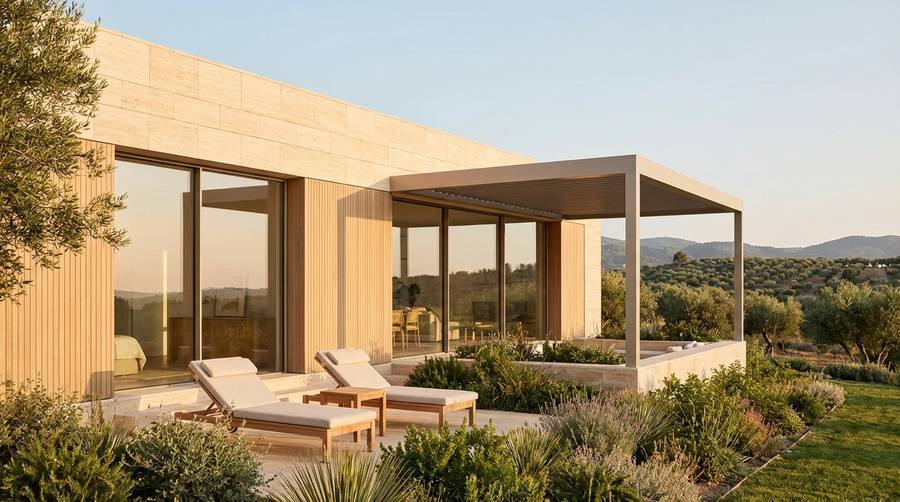
Image prompt for Findnido brand: Mediterranean contemporary modular home in Spain at golden hour, premium finished façade with light stone, wood and concrete accents, large windows, inviting terrace and landscaped garden, warm family scene on terrace, architectural magazine quality, realistic, no exposed construction—photograph style, natural colors, trust and sustainability mood.
Error 1 — Insufficient site planning and ignoring local regulations
What commonly fails: building without checking urban constraints and easements
Self‑builders too often assume a plot is ready for a modular build. The reality: local urban plans, easements, drainage rules and coastal protection zones can restrict footprint, height, materials and finished look. Ignoring these risks leads to redesigns, lost production slots and extra costs.
Practical solutions: checklist for permits, geotechnical study and adapting to the Mediterranean microclimate
- Immediate actions on plot purchase: request the cadastral certificate, certified plan extract and urban planning report from the town hall.
- Order a geotechnical report before finalising the contract with the manufacturer—watch for shallow groundwater and clay content that affects foundations.
- Map servitudes and utility easements (sewer, high‑voltage easements) and factor them into the layout early.
- Adapt design to microclimate: consider prevailing winds, summer solar angles, and summer overheating risks common in Mediterranean plots.
Financial tip: integrate correction costs into financing and your self‑build mortgage
Include a contingency line (5–10%) in your autopromoter mortgage for site corrective works. Lenders accept geotechnical and topographical reports as part of the application; use them to justify the contingency and avoid mid‑project refinancing.
Error 2 — Picking the wrong construction system for climate and budget
Frequent problem: choosing a system (e.g., steel frame) without comparing thermal performance and lifecycle costs
Manufacturers promote their preferred system. Buyers sometimes latch onto speed or upfront price and skip side‑by‑side technical comparisons. That can mean higher heating/cooling costs, worse acoustic comfort or expensive long‑term maintenance.
Technical solution: practical comparison (industrialized concrete vs timber frame vs steel frame)
Below are concise, measurable comparisons—use them when requesting quotes.
- Industrialized concrete
- Typical on‑site schedule: longer prefabrication but excellent thermal mass.
- Upfront cost: medium–high; reduces HVAC peak loads in Mediterranean winters and stabilises interior temperatures.
- Maintenance & durability: high—lower lifecycle interventions.
- Light timber frame (entrama do ligero)
- Typical on‑site schedule: fastest assembly; highly industrialised panels.
- Upfront cost: medium; excellent insulation-to-weight ratio.
- Efficiency: very good when combined with high‑performance insulation and correct moisture detailing.
- Steel frame
- Typical on‑site schedule: fast; precise tolerances.
- Upfront cost: variable—can be competitive but requires thermal breaks to avoid bridges.
- Efficiency: depends on thermal detailing; poor design multiplies cooling loads in summer.
Ask manufacturers for: measured U‑values for wall/floor/roof assemblies, sample energy simulations for your orientation, and references of completed Spanish Mediterranean projects with actual energy bills.
Decision tips: Passivhaus criteria, carbon footprint and long‑term maintenance
- Use Passivhaus metrics as decision filters: annual heating demand (kWh/m²·yr) and airtightness (n50).
- Request embodied carbon data per m² for the proposed systems when sustainability matters.
- Factor maintenance costs over 30 years: cladding replacement, timber treatment and connections inspections.
Error 3 — Underestimating the turnkey process and milestone coordination
Common failure: assuming everything is included or not defining responsibilities
Turnkey offers vary. Some include foundation works and connections; others stop at 'delivered modules'. Misaligned expectations produce conflicts, change orders and payment disputes.
Operational solution: typical phased schedule and control points
Use this template as your base contract annex. Tie milestones to deliverables and inspections.
- Pre‑contract: site validation, geotechnical study, planning permissions.
- Design stage: schematic approval, technical approvals, material samples.
- Manufacturing stage: factory production schedule, QA checkpoints, photos of panels/modules.
- Transport & assembly: delivery windows, site crane and crew responsibilities.
- Finishing stage: MEP connections, finishes, commissioning and snagging list.
- Handover: final measurements, energy tests and documentation pack.
Tools and recommendations: contracts, payment milestones and communication
- Contracts: insist on a clear scope annex with ‘in’ and ‘out’ items (foundations, utilities, external works).
- Payment linked to deliverables: reserve final retention (5–10%) until snagging is closed and energy tests pass.
- Project communication: weekly short reports, photo logs and a shared Gantt accessible to all parties.
Error 4 — Poor management of energy efficiency and comfort
What goes wrong: certifications or insulation designed without considering orientation, ventilation and thermal bridges
Buyers sometimes assume that good insulation alone guarantees comfort. In the Mediterranean, overheating, inadequate ventilation and thermal bridging defeat insulation gains—leading to poor measured performance despite 'good' U‑values.
Practical fix: integrate passive Mediterranean design, Passivhaus details and post‑delivery measurements
- Orientation and shading: design overhangs, shutters and pergolas to cut summer solar gains while allowing winter sun.
- Ventilation strategy: use mechanical ventilation with heat recovery (MVHR) or cross‑ventilation design to manage summer comfort.
- Thermal bridge management: insist on detail drawings at junctions—parapets, balconies and foundations are critical.
- Post‑delivery verification: perform airtightness (blower door) and thermographic inspections; treat defects within warranty.
Short case studies: real metrics from Mediterranean projects
Below are anonymised, condensed case studies with concrete numbers you can expect when best practices are applied.
- Case A — Timber frame villa, Valencia coast:
- Assembly to handover: 10 weeks on site; total project 24 weeks.
- Final airtightness: n50 = 0.8 h‑1; annual heating demand ~16 kWh/m²·yr.
- Client satisfaction: 9/10; realised energy bills 40% below initial estimate due to correct shading strategy.
- Case B — Industrialized concrete home, Málaga hinterland:
- Assembly complexity higher but excellent inertia; total cost 7% above timber option, lifecycle maintenance lower.
- Measured summer peak indoor temps 2–3°C lower than adjacent conventional builds.
Practical close: how to avoid these errors and secure a successful modular project
Summary of best practices: planning, technical choice, turnkey contracts and energy focus
To summarise the core recommendations:
- Validate the site early with town hall reports and geotechnical data.
- Compare systems on measurable criteria (U‑values, embodied carbon, delivery times and referenced projects).
- Define turnkey scope and milestones clearly and tie payments to deliverables.
- Design for Mediterranean climate: passive measures, correct ventilation and airtightness tests are non‑negotiable.
Suggested downloadable checklist for self‑builders in Spain 2026
Have a one‑page checklist at your disposal that includes: site documents, geotechnical deliverables, technical data to request from manufacturers, contract annex template and post‑handover tests. Use it during site visits and contract negotiations.
Next steps recommended: technical consultations, energy simulations and financing options
- Arrange a technical pre‑evaluation with your chosen manufacturer and an independent engineer.
- Request an energy simulation for your parcel and orientation before finalising the system choice.
- Discuss autopromoter mortgage options that include contingency for site corrections and guarantee periods.
Final thought: Prefabricated and modular housing delivers its promise only when planning, technical choices and contracts are managed with the same rigor as conventional projects. Avoid these four errors and you’ll save time, money and stress.
If you want a tailored checklist or a quick review of your plot and initial manufacturer quote, contact a specialised advisor to avoid costly surprises.