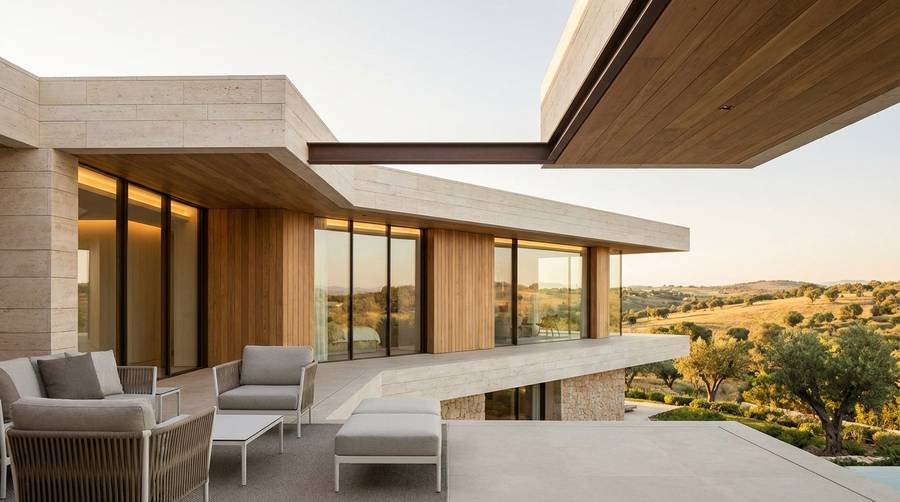
Steel Frame Guide: Build Industrialized Homes in Spain
Quick guide: why choose steel frame for your industrialized home in Spain
Hook: If you want predictable schedules, controlled budgets and an energy-efficient home tailored to Mediterranean living, steel frame industrialized housing is one of the most practical routes for autopromoters in Spain.
This guide gives a step-by-step framework to decide, plan and deliver a steel frame home. It is aimed at self-builders who want clear metrics, concrete checklists and real-world examples rather than theory.
Overview and purpose of this guide
This article explains what steel frame is, how it compares to other industrialized methods, the full design-to-delivery process, financing options for autopromotores, and case studies with measurable results.
Profile of the Spanish self-builder in 2026: expectations and needs
Today's autopromoter expects: transparent pricing, faster timelines than traditional site construction, high energy performance (often Passivhaus-level), and a turnkey delivery that reduces coordination burden.
Summary of benefits and what you will learn
- When steel frame outperforms concrete or timber systems.
- How to plan a project in phases, with realistic timelines.
- Practical financing approaches for self-build mortgages and payment schedules.
Steel frame allows the fastest on-site assembly among mainstream industrialized systems, typically cutting in-field time by 40–70% compared with conventional builds.
What is the steel frame system and how it fits industrialized housing
Accessible technical definition: structure, assembly and envelope
Steel frame is a load-bearing skeleton of cold-formed or hot-rolled steel sections manufactured to precise tolerances in a factory. Panels, floors and roof components are prefabricated and then assembled on site. The enclosure—insulation, vapour control, finishes and windows—can be integrated in the factory or completed on-site depending on the level of prefabrication.
Key advantages: consistent quality control in workshop conditions, lightness (reduces foundation costs on many soils), and compatibility with mechanical and energy systems designed for airtightness.
Comparison with other industrialized systems
- Industrialized concrete: Very robust and thermally massive; ideal for multi-storey and some seismic contexts. Longer factory cycles and heavier logistics.
- Timber light frame: Excellent thermal performance and carbon profile; very fast in workshop. Timber may require additional detailing for longevity in humid coastal zones.
- Steel frame: Combines precision and speed with high strength-to-weight ratio; adaptable to Mediterranean façades and wide spans.
Choosing the system depends on climate, plot constraints and design intent. For Mediterranean single-family homes with a premium finish and short onsite time, steel frame is often the optimal compromise.
When steel frame is the right choice: climate, plot and program
- Plots with limited access or restricted crane time benefit from light, quick assemblies.
- Programs requiring large open-plan interiors or cantilevers are easier with steel.
- Steel frame integrates well with high-performance envelope strategies (triple glazing, external insulation) for Passivhaus compatibility.
Advantages of steel frame versus traditional construction
Time efficiency: closing-in and delivery
Factory lead times + rapid on-site assembly shrink the critical weather-dependent phases. Typical sequence across projects:
- Design & approvals: 8–16 weeks
- Factory manufacture: 4–10 weeks
- On-site assembly: 3–10 days for the frame for a single-family home; cladding and internal works add 6–12 weeks depending on finish level
Net effect: from breaking ground to roofed-in envelope in as little as 6–10 weeks for many steel frame homes—significantly faster than typical masonry builds.
Cost control and fixed-price budgeting: risks and guarantees
Prefabrication shifts many variables from site to factory, enabling more predictable bills of quantities. A turnkey contract can include factory warranty, installation guarantees and performance testing (airtightness, thermal behaviour).
Risks to watch and manage:
- Scope creep in finishes—lock finishes early.
- Groundworks variances—carry geotechnical budget contingencies.
- Logistics and crane hire—plan access and schedule rigorously.
Energy efficiency and sustainability: Passivhaus compatibility
Steel frame supports high-performance envelopes with continuous insulation and controlled air-tightness. Combined with high-performance windows, mechanical ventilation with heat recovery (MVHR), and proper detailing, achieving Passivhaus or near-Passivhaus is feasible.
To reduce embodied carbon, consider hybrid approaches: steel structure with low-carbon concrete foundations, and responsibly sourced cladding (stone, certified timber). Integrate lifecycle thinking at the design stage.
Design and execution step-by-step: planning a steel frame home
Phase 0: searching and assessing the plot
Before design begins, evaluate the parcel for:
- Access and crane zones (essential for panel delivery).
- Topography and drainage (affects foundation type).
- Local regulations and urban codes: setbacks, allowed volume and roof typology.
- Microclimate: orientation, prevailing wind and solar exposure for passive strategies.
Tip: Obtain a geotechnical report early. The difference between a shallow raft and piled foundations can change the budget materially.
Phases 1–3: architectural design, structural calculations and finishes
- Schematic design (SP): define footprint, solar orientation and program — 2–4 weeks.
- Detailed design (DD): integrate MEP, airtightness strategy, and façade systems — 6–10 weeks.
- Structural engineering & factory drawings: produce shop drawings and tolerances for fabrication — 4–8 weeks.
Fix major decisions before factory orders: window types, insulation thickness, roof build-up and primary interior finishes. Changes after fabrication are expensive.
Phases 4–6: factory manufacture, on-site assembly and quality checks
- Workshop production: panels and modules assembled, services pre-installed where planned.
- Transport and lifting: coordinate delivery slots and crane days to reduce idle time.
- On-site finish & QA: airtightness tests, thermal commissioning and handover inspections.
Quality control checklist: Verify factory tolerances, fixings, vapour control continuity, and junction details between envelope elements before closing cavities.
Turnkey process for steel frame homes in Spain: project to delivery
Services included in a turnkey contract and stakeholder roles
A truthful turnkey offer commonly bundles:
- Full design team coordination (architect + engineer)
- Factory manufacture of structural elements and selected finishes
- On-site foundation, assembly, MEP installation and final finishes
- Testing, handover documentation and defined warranty period
As a platform, your role is to centralize procurement, provide transparent milestones and manage interfaces between suppliers and the client.
Typical schedule with real metrics
Example timeline for a 140 m² single-family steel frame home (Mediterranean climate, accessible plot):
- Weeks 1–12: Design approvals and permits
- Weeks 13–20: Factory production (panels, windows, pre-installed services)
- Week 21: Foundations completed
- Week 22: Frame delivered and erected (3–7 days)
- Weeks 23–30: Cladding, interiors and services
- Week 31: Commissioning and handover
Metrics observed across projects: onsite frame assembly often completes within one working week, and envelope closure typically within 4 weeks from arrival.
Permits, coordination with utilities and post-delivery guarantees
Key administrative tasks: building permit, water and electricity connection requests, and local municipal inspections. Ensure the turnkey contract spells out responsibility for each permit and the timeline for utility connections.
Guarantees should include structural warranty, air-tightness/thermal performance targets and remedial procedures if targets are unmet.
Financing, self-build mortgages and economic assessment
Financing options for autopromoters and banks' requirements
Spanish banks offer specific products for autopromoción: staged loans that release funds against milestones (permits, foundations, completion). For industrialized builds, present:
- A clear turnkey contract with factory and assembly milestones.
- Factory production schedule and payment terms.
- Cost breakdown separating land, works, and VAT.
Banks value the predictability of prefabrication, so a documented turnkey supplier can improve lending terms versus a loosely managed traditional build.
Preparing an economic dossier: broken-down budget and cashflow plan
Essential elements:
- Detailed budget: land, foundations, frame & envelope, internal finishes, external works, VAT, contingencies.
- Payment calendar tied to milestones (for example: permit 10%, foundations 20%, frame delivery 30%, envelope closed 20%, handover 20%).
- Contingency reserve 5–10% for unforeseen groundworks or specification changes.
Negotiation tips with lenders
- Provide references and previous project data from your turnkey provider.
- Use conservative estimates for contingency absorption.
- Highlight energy-efficiency measures (lower running costs reduce borrower risk).
Case studies and real metrics: steel frame projects
Case A: 120 m² single-family home — timelines, final cost and client satisfaction
Summary:
- Area: 120 m²
- Schedule: 28 weeks from permit to handover
- On-site frame assembly: 5 days
- Final construction cost (turnkey, excluding land): €1,400/m²
- Client rating at 12 months: 9/10 for build quality and schedule adherence
Lessons: early decisions on finishes avoided costly change orders. Provision of a clear test schedule for airtightness provided client confidence.
Case B: 160 m² bioclimatic home to Passivhaus criteria — consumption and carbon footprint
Summary:
- Area: 160 m²
- Measures: continuous external insulation, triple-glazed windows, MVHR, solar thermal support.
- Measured heating demand: 12 kWh/m²·yr (near-Passivhaus)
- Embodied carbon reduction: hybrid design decreased embodied CO2 vs full concrete by ~18%
Lessons: integrating energy and structural decisions at concept stage is essential. Factory pre-installation of MVHR ducts accelerated commissioning.
Lessons learned and practical recommendations
- Fix the building envelope early and test airtightness in stages.
- Budget for robust foundations informed by geotechnical data.
- Insist on a detailed delivery schedule and penalties for unjustified delays.
Practical closure: next steps to start your steel frame project
Concise pre-project checklist
- Obtain geotechnical study and verify access for deliveries and cranes.
- Prepare a basic budget allocating 5–10% contingency.
- Shortlist turnkey providers with verified references and factory visits.
How to choose a supplier or integrated platform
Key criteria:
- Transparency: clear cost breakdown and milestone schedule.
- Quality assurance: factory QA processes and warranty terms.
- Energy competence: documented results for airtightness and thermal performance.
When comparing offers, ask for a sample contract with payment milestones and a list of third-party references.
Resources and further reading
For an economic perspective and extended technical comparisons, see Vivienda industrializada en España: economía y guía which complements the financial and cost-per-m² aspects discussed here.
Conclusion
Steel frame industrialized housing offers a compelling balance of speed, predictability and performance for self-builders in Spain. With proper upfront planning—plot assessment, fixed finishes, and a transparent turnkey contract—you can reduce site risk and deliver a comfortable, energy-efficient home on a reliable schedule.
If you are evaluating options for your autopromoción, start by securing a geotechnical report and a fixed-step quote from a vetted turnkey supplier. Small early investments in studies and specifications produce disproportionate savings and reduce surprises.
Call to action: If you want a tailored checklist or a comparison of turnkey offers for your plot, reach out to a qualified platform that consolidates design, manufacture and on-site delivery — it will save time and clarify costs for your project.