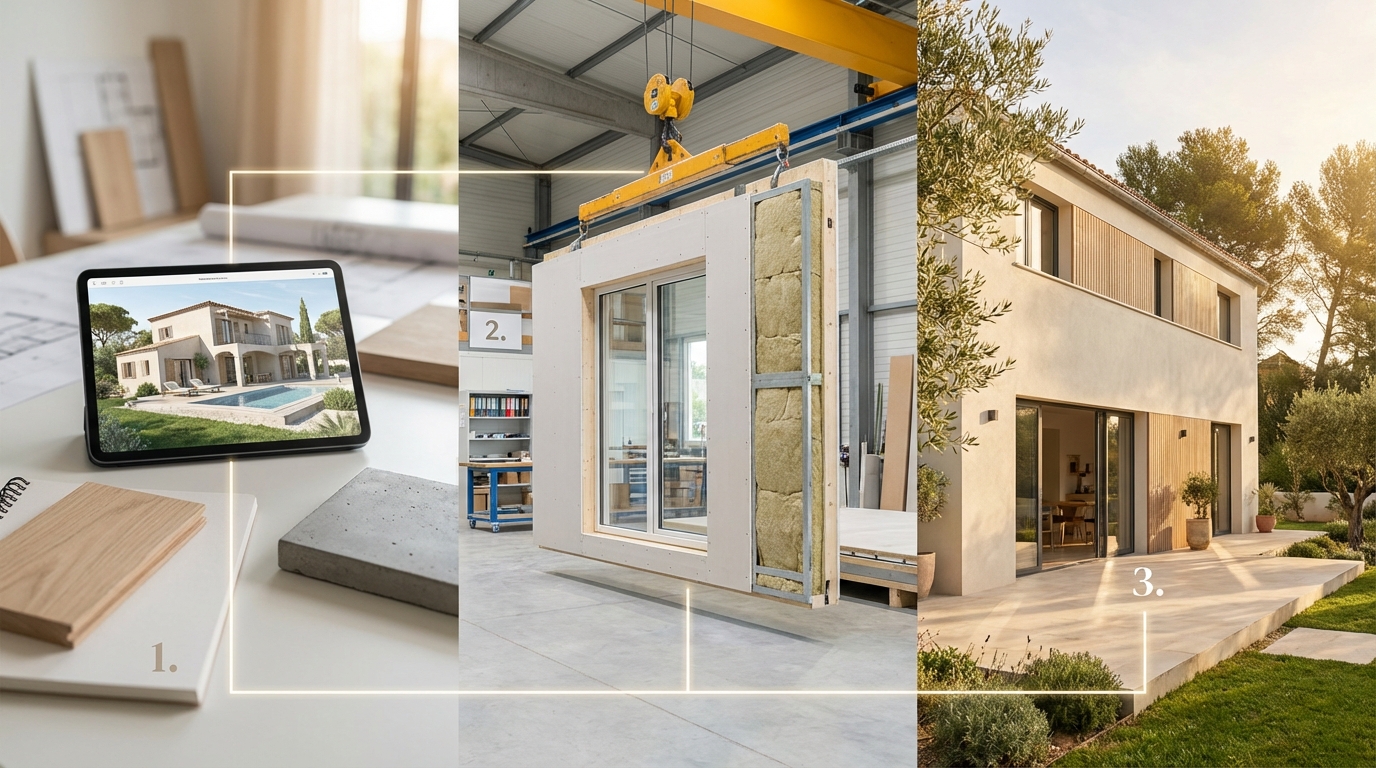
Modular Housing: Spain’s Strategic Answer to the Housing Crisis
When a family needs a secure, energy-efficient home and urban inventories can’t keep up, modular housing stops being an option and becomes a strategy. This article cuts through buzzwords to show how industrialized housing in Spain delivers predictable timelines, measurable cost control and genuine Passivhaus-level performance—if you plan it correctly.
Why modular housing is Spain’s strategic response to the housing crisis
Macro demand and supply pressures are forcing a change: growing household formation, limited buildable plots near services and lengthy on-site construction are inflating time-to-occupancy and final prices. Modular housing reduces those frictions by shifting work into controlled industrial processes.
Macro trends: demand, supply and bottlenecks in traditional construction
Spain’s housing shortfall is concentrated in suburban and peri-urban zones where families seek quality and affordability. Traditional on-site construction is limited by:
- Labor shortages: skilled trades are scarce and costly.
- Weather dependency: on-site delays extend schedules.
- Logistics and sequential phases: many interfaces increase risk and rework.
Industrialized housing addresses each factor by standardizing modules, reducing crew sizes on site and compressing assembly into measured weeks rather than many months.
Key benefits of prefabrication: fixed timelines, predictable cost and controlled quality
Predictability is the primary value proposition. Manufacturers offer fixed-price packages for defined scopes, and factory conditions reduce variability. The result: faster pricing cycles, lower contingency allowances and clearer client decisions.
- Time to envelope close: factory-built elements shorten site work to weeks.
- Cost certainty: lower change orders and reliable procurement reduce surprises.
- Quality control: repeatable processes, measurements and inspections in a factory.
How modularity enables fast responses without sacrificing design or comfort
Modern modular systems in Spain use diverse structural types—light wood frames, steel frames and industrialized concrete—so architectural flexibility is high. With good design governance, clients gain:
- Custom layouts within repeatable panel or volumetric systems.
- High-performance envelopes that meet Passivhaus targets.
- Residential-grade finishes and durable details comparable to traditional builds.
Quantitative comparison: prefabricated house versus traditional build
Numbers matter for decision makers. Below we synthesize industry averages and verified project data to help self-builders and developers make evidence-based choices.
Time analysis: average phase durations (site purchase, fabrication, assembly, handover)
Typical timelines, drawn from recent modular projects in Spain and comparable European markets:
- Parcel acquisition and permits: 3–9 months (same for both methods).
- Design and approvals: 2–6 months for modular designs optimized early.
- Factory fabrication: 6–12 weeks for a single-family home module set.
- On-site assembly and connections: 2–6 weeks for modular vs 4–9 months typical for traditional.
- Total delivery: modular 7–12 months from contract to handover; traditional 12–24 months.
Implication: modular methods concentrate risk earlier and compress schedule risk late in the project life-cycle—valuable for time-sensitive finance or tenant plans.
Costs breakdown and budget risk: fixed price, overruns and contingencies
Cost comparisons require consistent scope. When scope and finishes match, modular projects often show:
- Comparable hard costs: manufacturing can be slightly higher per m2 due to factory overheads.
- Lower soft costs: fewer site management days, lower financing charges and reduced waste disposal.
- Reduced contingency needs: typical contingency in modular projects 5–8% vs 10–15% in traditional builds.
For self-builders, the most tangible saving is the reduction in indirect costs—shorter interim financing, earlier occupancy and lower management overhead.
Quality indicators and customer satisfaction from industry data
Measured outcomes across European modular projects indicate:
- Defect rates: lower initial defects at handover due to factory testing.
- Energy performance: closer alignment to modeled consumption when factory-applied insulation and airtightness are implemented.
- Client satisfaction: higher when communication and scope are fixed early; main dissatisfiers are late design changes and mismatch of expectations on finishes.
Factory conditions reduce defects and deliver energy performance closer to design targets—this is where industrialized housing converts promise into measured results.
Materials and systems shaping 2026 industrialized homes
Material choice determines structural behaviour, embodied carbon and finish expectations. Here are the leading systems and their trade-offs.
Industrialized concrete: structural performance and series efficiency
Precast and industrialized concrete panels offer:
- High durability and thermal mass: benefits in Mediterranean climates for stable indoor temperatures.
- Repetition advantages: panelized production reduces unit cost as volume increases.
- Embodied carbon: can be mitigated with low-carbon mixes and optimized sections.
Light timber frame and steel frame: technical and sustainability comparison
Timber frame provides favorable carbon balance and fast assembly; steel frame delivers slender sections and large spans. Key points:
- Timber: renewable, light, excellent prefabrication fit; requires moisture control strategies.
- Steel: precise, durable, ideal for open-plan interiors; higher embodied energy but recyclable.
Choice should match climate, budget and the client’s sustainability objectives.
Finishes and details that drive residential value and longevity
High-perceived value often comes from durable exterior cladding (stone, quality timber, ventilated façades), large glazed openings with thermal frames, and robust interior junctions. Investing in these details reduces lifecycle costs and increases resale value.
Sustainability and energy efficiency: industrialization aligned with Passivhaus
Industrialized production excels at making repeatable, high-performance envelopes. When combined with Passivhaus principles, the outcome is measurable and marketable.
Design strategies and performance data: envelope, airtightness and thermal bridges
Key strategies that factories control well:
- Precision insulation layers installed in controlled conditions to reduce thermal bridging.
- Factory-tested airtight panels with validated blower-door results before shipment.
- Prefabricated window units with integrated flashings for reliable interfaces.
Documented modular Passivhaus projects report airtightness below 0.6 ACH and heating demands under 15 kWh/m2·yr when design and execution are coordinated.
Reducing carbon footprint: industrialized processes vs on-site construction
Industrialized methods can reduce material waste by up to 30–50% through optimized cutting, and transportation impacts may be lower overall when on-site rework is eliminated. The net embodied carbon depends on material choices—timber systems typically yield lower embodied emissions than concrete or steel.
Certifications, costs and energy payback: realistic metrics
Certifications (Passivhaus, NZEB) bring premium costs of roughly 3–8% depending on baseline. Energy savings and maintenance reductions often recover that difference in 7–15 years for well-occupied homes—useful data for lenders and buyers assessing lifecycle returns.
Turnkey guide for self-builders: from plot search to delivery
Turnkey modular projects reduce coordination burden for self-builders, but active decisions remain essential. Below is a practical roadmap.
Critical steps: plot identification, design, permits and manufacturing
- Plot selection: prioritize access, orientation and services; modular assembly requires crane access and delivery routes.
- Early design briefing: lock layout and performance targets before manufacturing to avoid late changes.
- Permits: submit detailed plans including structural and service strategies; timelines align with municipal processes.
- Factory schedule: confirm production window and lead times; coordinate site foundations to align with delivery.
Coordination and timelines in turnkey mode: responsibilities and deliverables
Turnkey providers typically assume:
- Complete delivery of modules and assembly.
- Interconnection to utilities (subject to local supplier timings).
- Final finishes and commissioning per contract.
Self-builders should confirm milestones, acceptance tests and warranty periods in writing.
Checklist for self-builders: key decisions, documentation and quality control
- Define fixed scope and finish schedule early.
- Require factory QA reports and pre-shipment inspections.
- Agree on on-site tolerances and snag lists at handover.
- Plan for interim financing and clear payment triggers tied to deliverables.
For broader economic context see Vivienda industrializada: el futuro viable en España, which examines market impacts and scalability.
Financing and mortgage solutions for modular self-development
Financing remains a practical hurdle, but Spanish banks and specialist lenders have adapted products for self-development and modular projects.
Financing options in Spain: self-build mortgages and bridging loans
Common instruments:
- Autopromoción mortgages: staged disbursements tied to construction milestones.
- Bridge loans: short-term credit during plot purchase and construction, refinanced on completion.
- Manufacturer finance: sometimes available to cover factory production with backed guarantees.
Bank criteria and documentation that ease approval for industrialized housing
Banks look for clarity on schedule, contractor credentials and final valuation comparables. Helpful documents:
- Fixed-price contract with manufacturer.
- Production schedule and factory QA protocols.
- Independent valuation of completed property.
Payment models and tax implications: practical advice to lower financial risk
Negotiate payment tied to verifiable milestones. Consider VAT timing and local taxes; some incentives may apply for energy-efficient buildings—factor these into cashflow models to reduce net cost.
Case studies and projections: metrics, lessons and the near-term future
Solid decision-making comes from real projects. Below are anonymized, representative findings drawn from recent Spanish modular deliveries.
Case studies with data: delivery times, final costs and client satisfaction
- Family home, timber frame, Mediterranean coast: 9 months total, final cost within 4% of fixed price, client satisfaction score 9/10; energy use 40% below Spanish average for similar homes.
- Two-storey concrete-panel home near Valencia: 10 months total, faster assembly reduced financing costs by ~€12,000; durable exterior reduced maintenance forecasts.
Lessons learned: common errors and levers for improvement
- Avoid late changes to finishes—these drive cost and delay.
- Prioritize early coordination of services (sewer, water, power) to prevent on-site holds.
- Insist on factory QA evidence and airtightness tests before acceptance.
Projections 2026–2031: market share, barriers and opportunities for self-builders
Conservative projections suggest modular could capture 10–20% of new single-family housing in growth corridors by 2031, driven by: policy emphasis on energy efficiency, tighter labour markets and buyer demand for quicker occupancy. Barriers remain plot scarcity near services and the need for more standardized valuation approaches by lenders.
Inspiring close: how industrialized housing transforms places and lives
Industrialized housing is not a one-size-fits-all answer, but it is a scalable tool. For self-builders in Spain it offers faster delivery, better predictability and measurable sustainability gains when combined with good design and planning.
Social and urban impact: accessibility, diversity and residential regeneration
Modular projects can unlock infill sites and underused parcels, enabling diverse housing types and faster regeneration of neighbourhoods while reducing disruption during construction.
Executive summary of actionable benefits for self-builders
- Shorter schedules reduce financing and occupancy uncertainty.
- Predictable budgets lower contingency and negotiation stress.
- Higher initial energy performance reduces operating costs and improves comfort.
Next steps: resources, contacts and tools
Start by defining your performance targets and fixed scope. Request factory QA evidence and a detailed production schedule. Engage a lender early to align milestones with financing. If you want a concise checklist, download a turnkey planning template or contact providers for fixed-price quotations tailored to your plot and design.
Industrialized housing is maturing into a practical route for Spanish self-builders who want control, speed and sustainability. If you’re planning a self-build, take the next step now: define your performance goals, secure lender pre-approval and request factory QA documentation before signing.
Artículos relacionados
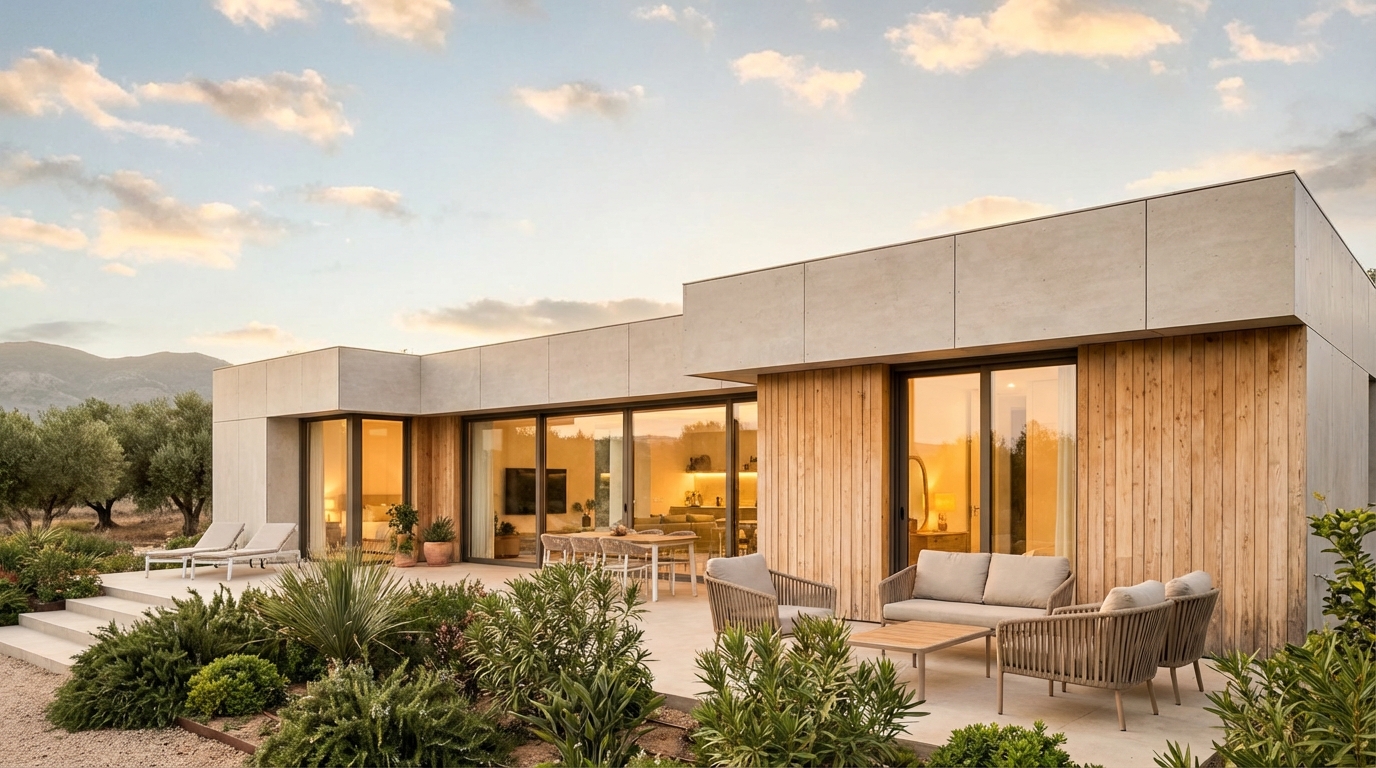
Modular Housing Success: A Spanish Family’s Real Case
A Spanish family faced rising rents and scarce homes — they built a modern, energy-efficient modular house on budget and on time. This case study details design choices, materials, financing, metrics and repeatable steps for autopromoters in Spain.