


Prefabricated House vs Traditional Home: Clear Pros and Cons
Deciding between a prefabricated house and a traditional home: a practical opening
Imagine signing a fixed-price contract and moving into a completed home months after the foundations are poured — not years later. That faster, more predictable outcome is the main reason many Spanish self-builders now consider a prefabricated house. This piece gives a balanced, evidence-led comparison so you can decide with confidence.
Data from recent projects show average factory assembly reduces on-site time by 40–60%, and airtightness gains can cut heating needs by up to 70% compared with conventional builds.
Why choose an industrialized home today: overview and key benefits
Quick summary: prefabricated homes typically offer better time control, a higher degree of factory quality control and a fixed-price approach that reduces the risk of budget overruns. Traditional builds still win on site-adaptability and perceived flexibility.
Quick recap: energy efficiency, timelines and cost control
Energy efficiency: Modern prefabricated assemblies are designed for high insulation levels and airtightness. When combined with proper mechanical ventilation, they often exceed standard thermal performance of conventional builds.
Timelines: Modular and panelized systems move large work volumes into factories, shortening weather-impacted site work. Typical reductions in on-site weeks range from 30% to 60%, depending on the project size and system.
Cost control: Many manufacturers offer fixed-price packages, reducing change-order risk. That said, land, connections and finishes still require careful budgeting.
The Spanish self-builder in 2026: what they seek and why industrialization fits
Autopromoters in Spain increasingly look for:
- Predictable schedules to coordinate sale of existing homes or financing milestones.
- Transparent pricing to avoid surprise costs.
- Energy-efficient homes aligned with grants and resale value.
Industrialized delivery aligns with these priorities by concentrating labor and quality control in the factory, offering faster handover and strong performance guarantees.
When industrialization makes sense—and when it may not
Prefer a prefabricated house if you value time certainty, fixed budgets and certified thermal performance. Consider traditional construction if your plot has difficult access, you demand highly bespoke on-site customization, or local heritage rules force in-situ techniques.
Technical comparison: prefabricated house vs traditional home
Energy efficiency and airtightness: measurable outcomes and standards
Prefabricated systems often exceed standard regulatory requirements because factory assembly enables consistent insulation installation and reduced thermal bridging. Examples:
- Measured airtightness (n50) for well-built modular homes: 0.3–1.0 h-1. Typical on-site builds: 3.0–5.0 h-1 unless specifically targeted for Passivhaus.
- When targeting Passivhaus, industrialized envelopes deliver repeatable results. Combining a tight shell with balanced MVHR makes achieving the standard more efficient and cost-effective.
Construction timelines and climate risk: factory vs site
Factory work reduces exposure to weather. In Spain, seasonal rain or cold snaps delay site trades—factories keep production steady year-round. A representative case: wall panels manufactured in 6–8 weeks, on-site assembly in 2–4 weeks, versus 6–12 months for a comparable masonry build on the same plot.
Direct and indirect costs: fixed price, variability and maintenance
Direct costs: Prefab packages can be competitive once logistics and plot constraints are considered. Fixed-price contracts limit cost escalation but watch for allowances on finishes and utility connections.
Indirect costs: Shorter site durations reduce financing interest, temporary accommodation and site supervision fees. Long-term maintenance depends on materials—stone, treated timber and concrete panels each have different life-cycle costs.
Modern materials: advantages and limitations (industrialized concrete, light wood frame, steel frame)
Industrialized concrete: durability, thermal mass and energy performance
Precast concrete panels provide high thermal mass, robustness and low maintenance. For Mediterranean climates, mass helps stabilise internal temperatures, dampening peak loads. Downsides: higher embodied carbon unless recycled content or low-carbon binders are used, and heavier panels increase transport cost.
Light timber frame: lightness, hygrothermal comfort and sustainability
Engineered timber frames excel in embodied carbon and speed of assembly. Benefits include warm surfaces, rapid construction and good hygrothermal behavior. Limitations are fire strategy, acoustic detailing and careful moisture management—issues resolvable by certified detailing and fire-resisting linings.
Steel frame: precision, strength and thermal considerations
Steel enables long spans and precise tolerances, useful for open-plan Mediterranean houses. Thermal bridging must be addressed with thermal breaks and continuous insulation. Steel is recyclable but has higher embodied energy; specifying recycled content mitigates this.
Sustainability and carbon reduction: how industrialized homes overcome challenges
Passive design and passive measures: insulation, ventilation and thermal bridges
Industrialized construction simplifies achieving passive measures because components are manufactured to tolerances that reduce thermal bridges. Key actions:
- Continuous external insulation and factory-controlled junctions.
- Integrated MVHR systems sized to design flows, tested prior to delivery.
- Window frames and glazing specified to reduce overall heat loss and solar gain where needed.
Life cycle analysis and carbon footprint: materials, transport and assembly
Assessing embodied carbon requires looking beyond materials: factory location, transport distances and construction speed matter. Example metric: a timber-frame modular home with local panels can reduce lifecycle emissions by 20–35% compared with a conventional masonry build, primarily by lowering on-site waste and shortening construction time.
Real strategies: renewables, envelope and HVAC
Practical, high-impact measures for modular homes:
- High-performance envelope to shrink heating/cooling loads.
- Solar PV sized for realistic household consumption with battery-ready wiring.
- Heat pumps paired with low-temperature distribution systems (underfloor heating or efficient fan coils).
These strategies are compatible with industrialized builds and often integrated by manufacturers in turnkey offers.
The turnkey process explained: from plot search to handing over the keys
Plot search and validation: regulations, access and solar orientation
Early plot checks save major headaches. Key validations:
- Zoning and permitted uses (municipal classification).
- Access for heavy transport during assembly and crane placement.
- Solar orientation and shading—vital for passive performance and PV yield.
Turnkey phases: design, manufacture, assembly and finishes
Standard turnkey roadmap:
- Feasibility and concept design—plot survey and briefs.
- Technical design and factory detailing—BIM models and element production drawings.
- Manufacture—components produced under QA systems.
- On-site assembly and final finishes—connections, landscaping and handover.
Warranties, fixed times and quality checks: customer checkpoints
Look for contracts that specify milestones, penalties for delays and clear warranty scopes (structure, envelope, installations). Insist on air-tightness testing and commissioning certificates for HVAC and renewables.
Financing and incentives: mortgages for self-build and modular options
Financing models: self-builder mortgage vs modular developer loan
Two common approaches:
- Self-builder loan (hipoteca autopromotor) released in tranches tied to milestones. Banks may require stronger documentation for factory-built systems but increasingly accept them when backed by certified manufacturers.
- Developer-style funding through the manufacturer or a promoter offering a turnkey product with an integrated payment plan.
Grants and subsidies in Spain: examples and eligibility
Several regional and national grants prioritize energy-efficient new builds and renovations. Eligibility often requires minimum energy performance (e.g., NZEB/near-zero energy) or installation of renewables. Check municipal and autonomous community portals early in the design phase.
Presenting a modular project to a bank: documentation and KPIs
Essential documents banks ask for:
- Manufacturer specifications, warranties and references.
- Detailed budget with fixed-price clauses and contingency.
- Project schedule and mechanical system commission plan.
- Energy performance estimates (PHPP or dynamic simulation) if seeking efficiency-linked financing or grants.
Practical guides and case studies to decide with data
Step-by-step guide: design a prefabricated house in Spain (2026)
Concise roadmap:
- Validate the plot for access, zoning and solar orientation.
- Set a clear brief: size, budget, performance targets (e.g., Passivhaus, NZEB).
- Obtain initial turnkey quotes from certified manufacturers and request air-tightness and life-cycle data.
- Secure financing: present the manufacturer dossier to your bank early.
- Finalize design, sign the fixed-price contract and schedule delivery/assembly dates.
- Commission systems, perform airtightness and handover with documented warranties.
Case study: a family home—times, costs and satisfaction metrics
Project snapshot (illustrative, anonymised):
- Type: 150 m2 Mediterranean contemporary prefabricated house, timber frame with concrete plinth.
- Production: 8 weeks in factory; on-site assembly and finishes: 10 weeks.
- Total delivery time (from contract to keys): 5.5 months.
- Cost: competitive with similar-quality masonry build when factoring lower finance and temporary housing costs; final variance vs initial quote: +2.5%.
- Post-occupancy: airtightness n50 = 0.6 h-1; annual heating energy reduced by ~65% vs local average for similar-sized conventional homes.
- Client satisfaction: 4.6/5—high marks for predictability and indoor comfort.
Decision checklist: 10 questions to choose between prefabricated and traditional
- Do you need a strict handover date?
- Is your plot accessible for panel/element transport and crane operations?
- Do you prioritise airtightness and repeatable thermal performance?
- Are you comfortable with factory-led design limits or need significant on-site customisation?
- Have you compared lifecycle costs, not just initial price?
- Does your lender accept modular construction documentation?
- Will faster delivery reduce other costs (rents, mortgages, interim housing)?
- Is Passivhaus or similar performance a target?
- Are warranties and testing clauses clearly defined in your contract?
- Have you visited completed projects to assess finish and feel?
Balanced conclusion: criteria to make the final decision
Comparative summary and recommendation by self-builder profile
If you prioritise schedule, fixed budgets and high thermal performance, a prefabricated house is often the better choice. If your plot is irregular, highly constrained or you require artisanal on-site masonry finishes, traditional construction may be preferable. For many Spanish autopromoters, a hybrid approach—factory-made envelope with onsite bespoke finishes—offers the best trade-off.
Risks to watch and how to mitigate them with contracts and guarantees
Main risks and mitigations:
- Transport or crane access issues — verify access during plot validation and include contingency in the schedule.
- Scope creep on finishes — fix allowances and change-order pricing in the contract.
- Performance shortfalls — require pre-delivery testing, airtightness certificates and post-handover commissioning clauses.
Next steps: visits, quotes and specialised advice
Start by shortlisting manufacturers with demonstrable references, request full lifecycle and airtightness data, and arrange site visits to completed homes. For detailed energy targets, commission a PHPP or dynamic simulation and include those outputs in your financing dossier. For more on energy advantages of industrialized housing, see Vivienda industrializada: el futuro de la eficiencia energética.
If you're ready to compare realistic turnkey offers, request on-site visits and ask for airtightness and life-cycle data up front — those documents consistently reveal which proposals deliver long-term value.
Want tailored help evaluating a plot or comparing two turnkey quotes? Contact a specialised adviser or request comparative bids to see exact timelines, guarantees and performance metrics for your project.
Artículos relacionados
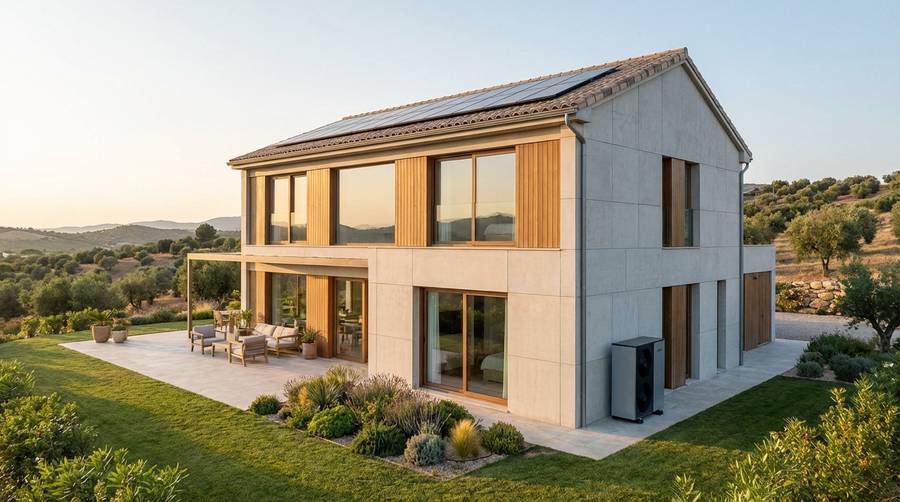
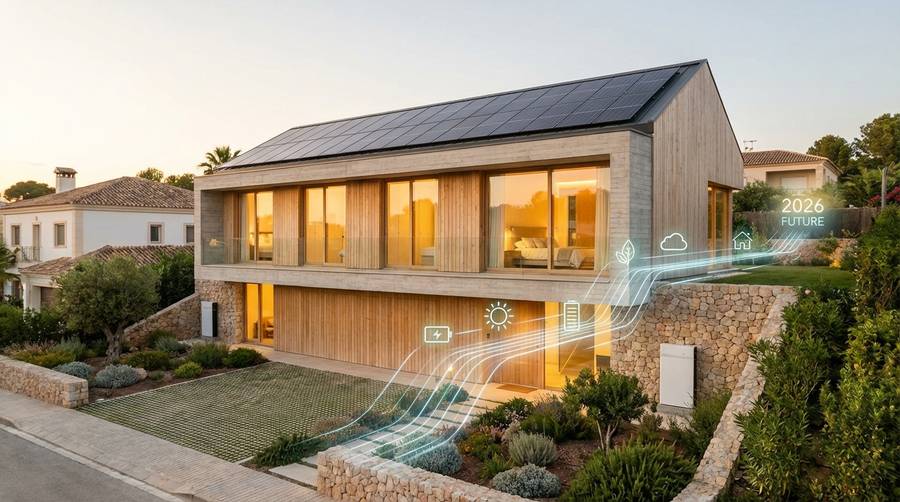
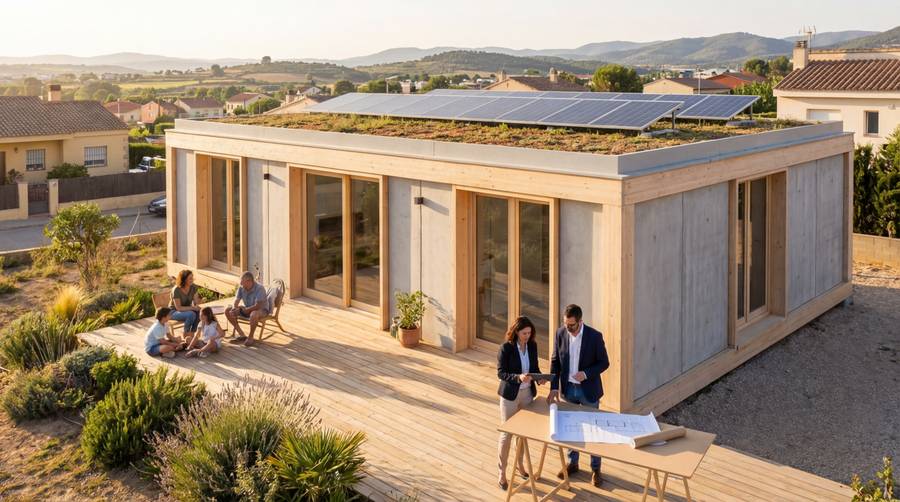
Industrialized Housing: A Spanish Turnkey Success Story
A family in Spain moved from long waiting lists and uncertainty to a delivered, energy-efficient turnkey home built with industrialized methods. This case study reveals the decisions, timelines, real metrics and practical lessons for self-builders in 2026.