Industrialized Housing in Spain: Carbon Footprint Outlook 2026
Introduction: Why the carbon story of industrialized housing matters now
Hook: By 2026, industrialized housing can cut the embodied carbon of a typical Spanish single-family home by up to 25% if projects adopt proven material and process choices. This article explains how — with data, case metrics and a practical roadmap for autopromoters.
Industrialized housing and prefabricated house models are no longer niche. They combine speed, cost control and high quality with a unique opportunity to reduce carbon early in the building lifecycle. Below you will find an analytical view of trends, quantified advantages, material trade-offs and an actionable turnkey (llave en mano) checklist to drive lower emissions in your project.
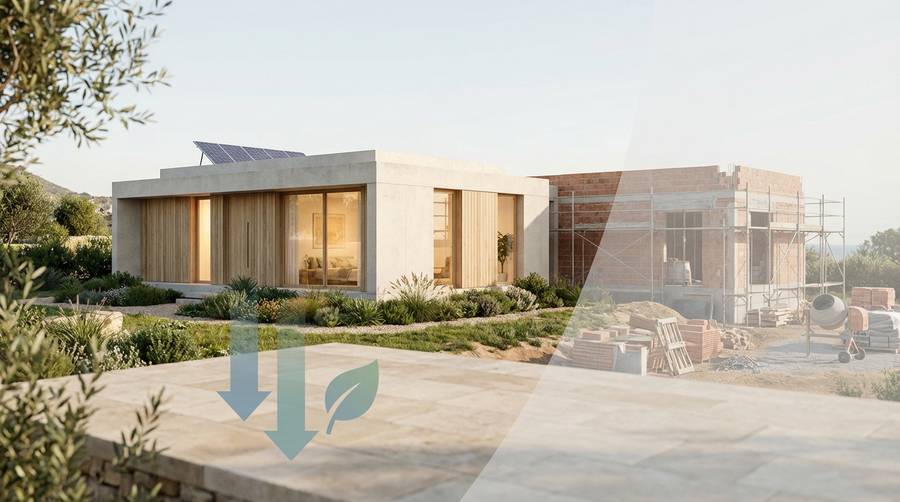
Modular production can reduce on-site waste by 70% and shorten on-site assembly time by 60%, translating into meaningful carbon and cost savings across the project lifecycle.
Panorama 2026: where embodied carbon is headed in industrialized housing
Global and Spanish trends: sector data to watch
Industry surveys and market data indicate accelerating adoption of modular construction in Southern Europe. Key signals for 2026:
- Volume growth: modular starts in Spain are forecast to grow 20–30% YoY in targeted regions with available land and supportive permits.
- Market segmentation: an increasing share of self-build (autopromoción) buyers choose prefabricated house solutions for predictability and faster delivery.
- Carbon focus: clients and planners are demanding data on carbon footprint and EPDs as part of procurement.
Projected emissions reductions from modular construction
When comparing industrialized housing to conventional builds, the possible carbon reductions come from three sources:
- Lower material waste due to factory precision.
- Optimized logistics and bulk production efficiencies.
- Shorter on-site times that reduce energy and temporary works.
Conservative modelling for a 120 m2 house in Spain suggests total embodied carbon reductions of 15–25% versus traditional on-site construction when using timber frame or low-carbon concrete systems plus lean industrial processes.
Regulation and climate targets: influence on the residential market
European and Spanish regulations are increasingly steering procurement toward quantified carbon outcomes. Expect:
- Mandatory reporting of embodied carbon for publicly funded housing projects within coming years.
- Incentives for projects with EPD-backed materials and Passivhaus-aligned performance.
Quantifiable advantages of prefabricated houses vs traditional builds
Time efficiency and its effect on emissions
Faster enclosure = lower site emissions. Typical comparisons show factory-led projects reach weather-tight status in 30–50% less time. That reduces diesel use for on-site equipment, temporary heating and extended worker transport, lowering operational site emissions by an estimated 40–60% during construction.
Cost control and waste reduction during production
Factory workflows enable:
- Material reuse and optimized cutting plans that reduce offcuts.
- Centralized quality control that lowers rework rates.
Real projects have recorded waste reductions between 50–70% compared to traditional sites, translating into both cost and embodied carbon savings.
Case examples: CO2 savings per m2
Selected study benchmarks (typical range):
- Timber frame modular home: 25–40 kgCO2e/m2 lower embodied carbon vs masonry when sourcing PEFC/FSC certified timber.
- Low-carbon concrete panels: 10–20 kgCO2e/m2 advantage versus standard cast-in-place when using industrialized production and CEM II / SCMs (supplementary cementitious materials).
These numbers depend on transport distance, on-site processes and the level of finish delivered by the manufacturer.
Modern materials and embodied carbon: selection and trends
Industrialized concrete vs conventional concrete
Precast and industrialized concrete offer manufacturing efficiencies but can carry high carbon intensity per ton. Important considerations:
- Prefab advantage: better dosing control, additives and curing regimes reduce waste and sometimes cement content.
- Mitigation: using cements with higher SCM content, sourcing local aggregates, and integrating recycled content can cut embodied carbon 10–30%.
Light timber frame and steel frame balances
Material trade-offs in Spain:
- Timber (light frame): favorable embodied carbon when the wood is regionally sourced and certified. It also stores biogenic carbon during service life.
- Steel frame: highly durable and precise, but typically higher embodied carbon per kg. Benefits accrue if high recycled content and efficient detailing reduce quantity of material.
In many Spanish scenarios, timber frame modular systems achieve the best balance of low embodied carbon and speed—especially for single-family homes.
Material innovations and market availability in Spain
Key innovations to monitor in 2026:
- Low-carbon cements and blends available from major suppliers across Spain.
- Certified cross-laminated timber (CLT) and engineered wood becoming more accessible.
- EPD transparency for façade systems, insulation and finishes—critical for apples-to-apples comparisons.
Design, processes and certifications to minimize emissions in turnkey delivery
Applying passive design and Passivhaus in modular homes
Passive measures amplify carbon gains. Combining high-performance envelopes with industrialized construction yields lower operational energy and reduces total lifecycle emissions. For autopromoters, target:
- Airtightness levels aligned with Passivhaus principles.
- Optimized orientation, solar control and thermal bridging management in the module design.
Industrial control: traceability and waste reduction
Factory processes provide traceability that is hard to match on-site. Insist on:
- Batch-level EPDs for major components.
- Logistics plans that minimize empty kilometers.
- Lean production KPIs: waste per m2, rework hours and assembly time.
Certifications and how to interpret them
Key documents to demand and understand:
- EPD (Environmental Product Declaration): provides cradle-to-gate impacts for materials.
- HC / embodied carbon reports: look for whole-building assessments, not only product sheets.
- Energy performance and Passivhaus certificates: validate operational energy predictions.
Use these documents to compare suppliers and to support green finance or subsidy applications.
Financial strategies accelerating decarbonization
Mortgages for self-build and green financing
In Spain, tailored mortgages for autopromoción and green loans are increasingly common. Benefits for modular projects:
- Preferential rates for certified low-carbon homes or proven energy performance.
- Faster project delivery improves lender confidence, reducing cost of capital.
Adopt a finance plan that integrates the turnkey cost, expected energy savings and potential subsidy receipts.
Business models and long-term valuation
Investors and banks are starting to value lower embodied carbon and predictable maintenance. For owners, this means:
- Higher resale values in markets that reward sustainability.
- Lower operating costs when combined with high-performance envelopes.
Public policy and subsidies
Regional incentives for energy performance and low-carbon materials can materially change project economics. Track available grants and tie them to your specification decisions early.
Roadmap for self-builders: planning a low-carbon industrialized home
Project phases from plot to handover with an emissions focus
Key phases and carbon-focused actions:
- Site selection: minimize access distances to factory to cut transport emissions.
- Concept and design: lock in passive measures and modular dimensions to reduce material waste.
- Production: require EPDs and waste KPIs from your manufacturer.
- Assembly and commissioning: ensure airtightness tests and proper commissioning to deliver the designed operational performance.
Choosing materials, processes and suppliers
Selection criteria for procurement:
- Proven track record in delivered modular homes in Spain.
- Transparent EPDs and whole-building carbon estimates.
- Local manufacturing to reduce transport emissions.
Link related reading for specification decisions: see Vivienda prefabricada: sostenible, eficiente y llave en mano and Casa prefabricada y huella de carbono incorporada for deeper dives on materials and carbon accounting.
Practical checklist: metrics to request and benchmark
- Whole-building embodied carbon (kgCO2e/m2).
- EPDs for primary envelope elements.
- Waste per m2 in production and on-site.
- On-site assembly days to weather-tightness.
- Airtightness target (e.g., n50 value) and thermal transmittance (U-values).
Final synthesis: opportunities and challenges for a decarbonized residential future
Key recommendations for autopromoters
- Prioritize modular procurement where factory control offers clear waste and timeline advantages.
- Demand transparency: EPDs, whole-building carbon and production KPIs.
- Combine passive design with material choices (timber where possible, low-carbon concrete where structural needs demand it).
- Align finance early: secure green-friendly mortgage or financing that values predictable turnkey delivery.
Remaining technical and market barriers
Challenges to address through 2026 and beyond:
- Supply chain scale-up for low-carbon materials in Spain.
- Standardization of embodied carbon reporting and accessible benchmarking tools.
- Market perception: continue shifting the narrative away from low-quality prefabrication toward premium industrialized housing.
Conclusion: act now with measurable steps
Industrialized housing offers a measurable route to reduce embodied carbon while delivering faster, cost-predictable homes for self-builders. The impact is real when you pair the right materials, traceable production and finance aligned with sustainability goals. Consider the practical checklist above as the starting point for any project.
If you are planning a prefabricated house in Spain and want a tailored evaluation of embodied carbon, materials and finance options, contact an experienced modular provider to request EPDs and a whole-building carbon estimate — small early choices yield disproportionately large carbon savings.
Call to action: Reflect on two decisions you can make today: preferred structural system (timber vs steel/concrete) and your acceptable transport radius for factory delivery. These determine the largest share of embodied carbon in a modular project.
Further resources
Explore linked guides for deeper technical guidance: Casa prefabricada: guía sostenible y llave en mano, Casa prefabricada: huella de carbono y ventajas clave and Casa prefabricada: eficiencia y baja huella de carbono.