Industrialized Housing: Complete Guide for Spain 2026
Hook: If you want a high-quality, energy-efficient home delivered faster and with predictable costs, industrialized housing in Spain is your best option for 2026.
This guide explains, step by step, how to plan, finance and deliver a modular or prefabricated home optimized for energy performance and long-term value. It focuses on actionable decisions: which materials to choose, how to meet Passivhaus-level targets, and how the turnkey workflow works from plot search to handover.
Why mass energy rehabilitation and industrialized housing matter now
Spain 2026 context: efficiency and emissions targets
Spain’s energy and climate targets raise minimum efficiency requirements for buildings. Public incentives now favor projects that cut operational emissions and primary energy demand. For homeowners and developers, this means a higher bar for thermal performance, airtightness and renewable integration.
Impact on cost of living, comfort and asset value
- Lower running costs: better insulation and systems reduce energy bills year-round.
- Improved comfort: stable indoor temperatures, less humidity and better acoustic performance.
- Increased resale value: energy-rated homes command higher prices and sell faster.
Social benefits and industrial scale: jobs and local economy
Industrialized building creates repeatable factory workflows. That scale produces jobs in manufacturing, logistics and local installation. It also shortens on-site disruption and accelerates delivery across regions.
Industrialized housing reduces on-site time by up to 60% while improving quality control—making energy targets more achievable at scale.
Advantages of industrialized housing over traditional construction
Time efficiency: closed shells and reduced on-site duration
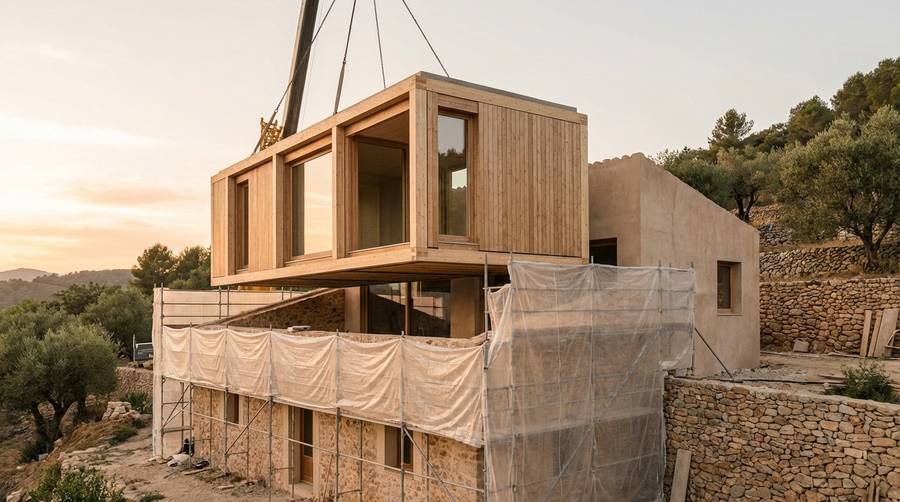
Factories produce modules or panels under controlled conditions. This enables parallel work: foundations and site prep can run while the house is manufactured. The result: fewer weather delays and predictable calendar milestones.
Cost control and fixed-price certainty for self-builders
Industrial workflows mean fewer unknowns. Bills of materials and process steps are defined early. For autopromoters, that translates into clearer budgets and fewer surprise costs during execution.
Quality and reproducibility: process control and inspection
Factories enforce QA steps, traceability and testing. Thermal bridges, joinery fit and finishes are repeatable. The outcome is consistent performance and easier certification for energy labels.
Industrial materials and systems for energy rehabilitation
Industrialised concrete: when to choose it and thermal performance
Precast concrete elements excel where mass and thermal inertia help stabilize indoor temperatures. Use concrete frames or slabs for high acoustic performance and for sites with high wind or seismic demands. Combine concrete with external insulation to avoid thermal bridging.
Light timber framing and steel frame: speed, light weight and sustainability
Timber frame offers fast assembly, low embodied carbon and good thermal performance when paired with high-quality insulation. Steel frame delivers precise geometry and reduced structural depth. Both systems suit retrofit panels and new-build modules for rapid on-site installation.
Complementary systems: ventilated facades, insulation and high-performance windows
- Ventilated façades improve hygrothermal behaviour and permit high-quality cladding finishes.
- Continuous insulation and careful detailing avoid thermal bridges at junctions.
- High-performance windows (triple glazing, warm edge spacers, low-e coatings) are essential to meet Passivhaus targets.
Efficiency-driven design: applying Passivhaus and practical strategies
Passivhaus principles for retrofits: airtightness, insulation and thermal bridges
Target a fabric-first approach. Set measurable targets early—U-values, ACH (air changes per hour) and thermal bridge indices. Use blower-door testing to verify airtightness during assembly and again after installation.
Mechanical ventilation with heat recovery and indoor air quality
Install balanced mechanical ventilation with heat recovery (MVHR). It reduces heating demand and provides consistent fresh air. Prioritize low-pressure-drop duct design and accessible filters for maintenance.
Passive strategies: orientation, solar shading and window optimization
Optimize orientation for solar gains in winter and shading in summer. Use fixed shading, brise-soleil or adjustable elements. Choose glazing ratios that balance daylight and thermal control.
Turnkey process for large-scale energy rehabilitation and modular delivery
Phases: plot or building search, design, prefabrication, assembly and handover
- Site assessment: legal constraints, soil and structural checks.
- Design phase: energy model, materials selection and permit documentation.
- Manufacture: factory production of modules, panels and systems.
- On-site assembly: foundations, crane operations and commissioning.
- Handover: testing, certifications and user briefing.
Logistics coordination and managing industrialized works at scale
Plan transport routes and lifting operations early. For multiple units, schedule factory runs and site slots to minimize storage costs. A dedicated logistics manager reduces delays and lost margin.
Guarantees, energy certificates and regulatory compliance
Demand clear warranties on structure, envelopes and installed systems. Use standardized documentation to speed up energy certification and mortgage underwriting.
Financing and economic models for self-builders and promoters
Self-build mortgages and credit lines for modular housing
New mortgage products support staged disbursement tied to factory completion milestones. Discuss with lenders how prefabrication stages map to payment tranches to secure better rates and certainty.
Incentives, grants and public programs for energy rehabilitation
Spain’s current programs often require specific energy improvements. Structure the project so incentives cover low-carbon upgrades and MVHR installations. Early alignment with subsidy rules avoids delays.
Structuring investment: costs, energy payback and asset uplift
Model the investment by including capital costs, expected energy savings and projected resale premium. For many upgrades, energy savings and improved marketability repay a significant share of the added cost over 10–15 years.
How to start: a practical step-by-step checklist and case studies
Initial checklist for self-builders: requirements, team and timelines
- Define your performance target (e.g., improved energy label or Passivhaus).
- Secure plot or building and obtain regulatory feasibility.
- Assemble core team: architect/designer, factory partner, structural engineer and mortgage advisor.
- Establish a project calendar with milestones for permits, manufacture and assembly.
- Set a contingency and agree warranty and testing clauses with suppliers.
Case study: modular promotion near Valencia — metrics and outcomes
Project summary: 12 homes on a suburban plot delivered as modular units with timber frame envelopes. Key metrics:
- Factory time: 10 weeks for modules.
- On-site assembly: 4 weeks for foundations and craning.
- Total delivery: 16 weeks from contract to handover.
- Budget adherence: final cost was within 3% of fixed price.
- Performance: annual heating demand under 15 kWh/m² (near Passivhaus-lite).
- Customer satisfaction: 92% rated process and indoor comfort as excellent.
What made it work: pre-agreed interface details, early procurement of windows, and staged payments linked to factory QA.
Technical and economic comparison vs conventional solutions
Compared to on-site masonry builds, industrialized options generally show:
- Shorter delivery time (often 40–60% reduction).
- Lower schedule risk and fewer weather delays.
- Comparable or slightly higher initial cost depending on finishes, offset by lower lifecycle energy costs and faster sale or occupation.
Common pitfalls and how to avoid them
- Poor early alignment between architect and factory details. Solution: freeze critical interfaces before manufacture.
- Underestimating logistics for oversized modules. Solution: run route surveys and obtain permits early.
- Neglecting commissioning of MVHR and renewables. Solution: include commissioning in the contract and budget.
Conclusion
Industrialized housing offers a pragmatic path to faster delivery, reliable budgets and measurable energy performance in Spain. For autopromoters and developers, the key is early decisions: choose the right materials, commit to performance targets and map factory stages to financing.
Next step: start with a feasibility review of your site and a simple energy target. If you want tailored guidance, consider contacting a turnkey provider to produce a costed proposal and timeline.
Image description for Findnido brand visual:
Call to Action: If you are planning a modular or prefabricated project in Spain, request a feasibility check to align design, budget and energy goals. A short technical review can save months and significant cost.
Artículos relacionados
Industrialized Housing Success: Scalable Energy Renovation
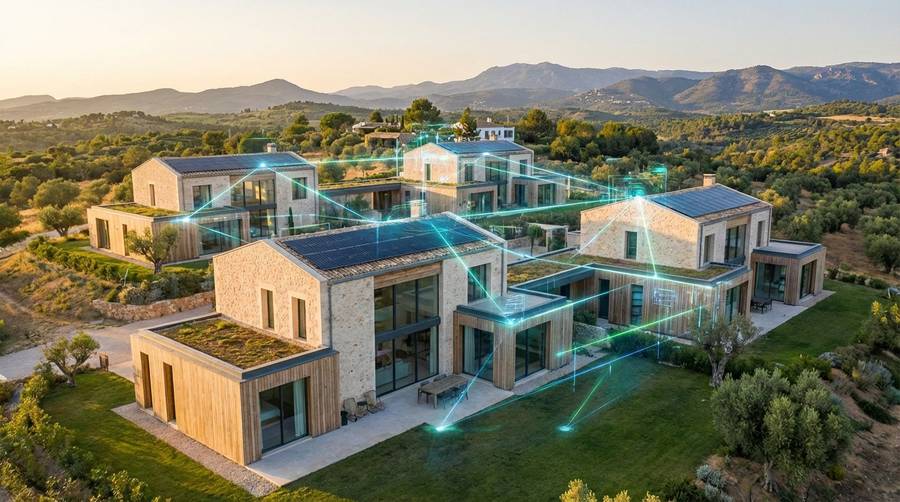
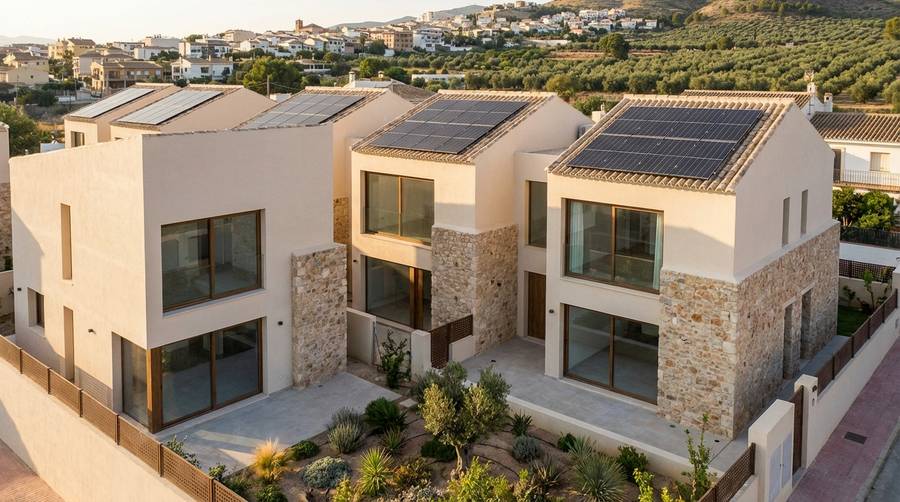
A real Spanish pilot transformed a tired neighborhood into a reference in energy renovation using industrialized housing. This case study breaks down decisions, materials, timelines, measurable results and a practical guide for autopromoters in 2026.